Archive | June, 2023

Opatija to Senj to Pag Island (Novalja)

29 Jun

These past 2 days of cycling have probably been some of the most challenging mentally and physically that we have ever done. But we got through it…and are relieved it’s done.

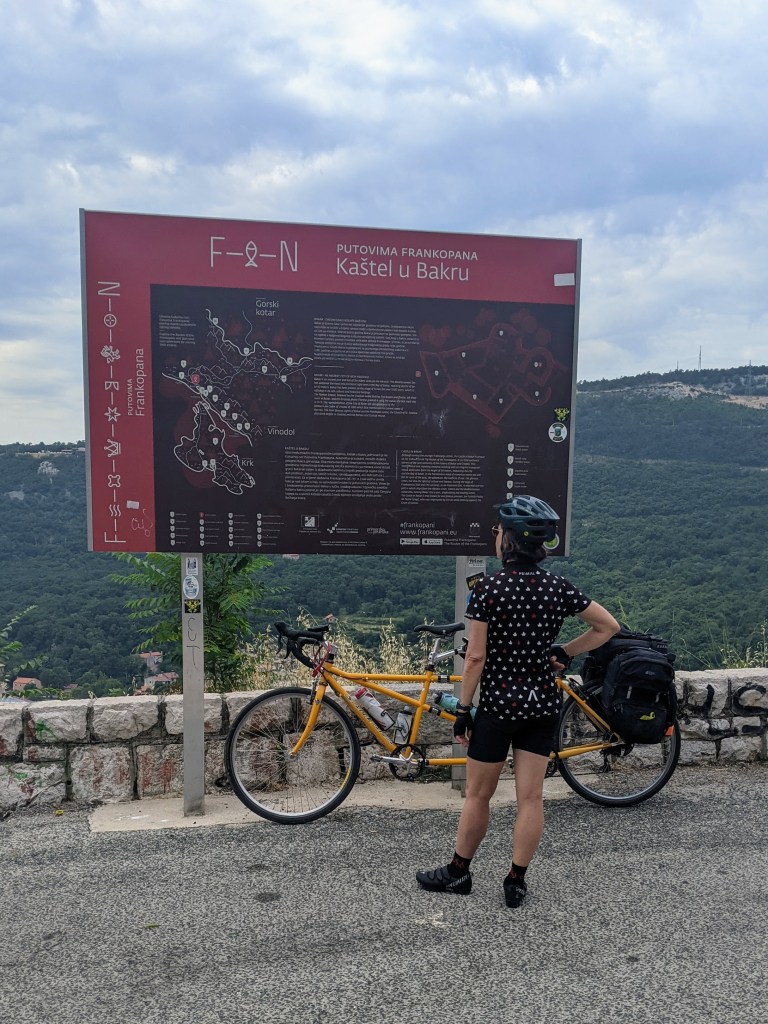
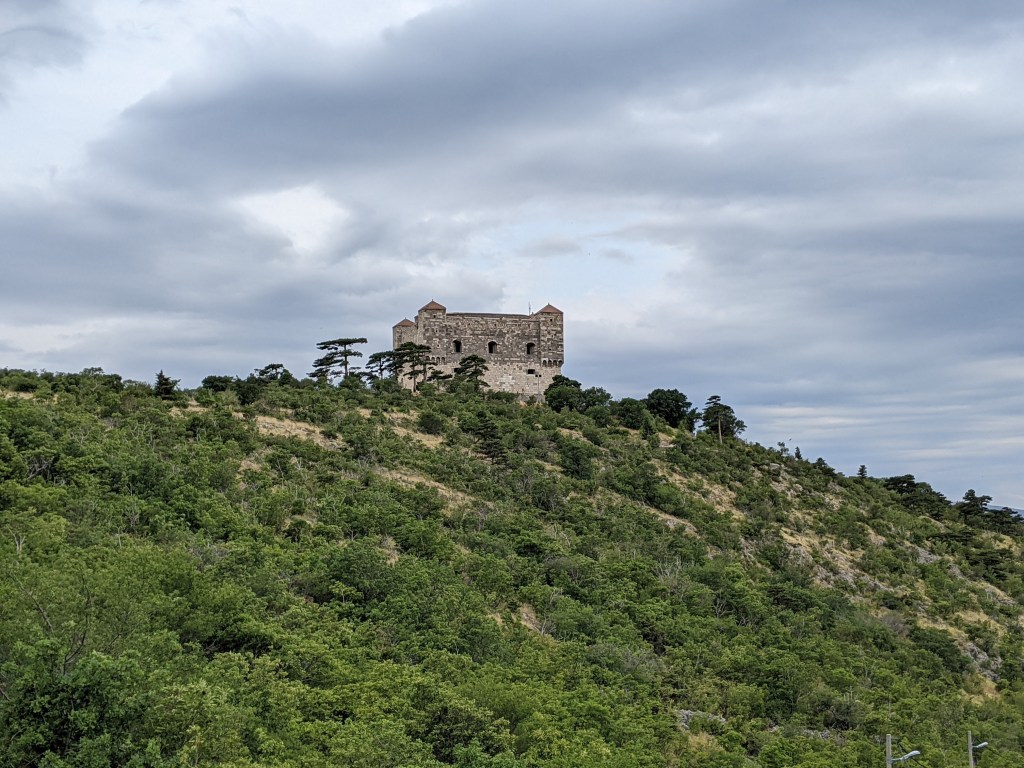
From Opatija to Senj was challenging physically as we had 1000 + meters of ascent but also much of it was on what we would consider more of a primary highway than the secondary one it is. There was lots of traffic, little shoulder, many trucks, etc. thus mentally this starts to wear on you. When we finally arrived at our stopover point of Senj we had a comedy of errors to work through. We were led by the GPS to the wrong apartment and went through quite a process with a nice Croatian speaking lady checking us into a room in the wrong house. Then our actual host texted us wondering where we were and so we realized our error. The first lady did seem surprised, yet very accommodating, about our arrival. The second lady, our host, who spoke perfect English helped us explain to the first lady what happened. Both addresses were #13(!) and in the same cluster of little streets.
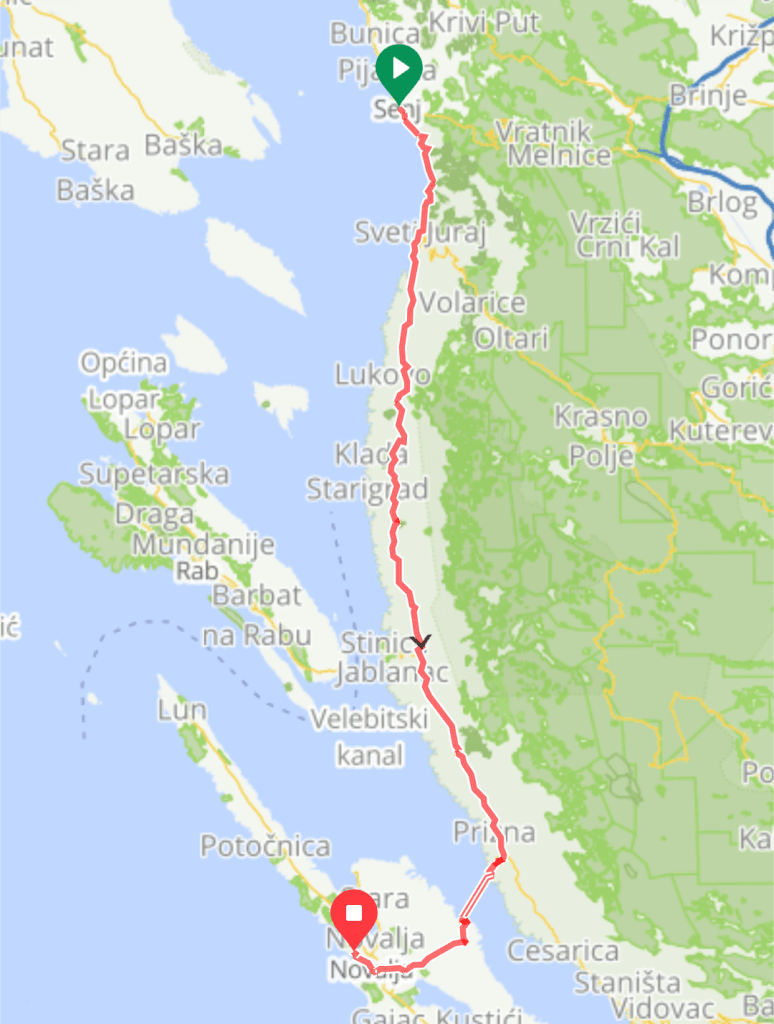
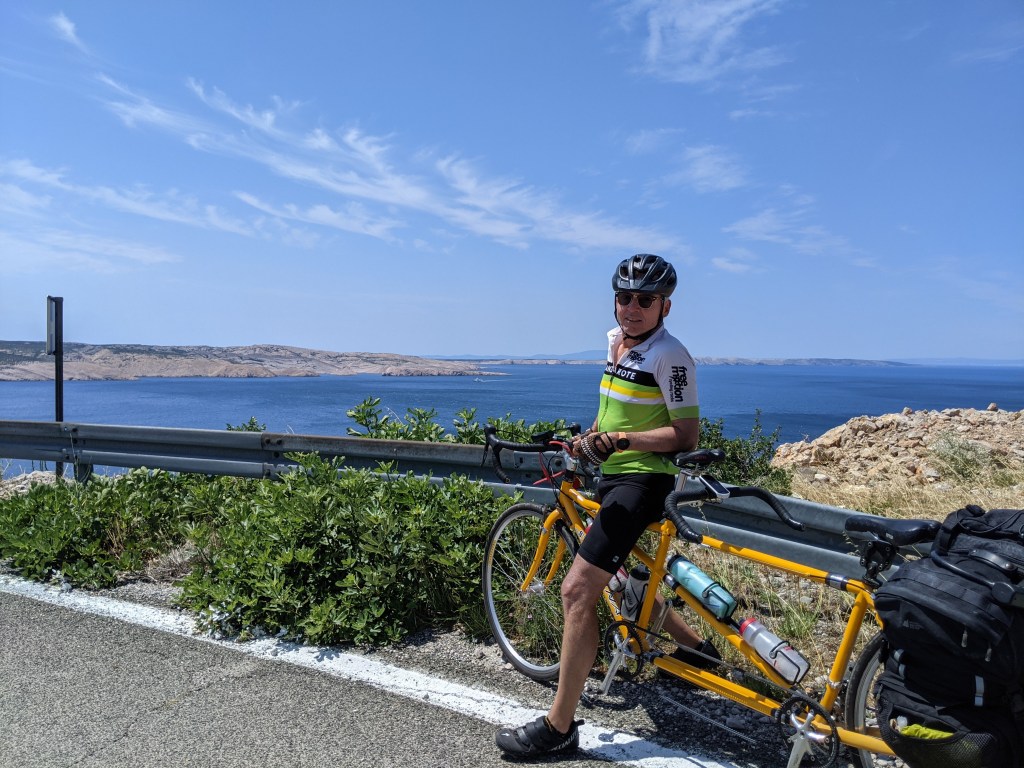
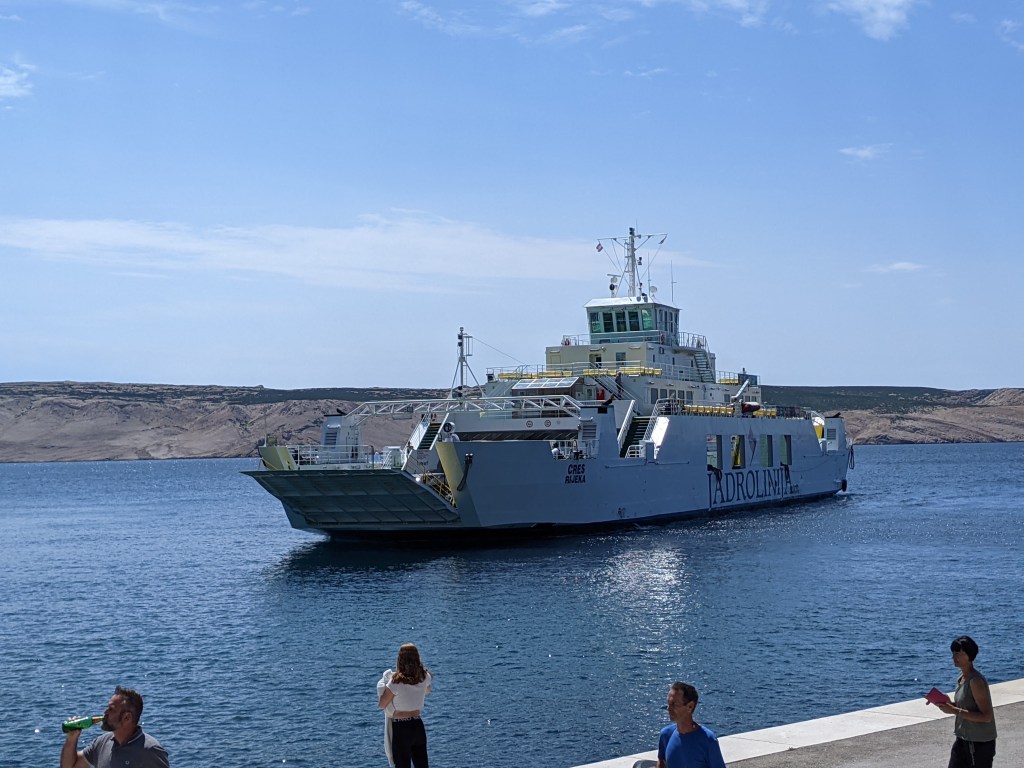
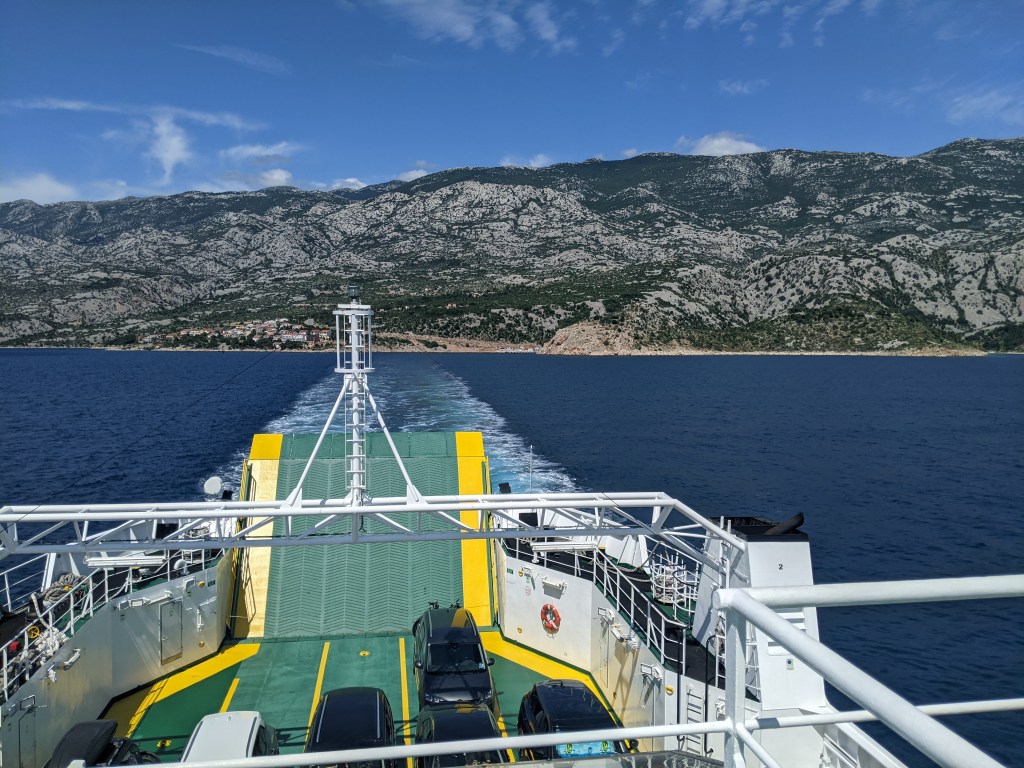
Once settled in, a seriously strong wind came up suddenly and lasted into the night (famous Bora wind). Apparently Senj is known for this as is most of coastal Croatia. We were worried about it and wondered if we needed a plan B for the next day as we were climbing along the coastal mountains on the way to Pag Island. However when we woke up in the morning it was much improved and the wind forecast looked stable so off we went. Well, the Bora monster is no laughing matter. Once up higher on the road we were starting to have difficulty controlling the bike, we thought we could be blown off the road the Bora was so fierce. Not cold or rainy but a powerful force on a somewhat narrow winding road with steep drop offs, not for the faint of heart and yes, we shouldn’t have been there on that day. Mostly there were guard rails but not always. The traffic was somewhat lighter this day, likely due to the wind, so a small concession. We stopped often, walked some and at one point George tried to flag down larger vehicles that may be able to give us a ride but to no avail. We just had to keep going. We had about a 350m climb over 10km and at the top of this the wind was the worst. Once we started to descend we could gradually feel an improvement and once at the ferry terminal in Prizna it was fairly calm again. It was a huge relief to actually arrive there on time, we did have doubts that we would make it that day. There were a few other crazy cyclists on the road also and we commiserated together which actually helped. Another factor on this part of the road is that there are virtually no services or towns where you can rest or get more supplies. We saw one small gas station only, well after the worst part, and no WC even. Once off the ferry on Pag we had another 10 or so kilometers to ride to Novalja where we are staying for a couple of nights. So thankful for a rest day!

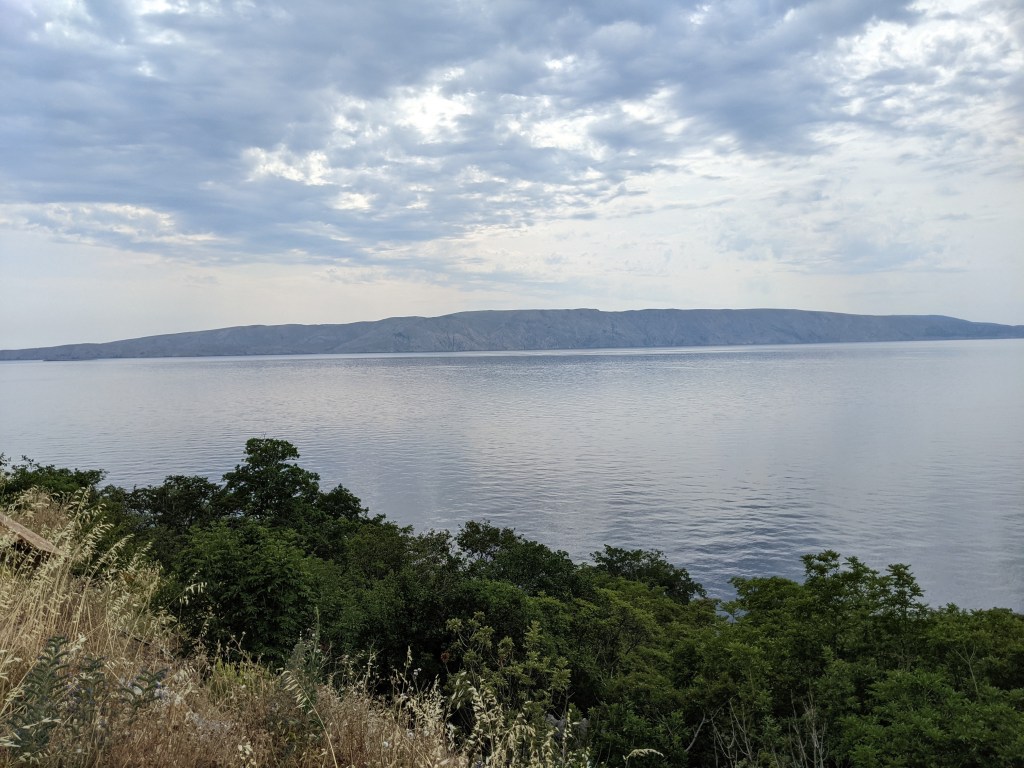
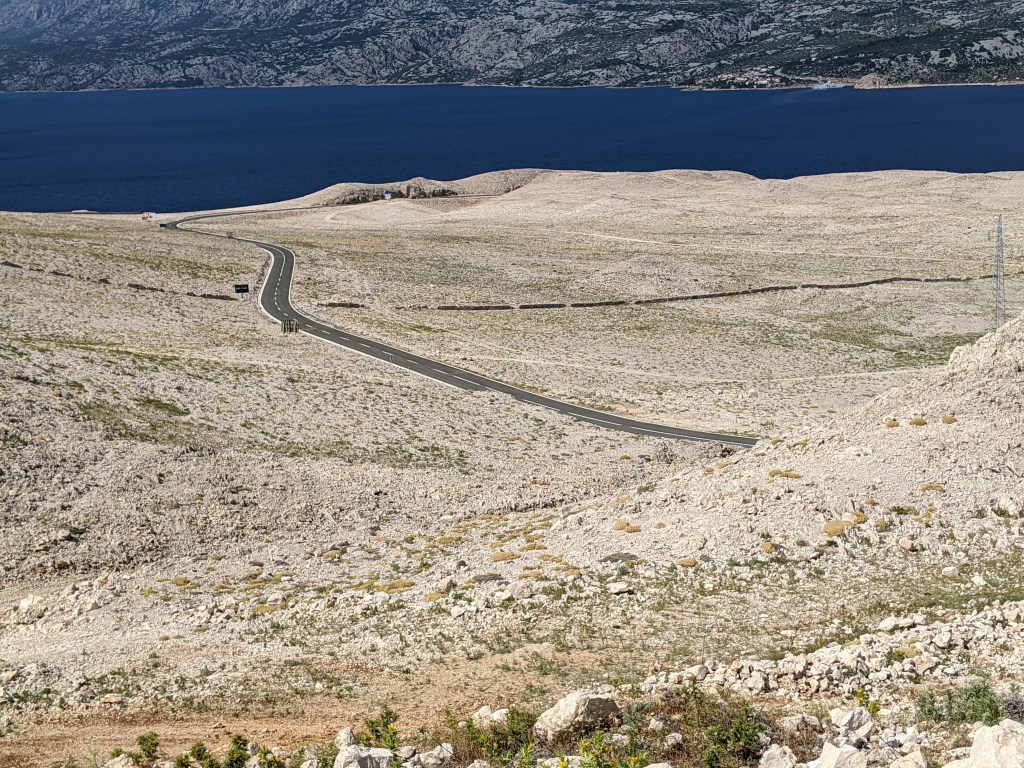
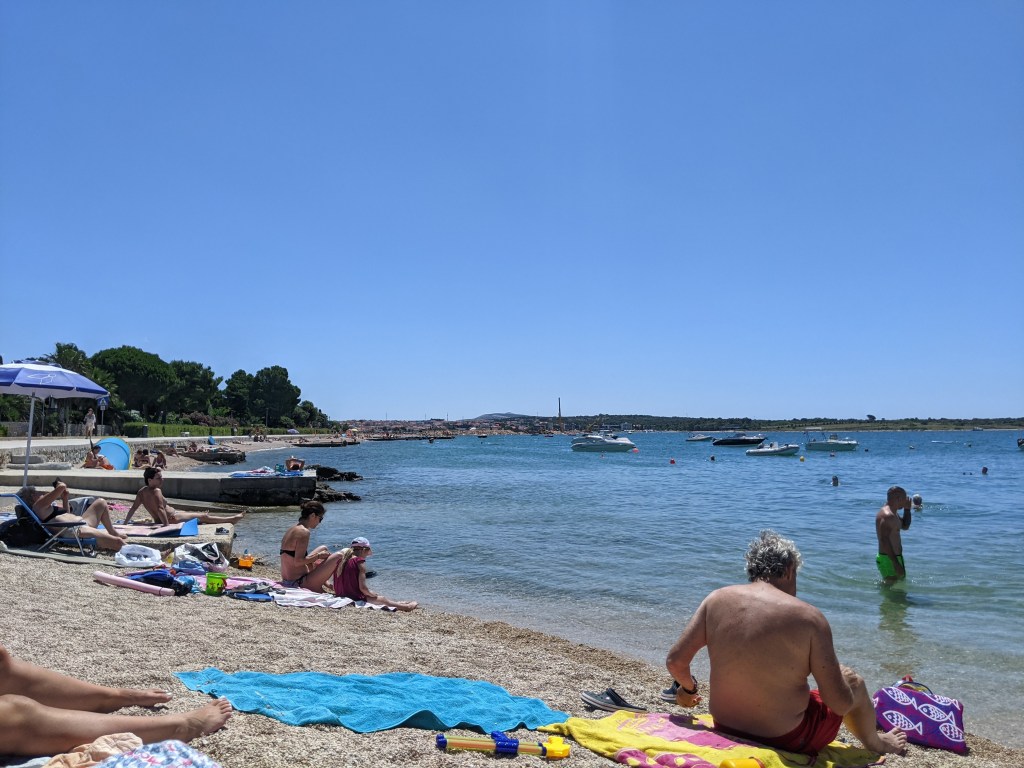
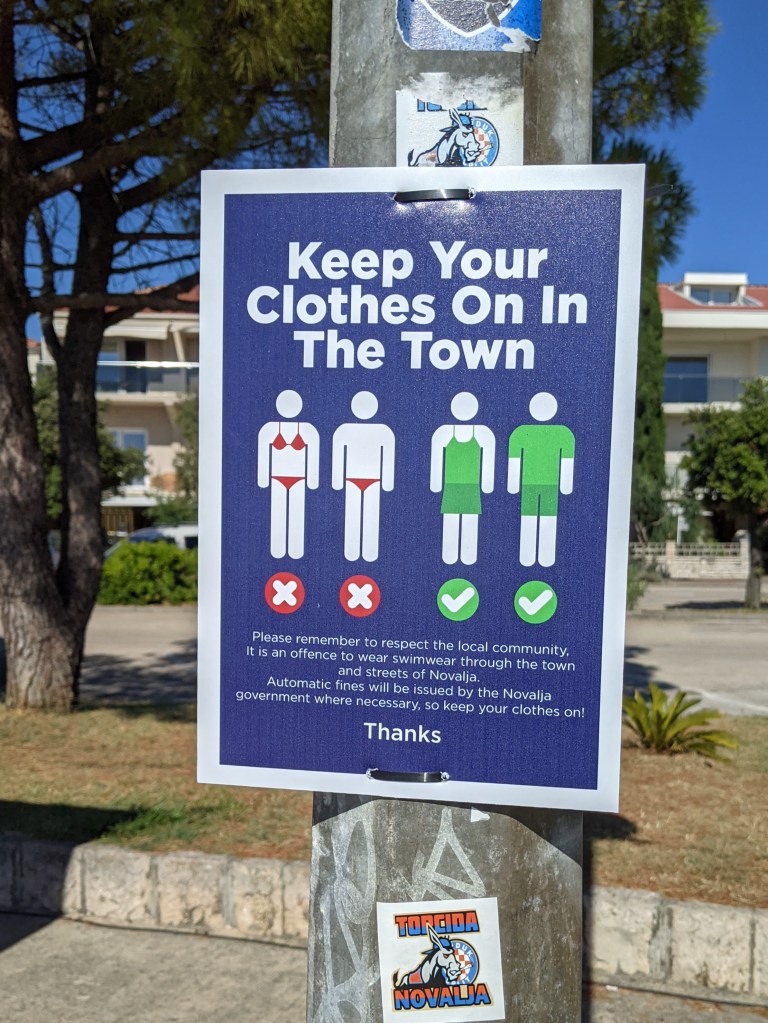
The east side of this island and others in the area are all barren, like a moonscape, due to the Bora. The west sides have more vegetation but still a dry area. The west side where we are is another huge beach playground area with many tourists and services, we won’t go hungry or thirsty here. It actually is pure party central with thousands of 20 something Brits predominating. School’s out and this is the place to be I guess. We had a bit of a dispute with our host misrepresenting the property here resulting in a 50% refund so all together we’ll be happy to head south to Zadar tomorrow.

Rovinj to Labin to Opatija

26 Jun

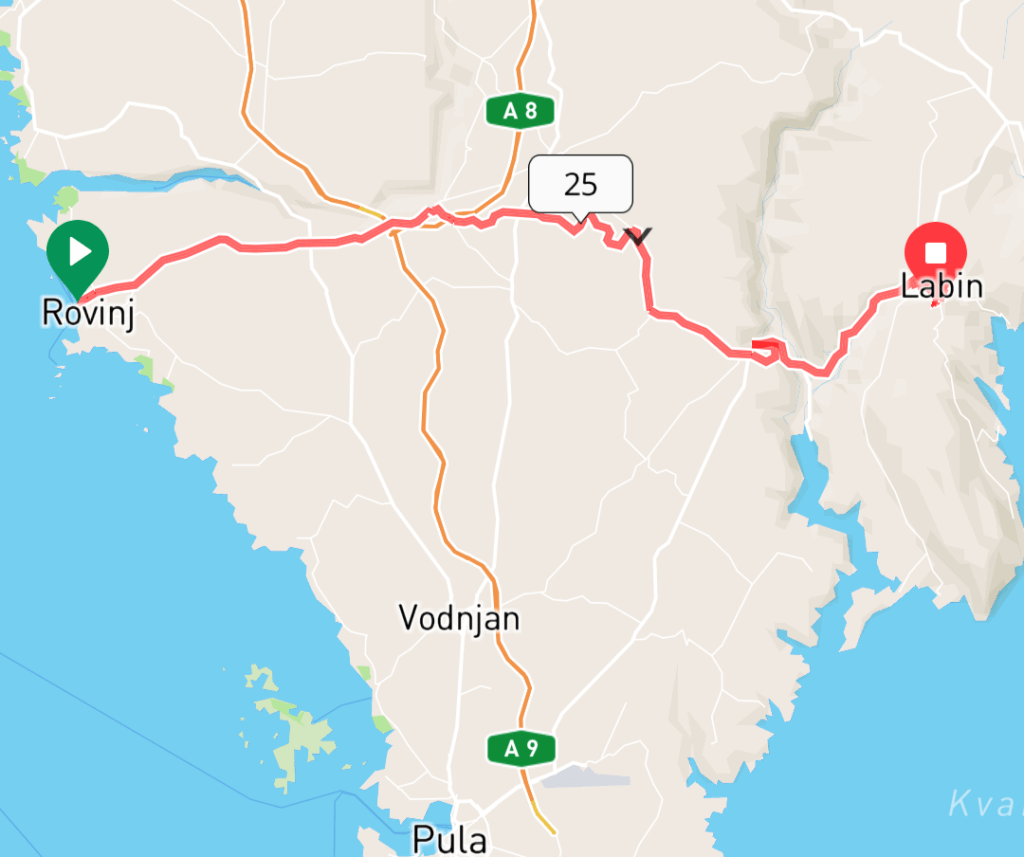
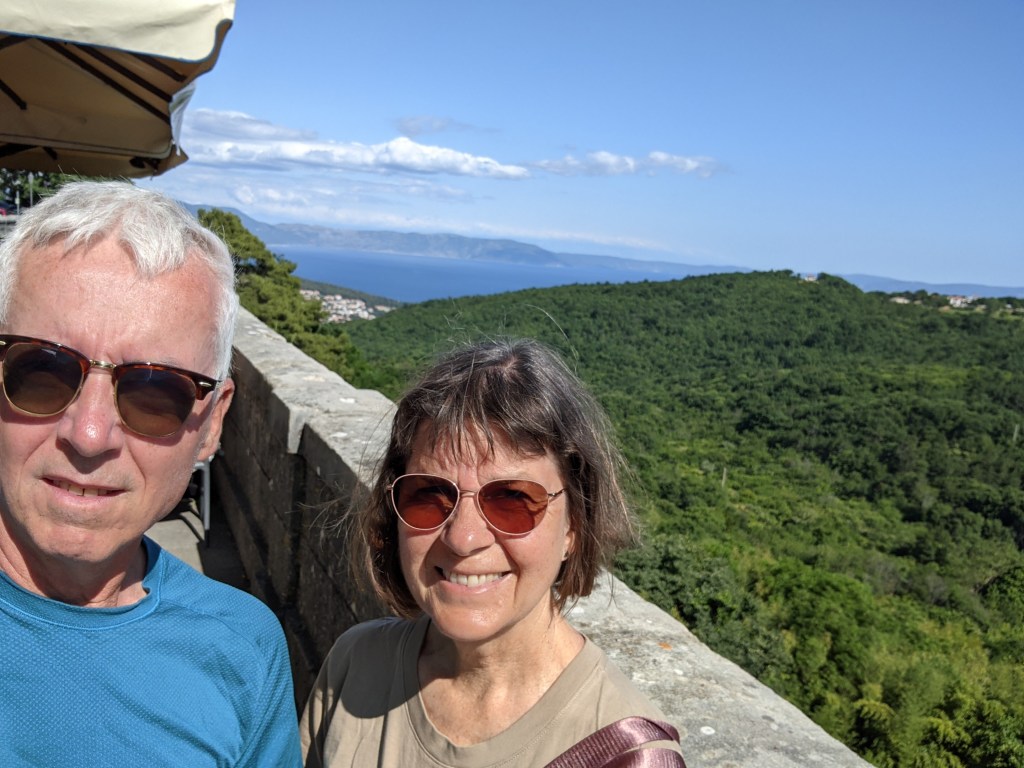
The first leg of this ride to Labin was predominantly climbing. Of the 55 kms we were ascending for 31 kms, too much! Mostly the grade was doable from 3-7% but the last km, true confessions now, was in the 13-18% range and we had to push the bike up to the hotel.  Perhaps in the future we need to look at this more carefully.  This route took us across the Istrian peninsula to the other side, almost to the opposite coast but not quite.  It went through many forested areas and into big hills, almost mountains, on some lovely quiet roads.  As we got closer to our destination we realized that Labin is a (very high) hilltop town, unfortunate for non e-bike cyclists as ourselves, but fortunate as it provides wonderful views of the surrounding area and it is very charming place as well. We found a place to have dinner with a stunning view down to the town of Rabac on the coast.  Labin was meant as just a stopover point on the way to Opatija as it was too far otherwise but ended up being a nice spot to visit too.

The next day our ride to Opatija was also lower in mileage, only 53 kms, and stunningly beautiful.  We again had a good amount of climbing to do after descending out of Labin (down is fun but usually means another up) but it did pay off with wonderful vistas of the Adriatic.  The road was good except for 4 speed crazy motorcyclists who passed us twice at extremely high speeds and scared the sh## out of us.  We could feel a shock wave and high noise level as they passed at speeds probably around 200kph; so dangerous for everyone on that narrow winding mountain road with a speed limit of 80kph, an example of more balls than brains.  We found our apartment for the next 2 days easily, just a few blocks off the water and not at the top of a mountain, thank goodness.  After yesterday it felt like we got off easy.

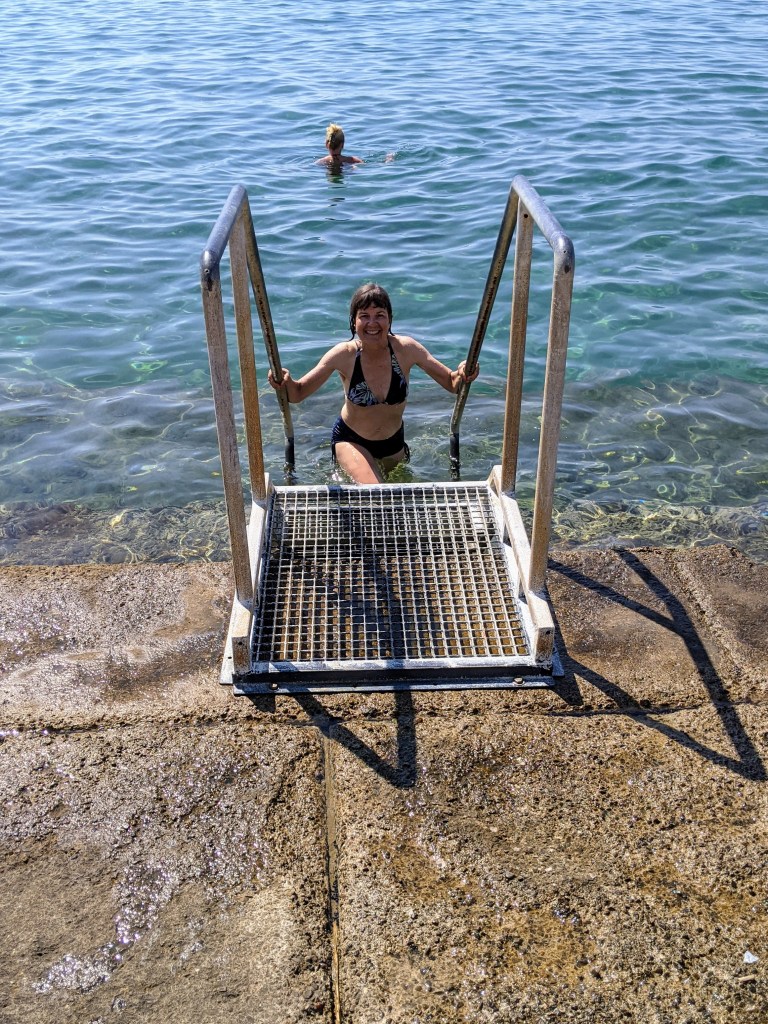
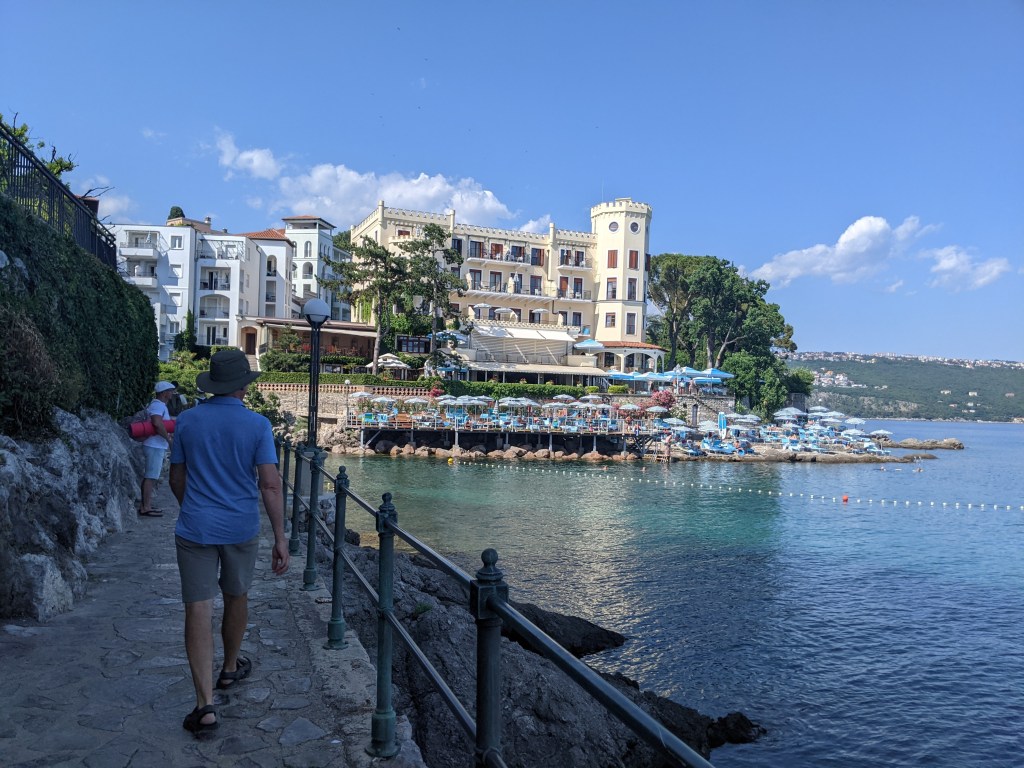
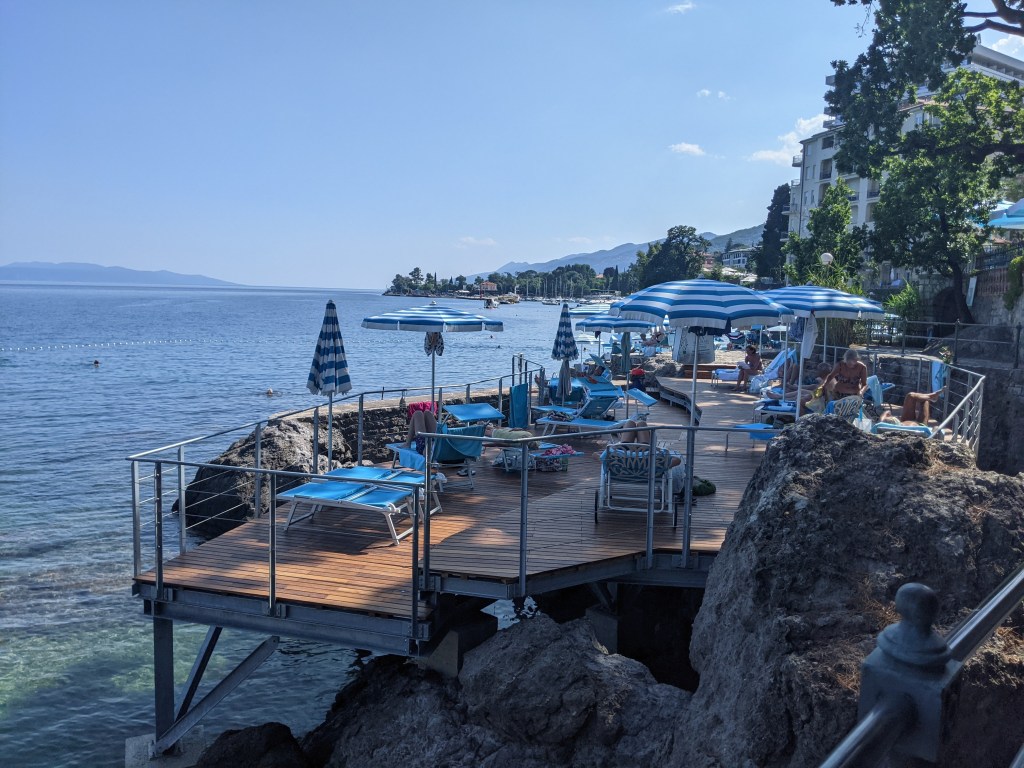
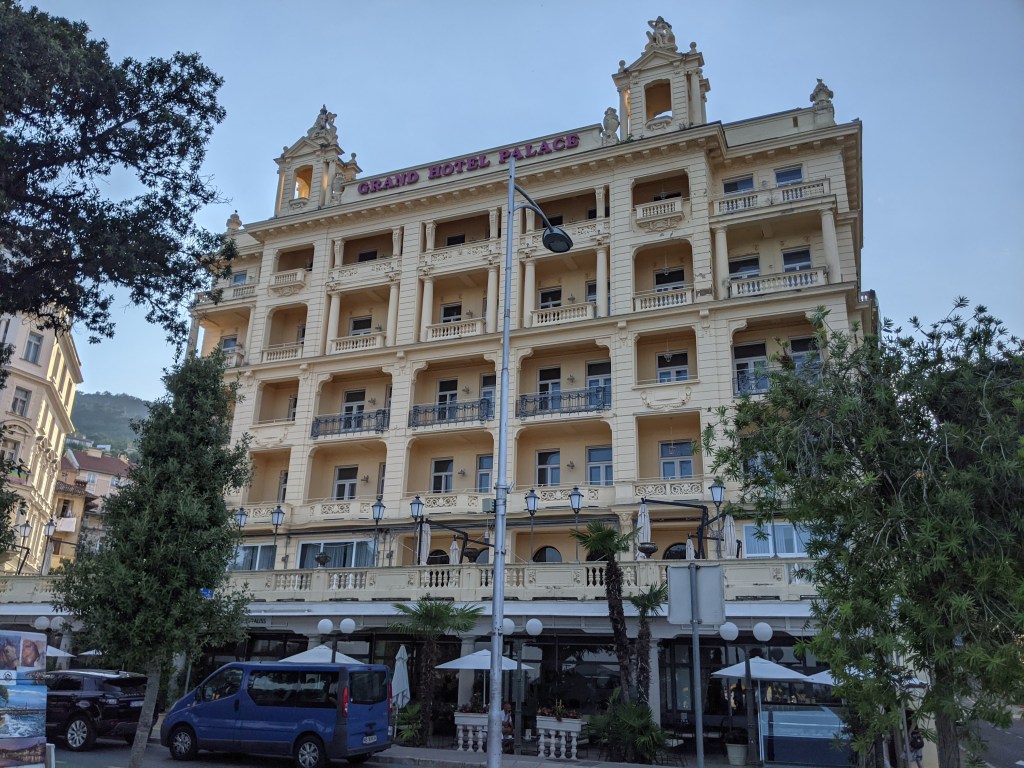
The Austrians started to develop Opatija as a summer and tourist destination starting in the later half of the 19th century and it is similarly grand looking like the French Riviera. It is known for the villas and grand hotels along the seafront. The architecture is similar to Trieste coming from the same influences. For our rest day in Opatija we spent the morning at the beach. It was a calm and beautiful morning, so perfect. The water was nippy but very refreshing once you were in. Again there are no beaches as we are used to, just concrete platforms built out onto the water and steps and ladders to help access the water. But there are a lot of them with tiny coves and bays strung out for many km. Sitting or lying on the concrete is a bit uncomfortable but we don’t last too long just sunbathing so not a problem. The locals of course have it figured out, bringing cushioning as a base layer.

In the afternoon we did the Lungomare stroll past parks, statues, villas turned into hotels and many sunbathers. It seems as though if you were born here or even just came for a visit they are happy to make a statue or at least a bust to commemorate you. We found several dedicated to librarians. With the architecture being very Viennese, we can see the Italian influence is fading as we leave Istria behind and go south.

Porec to Rovinj

23 Jun

After the last leg with too much gravel we altered this route to stay on pavement which means we were with the cars and probably less scenic too but better for us and our road bike. Rather than following the bike path which is just above the Lim Fjord we were on the road farther above which meant a long descent followed of course by a notable ascent of up to 7% grade. It was hard for sure and a +30 degree day to boot but our overall mileage that day was only around 40 kms so we managed. As we are climbing these hills I am always thinking about how much we are carrying and what we don’t really need…Every year we try to pare it down more to lighten the load, maybe that’s us getting old and feeble?  Next trip we will have a new tandem that will be lighter and better, can’t wait!

While riding this day George managed to collide with a rather large wasp that first hit his face then bounced to his arm and stung him well.  It has left him with an angry red and edematous upper arm and elbow but slowly it seems to be improving. Such is the life of the person in front of the ship.

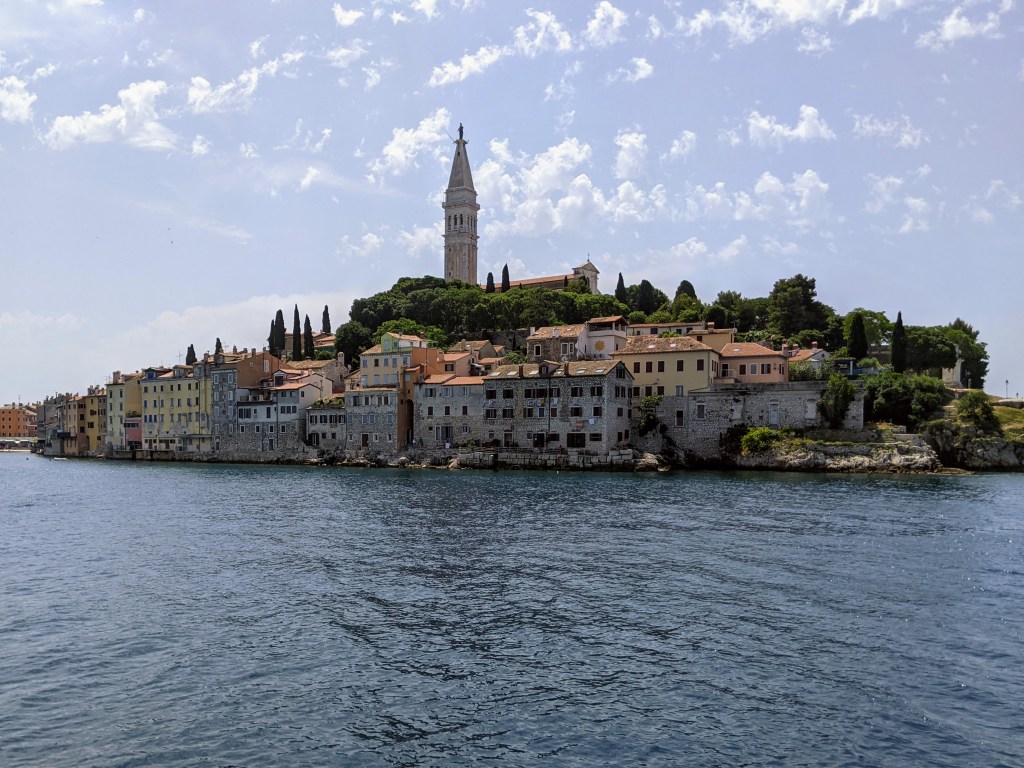
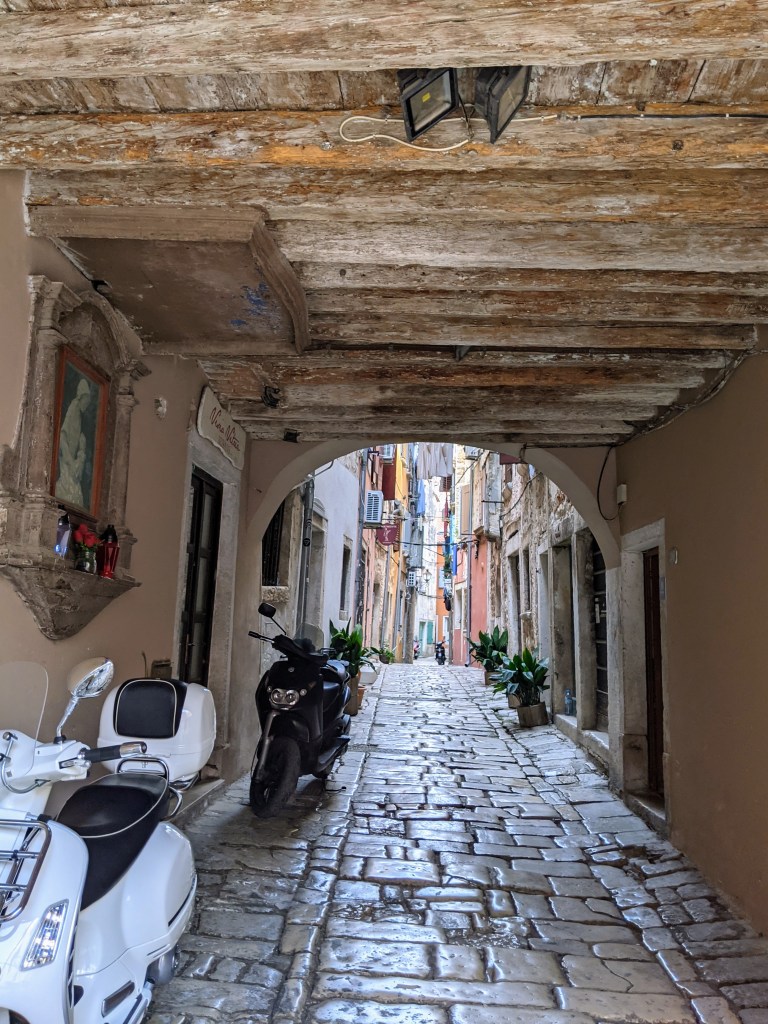
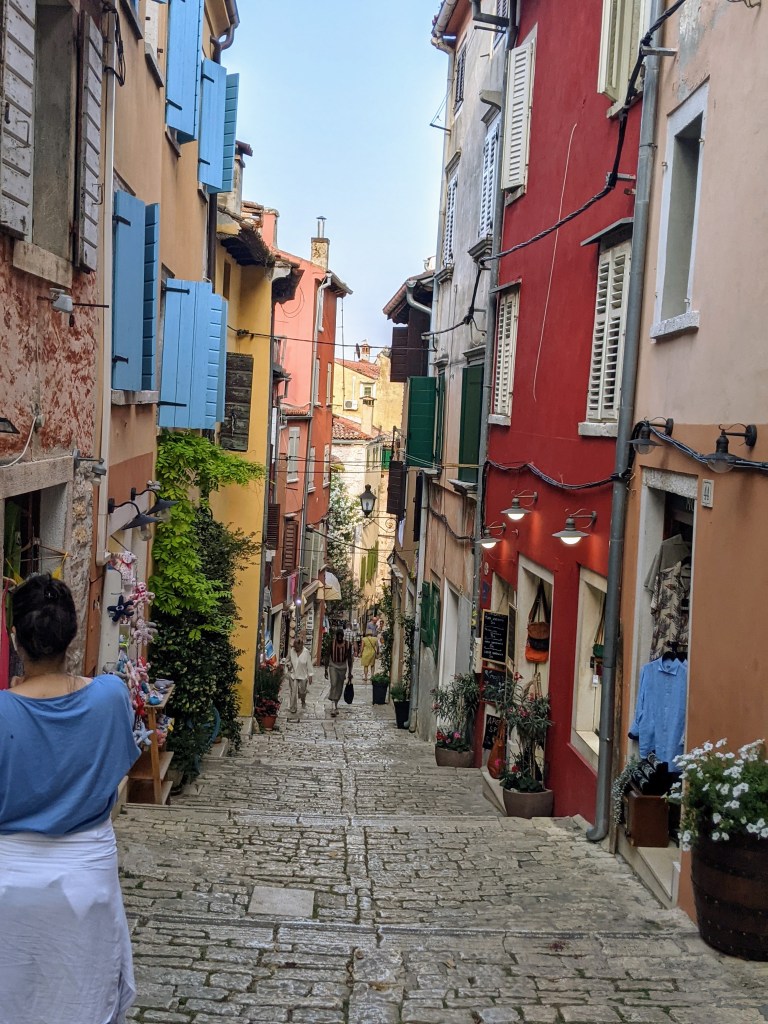
The last 10 km descent gave us a beautiful view of Rovinj (pronounced Roving, hard G and emphasis on the “ing”), originally an island just off the mainland and joined by a land bridge over the sea moat in 1763.  At this point in history the controlling Venetians felt safer from threats than previously so joined the little island to encourage trade and commerce.  Now it appears as a roundish peninsula with densely packed housing which was done to fit the population onto the island.  The Venetians were in control of Rovinj and other coastal areas of Istria for approximately 500 years starting in the 13th century.  There are winged lions everywhere which is the symbol of Venice.  If the lion is holding an open book it means Venetian rule was accepted (peace) and if the book is closed it means there was war to get the same result. Istria is known as ‘Little Italy’ with Italian culture still having a strong influence; Italian is officially the second language here and most people are (at least) bilingual.  The name Istria comes from the very first people to inhabit the area, the Histri.  Rovinj is truly a maze of narrow streets and tall houses, quite spectacular to see and easy to get lost in.

We went on a “free” walking tour (Free Spirit Walking Tours) with a lovely and knowledgeable young woman named Martina who is a native Croatian and a bicycle enthusiast also.  We were the only 2 in the group so we were able to talk about cycling and our route and she gave us many good ideas.  She also shared much with us about Istrian and Rovinj history, local foods, the people, language, more recent history including the separation of Yugoslavia (south slavia), the war, Tito and much more.  It was very informative and interesting, we learned a lot.  

We also took a boat tour to see Rovinj from the water side and as well see other nearby islands and the coast south of Rovinj.  This was pleasant with good views but not very informative.  

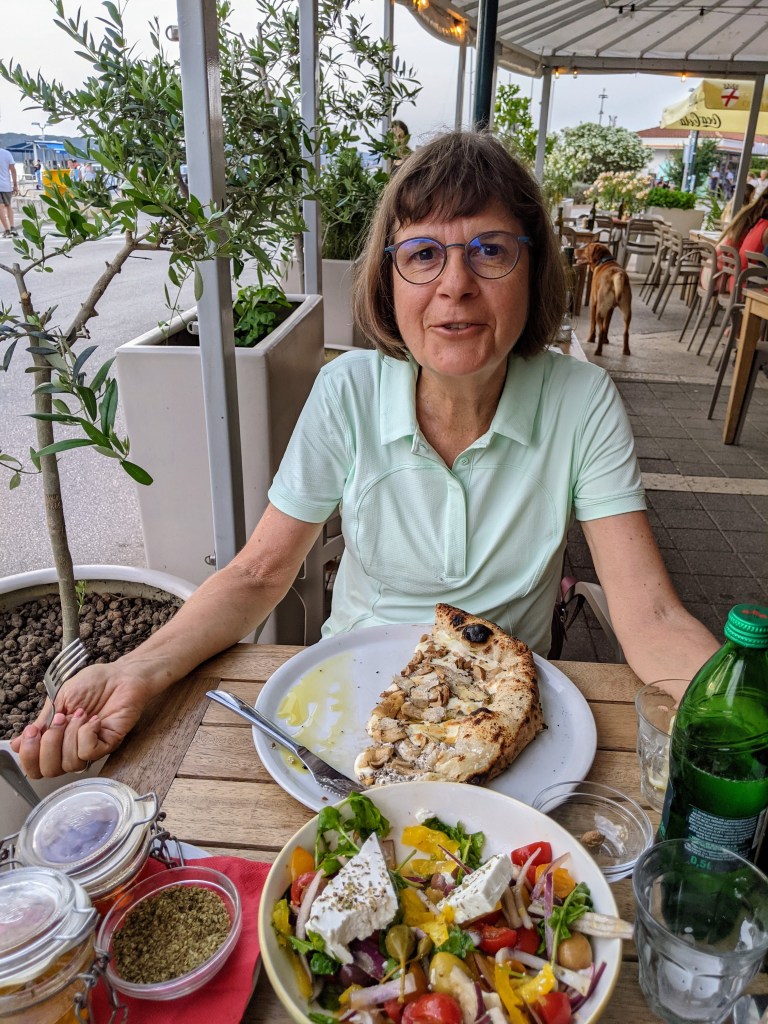
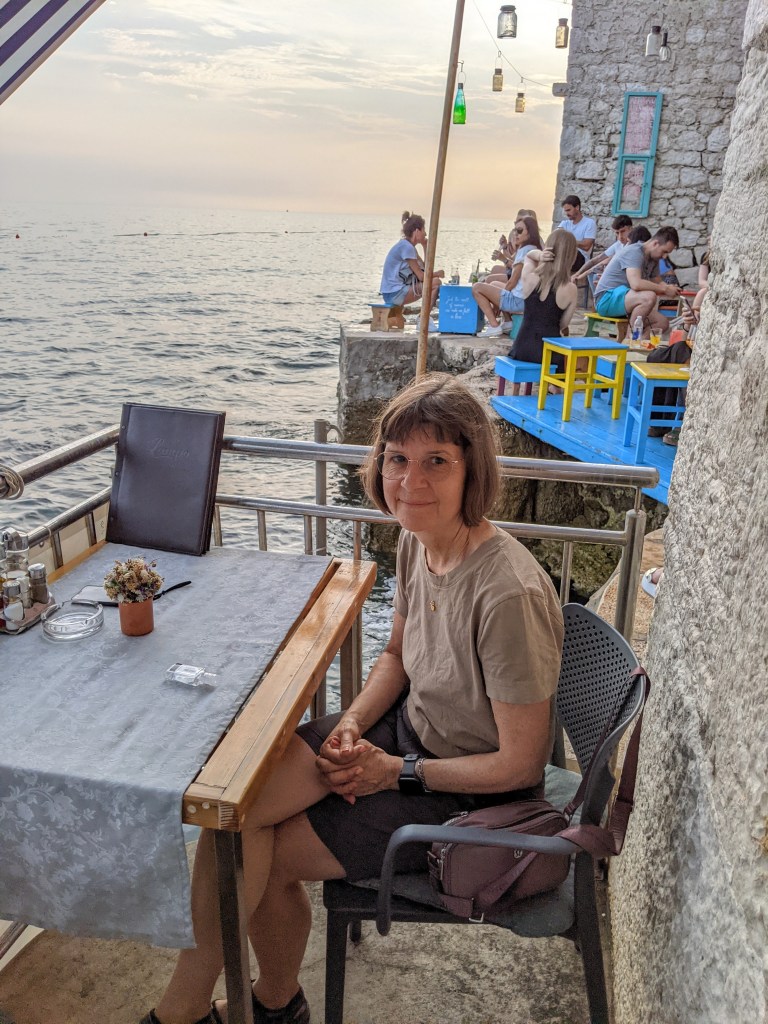
We enjoyed 2 excellent dinners in Rovinj.  One was excellent food without a view and the other was the opposite with average food but situated right on the water.  The first dinner I mentioned was a truffle and mushroom pizza, probably one of the best we have had, and we are not even in Italy.  Istria is famous for its truffles, it is now black truffle season (white in the winter) and they are for sale everywhere.

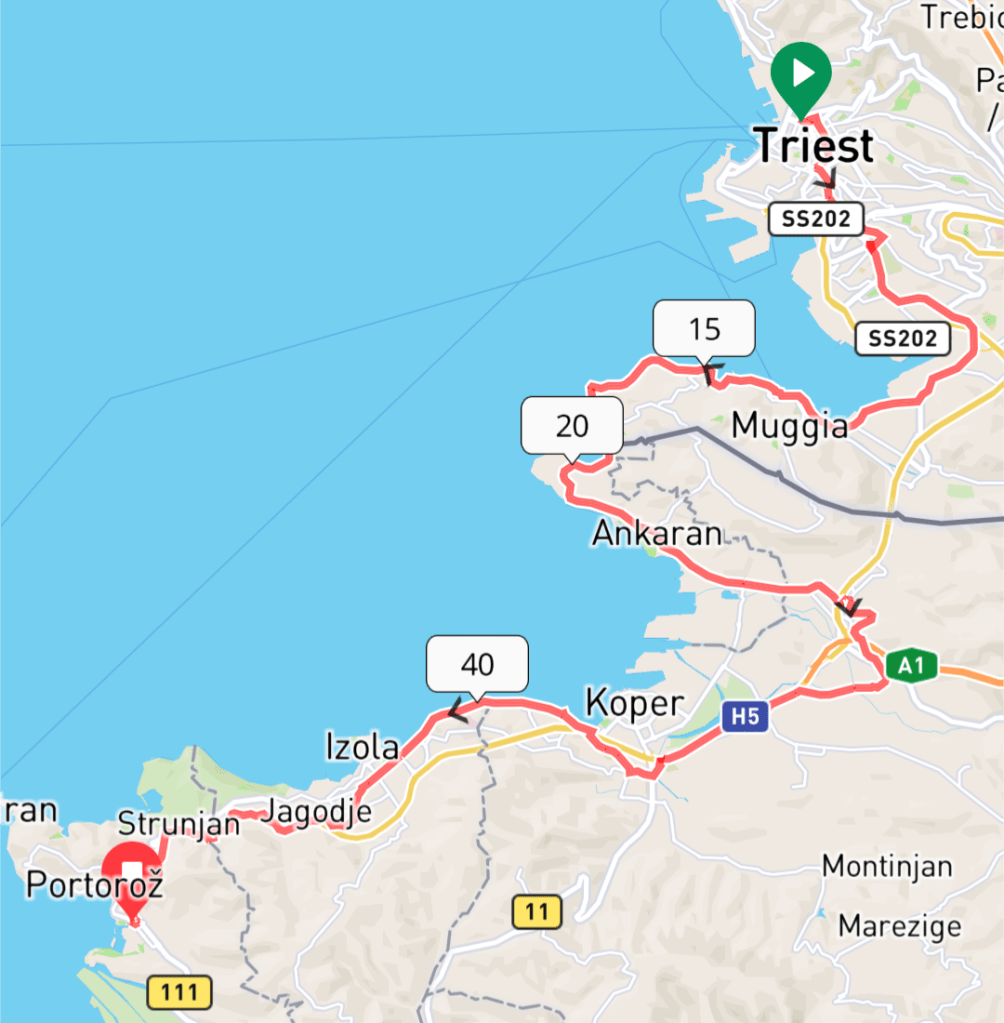
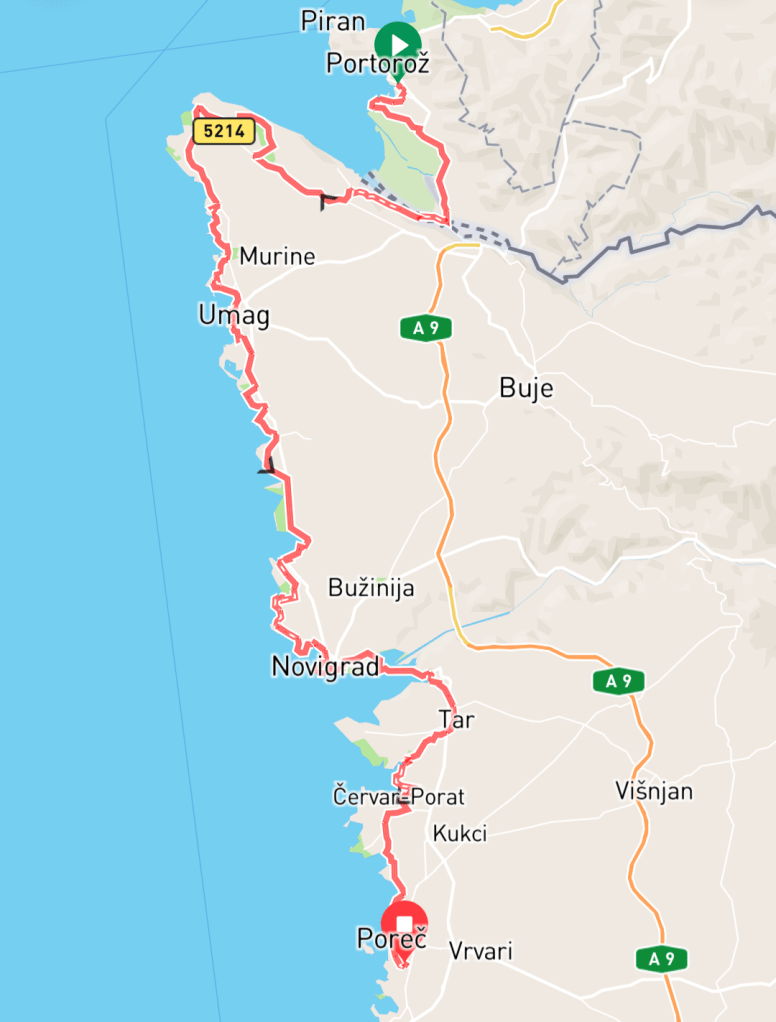
Trieste to Portoroz to Porec

21 Jun

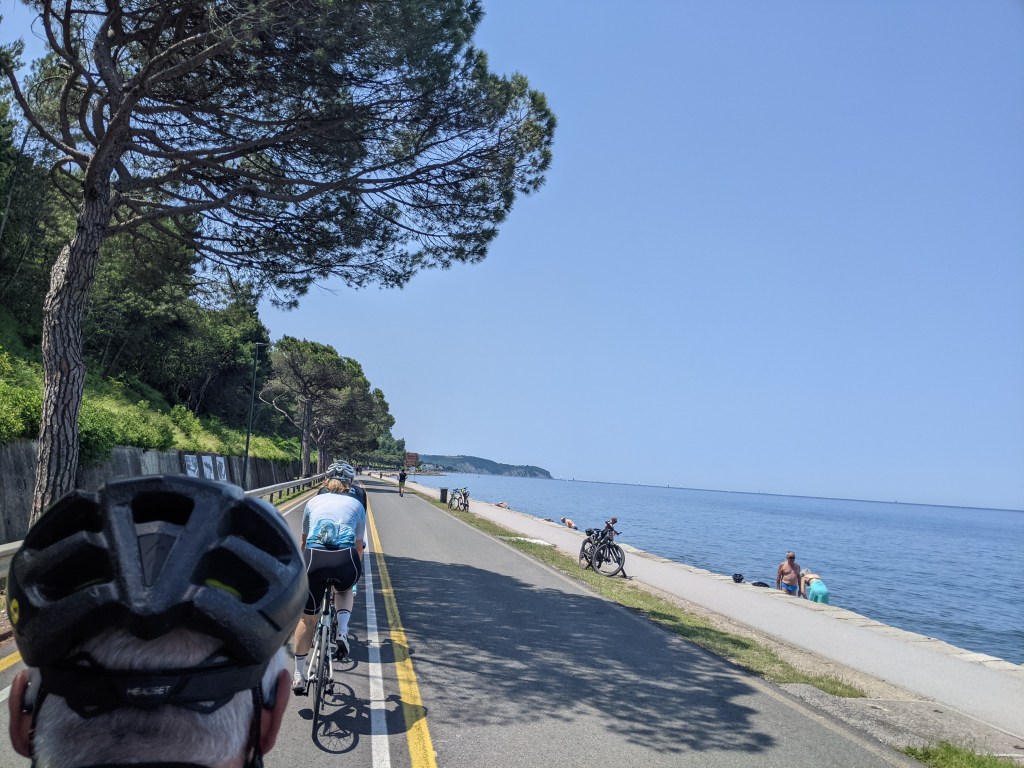
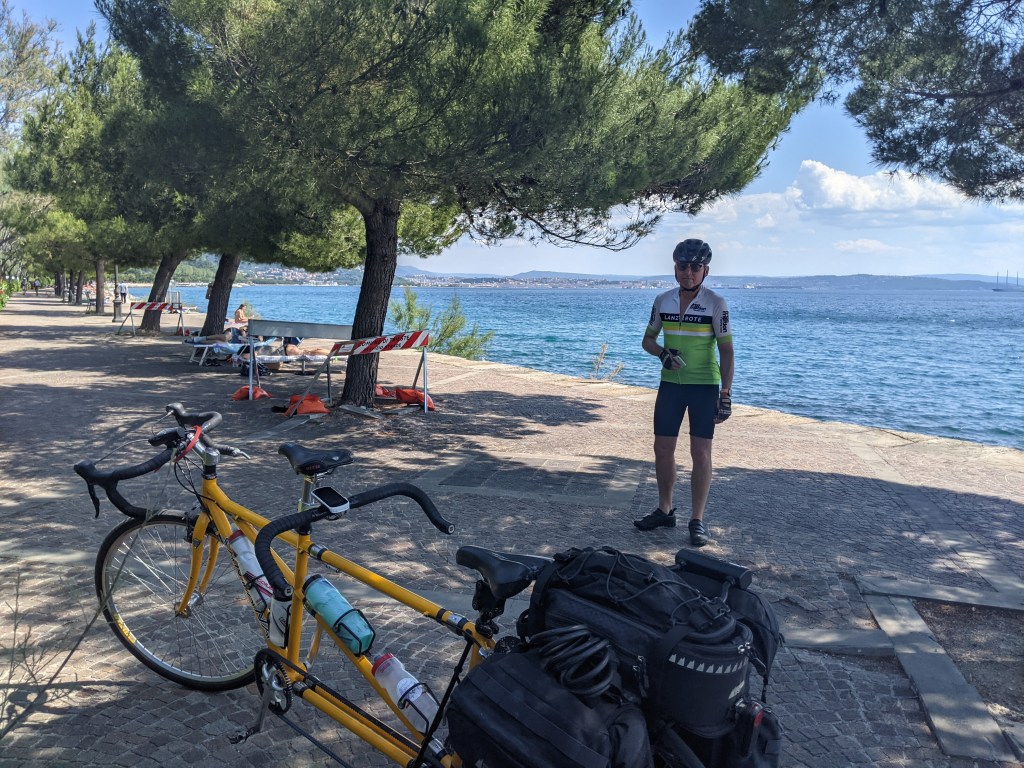
The first leg of this segment was very scenic and primarily coastal taking us through Muggia, Koper and Izola. We crossed into Slovenia about an hour out of Trieste and noticed almost immediately that there are many bike lanes and many cycle tourists using them. It appears to be a popular area for cycle holidays although most people aren’t touring like us, just staying put and going for rides in the area.

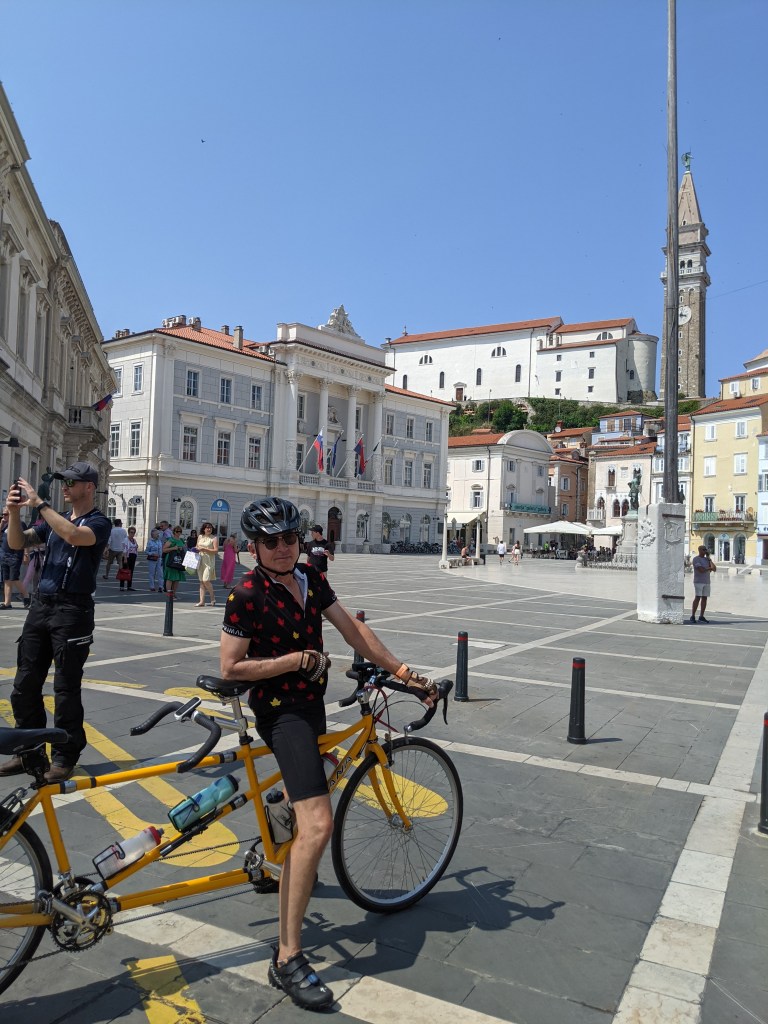
Our route went inland after Izola following a well established part of the Eurovelo 8 which is also part of the Parenzana trail of the Istrian Peninsula, formerly a rail line. Once in Portoroz we dumped our bags at the hostel and rode the short distance to Piran which is the coastal town at the end of this smaller peninsula. We found the beautiful main piazza in Piran and treated ourselves to some gelato, relaxation and people watching.

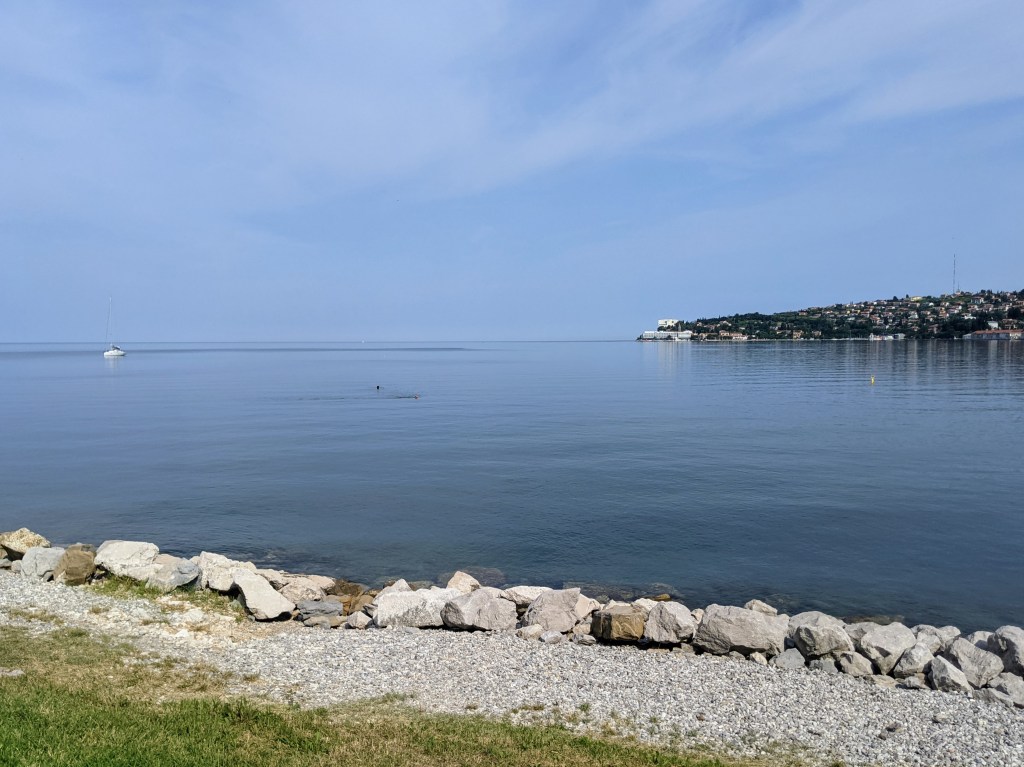
The next day and the next leg of the segment to Porec was very scenic but also very tiring as it involved more climbing, a considerable amount of gravel and getting a bit lost once or twice, things which impact our pace. The mileage didn’t seem too bad at 72 kms but took longer than usual so we arrived pretty bagged. However we are feeling stronger after a week of riding. We entered Croatia soon after leaving Portoroz and here too there are many separated bike lanes to make cycling more comfortable and again we were following some of the Parenzana trail. For the most part we were on coastal roads so passed through many beautiful ports and beachy areas. The weather was hot but the cool air off the water helped. All up and down this coast it is a giant seaside playground. Every bay and seaside village is busily helping the sun worshipping tourists to do their thing. Not just bars and restaurants but giant waterborne playgrounds, bike rentals by the hundreds, jet skis, para-sailing, and on and on. It makes it a bit crowded on the seaside trails but fun to watch too.

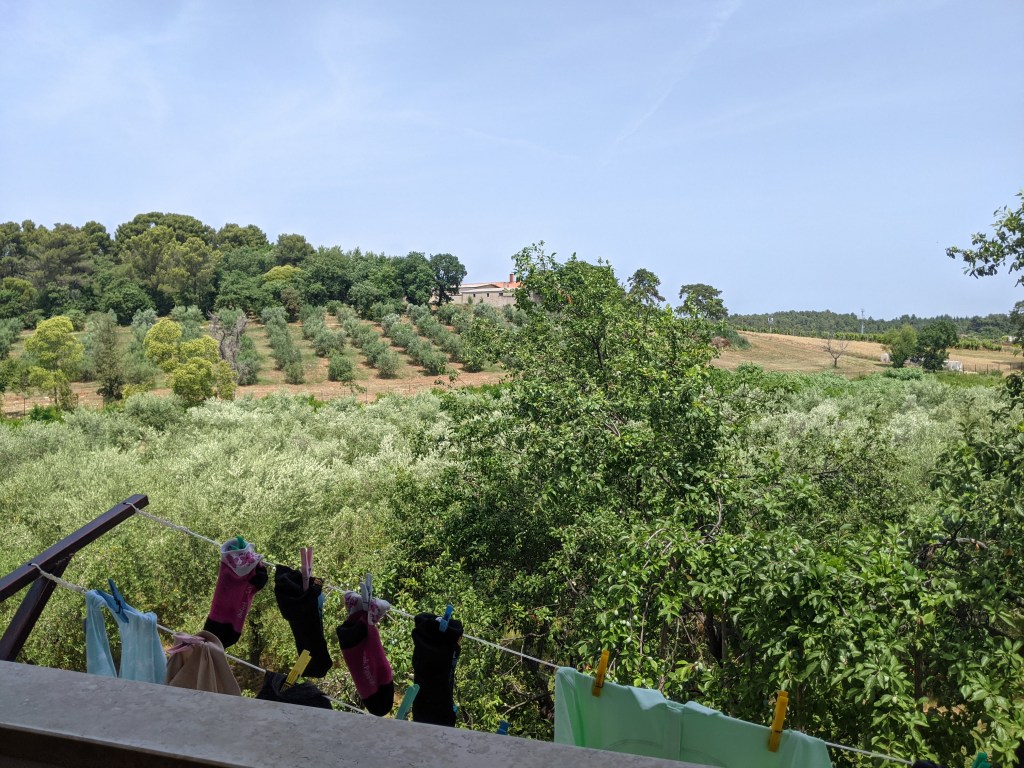
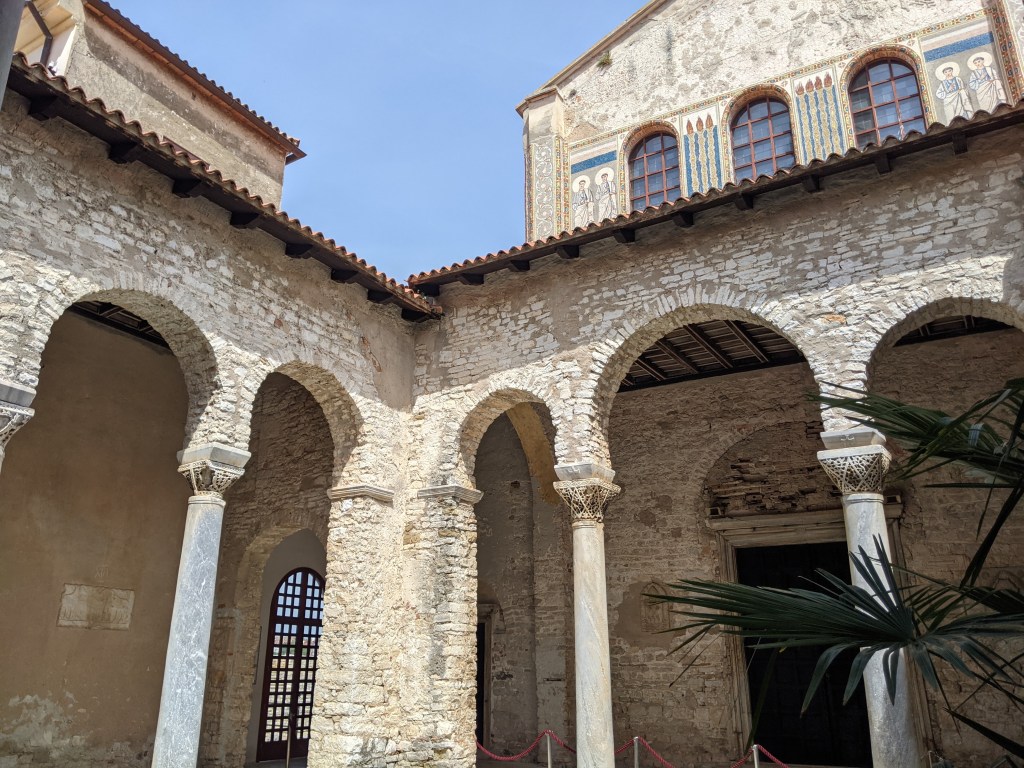
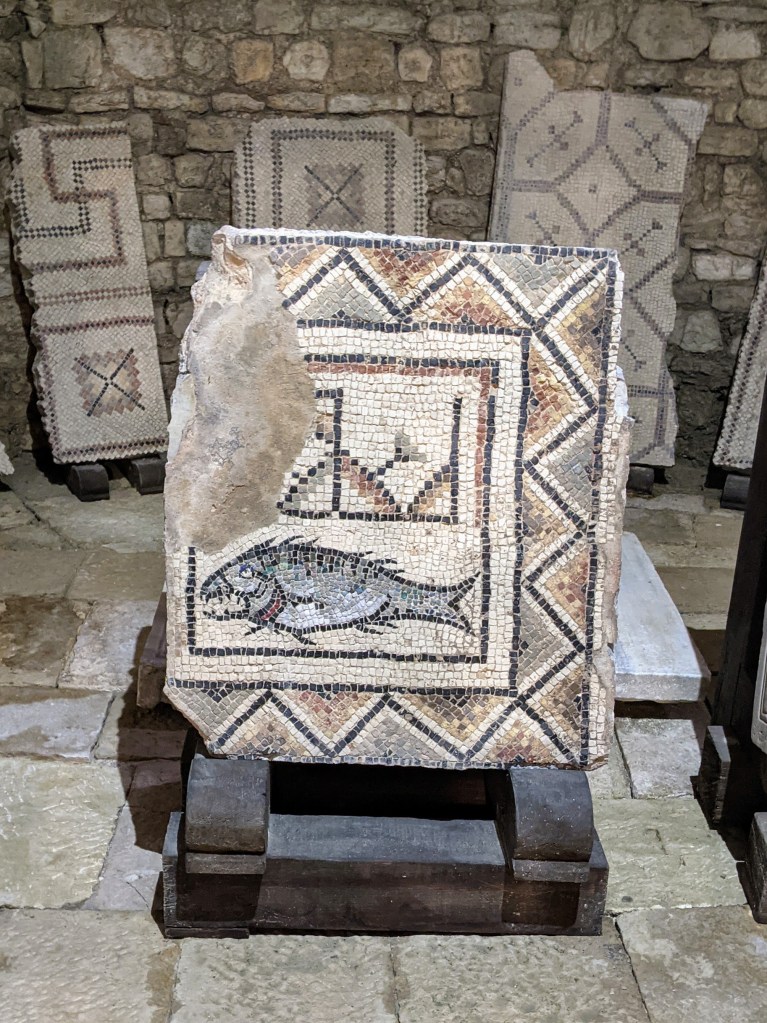
We had a relaxing morning to catch up on laundry and recover. We have a beautiful balcony at our apartment with a view of an olive orchard. In the afternoon we took a walk in the old town centre and admired the narrow streets, historic buildings and oodles of tourist shops. We visited the Euphrasian Basilica, a Unesco world heritage site, built from the 4th to the 6th centuries originally and is the best preserved early christian cathedral complex in the world. The mosaics were quite amazing considering the age and the basilica is still in use for regular services. There is a very good view of the city and surroundings from the bell tower. As we always say, no view without the climb.

We are having some difficulty interpreting menus when we eat in restaurants. They are supposedly in several languages including English but the translation is poor and still has Croatian words in them which google doesn’t translate well. The descriptions of the dishes are incomplete so when you order something like chicken or fish it may or may not have something with it, so you order a side dish like vegetables or rice and then the dish comes with a side included so there’s too much food. Last night we had to use our minimal Italian as the waitress didn’t speak any English. Italian seems so easy and familiar compared with Croatian. It’s definitely an adventure.

Although it’s been some time since Croatia became independent and started moving towards a western culture, about 30 years, understandably we can feel some differences still from western Europe. The people who are in the tourist business, at least so far as we’ve seen, are far more aggressive about getting your business. They stand in front of their shops, restaurants, boats and try to lure you in with various tactics. It is less enjoyable to walk down the street or the piers with this constant pestering. Also as soon as you are a little off the beaten tourist path they are less equipped to handle credit card payment, just a bit less global and automated than we’ve experienced before.

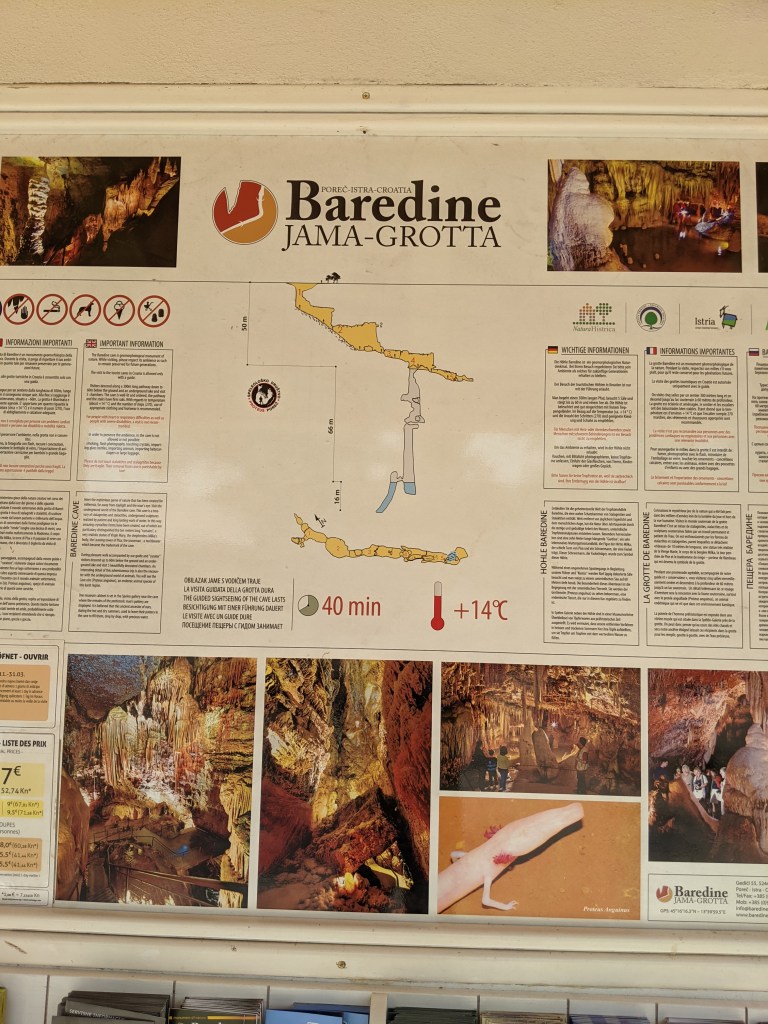
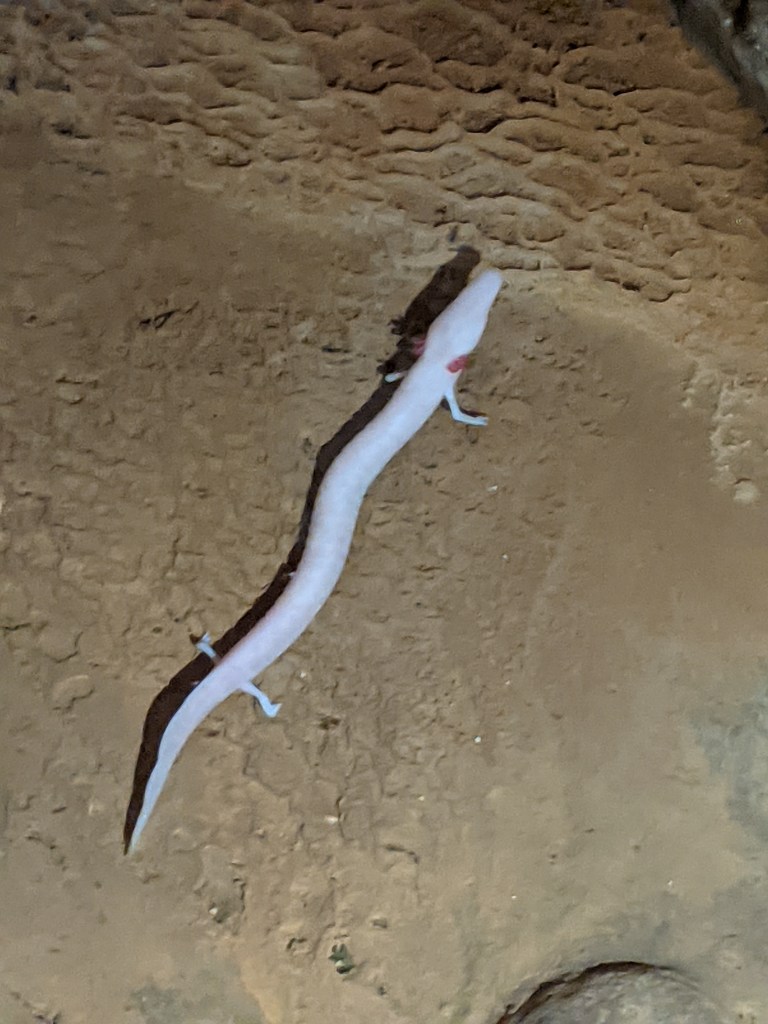
Our second day in Porec we rode a little way out of the city to the Baredine Cave for an underground tour. It was very pedestrian compared to the one we did with our son in law Ryan at the Rat’s Nest Cave in Canmore (rappelling and squeezing through tight spaces) but enjoyable nonetheless. We saw many beautiful stalagtites, stalagmites, crystals and even an endemic creature called a cave olm. There were 5 chambers to see and we were 60 meters underground. It was very refreshing to get out of the hot weather and into the cool 14 degree cave environment.

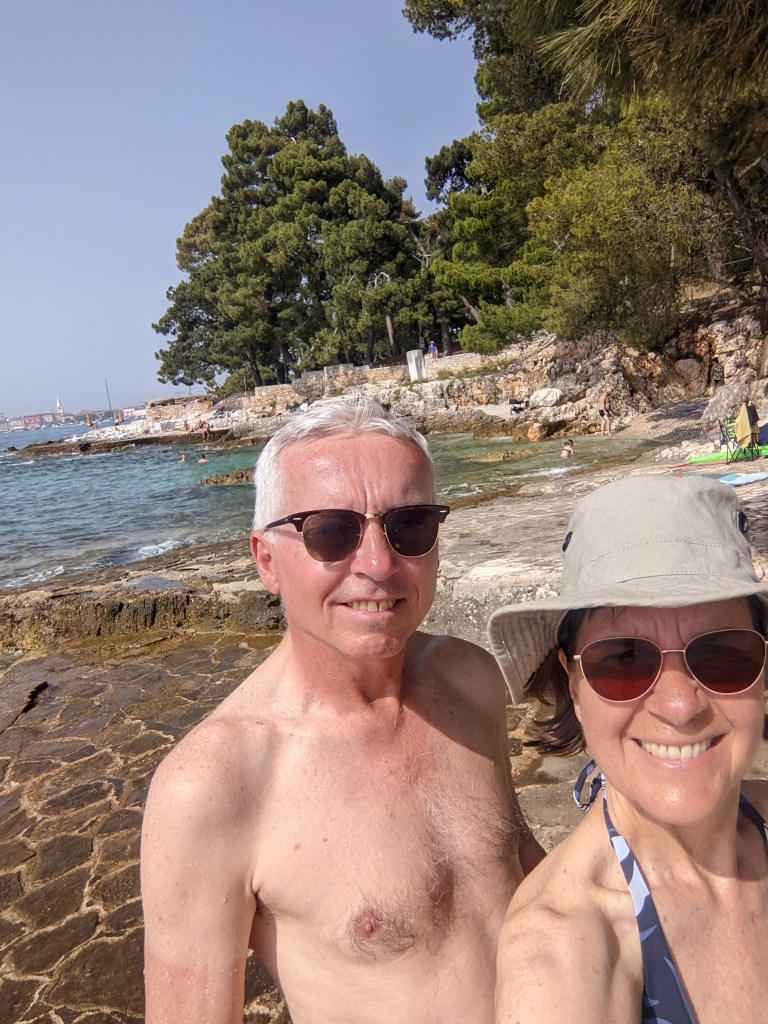
We spent a couple of hours in the afternoon on the beach although it isn’t exactly what I would call a beach. There’s absolutely no sand, just rocks and concrete/tiled platforms and walls that people sit or lie on. It’s nice but not as inviting as a Maui beach. We have many more Croatian beaches to come, however.

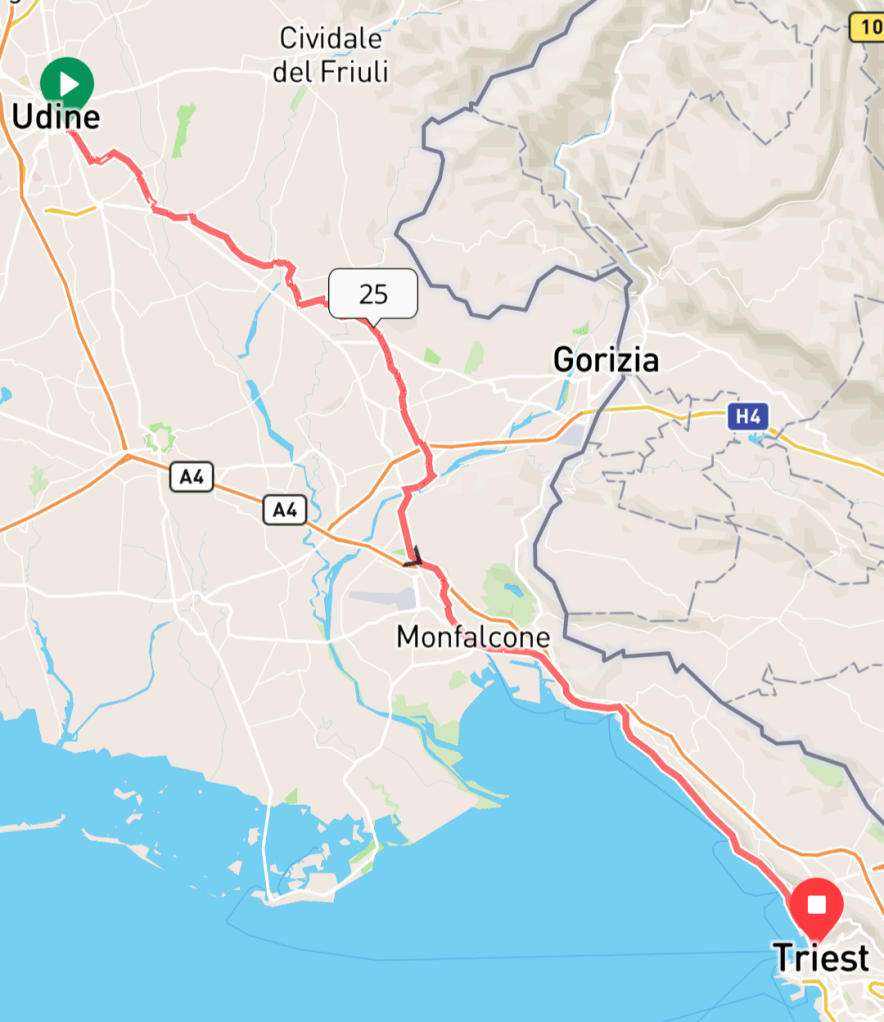
Udine to Trieste

17 Jun

This ride was much more pleasant than the last one. The first half of the 75 kms was mostly on bike paths, a little gravel, but at least off the busy highway. The second half was more on the highway but there were decent shoulders so we felt comfortable. The day was still warm but a good breeze kept us cool and we found la mare again so that also helped. The last 10kms or so along the coast were very scenic with villas, castles and the view of Trieste to enjoy. I was trying to take photos from my rear office but il capitano was noticing my distraction as the power would cut in and out.

Our accomodation is a 5th floor apartment with a small elevator so we had to unload everything and haul the bike up by hand. Just what you want to do after a long day of riding.

After settling in, our first item was to find the TIM store as we are burning through our Canadian international cell data plan at an alarming rate. We have gone the TIM route before but not for a couple years as we had a decent rate and avoided the trouble of a new foreign number but it’s just not working this time. We were successful so will have a new number on one phone for the rest of the vacation and will just do this from the get go next time.

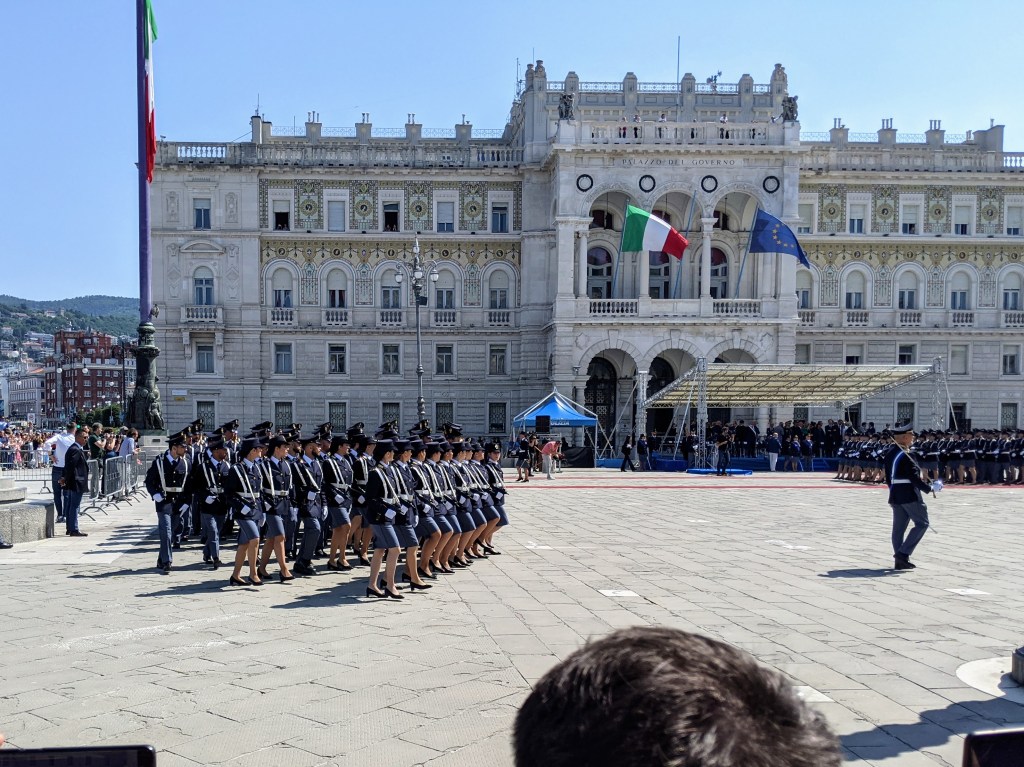
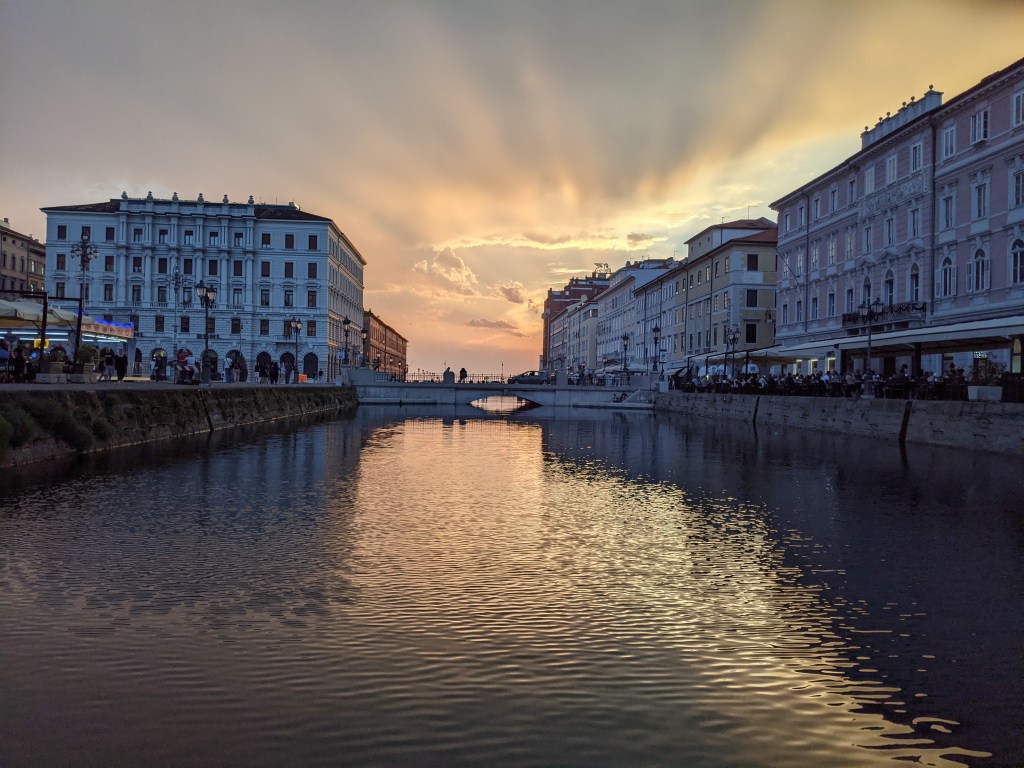
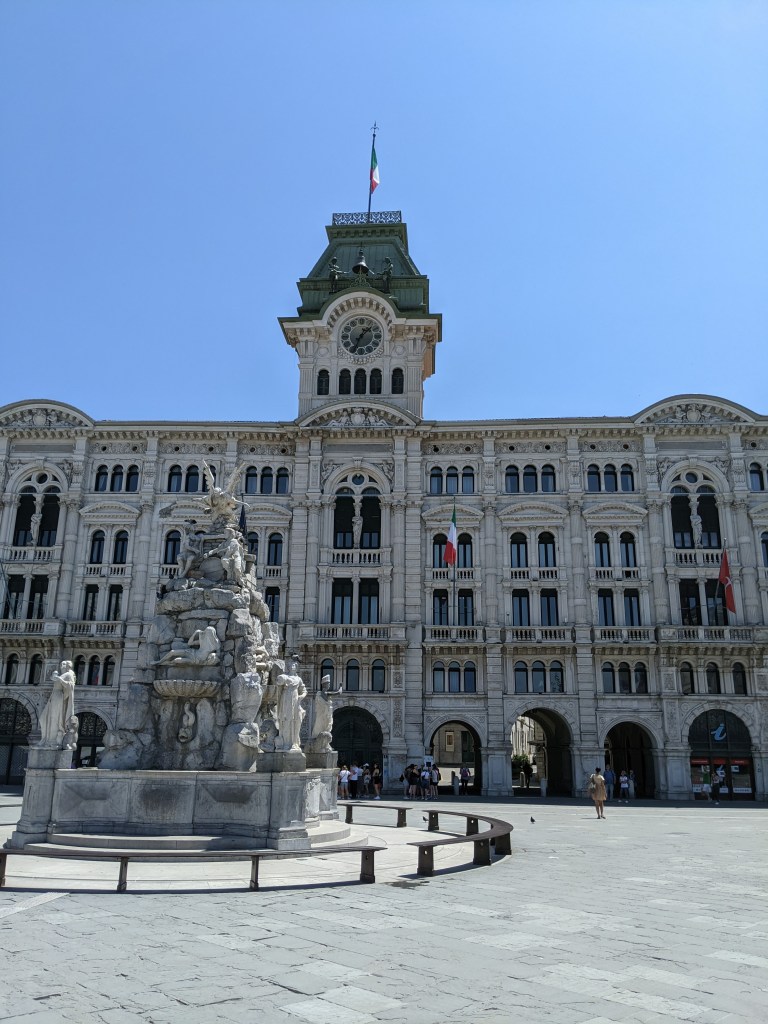
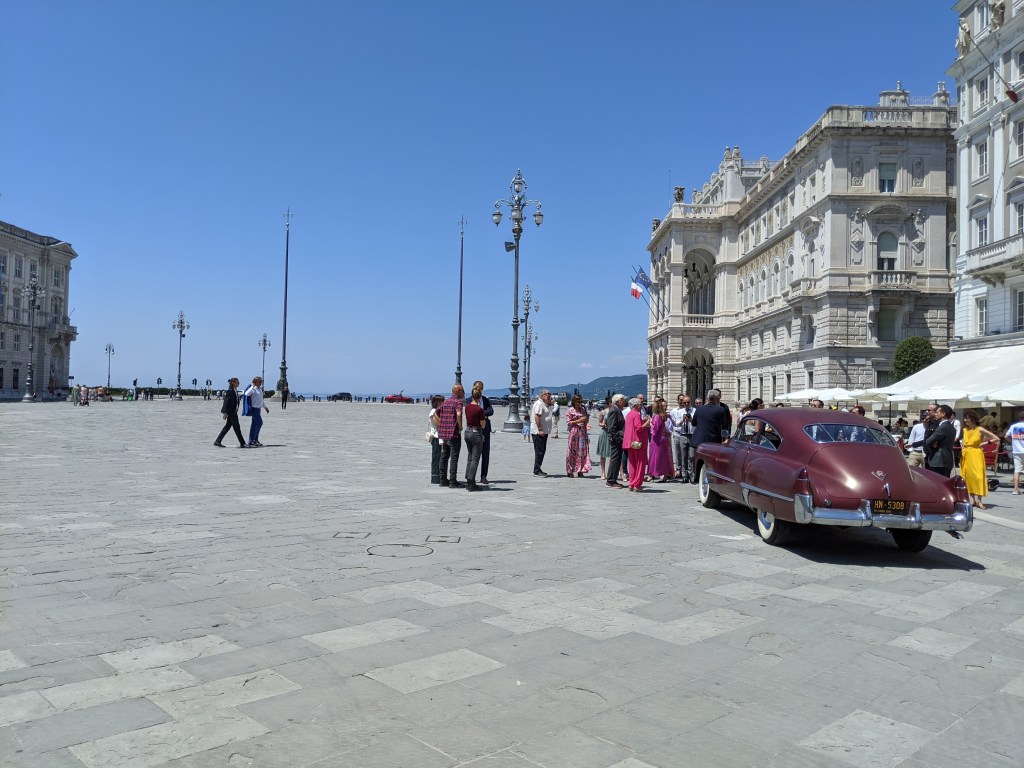
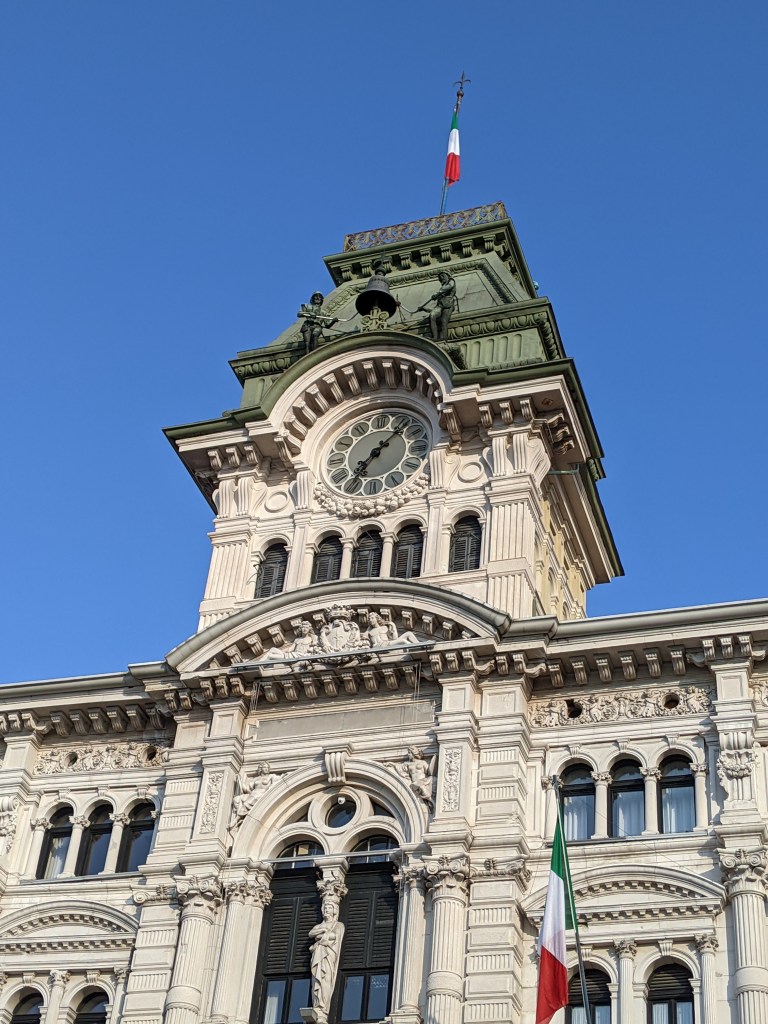
We partook in the traditional passegiatta or late afternoon/evening stroll and an aperitivo before dinner to get an initial look at the city. This is a very grand looking city, not the usual Italian style, because for a long time, from 1382 and up until the end of WW1 in 1918 it was part of the Austrian/Hapsburg empire so looks more like Vienna than any Italian city we’ve visited with opulent looking piazzas and palazzos everywhere.. The Venetians had control briefly a couple of times in this period but predominantly it belonged to the Austrian empire. The history is actually very interesting and more complicated than we will go into here.

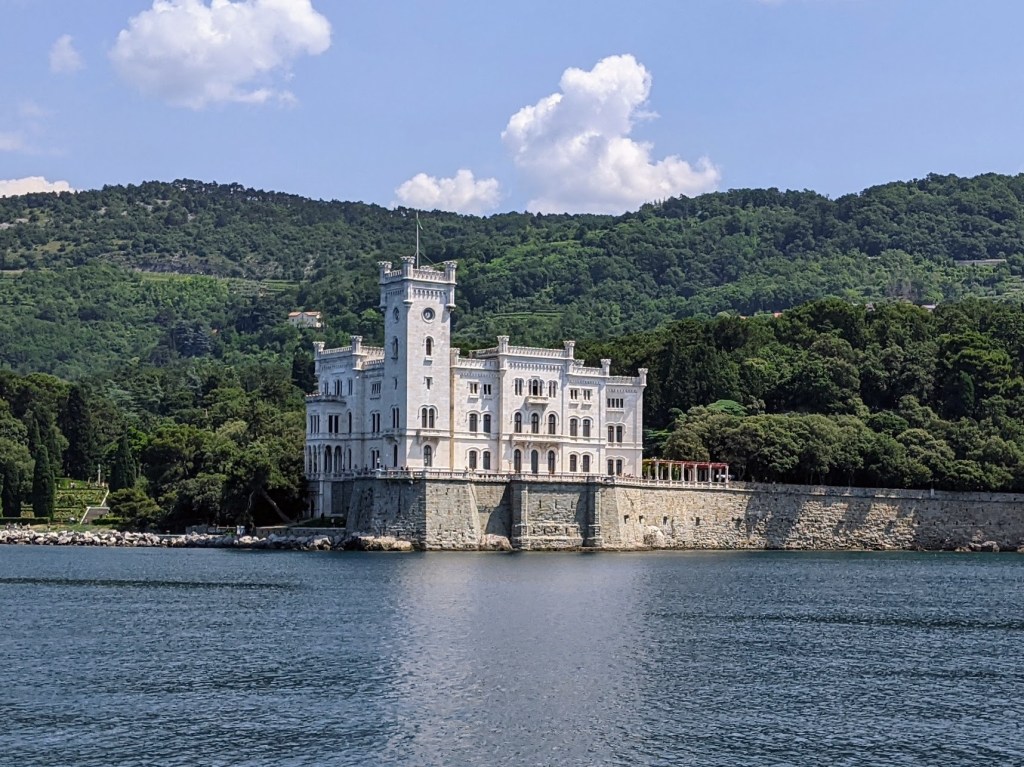
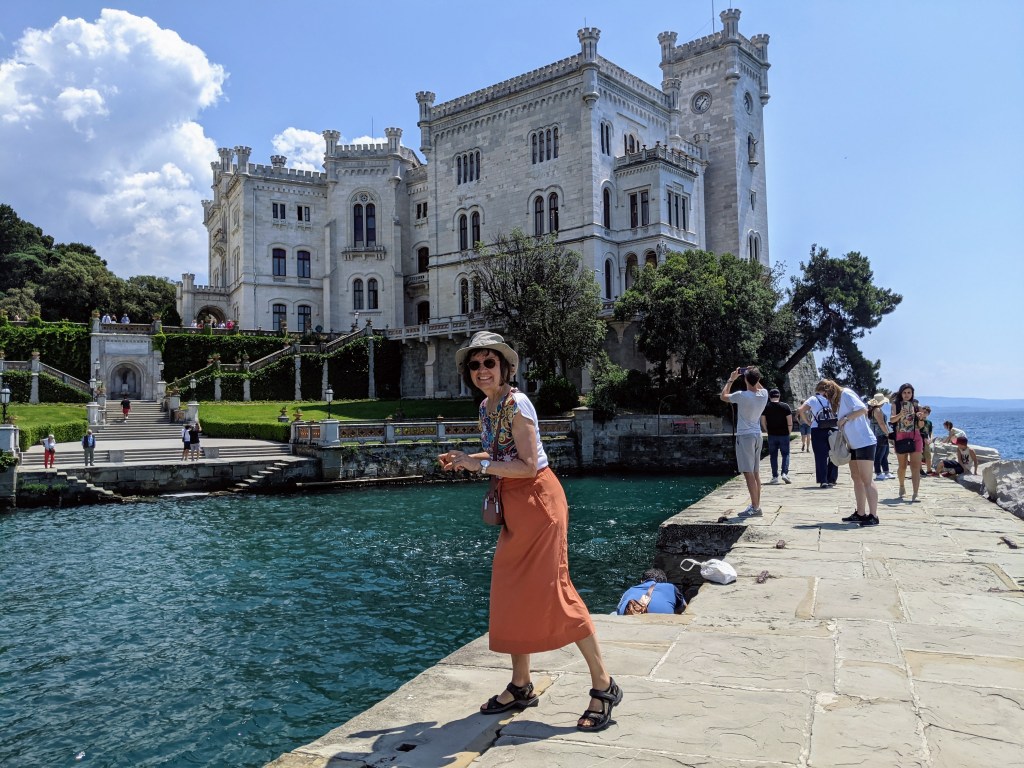
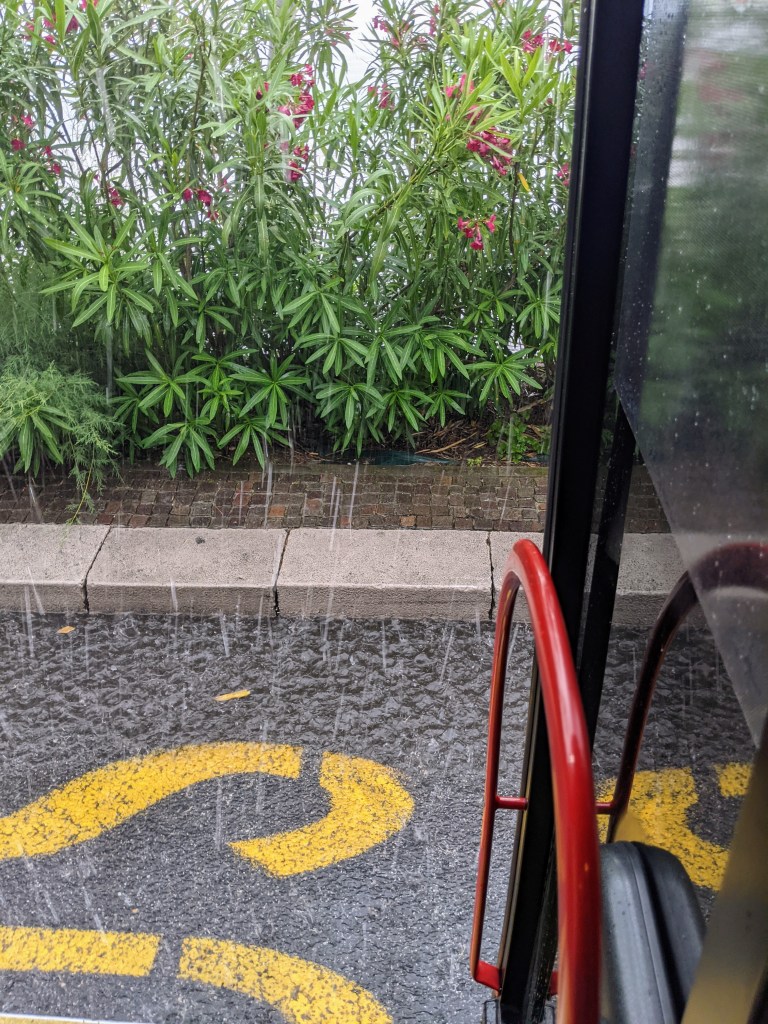
The next day we took a boat ride back to where we had ridden the day before to the Castello Miramare. This castle was built in the 1860’s by Archduke Ferdinand Maximilian who was a naval commander and the brother of Franz Joseph the Hapsburg Emperor of the time. He wanted a grand home looking on the sea for himself and his new wife Charlotte to enjoy. He had a passion for plants and trees so included elaborate gardens which we were able to walk around, as well as see inside the castle. It was an interesting and beautiful place to explore. We had to make a run for it to escape a sudden thunderstorm and pile onto a bus with way too many other people, something we wouldn’t have done a year ago (covid).

An interesting bit of history, Maximilian was appointed as emperor of Mexico just after the castle was completed and moved there with Charlotte. After only a couple of years there was rebellion against the monarchists and Max was arrested and eventually executed in Mexico at the age of only 34. Charlotte returned to Europe broken hearted and never returned to Miramare. Maximilian’s nephew was Archduke Franz Ferdinand who was assassinated in Serbia in 1914 (after the Austrians annexed Serbia in 1908) which was the beginning of World War I and the beginning of the end of the Austro-Hungarian/Hapsburg domination. Trieste was occupied by the Germans from 1943-45 and then briefly by the Yugoslavs before eventually returning to Italian control in 1954. Even now we saw signs about a free Trieste and our host also said there are many who would prefer not to be in Italy. This part of Europe has seen its fair share of war and political unrest and soon we will be heading into Slovenia and Croatia where recent devastating wars have taken place only 30 years ago. We are fortunate to be living where we are.

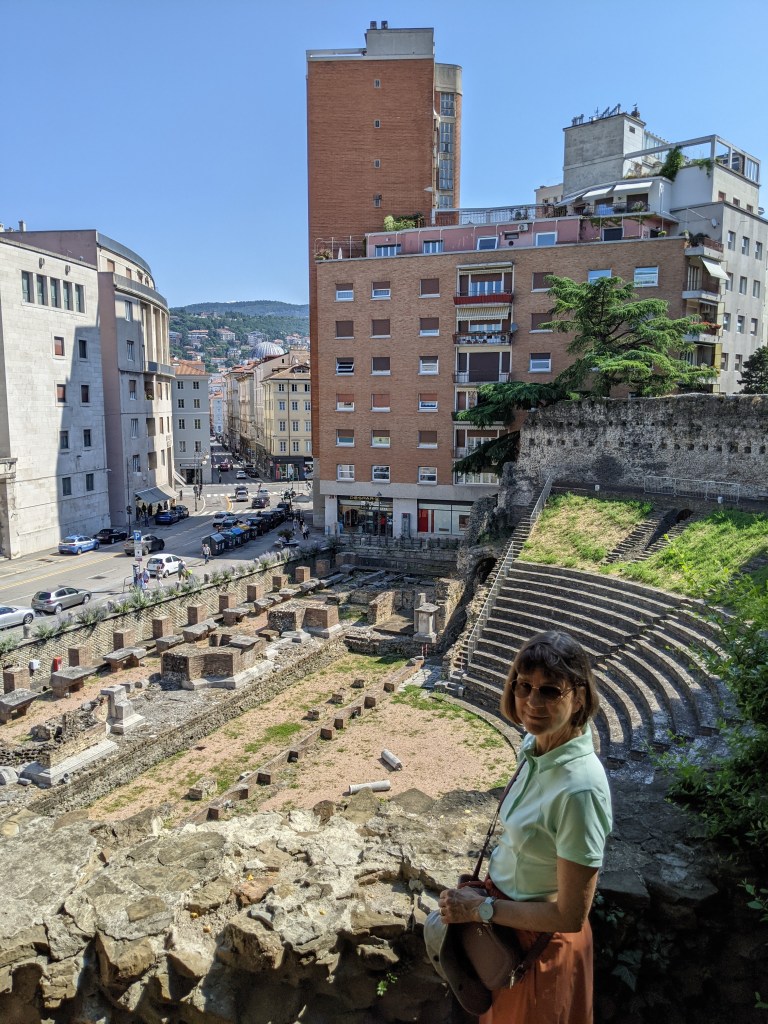
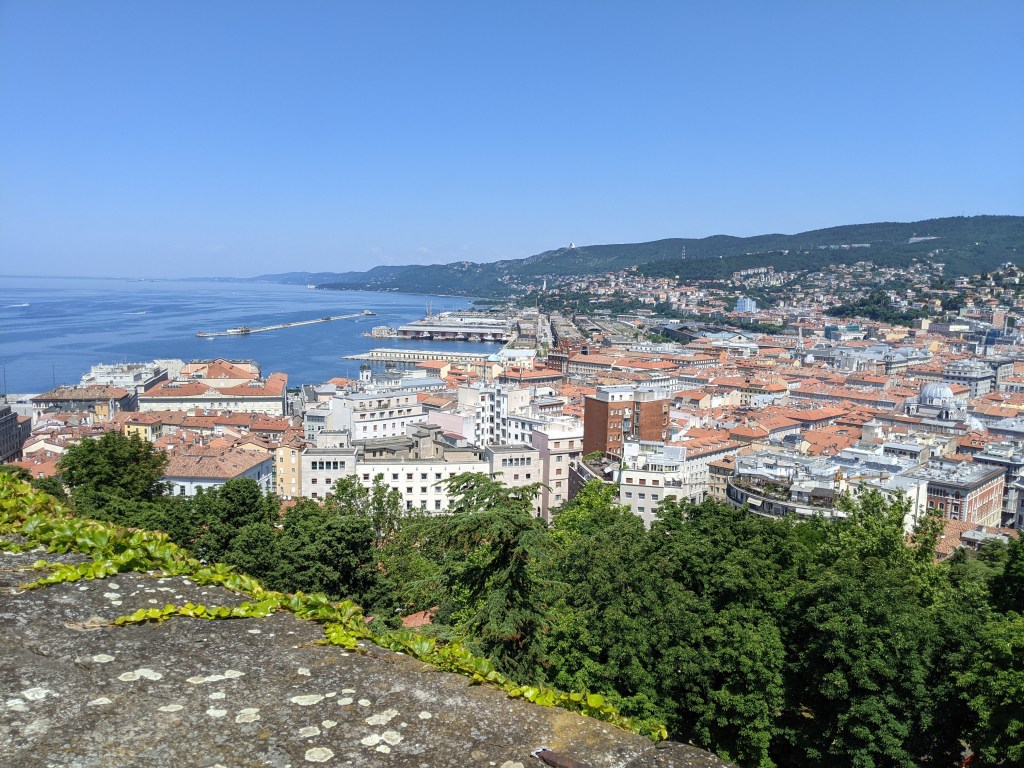
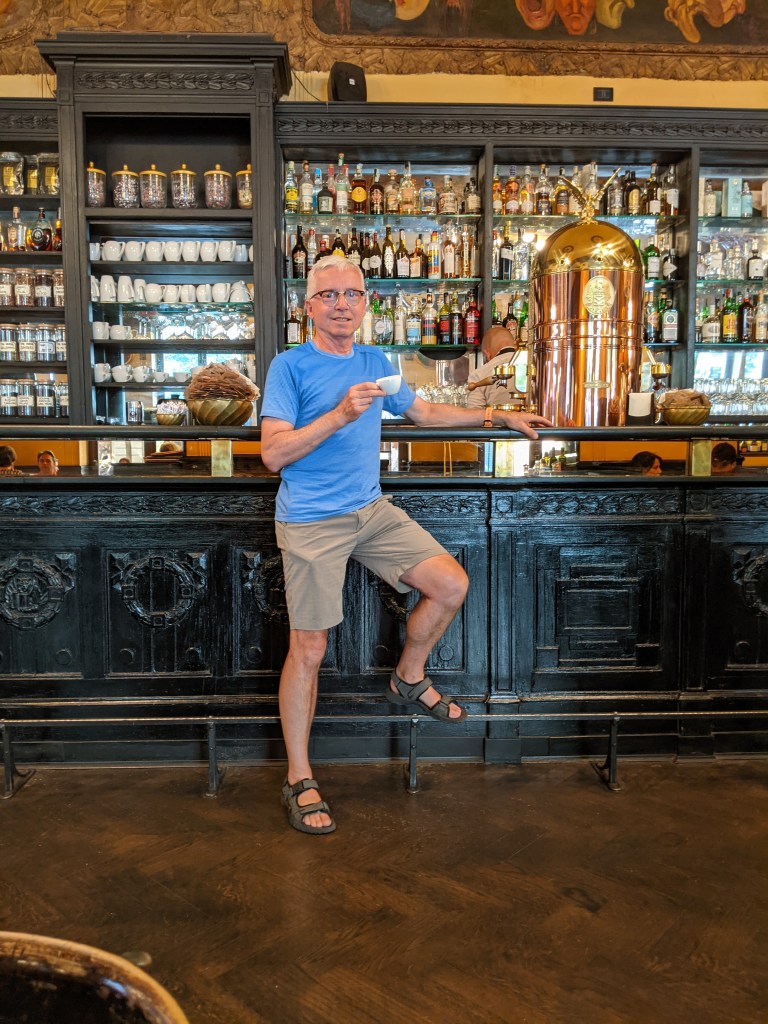
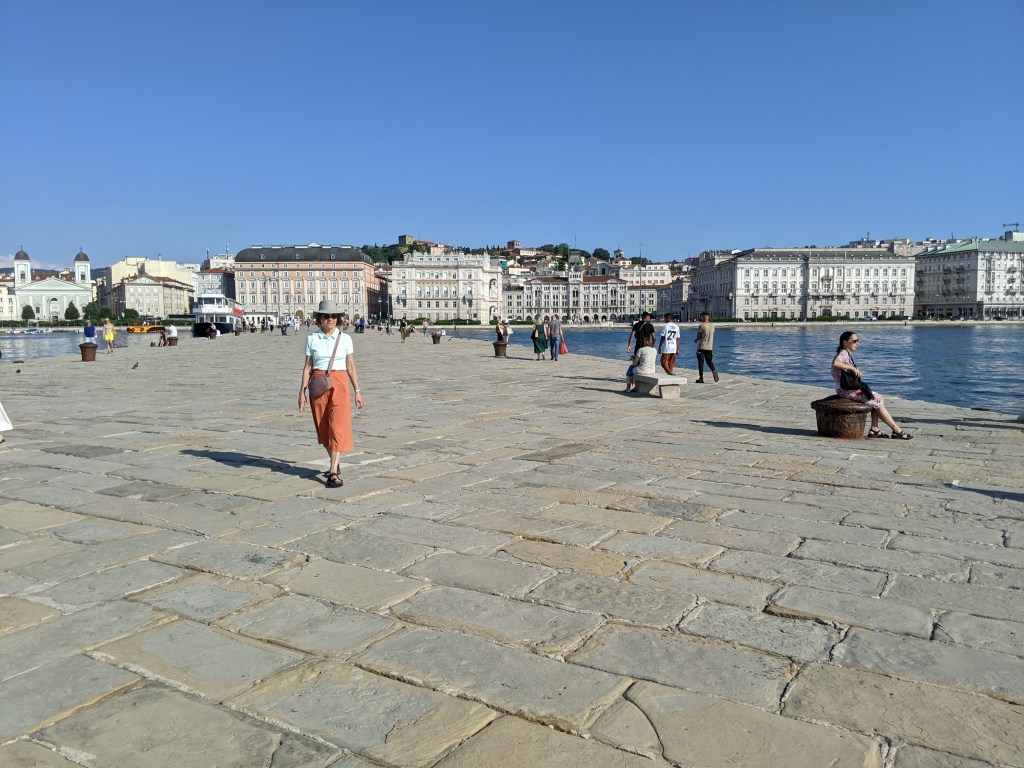
The following day we walked up the hill to the Castle of San Giusto and were rewarded with a spectacular view of the city and out to the ocean. The museum was well done with many English explanations about the history of the castle, about Trieste, about the Romans and a history of weaponry. Later we explored the various piazzas, cathedrals, a famous cafe (San Marco) frequented by James Joyce as well as the Molo Audace, a long pedestrian pier that juts out into the Adriatic. The pier was named Audace after the Italian warship that first docked here to claim Trieste in November of 1918 at the end of WW1. So much history!

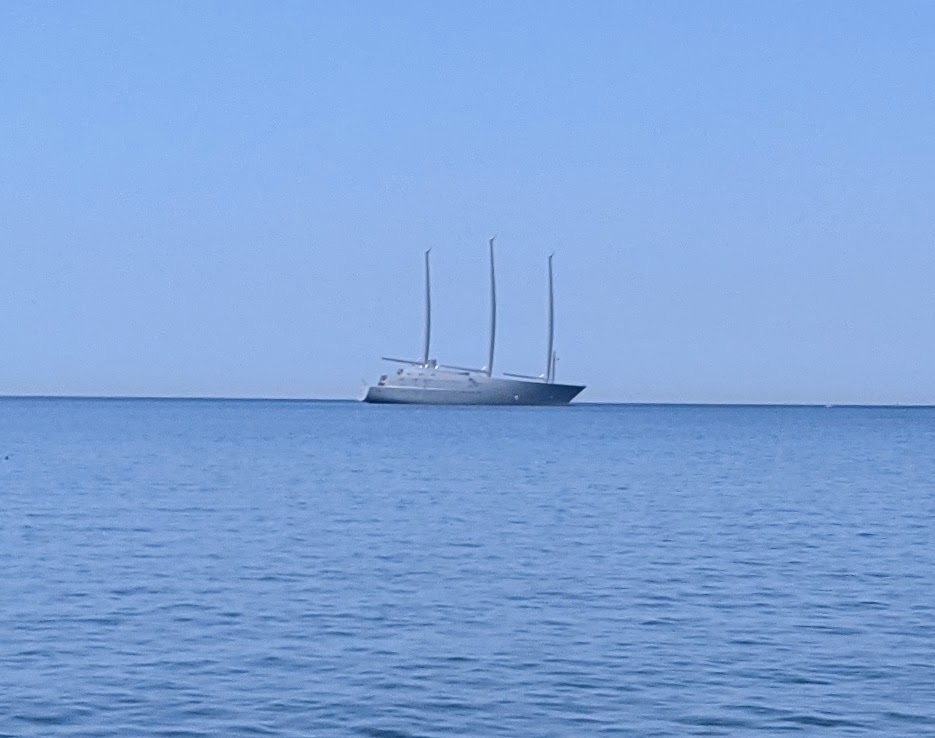
Overall we found Trieste to be a very interesting and welcoming city and a place we could have stayed much longer. It had great restaurants and pedestrian areas and a beautiful seafront, complete with a huge sailing ship seized from a russian oligarch by the Italian Guardia di Finanza.

Jesolo to Udine

14 Jun

The ride from Jesolo to Udine was our first big one of the trip and we didn’t find it easy but we conquered it anyway. 87 km with the full paniers in 29 degree weather. Fortunately it was relatively flat but unfortunately much of the ride was on the highway so not as relaxing and we were less able to enjoy the surroundings. We were spoiled last year in France riding predominantly on cycle paths.

Udine (pronounced oodinay, emphasis on the oo) is the second largest city of the Fruili region of Italy, located up against the Italian alps. It reminds me of Torino with the mountains just outside of the city. We were quite tired after our ride yesterday and enjoyed a wee bit of a sleep in to recover but then headed into the old centre to explore.

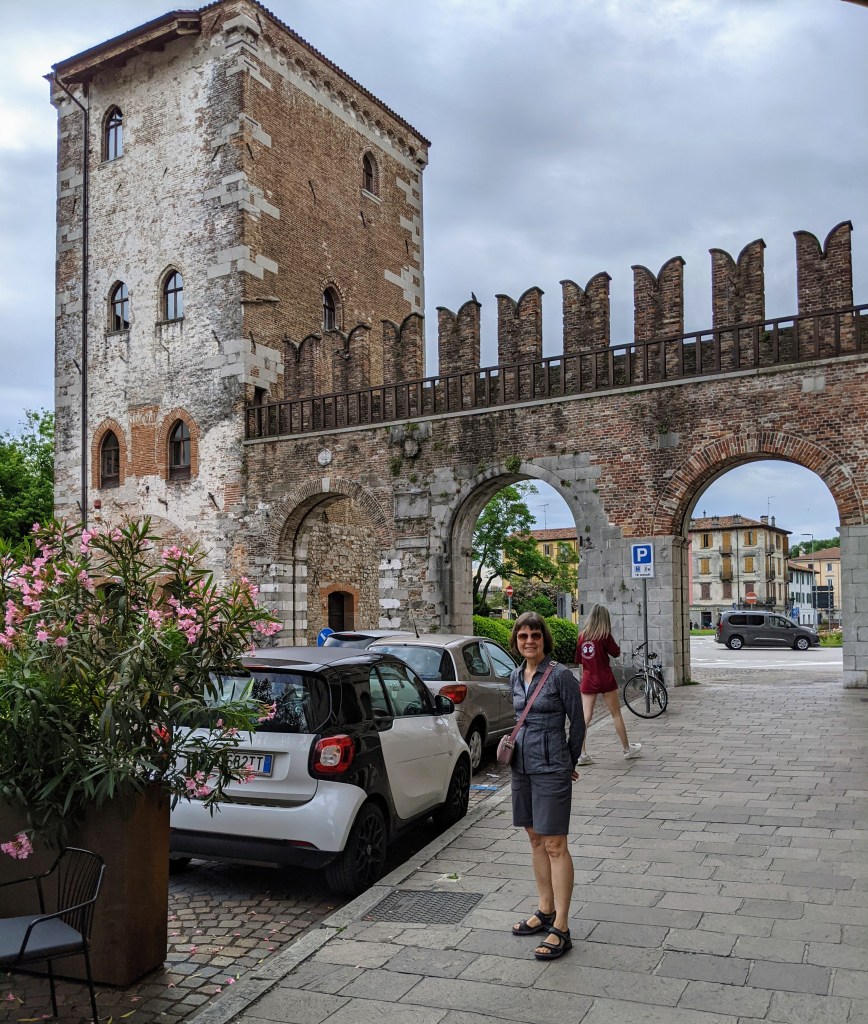
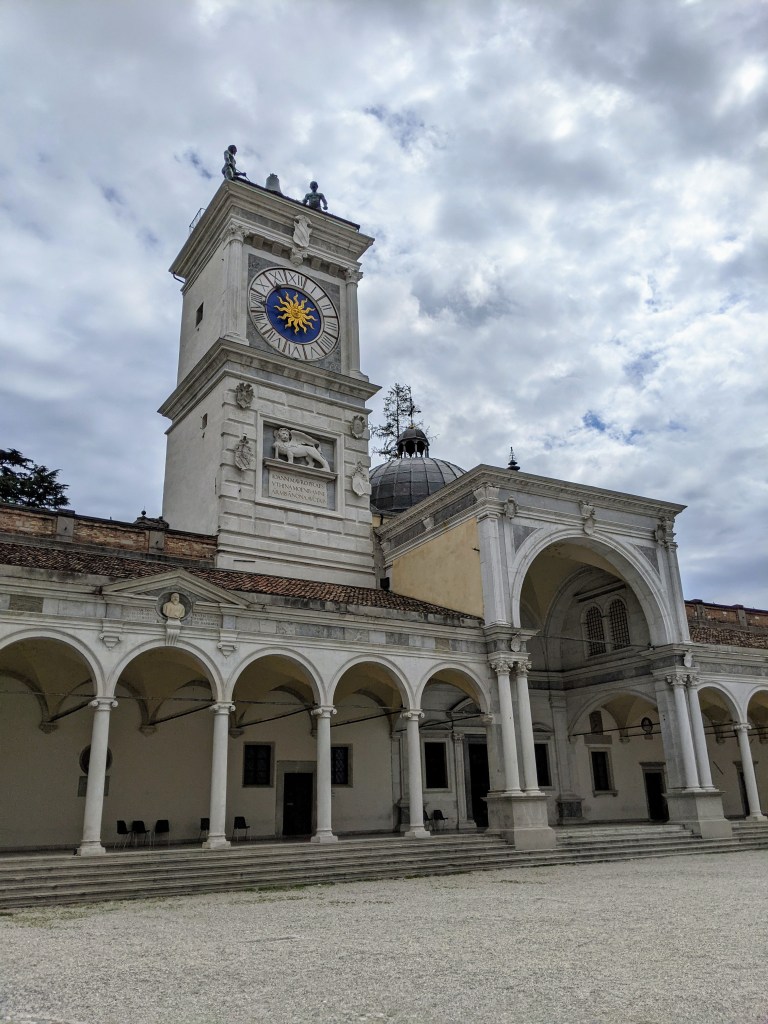
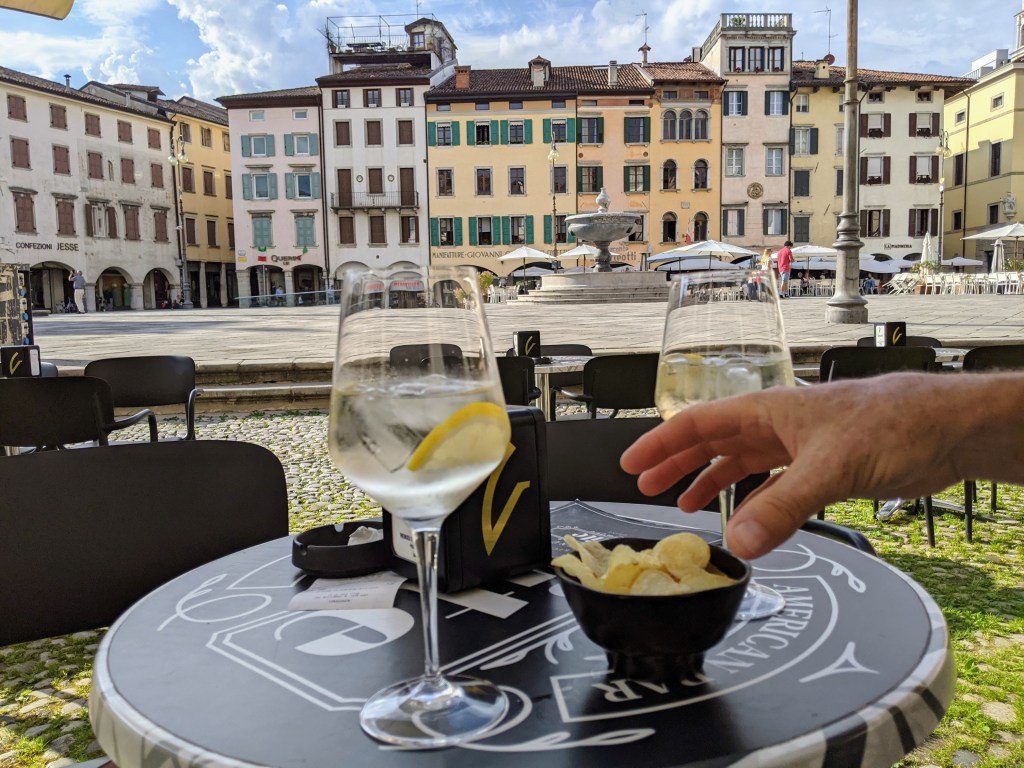
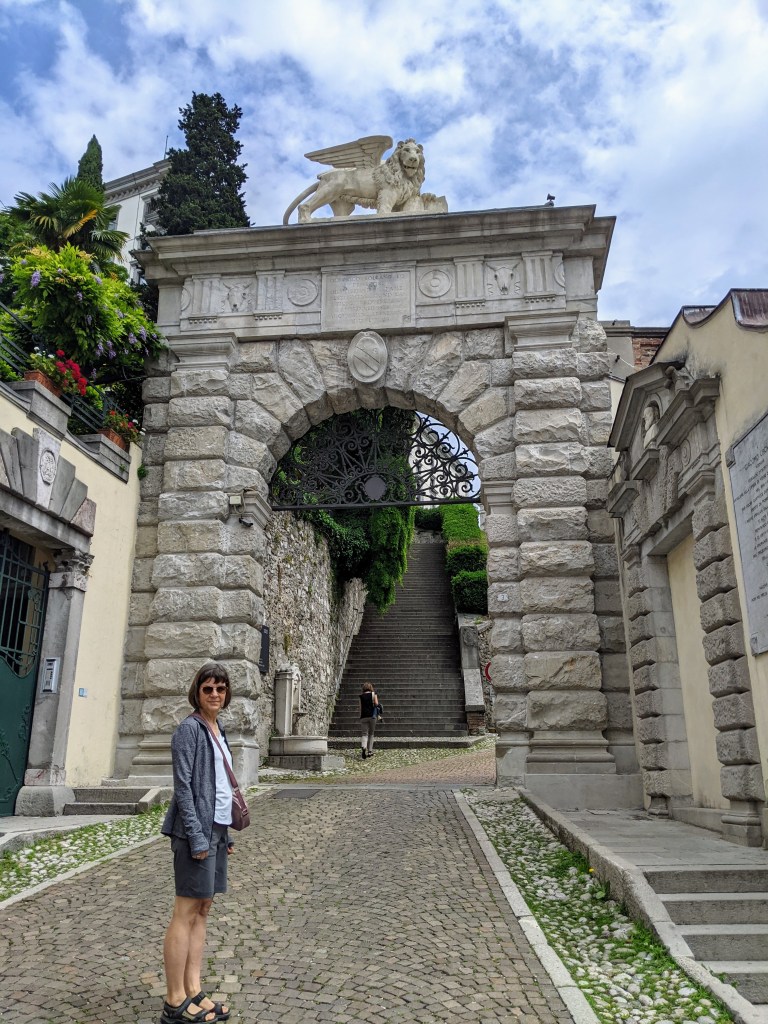
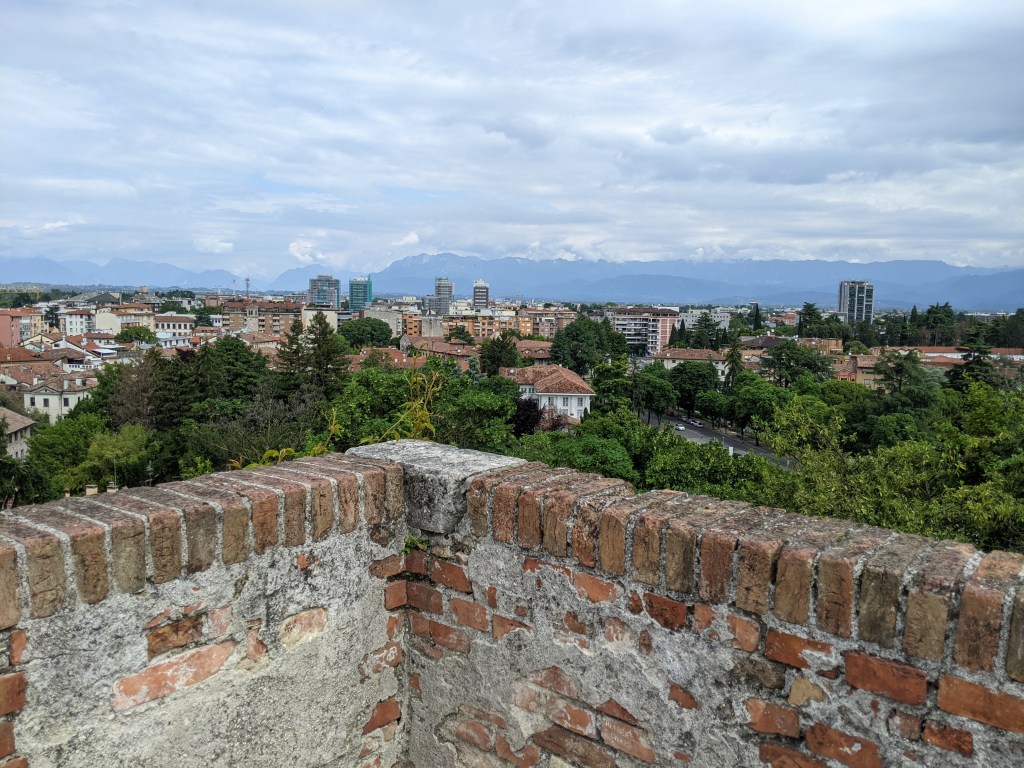
Udine isn’t a large city and the historic centre is very compact with most sights very close together, so nice of those ancient planners to think of our needs as tourists. In the central square, Piazza di Libertà there are 2 beautiful old loggia or open air structures in Baroque and Venetian styles as well as a tower clock complete with bell ringers. Above this is the Udine castello where museums and an art gallery showcase the history and culture of Udine. The section about the Friulian aspect of the reunification of Italy was unfortunately completely in Italian so our understanding was limited but there were many interesting artifacts. The art gallery was well done with many subtitled videos and English explanations. The gallery featured artists from this area of Italy going back to the 14th century. One who is particularly famous here is Giambattista Tiepolo who moved here from Venice in the early 18th century and remained for the rest of his life resulting in many churches and palaces in Udine with his works. Another piazza close by is the Piazza Matteotti where we sat and enjoyed a coffee. This is a notable piazza with beautifully restored old buildings/facades, a wonderful place to sit and do some people watching. I think this piazza is right up there on our list of memorable piazza’s with Sienna and Lucca.

On our second day here we continued with finding more of Tiepolo’s art work in various cathedrals, not too hard, they really liked the guy and his son who often helped his papa. The works are beautiful for sure. We also learned a bit about another famous Udiner? Tina Modotti who was a photographer born here in the late 19th century, moved to the US and then to Mexico where she photographed the people and became involved politically as an activist for social change along with other artists such as Frida Kahlo and Rivera Diego. Unfortunately the Modotti gallery here was temporarily closed so we weren’t able to actually see her work but discovered an interesting story.

Each of the 3 evenings we spent here it poured rain in the evening as we were returning to the hotel. The other excellent feature in the old city is the many porticoes to walk under to get out of the sun and the rain which we definitely put to good use. Again such smart city planners and they are beautiful to boot.

The last evening we ate at a charming Osteria right beside a canal and decided to eat outside to enjoy the ambiance. However it did again start to rain quite violently so made for an interesting dining experience.

Mestre to Jesolo

11 Jun

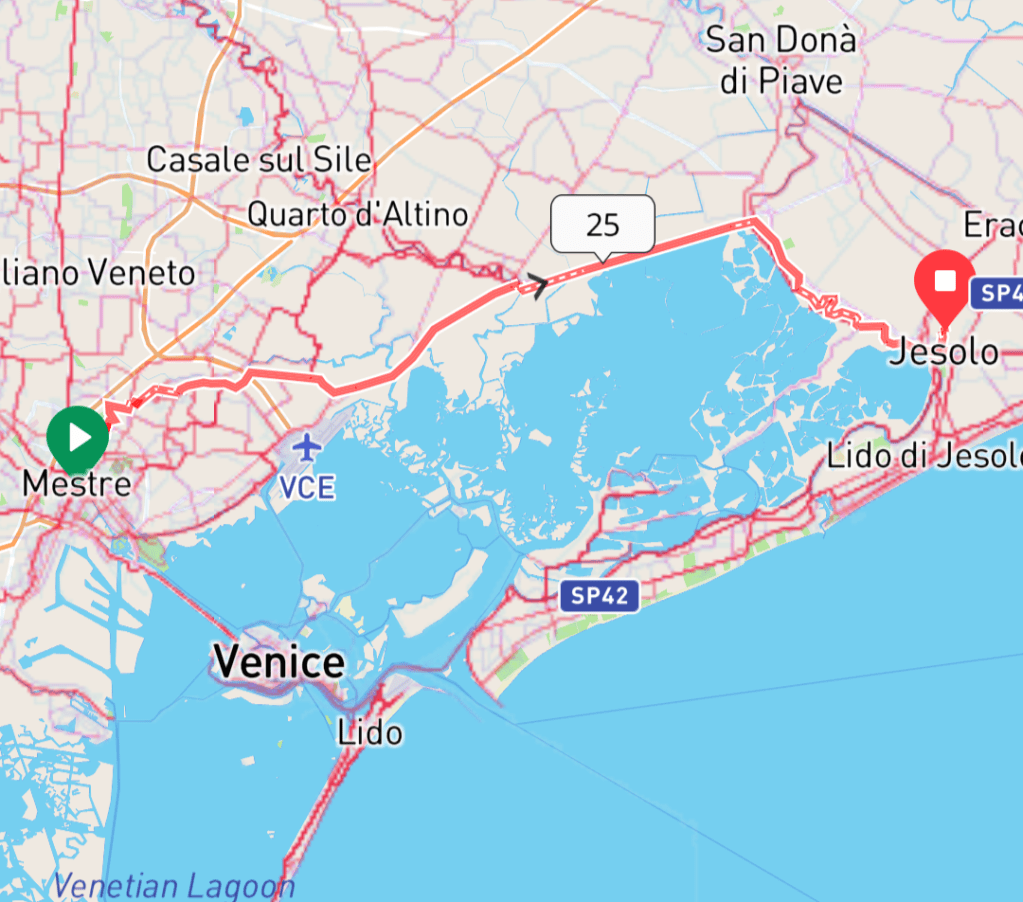
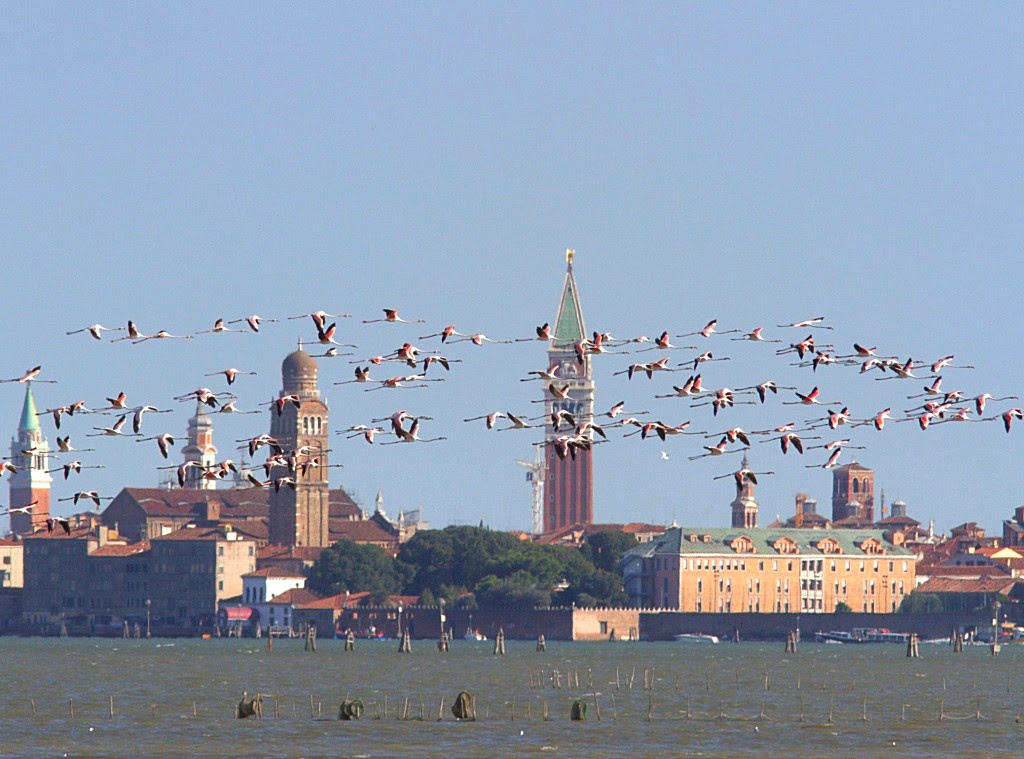
Our first real ride was a short one from Mestre to Jesolo, along the shoreline east of Venice, to where Jesolo sits at the far end of the lido.  It was nice to start off gently as we’re not used to having the heavy packs on the bike.  It was also very flat and a lovely day.  We saw lots of aquatic bird life on the way including flamingos in the Venice lagoon.  We had no bike or other problems except getting a bit lost once we arrived in Jesolo as we attempted to go to the beach before going to the accommodations and were off the planned course.  We actually never made it to the beach as we ended up on the wrong side of a canal, couldn’t find a bridge, and decided to retreat and call it a day.  

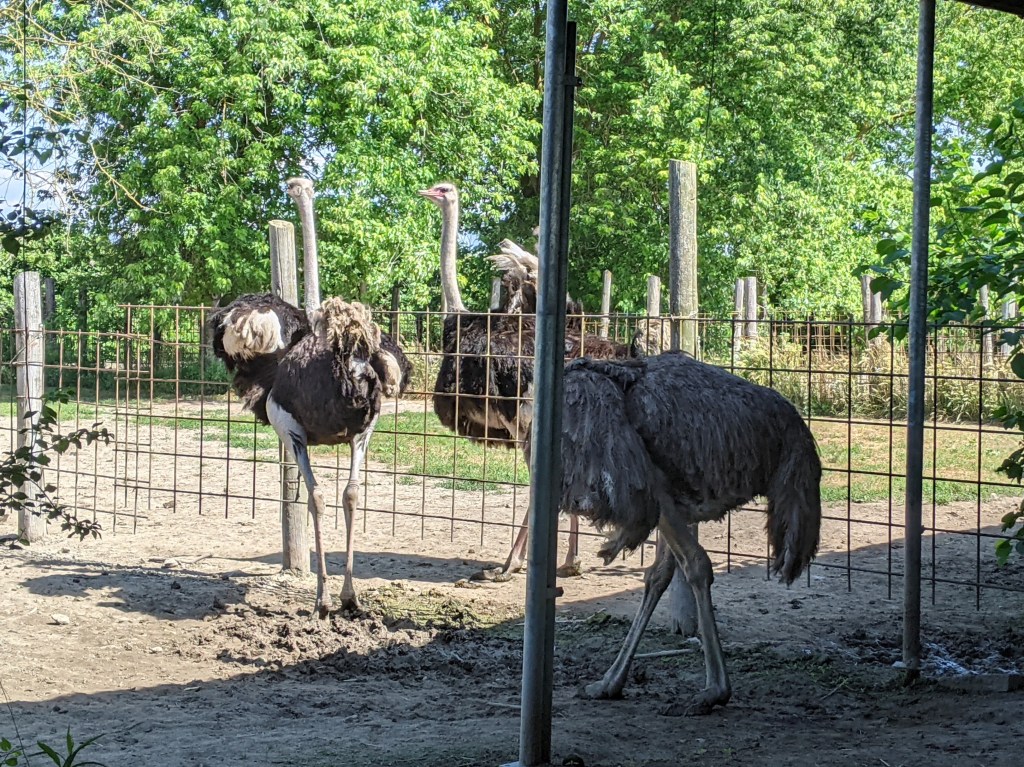
Our accommodation for the next 2 nights is a unique one.  It is an agriturismo or a farm B&B.  We’ve stayed in these before, often they are on vineyards.  This one is an ostrich farm!  We went out to the ostrich pens, they have 29.  They also run a restaurant here where they serve alternative meats such as ostrich meat and eggs but also donkey. Apparently these are higher in protein, lower in fat and more eco friendly than beef, pork and chicken. Ostrich eggs are very large, the equivalent of 24 chicken eggs.  However they don’t lay as many and only at certain times of the year.  We opted not to eat here though and instead looked for more typical italian fare.  We did go have a look at the birds (struzzi in Italian), they are very interesting up close.

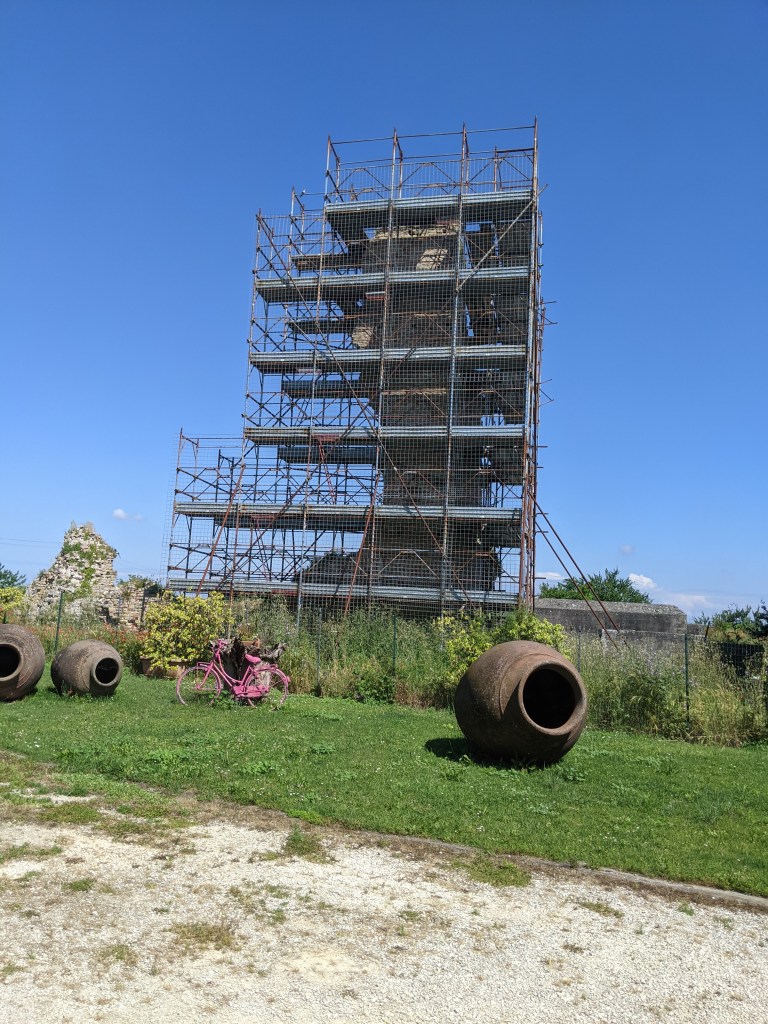
The other interesting thing about this agriturismo (called Antiche Mura or ancient wall) is that it is beside an archeological site where there are only a few walls remaining of a 9th century cathedral, hence the name.  

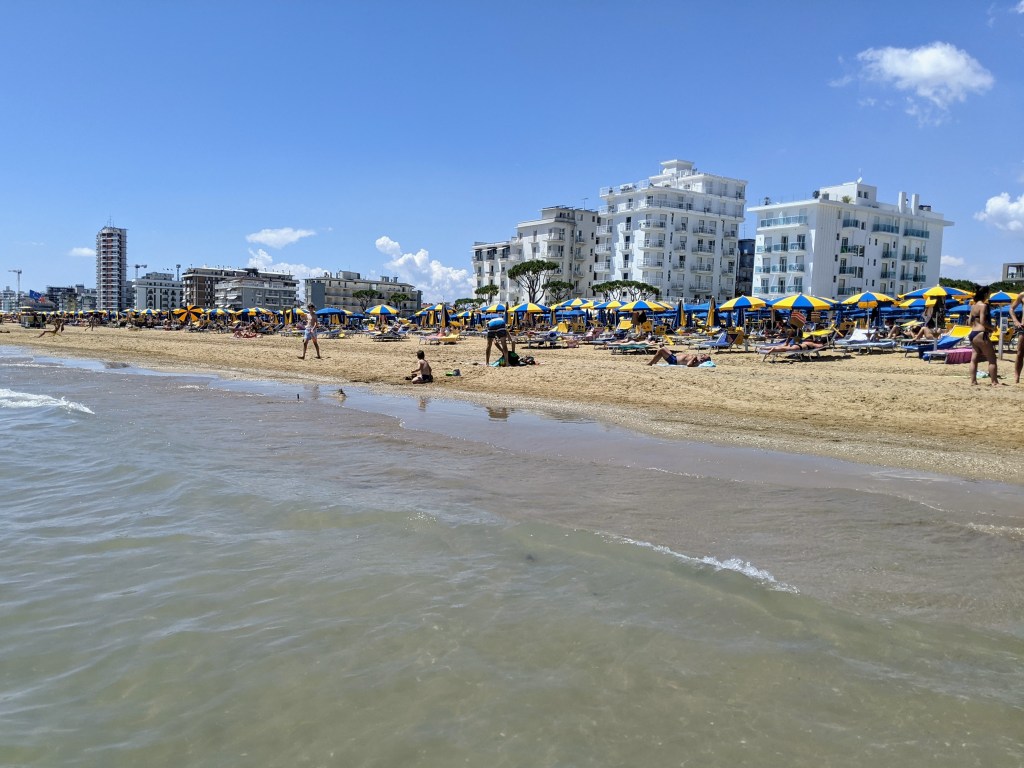
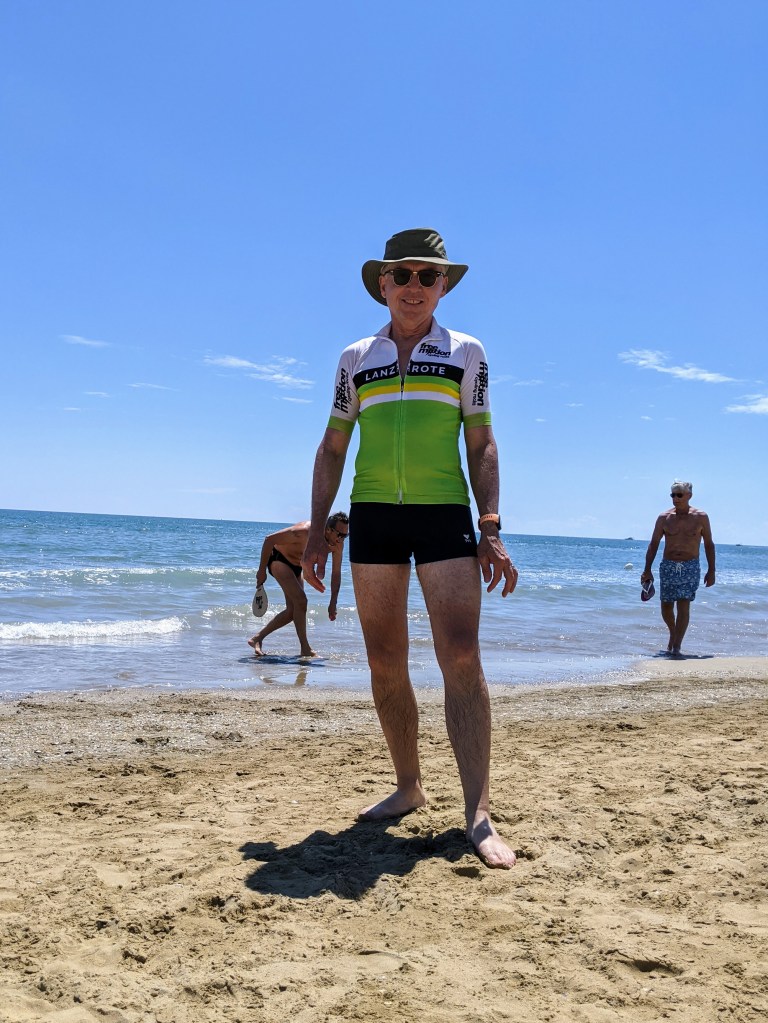
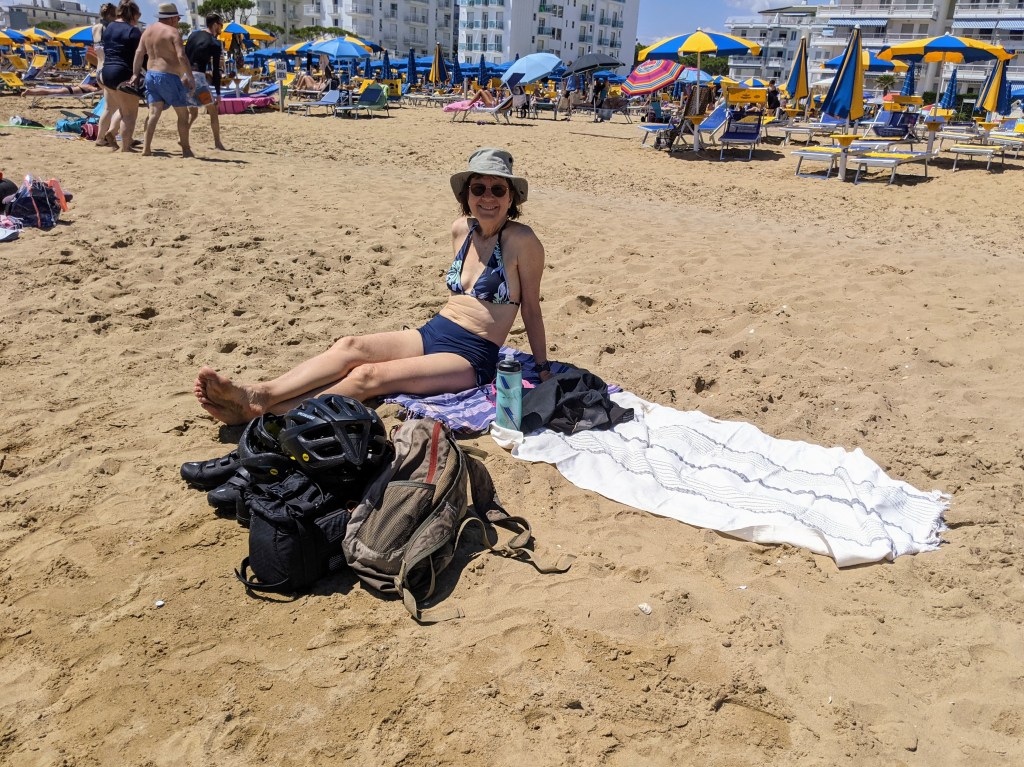
The lido is primarily a beachy place; it looks a lot like the Italian and French riviera with lots of ritzy hotels and beaches covered with rental chairs and parasols.  We took the short ride to the beach today and sat there for a short time on the small public area. Going to the beach with the bike is not the most convenient as you have to have your cycling gear on, bathing suit underneath, bring alternate footwear, towel, hat, etc then store/lock the bike and carry helmets/tech gadgets, bags, shoes/socks to where you’re sitting.  Once your’re done you have to get rid of all the sand, re-dress in the bike gear and shoes with a wet swimsuit on…(it’s worth it-GG) can you tell this isn’t my favourite way to do the beach?  We did treat ourselves to gelato at the end though.

Our Start in Venezia/Mestre

9 Jun

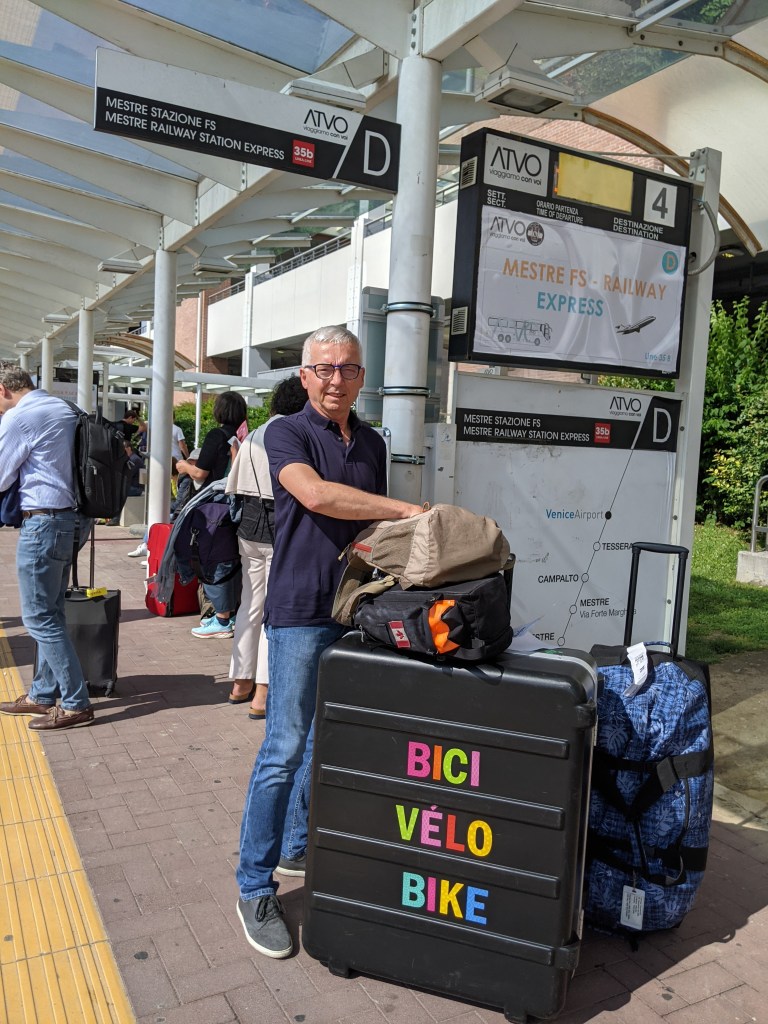
We had a relatively uneventful trip from Calgary through Gatwick to Venice.  It’s always nice to see the bike come on to the luggage carousel without damage.  We chose to stay in Mestre rather than Venice as it’s less crowded and close to the airport, important considerations when travelling with a big bike.  

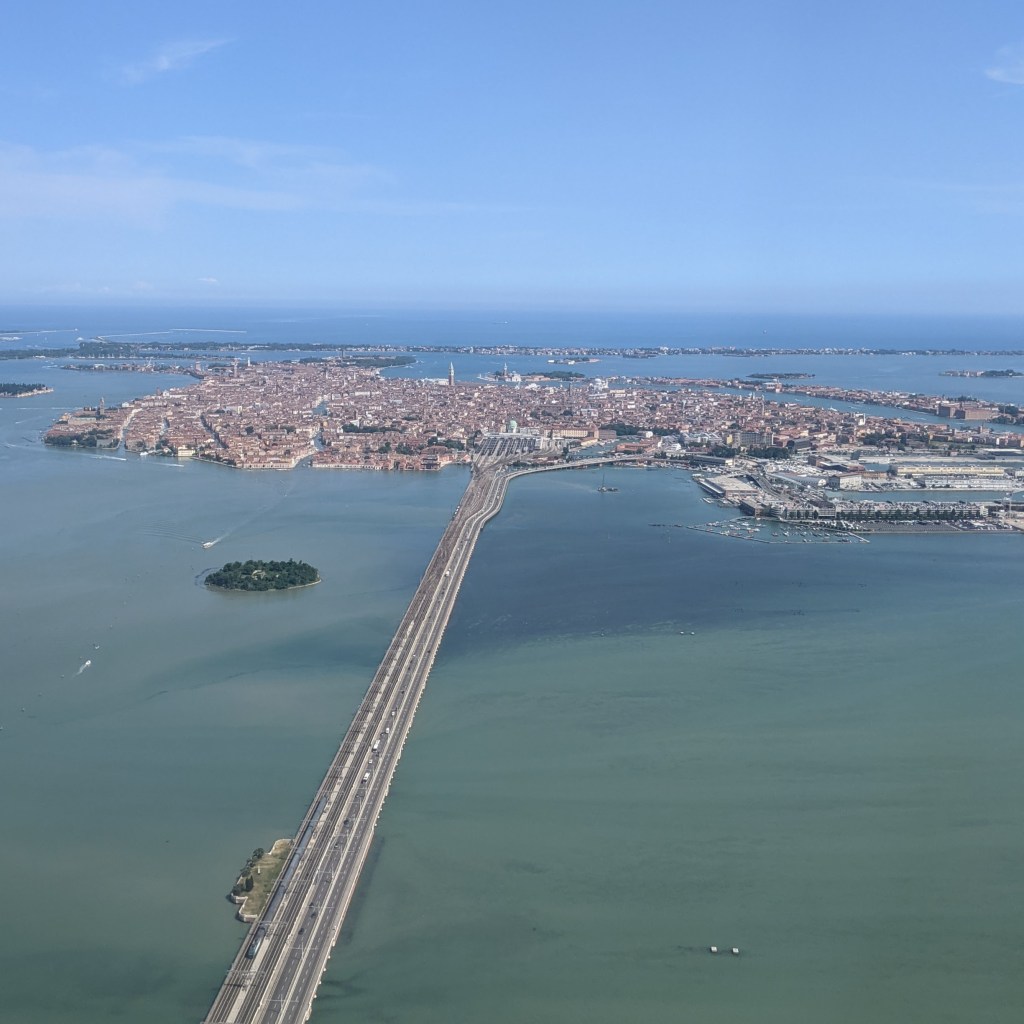
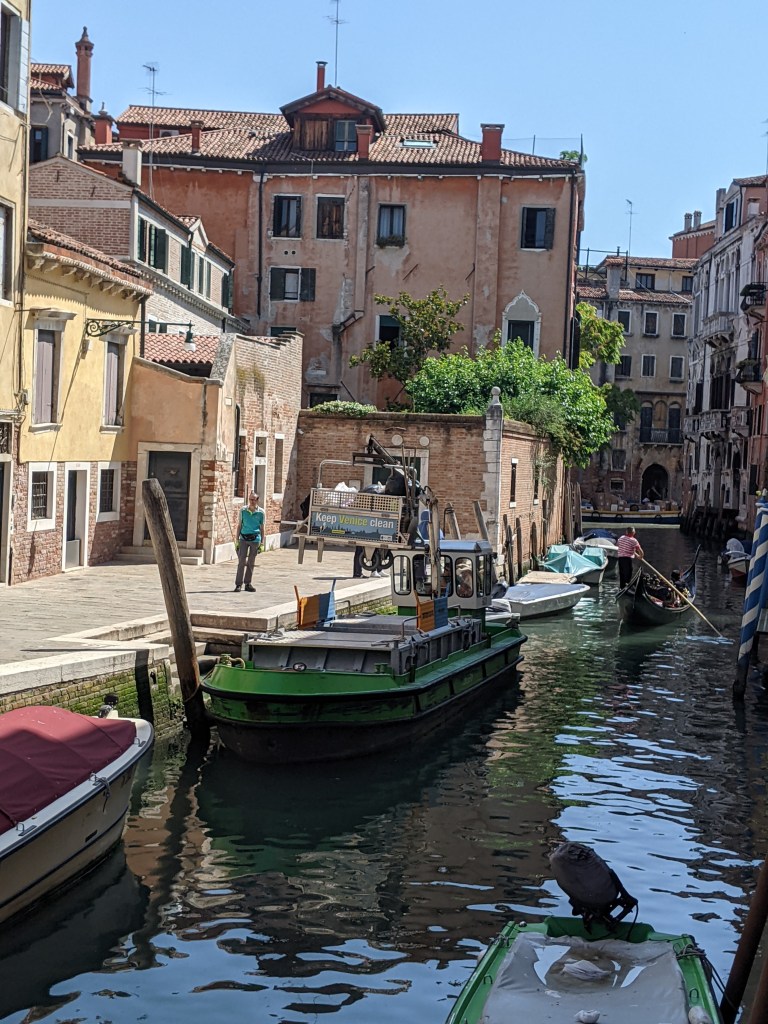
We spent our first day here walking around Venice, ony a short bus ride from Mestre.  We followed a self guided walking tour via an app called GPSmycity which is quite good. You go at your own pace and delve deeper when you want to.  We have both been to Venice a few times now but still are impressed by this unique city where there are only boats and walkers, no cars or bikes.  It makes strolling along the narrow streets very relaxing except for the fact that it’s like being in a maze and easy to get lost. 

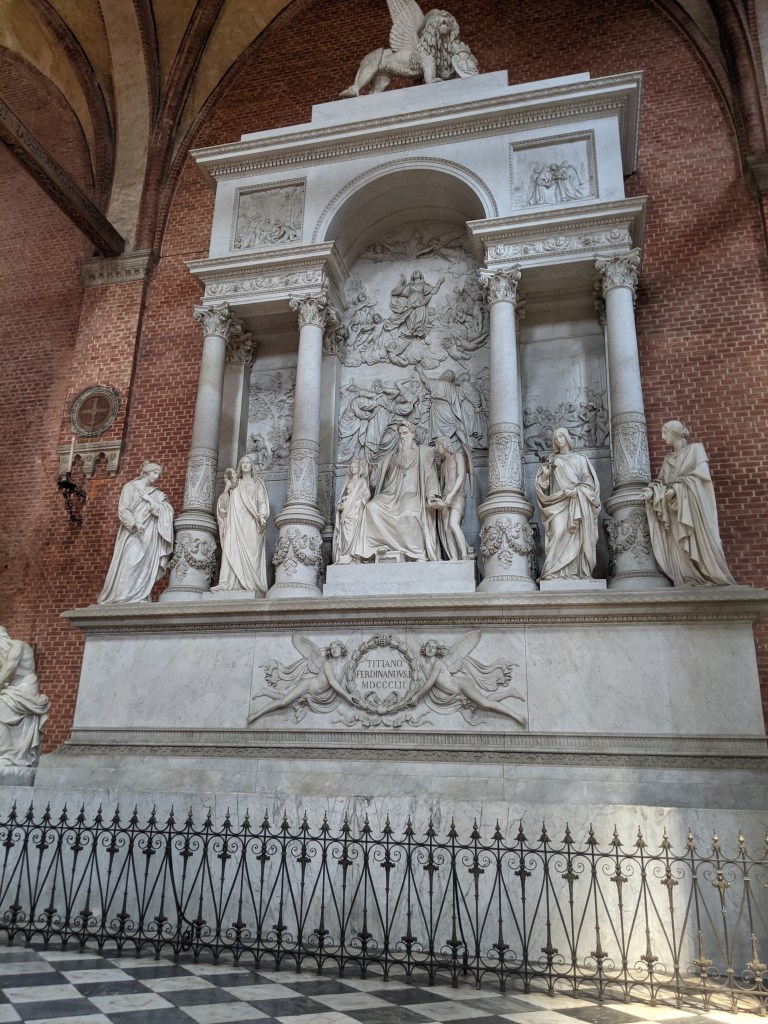
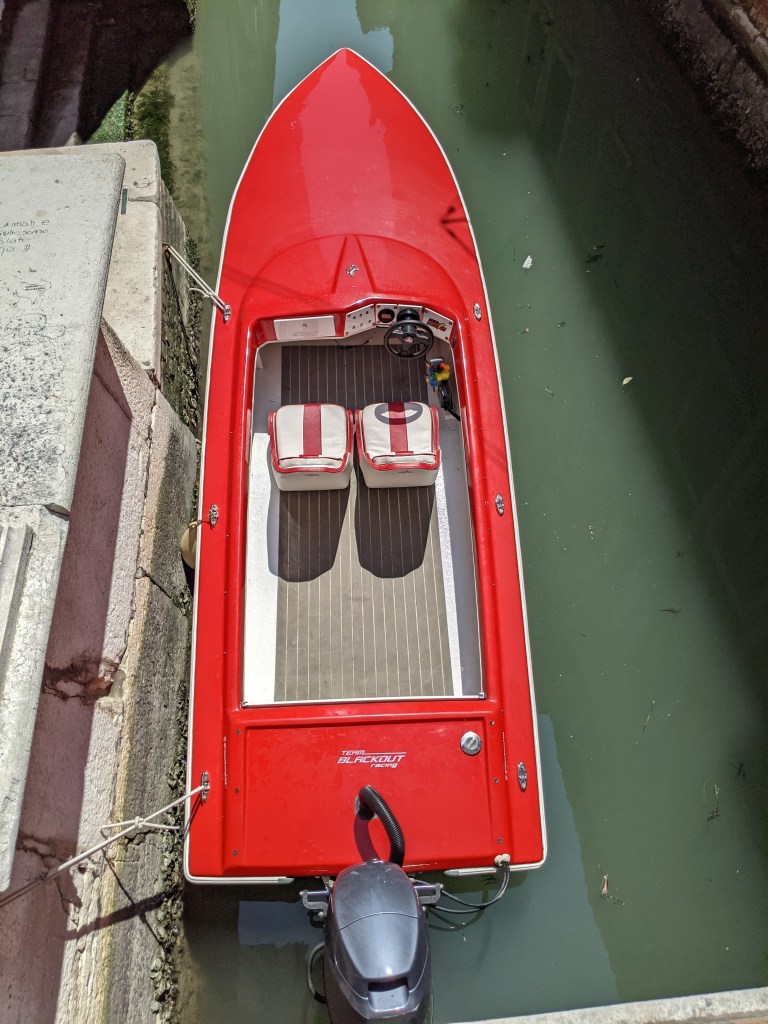
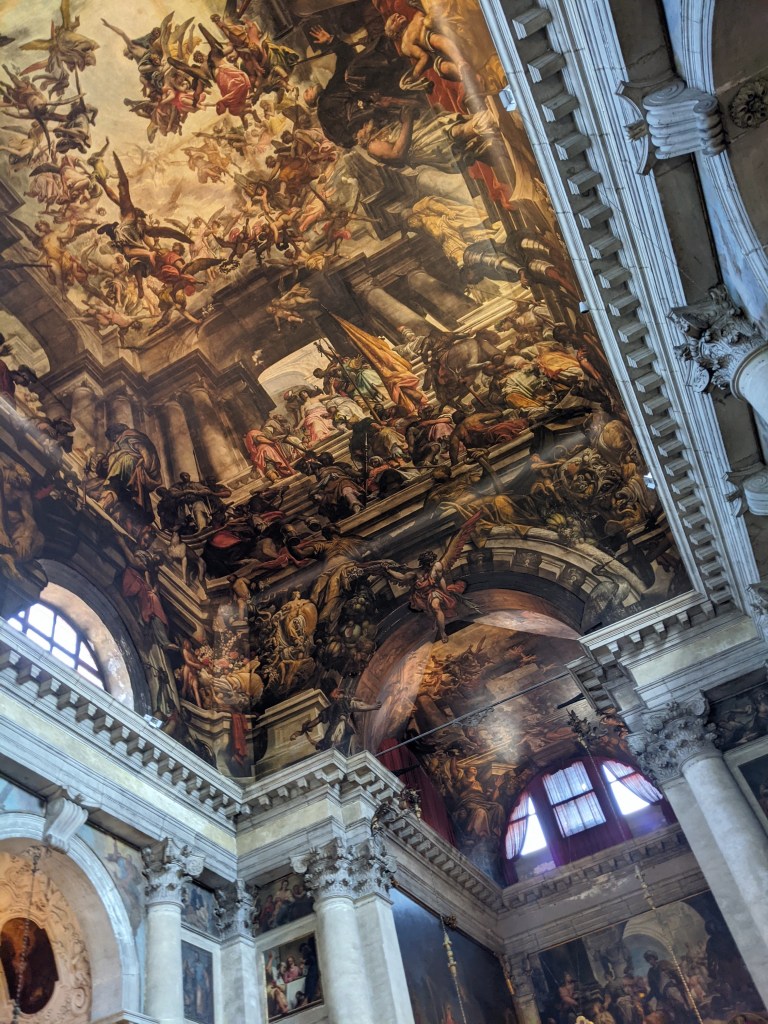
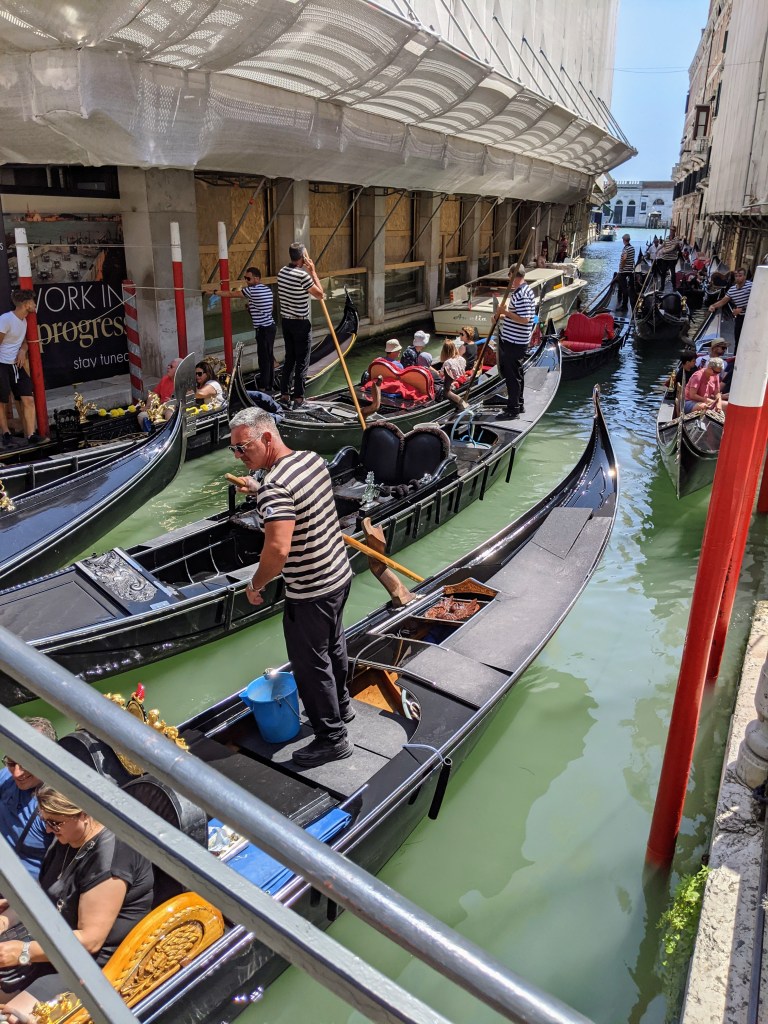
We chose to focus on a cathedral other than St. Mark’s: Santa Maria Gloriosa dei Frari. This cathedral is much less visited by tourists, no line ups, yet equally impressive as it contains famous works of art by Titian in particular, and others such as Bellini and Vivarini.  Most notable of these works is Titian’s Assumption of the Madonna which is a large painting at the high altar that was considered very innovative for it’s time in the 16th century due to the emotions displayed by the characters.  The painting has had to be moved several times during various wars including the 1st and 2nd World Wars to keep it safe.  The cathedral is also where Titian was buried after he died of the plague at age 90 in 1576 and there is a large 19th century monument erected in his honour.  Otherwise we wandered through the city, some very crowded areas around St.Mark’s square, and admired the shops with the venetian masks as well as the very shishi designer shops.  The gondolas and other service boats (police, ambulance, garbage, taxis) used along the canals are so intriguing to watch, such an interesting way of life.

The next day we built the bike in the morning then went out for an afternoon test ride.  On the advice of an architect friend we rode to the Villa Foscari (also called La Malcontenta) which is one of many Palladio Villas in the Veneto area.  Andrea Palladio was a famous renaissance architect from the 16th century who was known for his country houses and villas mostly but also designed palaces and churches. These 24 villas are all Unesco World Heritage sites and are found all over the Veneto area, most of them around Vicenza. His works are considered quintessential high renaissance works displaying calm and harmony.

Mestre appears quite bike friendly with many cycle paths to ride on.  Our old bike is working well and ready for a big tour over the next 6 weeks, hopefully also its operators are up for the challenge.

Let’s Do This But Bigger

6 Jun

Yay! In a few hours we go to the airport and start a new cycling adventure. While in the past we have gone for as long as 3 and a half weeks, this will be 6 weeks. It comes courtesy of Tara’s almost retirement giving us the latitude to go for longer.

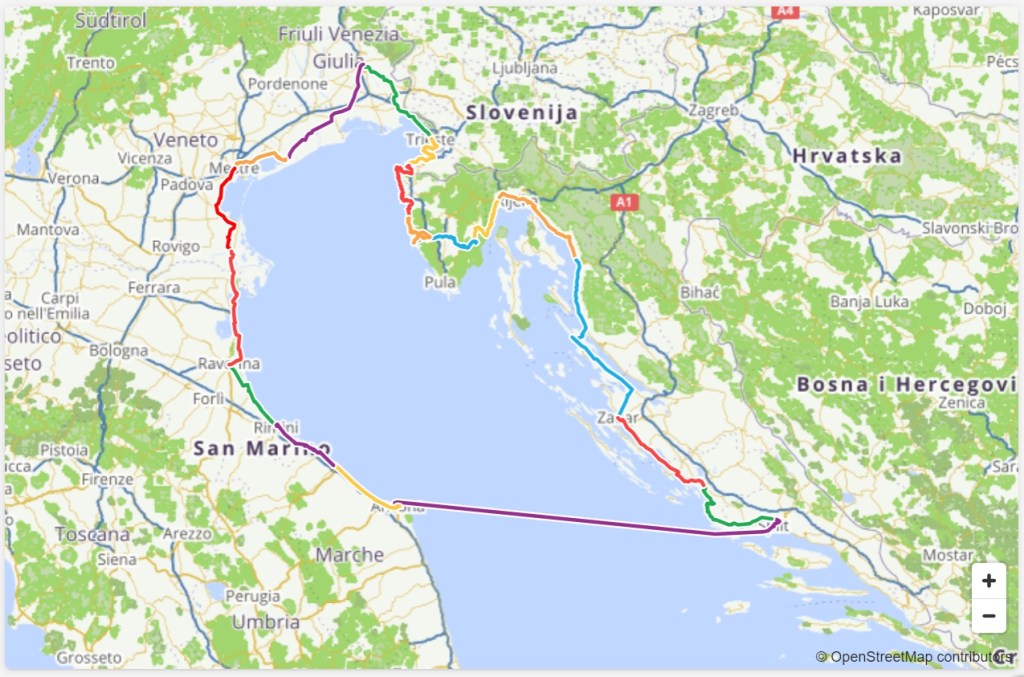
This will be a four country tour – Italy, Slovenia, Croatia, and then a couple of days with Erika in England on the way home. We fly in to Venice while actually staying in Mestre just on the mainland. The routes go clockwise and sticking mostly to the coast and going as far south as Split. From there we take a ferry back to Italy at Ancona and proceed north up the coast to Mestre again. I am a bit nervous because there are so many hotel bookings and anything could throw us off schedule. However we are mostly staying 2-3 nights at a time so there is some flexibility in case we lose a day and have to catch up. Not so easy on a bike as opposed to a car though!

Here is the overall route, starting at Mestre and going east