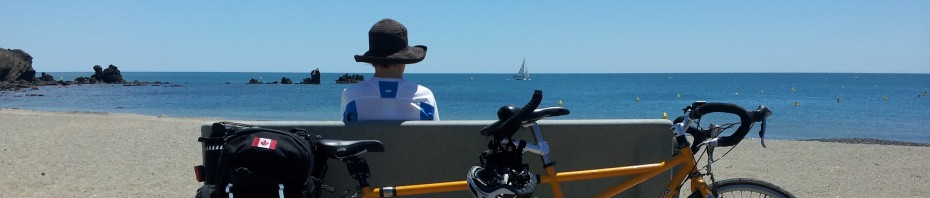

After the last leg with too much gravel we altered this route to stay on pavement which means we were with the cars and probably less scenic too but better for us and our road bike. Rather than following the bike path which is just above the Lim Fjord we were on the road farther above which meant a long descent followed of course by a notable ascent of up to 7% grade. It was hard for sure and a +30 degree day to boot but our overall mileage that day was only around 40 kms so we managed. As we are climbing these hills I am always thinking about how much we are carrying and what we don’t really need…Every year we try to pare it down more to lighten the load, maybe that’s us getting old and feeble? Next trip we will have a new tandem that will be lighter and better, can’t wait!
While riding this day George managed to collide with a rather large wasp that first hit his face then bounced to his arm and stung him well. It has left him with an angry red and edematous upper arm and elbow but slowly it seems to be improving. Such is the life of the person in front of the ship.
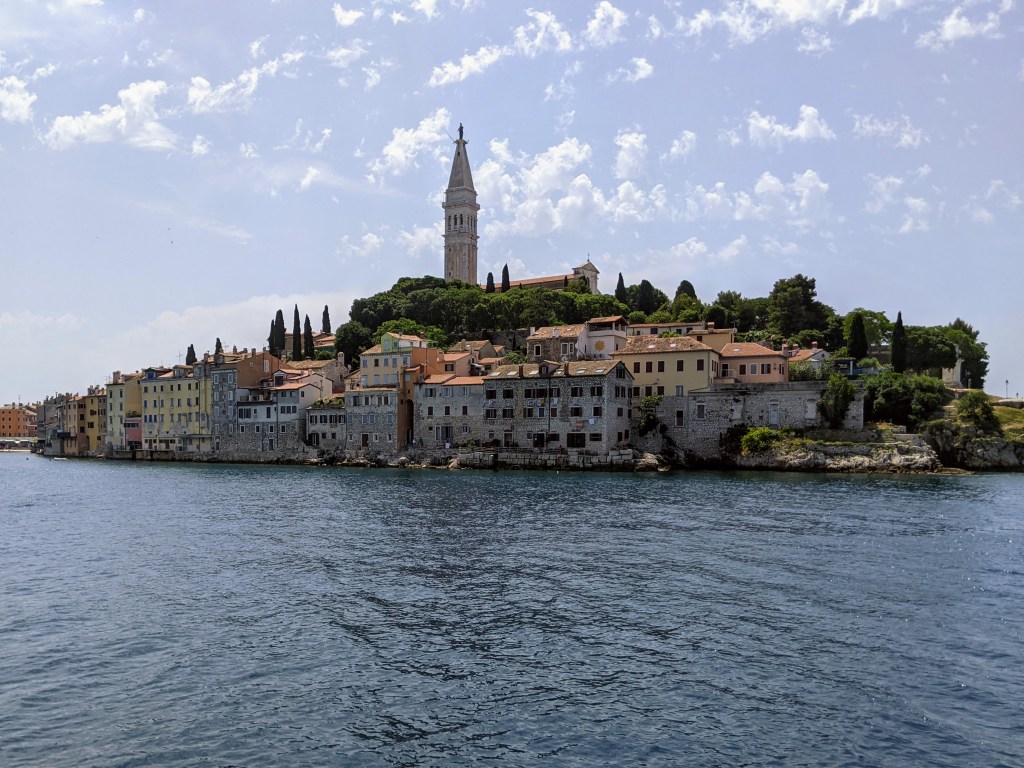
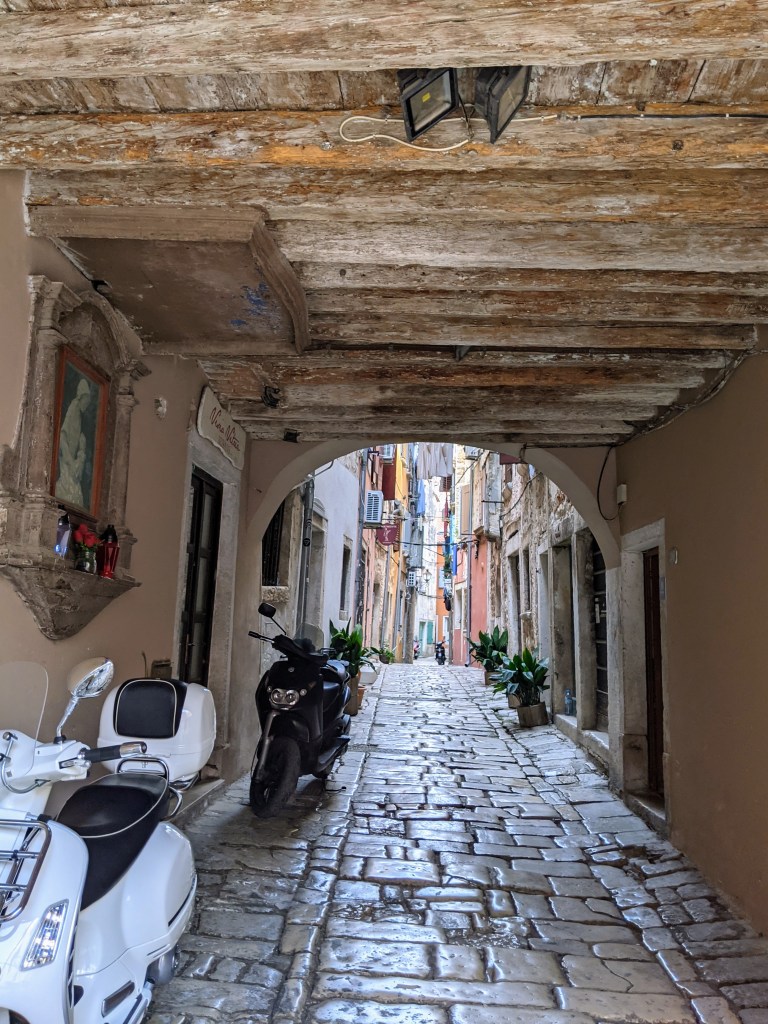
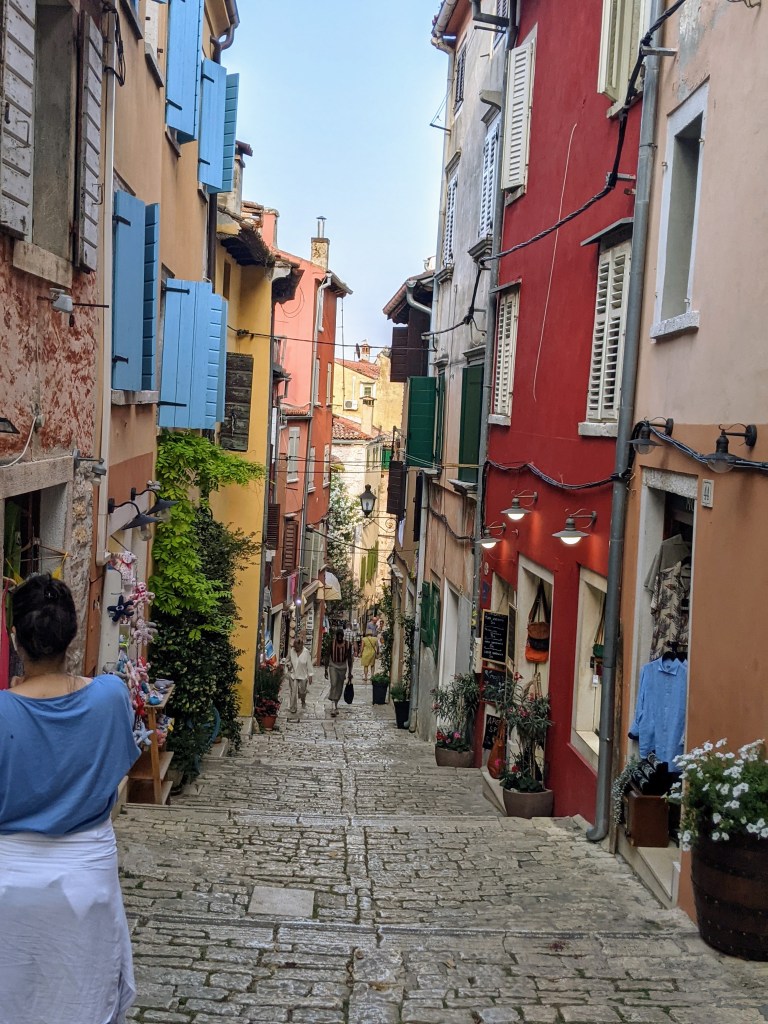
The last 10 km descent gave us a beautiful view of Rovinj (pronounced Roving, hard G and emphasis on the “ing”), originally an island just off the mainland and joined by a land bridge over the sea moat in 1763. At this point in history the controlling Venetians felt safer from threats than previously so joined the little island to encourage trade and commerce. Now it appears as a roundish peninsula with densely packed housing which was done to fit the population onto the island. The Venetians were in control of Rovinj and other coastal areas of Istria for approximately 500 years starting in the 13th century. There are winged lions everywhere which is the symbol of Venice. If the lion is holding an open book it means Venetian rule was accepted (peace) and if the book is closed it means there was war to get the same result. Istria is known as ‘Little Italy’ with Italian culture still having a strong influence; Italian is officially the second language here and most people are (at least) bilingual. The name Istria comes from the very first people to inhabit the area, the Histri. Rovinj is truly a maze of narrow streets and tall houses, quite spectacular to see and easy to get lost in.
We went on a “free” walking tour (Free Spirit Walking Tours) with a lovely and knowledgeable young woman named Martina who is a native Croatian and a bicycle enthusiast also. We were the only 2 in the group so we were able to talk about cycling and our route and she gave us many good ideas. She also shared much with us about Istrian and Rovinj history, local foods, the people, language, more recent history including the separation of Yugoslavia (south slavia), the war, Tito and much more. It was very informative and interesting, we learned a lot.
We also took a boat tour to see Rovinj from the water side and as well see other nearby islands and the coast south of Rovinj. This was pleasant with good views but not very informative.
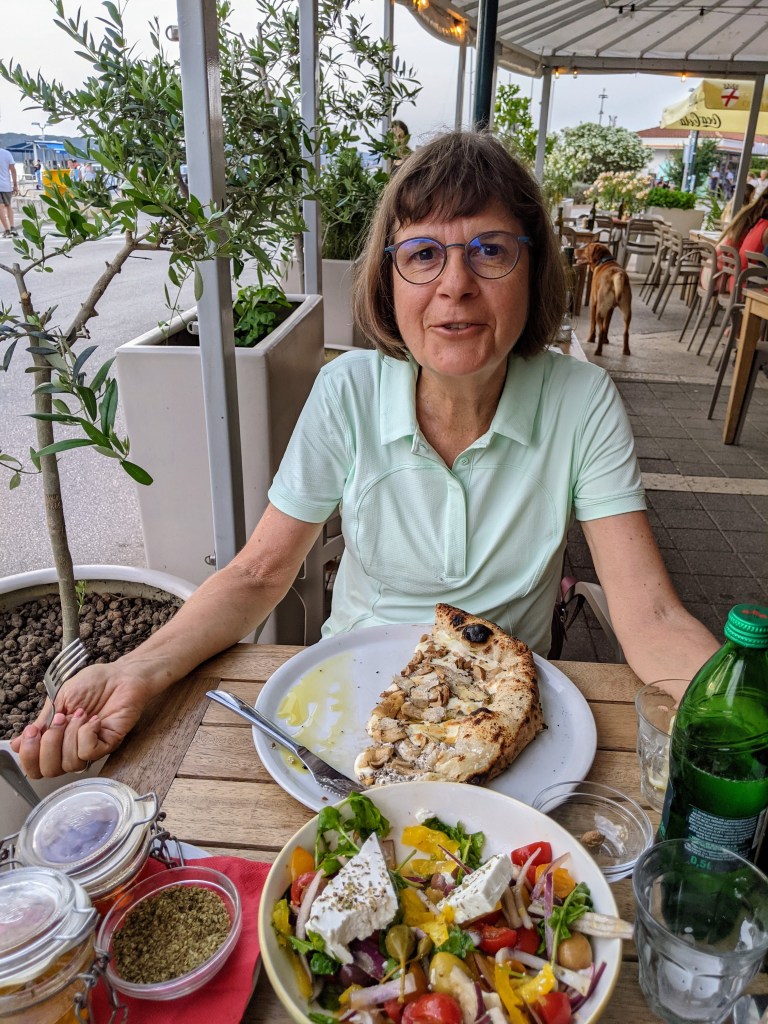
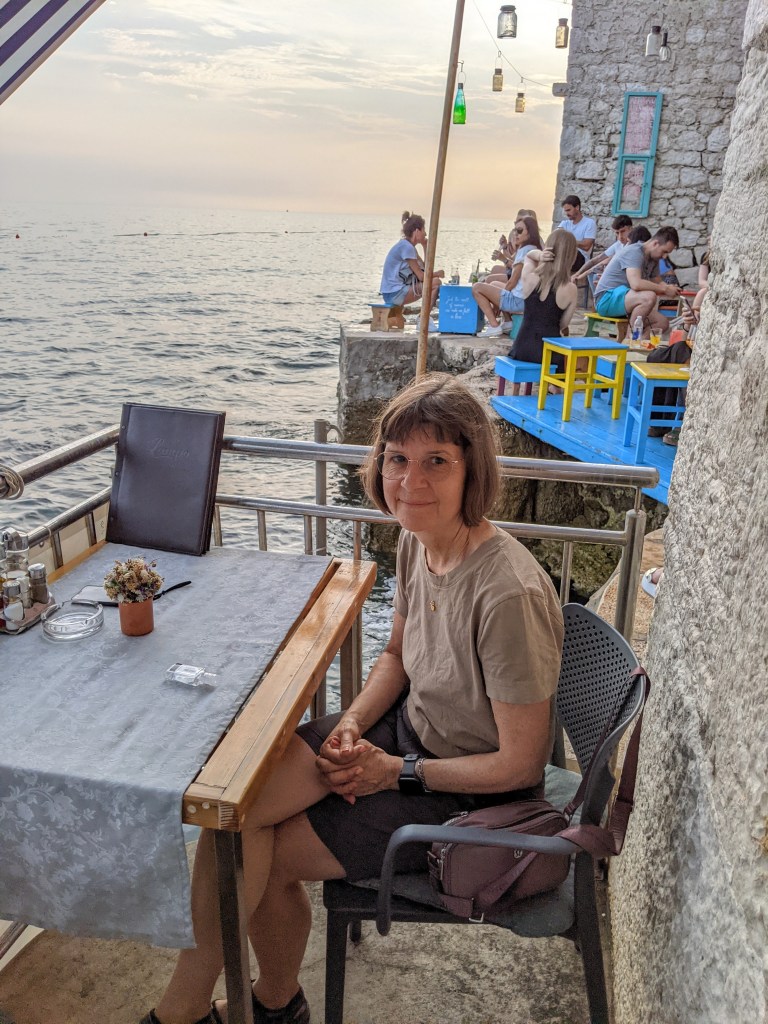
We enjoyed 2 excellent dinners in Rovinj. One was excellent food without a view and the other was the opposite with average food but situated right on the water. The first dinner I mentioned was a truffle and mushroom pizza, probably one of the best we have had, and we are not even in Italy. Istria is famous for its truffles, it is now black truffle season (white in the winter) and they are for sale everywhere.






 geeteetravels
George, I’m glad you aren’t allergic to wasps but still sounds painful. Poor you, good thing you have a nurse nearby. Love the colorful narrow streets! Great pictures, thanks for sharing!