Archive | 2023 RSS feed for this section

Ravenna to Porto Viro and back to Mestre

18 Jul

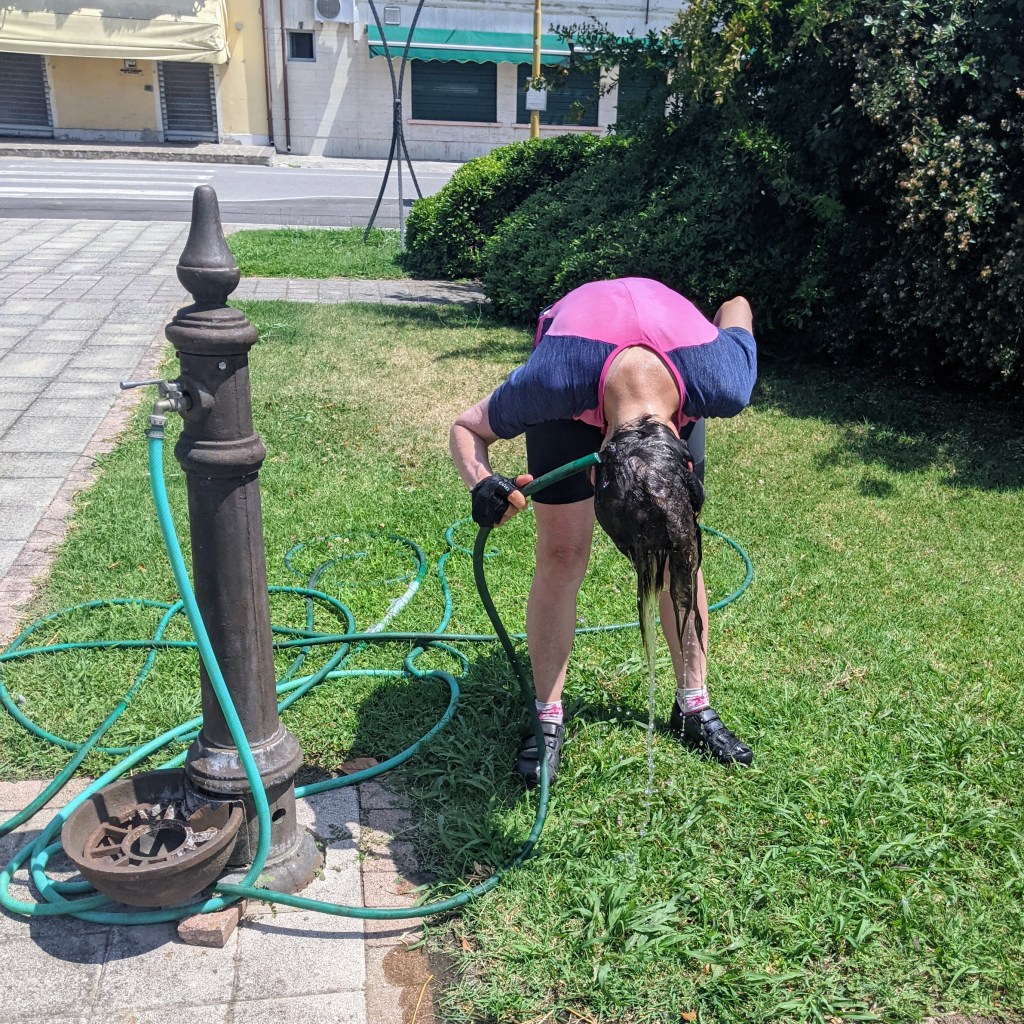
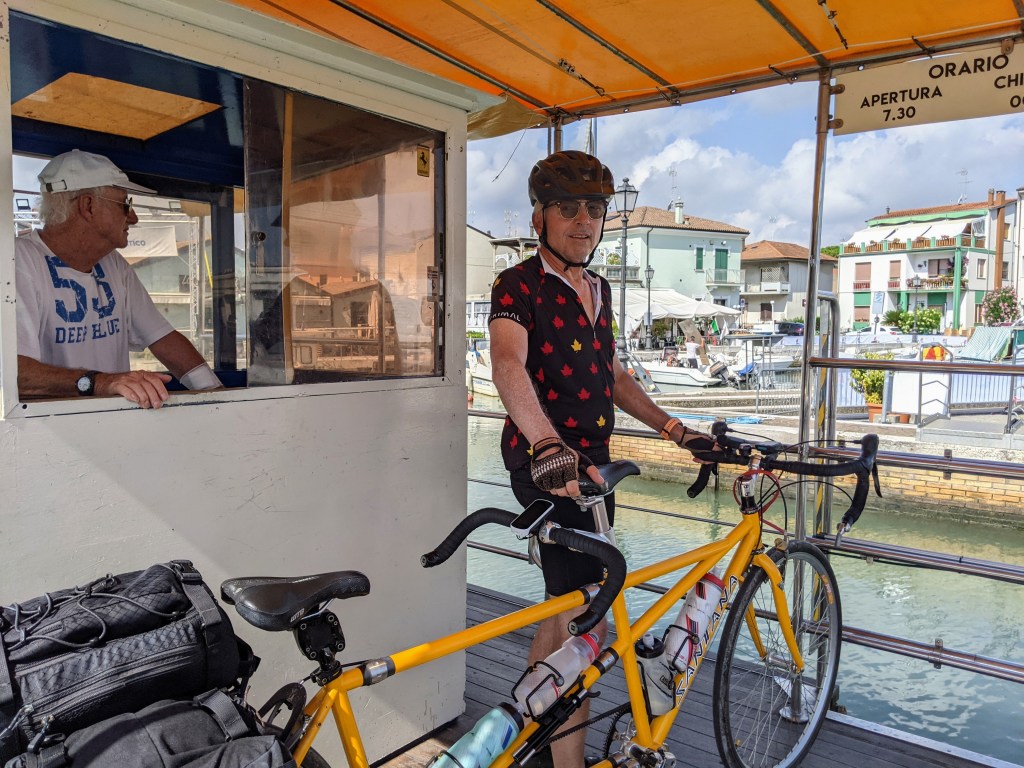
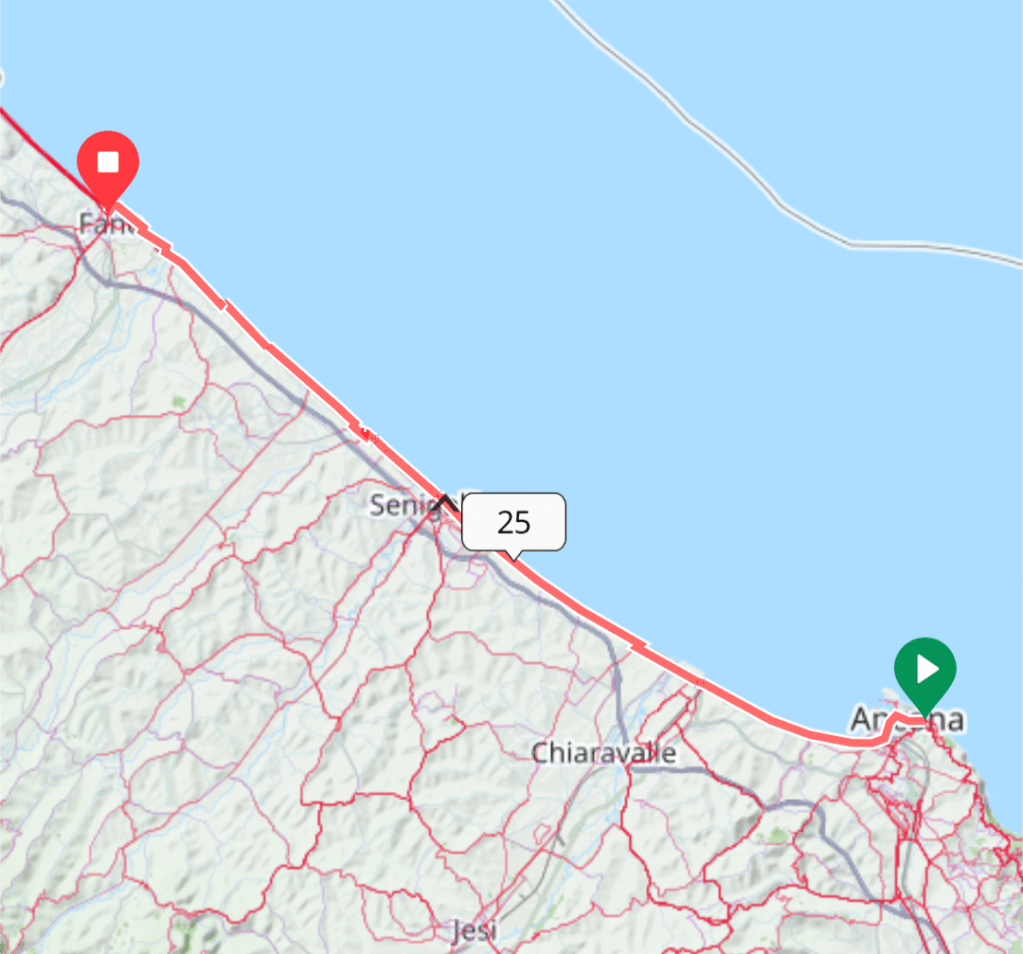
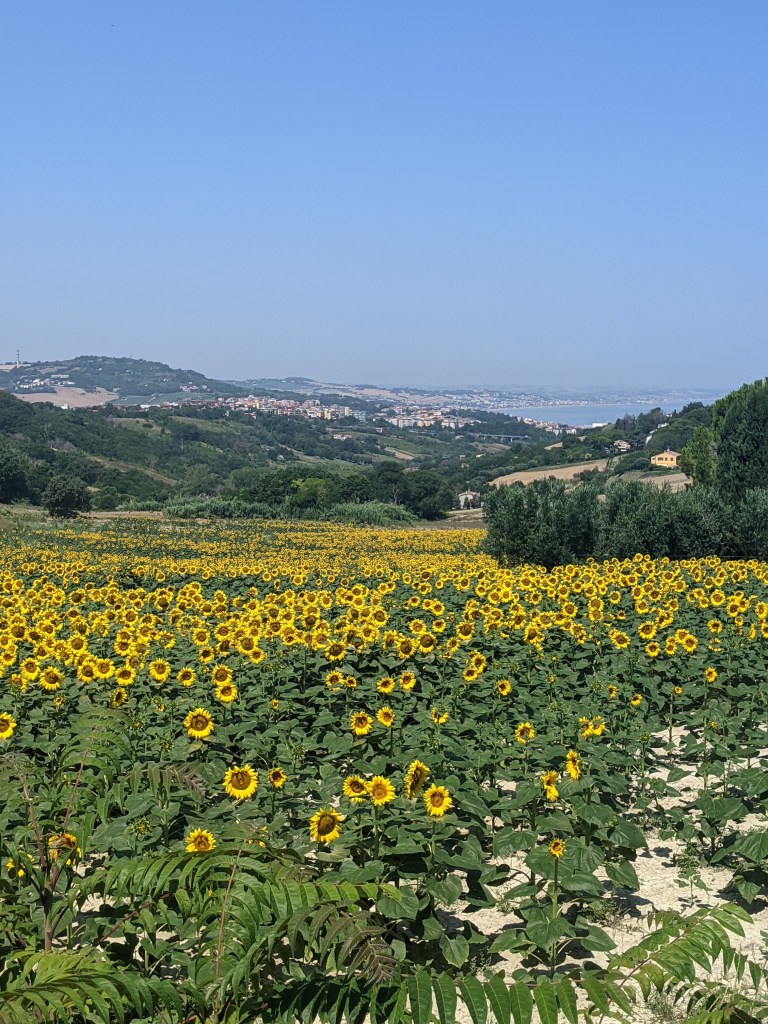
Our last 2 rides were on small, mostly quiet and scenic roads and would have been more enjoyable in normal temperatures. We were riding along the coast or beside canals once into the Po river delta and we took small ferries several times to cross inlets. The temperature the first day was about 35 degrees C (89kms), the second day 33 (70kms). We were thankful for the flat terrain here again as the heat takes up a lot of your energy. We tried drinking gatorade as well as water and it seemed to help compensate for the loss of body fluids through sweat. George sweats so much he was regularly wringing out his gloves and the lining of his helmet. I started to feel his sweat splashing onto me, the ultimate stoker sacrifice! We made sure we got on the road as early as we could to try to beat the hottest time of the day but it’s hard when you have almost 90kms and by 11:00 it’s already 30 degrees. The second day from Porto Viro it was very foggy and humid to start so a bit better than bright sun although still warm. The Po delta area is as you would expect with much agriculture happening due to the excellent growing environment. We saw corn, sunflowers, grapes and tomatoes being grown. Last year parts of the Po were dried up, this year it looks very full of water.

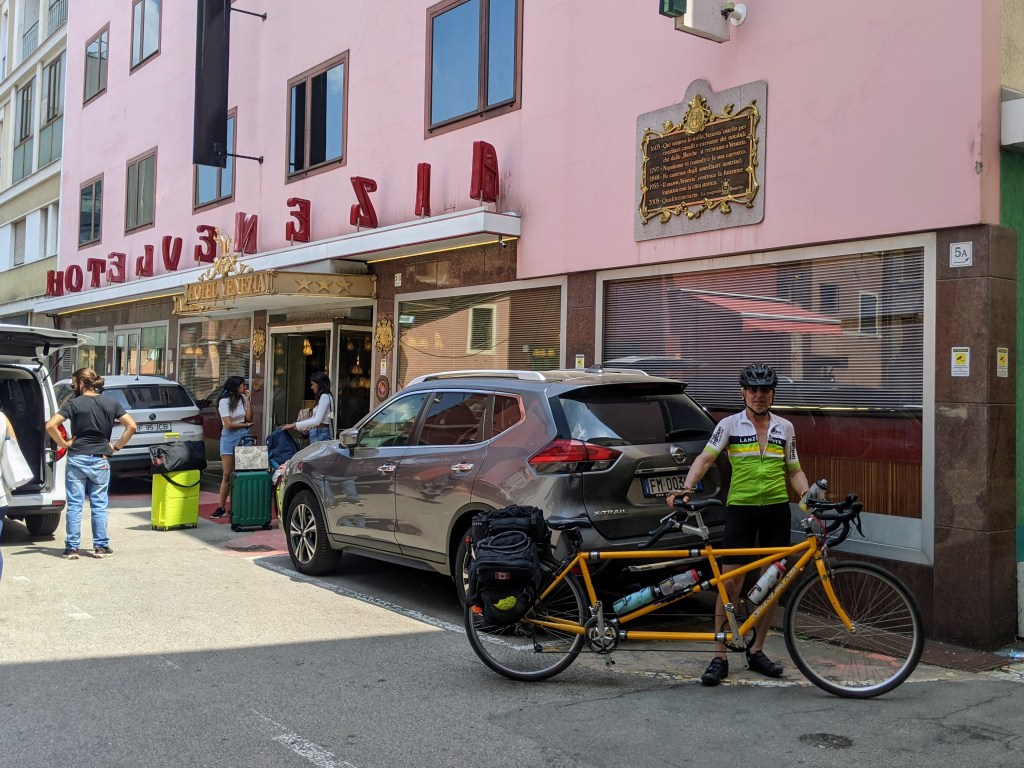
We made it back to our starting point in Mestre in the early afternoon and were able to dismantle the bike that day. Again though it was so hot that by the end of the job George was again dripping wet and had made puddles around where we were working in the garage of the hotel. Most of southern Europe is experiencing a heat wave currently, it will be nice to go to London where there are temperatures in the low twenties.

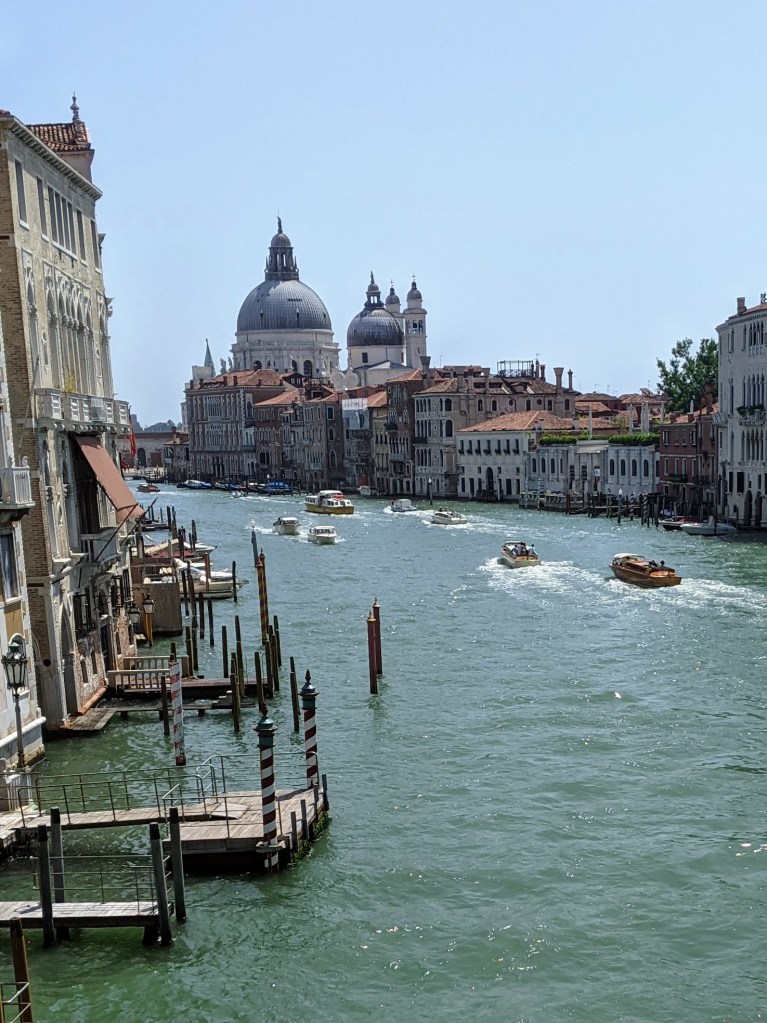
For our last day in Italy we went back into Venice to see a few more sites and do a bit of shopping. We try not to do any shopping until the end so that we have nothing extra to carry on the bike. Compared to 6 weeks ago Venice has become much busier as expected. I think it would be a challenging place to live and work in when you are constantly dealing with tourists who don’t always respect the environment, I find it challenging for one day. We bought some food in a grocery store and were going to sit on some steps in a piazza to eat and we were told by some kind of security people that we weren’t allowed to have picnics and to move along. Of course again it’s over 30 degrees, hardly any shade and you aren’t allowed to sit anywhere and eat, likely because people leave messes we think? There are thousands of restaurants and bars but often I can’t find suitable food to eat in them so often opt for a grocery store. I love many things about Venice but don’t really love being here. We did visit one other cathedral as well as a bit of shopping, one with more paintings by one of my favourite renaissance guys Tiepolo. It was cool in there and the artwork was beautiful. Just to add to the ambiance there was a choir practising. I just sat in the coolness and listened for awhile while I recovered from almost melting when walking there.

We are quite happy with the decision to stay in Mestre rather than Venice. It’s close yet far enough away to escape the crowds and the high prices. Also getting in and out of there with baggage is challenging, let alone a large bicycle.

The past 6 weeks have gone by surprisingly quickly. Our trips are quite busy with lots to do and see and of course many kms to ride (approximately 1300kms). We feel that it was long enough and perhaps for future trips it might be nice to build in a bit more time to relax about half way through by staying in one spot for a week or so. We are off tomorrow morning to London for a couple of days with Erika then back home. Arrivederci!

Rimini to Ravenna

15 Jul

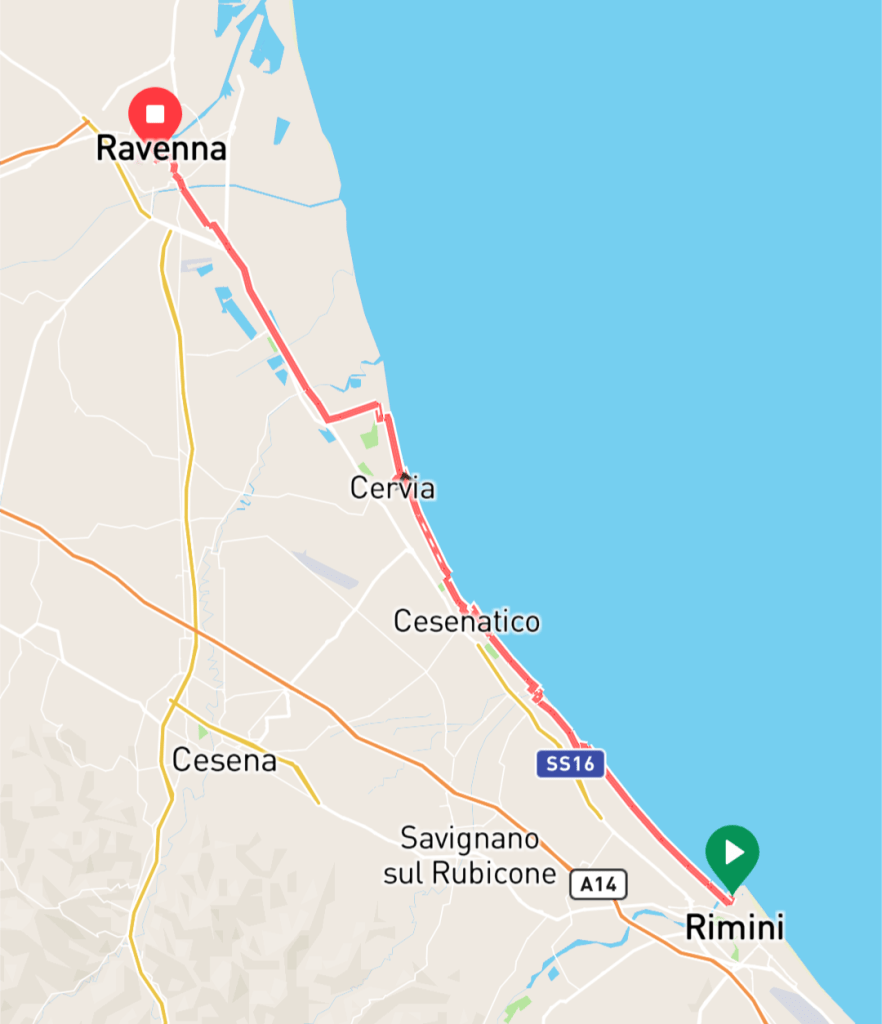
The ride to Ravenna was another relatively easy one with almost no climbing and only 60km, just the heat to deal with. Again we are mostly riding along the beach roads so plenty of services available when we needed a cool break. We arrived too early for our check in so found a bar to stop in while waiting. The woman serving us asked us where we were from and we said Canada, then she asked where in Canada so we told her Calgary and she then looked stunned and said that her father and other family members live in Calgary! What a coincidence this was. She then proceeded to show me pictures of her family in Calgary.

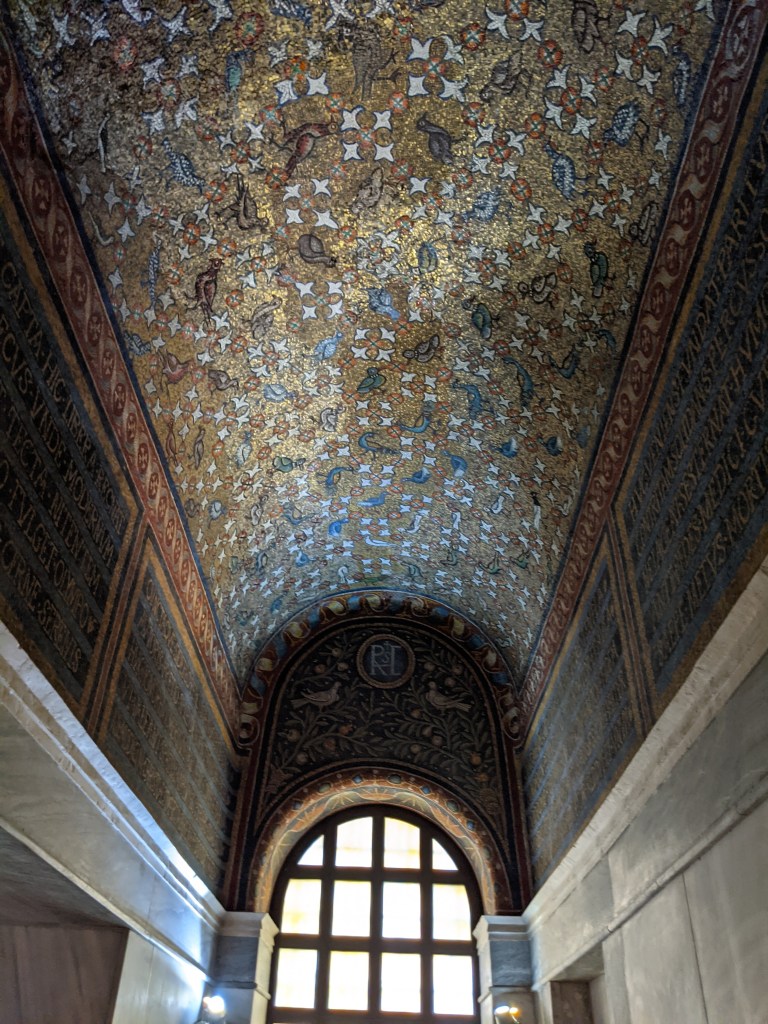
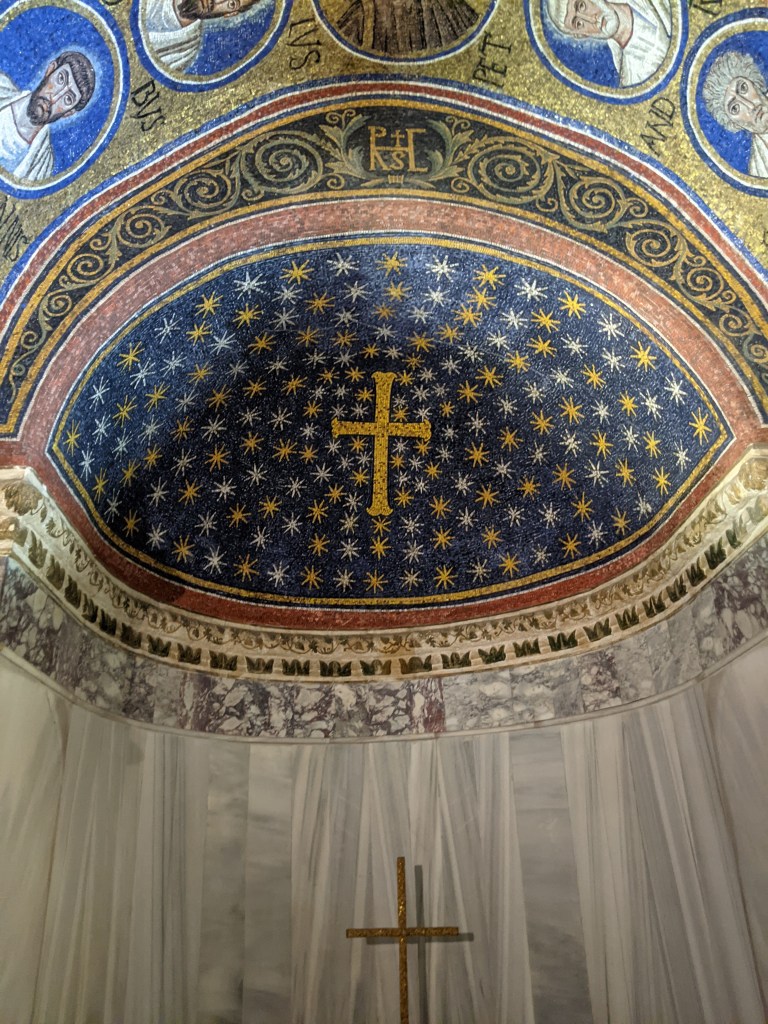
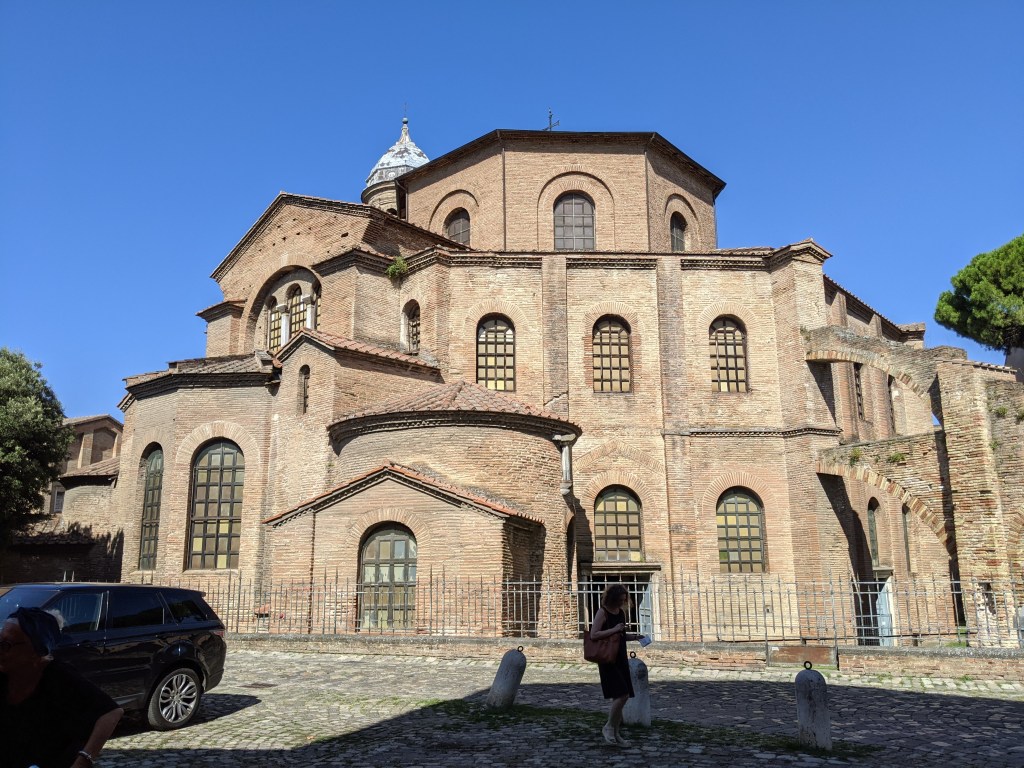
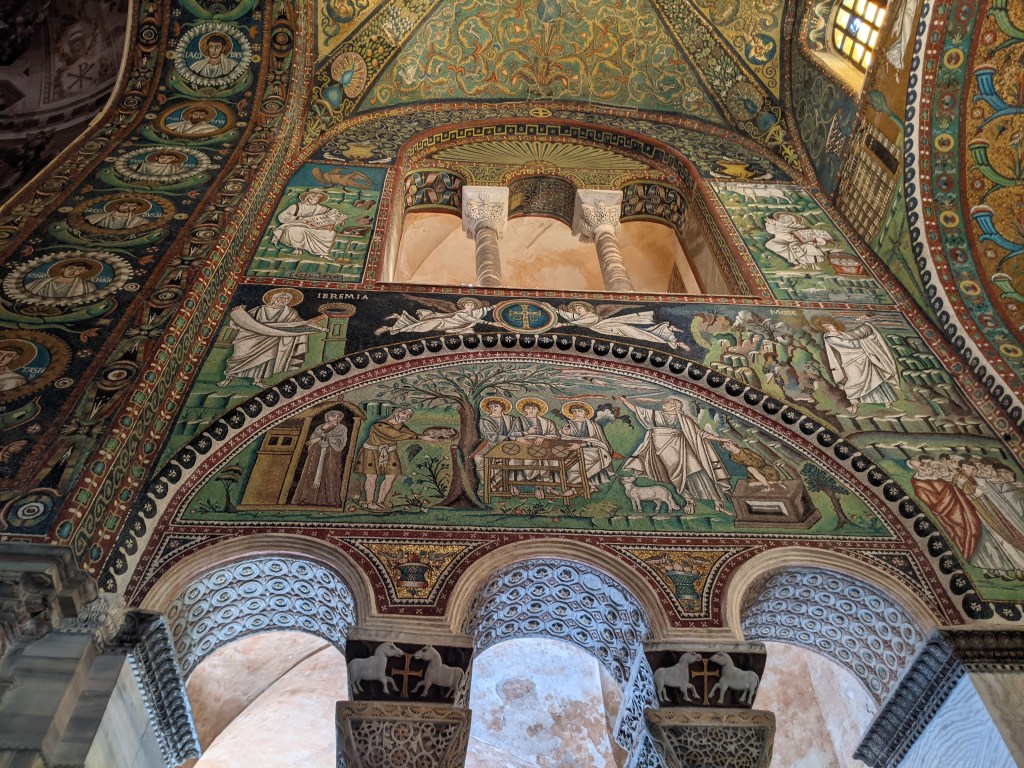
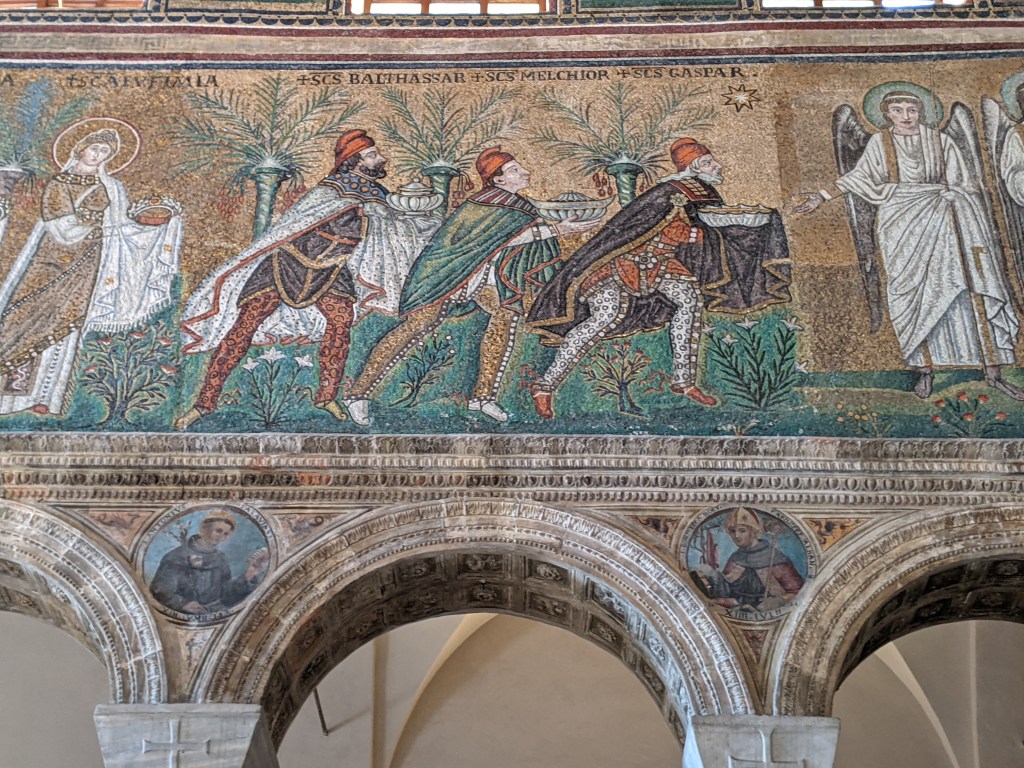
We’re staying in a lovely bed and breakfast here, close to the old city, with a big garden area in the back to keep the bike and relax in. Unfortunately when we arrived we realized that we had left 2 of our 3 bike locks back in Rimini! Neither of us are sure how we managed to do this but were not interested in returning or having them sent to us so our first errand was finding a bike shop and getting a new one. The one lock we left is a very heavy and annoying “D” lock so I’m secretly happy about it. After taking care of that and some laundry we headed into the city to start looking at some of the 8 UNESCO sites here featuring Byzantine era mosaics (approximately 5th – 6th century AD). This is what Ravenna is famous for and now I understand why. The 2 we saw on the first day were the Neoniano baptistry and the St. Andrew Chapel. These are both small places that are unassuming from the outside but stunning inside. It’s hard to imagine that they have survived 1700 years and look perfect.

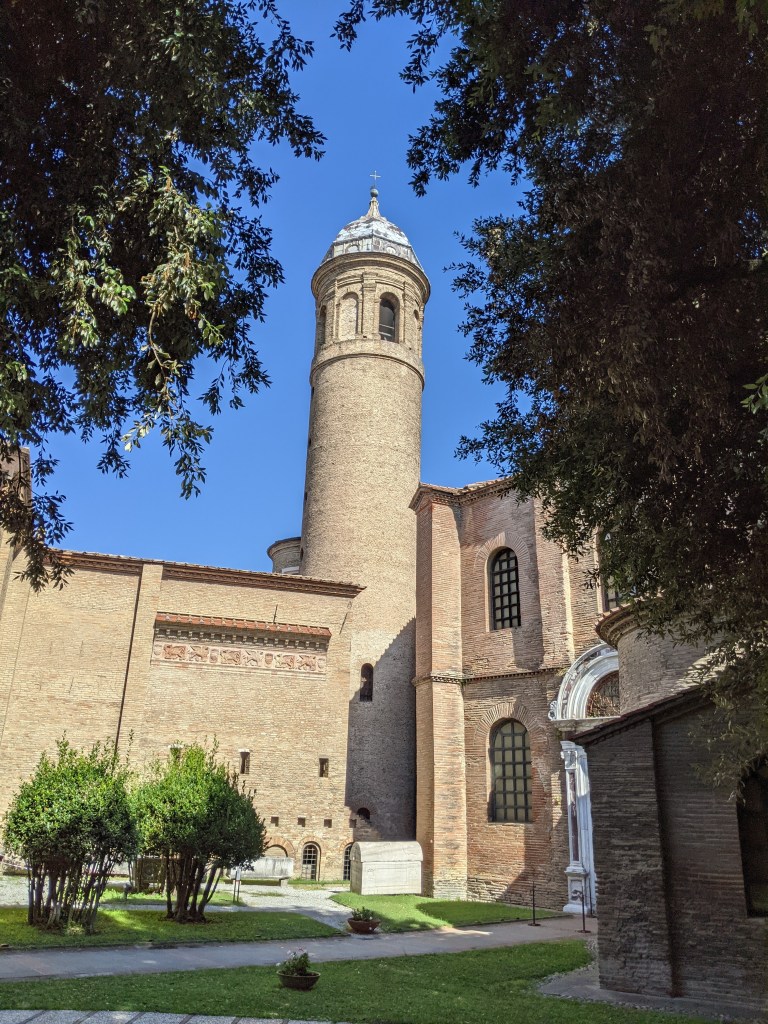
The next day we finished the Ravenna mosaic tour with the other 4 sites in the city: Basilica St. Vitale, Galla Placidia Mausoleum, Ariani Baptistry and Basilica St. Apollinare. Again all were very unassuming brick buildings from the outside but once inside you are in awe. There are 2 more a little way out of Ravenna too but we decided 6 was enough. We also visited another site where, in 1993 while beginning construction of a parking garage, some Roman era remains were unearthed. What was left was primarily the mosaic tiled floors of a few homes and a street. Floors don’t withstand the elements as well as domed ceilings for obvious reasons but these are also quite amazing considering the age.

It is still very warm here so we are trying to do things in the morning, take a rest and then back out later in the afternoon which helps a bit. It is apparently uncharacteristically hot for this area. Luckily we have good AC in the apartment.

Ancona to Fano to Rimini

13 Jul

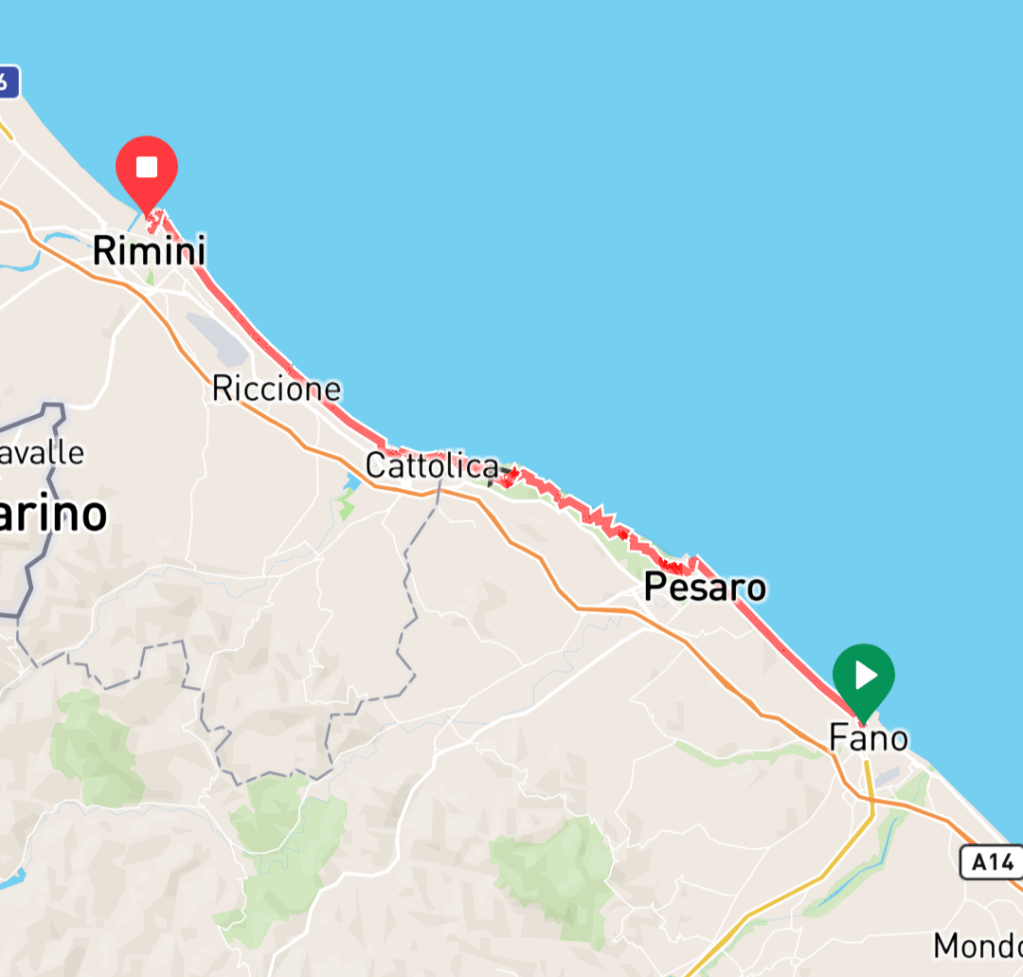
The first leg of this trip to Fano was a bit too flat, literally no hills, we were spoiled, making the second day to Rimini seem quite hard in comparison. However both days were hard because it is troppo caldo! The temperature today hit 35 celsius, yesterday was around 32. This is too hot for cycling, we may need to be smarter with our planning. We were quite spent by the end of both days. A lot of the riding in the past 2 days is along designated bike paths on the beach. It feels like you never leave one place before arriving at another, they are all joined and all developed beach areas.

Riding to Rimini from Fano, after passing through Pesaro (where composer Rossini is from) we did go inland into the Parco del San Bartolo on the Strada Panoramica. This is a beautiful road popular with cyclists that winds through the hills just inland from the coast. The views are spectacular in both directions, inland and to the sea. It was a bit of a slog up the hills (about 450m total gain in elevation) but worth the views. We also came across a few pretty hill top towns to admire. The other great thing was that there was almost no car traffic and lots of bike traffic. This is so great to see after the dearth of cyclists in Croatia. We feel a part of the fabric here rather than an invader.

This whole area from Senigalia to Rimini has uber beach development. The beaches have now become sandy and there’s many services for the tourists. It would be a great area to spend some time if you were looking for a beach holiday. It’s also not that crowded considering we are into July. We prefer these beaches to the ones in Croatia for all these reasons.

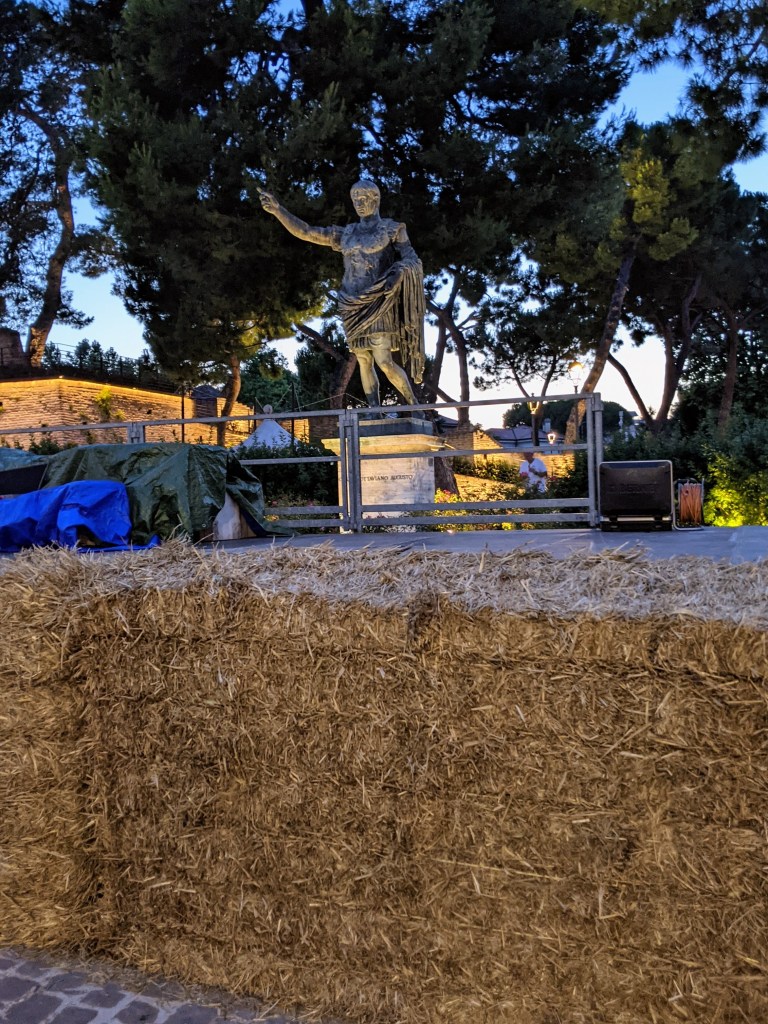
We were so tired when we got to Fano after the first leg that we didn’t have the energy to do much except go to the beach, a couple blocks from our hotel. There was absolutely no shade so we opted to rent 2 letti (beds) and a parasol for the rest of the day. This was a good decision! We needed a dip in the sea, a cold drink and a rest. There are some good Roman ruins here which we saw a bit of as we strolled in the evening while finding some food. There is some kind of Roman festival that just started as we were leaving unfortunately.

When we arrived in Rimini again we were bagged so put on our bathing suits and lounged at the pool in the hotel with a cold drink. We had an early supper on the beach a short walk away and then hit the sack. Maybe we’re getting too old for this?

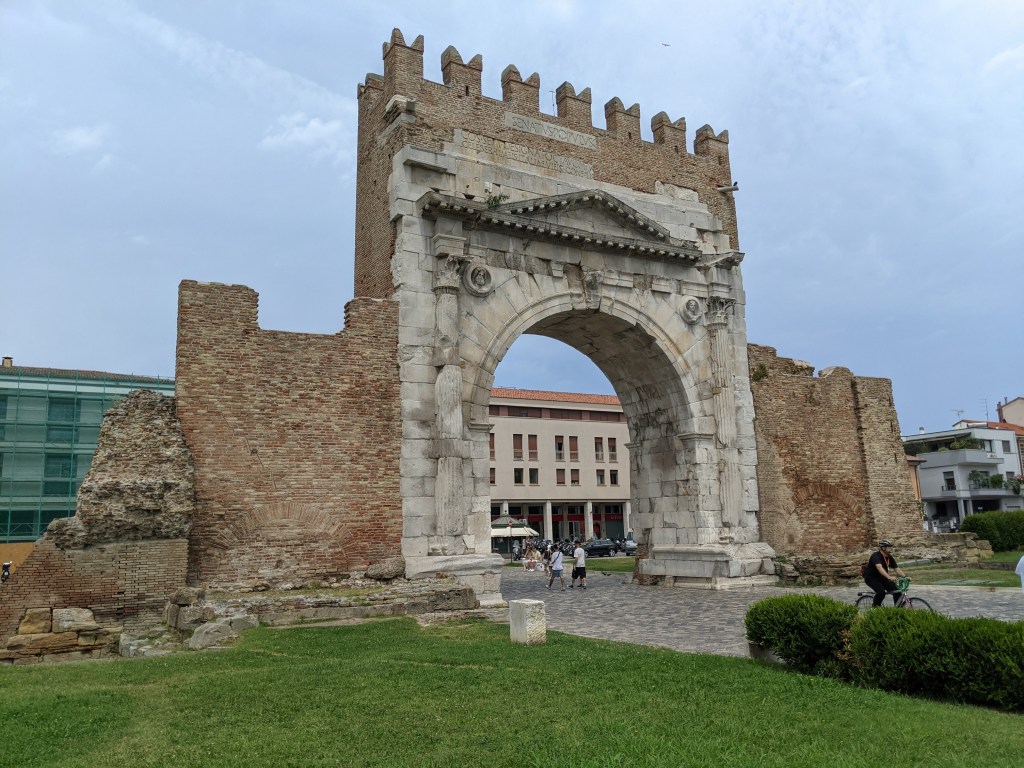
The next day in Rimini was cooler thank goodness and even a bit cloudy. We spent the morning looking around the citta antica at the sites, mostly Roman related. There is the Tiberius bridge which was built between 14 and 21 AD and is still in use today for pedestrians and light traffic! Now that’s building things to last. Rimini was called Ariminus in Roman times and was an important junction between Rome and other cities. There’s also an Arch of Augustus here, like in Fano. In the 13-14th centuries there was a fellow named Sigismondo Malatesta (bad head?) who dominated the city and built temples, castles, etc so many things named after him.

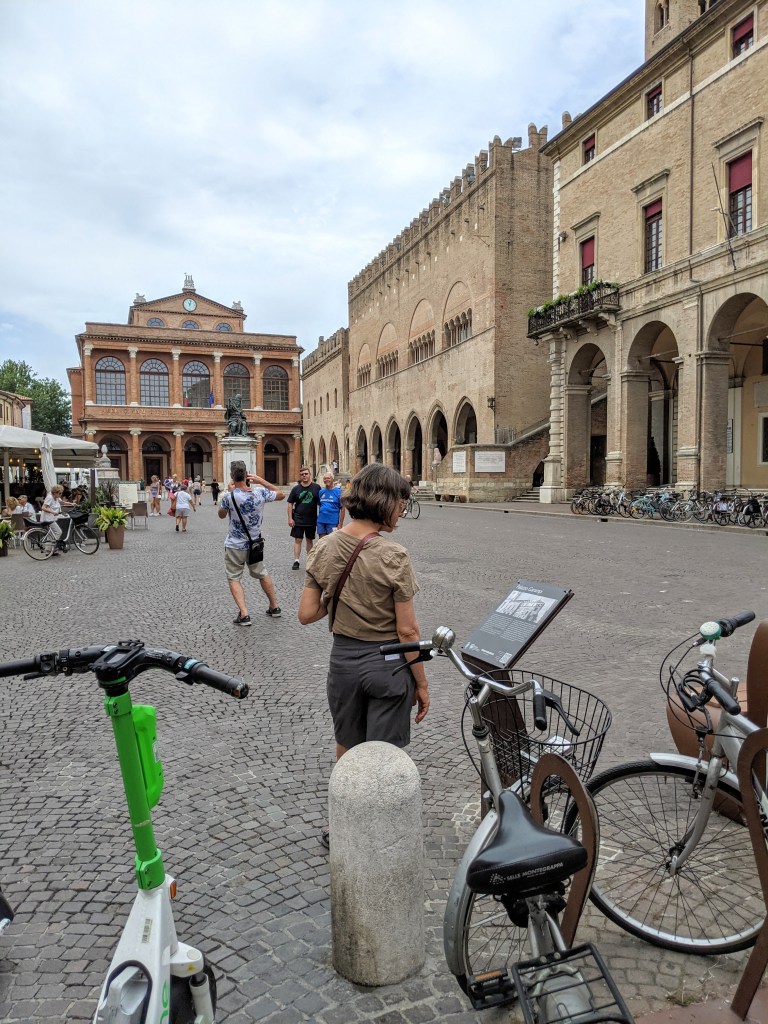
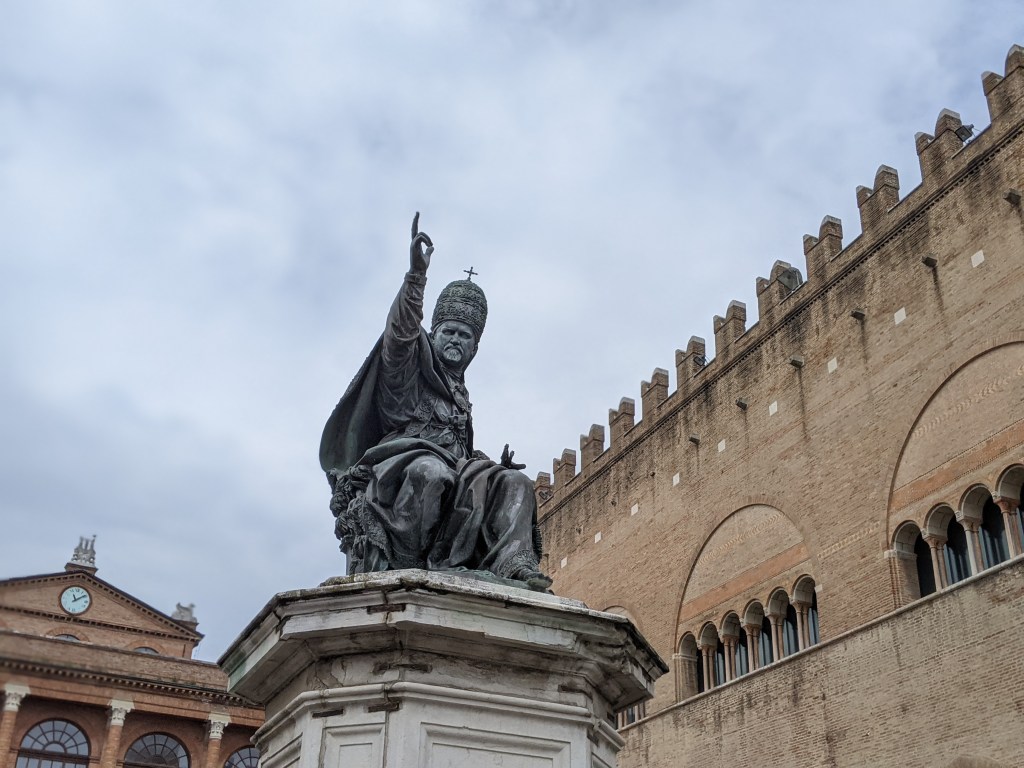
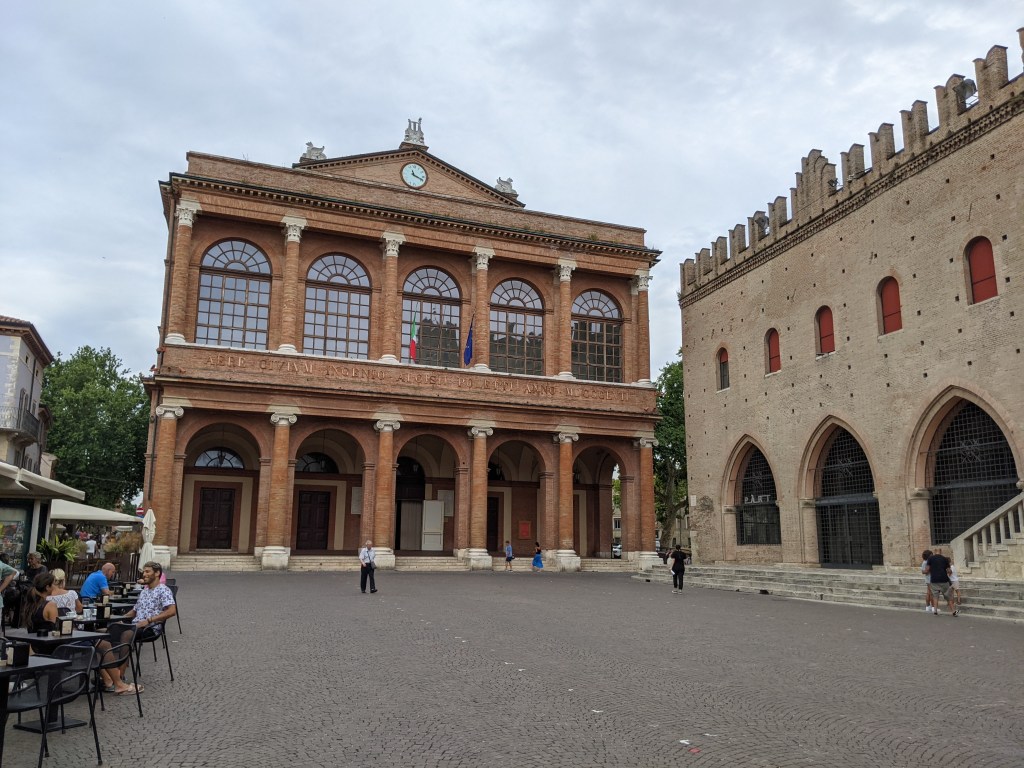
There are several notable piazzas in Rimini: 1) Piazza Cavour with palazzos, a papal statue, a Teatro Galli opened in 1857 with a Verdi opera, a Fontana della pigna (pinecone fountain) that dates from Roman times, provided the city drinking water until 1912 and has an inscription by Da Vinci from a 1502 visit that says “Make harmony with the different falls of water, as you saw at the source of Rimini” 2) Three Martyrs Square named after 3 young men who were executed by hanging in 1944(!) as they were part of the Italian resistance to the German occupation. Rimini suffered heavy damage during the 2nd World War unfortunately but it has been rebuilt over time 3) Piazza Malatesta (see description below).

Rimini is famous as the birthplace of Frederico Fellini (1920 – 1993) who was a renowned film director. He received many awards, including Academy Awards, for his various films. Some of the better known ones are La Dolce Vita (this is why the phrase was coined), 8 1/2, Amarcord, Nights of Cabiria, and many more. There is a whole tour of all the places he frequented, where he lived, where he went to the cinema, etc. The Fellini museum is in the Sismondo Castle on the Malatesta square, or now known as Piazza Dei Sogni (Square of Dreams) after Fellini’s idea that “nothing is known, everything is imagined” with a misting wading pool and a large circular bench evoking some famous scenes from his movies.

Rimini is also known as a resort town with big beaches as we have seen previously along this coast. We didn’t partake in this here as we had our own pool at the hotel. Most of the tourists seem to be here for that reason but again we are not finding it to be that crowded.

Kastela to Split, ferry to Ancona

10 Jul

Our short ride into Split was early on a Saturday morning so traffic was relatively light. However we still encountered one very rude tour bus driver (on an empty 3 lane road) who was determined to let us know that he didn’t want us on the road so drove past us very closely while laying heavily on his horn. We will not miss this characteristic of Croatia and look forward to riding somewhere where cyclists are accepted and welcomed. We recognize that Croatia has a much different culture and history than what we’re accustomed to and it’s important to acknowledge these differences and not expect everywhere to be like home. Travel is enlightening…but still no excuse for obnoxious driving.

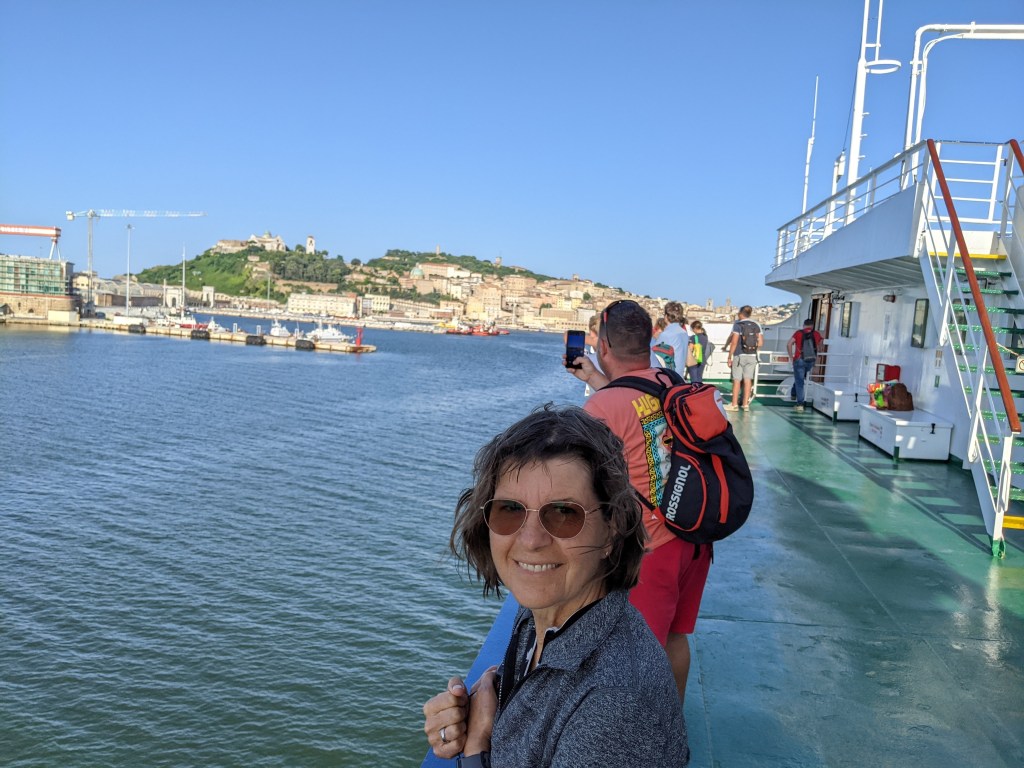
Getting on to the ferry was easy, we had no difficulties. It was a beautiful day and we had smooth sailing all the way to Ancona. We prebooked some reclining seats so that helped pass the time as it was a 9 hour crossing. We didn’t think to bring the charging cords for the phones up on deck so we had to ration our use. We didn’t see much while at sea except for one baby sea turtle spotted by me (Tara) right beside the boat but I wasn’t quick enough to get a photo unfortunately. Our hotel in Ancona was fairly close to the port so that also went smoothly except for the usual climb from sea level. There’s no parking of any kind here so hauled the bike up to the 3rd floor and into our room. It is a good place to hang clothes from.

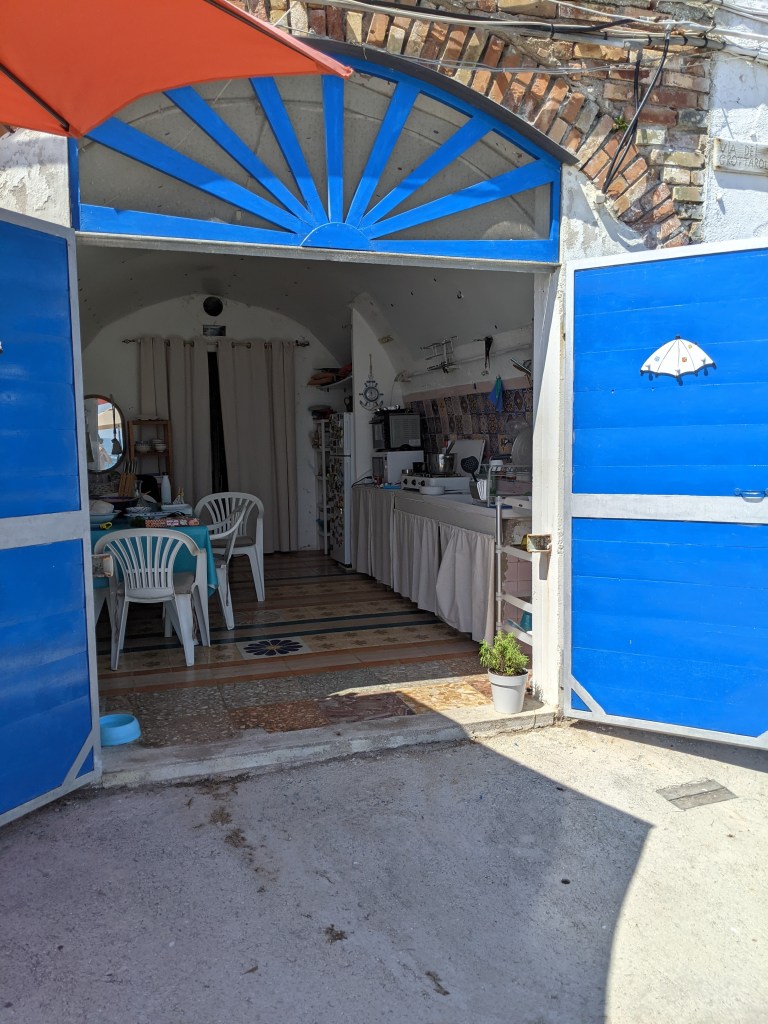
The next day was spent doing the usual city walks to see all the sites. Ancona has some very original looking beaches. No sand here either, just rocky, with many concrete walls and walkways where people lay out their towels and mats. There were also some interesting “caves” that had been dug out of the side of the cliff and finished like cabins with tables, chairs, fridges, etc all very personalized. People store in them whatever they might need at the beach like boats or paddle boards, parasols, etc, bring food and spend the day there. We’ve seen a lot of beachy places, this one is quite unique.

We strolled up then down a long shaded pedestrian avenue ( Viale della Vittoria) that goes from one end of the town to the other or one waterfront to the other. Ancona is situated on a “hook” shaped piece of land with water on both sides. There is a large war memorial situated at one end of the Viale and on the hill overlooking the beach which is very striking. There is also the citta antica to explore with cathedrals, towers, arches, piazzas and palazzi which involved much climbing by foot. The principal cathedral is San Ciriaco who is the patron saint of Ancona. The temperature was 33C that day so we definitely needed a few cool refreshment stops along the way. Ancona is significantly less crowded than Split, a pleasant change, but a beautiful small Italian city with lots of character and sites to see.

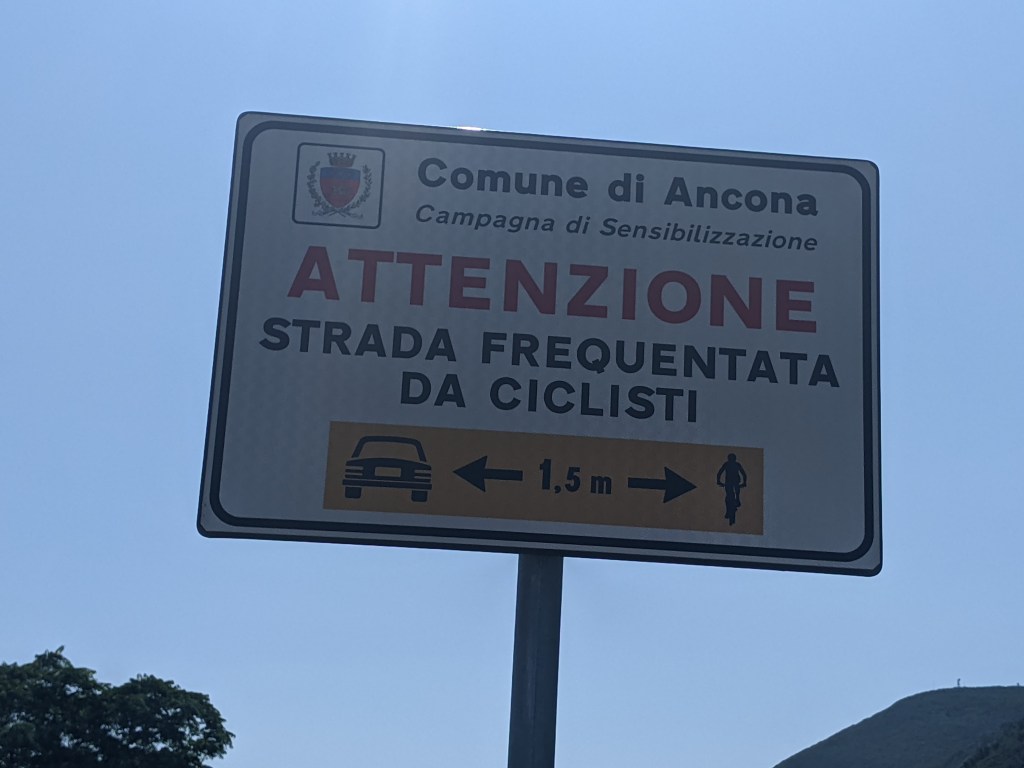
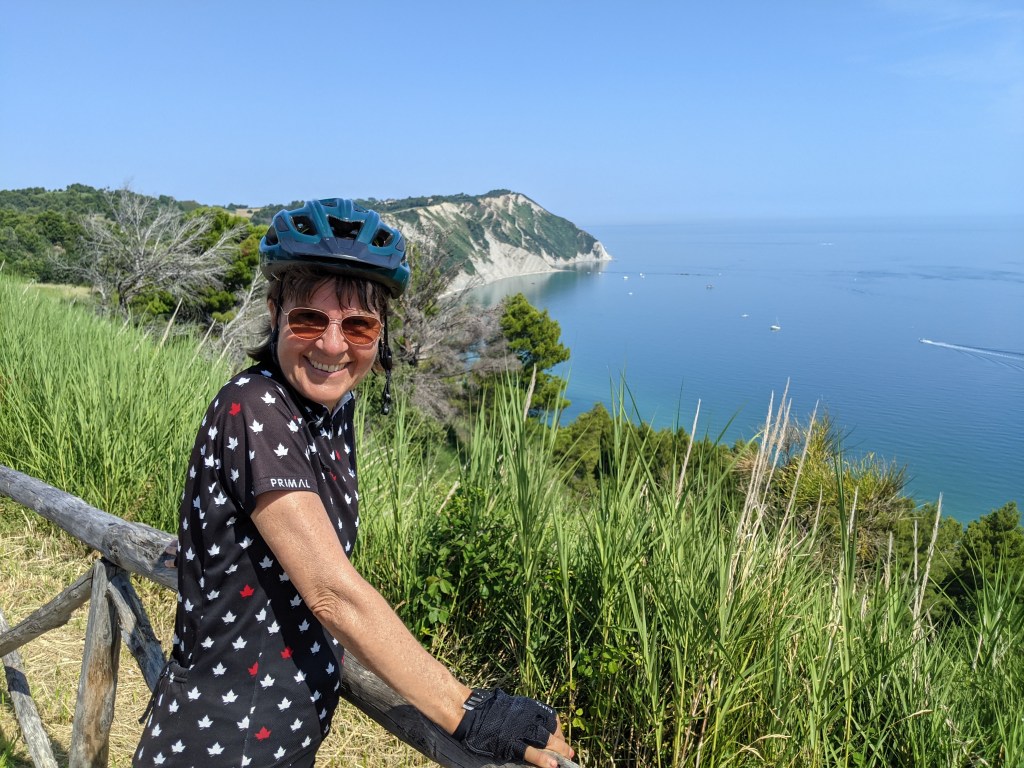
The next day we hauled the bike back down to the street and rode south of Ancona to Portonovo, a remote beach area accessed only by boat or a steep hiking trail from the road. We didn’t opt for the actual beach, just to do a bit of riding and see the countryside. It did, however, involve some very steep hills but as the saying goes, no view without the climb. It is a relief to be back on Italian roads, the drivers are used to bikes and figure out how to share the roads, much more enjoyable. It is very hot right now unfortunately, 30-35C, so we have to work at staying hydrated. George has been suffering from heat rash on his legs which looks bad but doesn’t really bother him otherwise. It may not clear up until we get back to Calgary the way the weather looks now.

Sibenik to Split (Kastela)

7 Jul

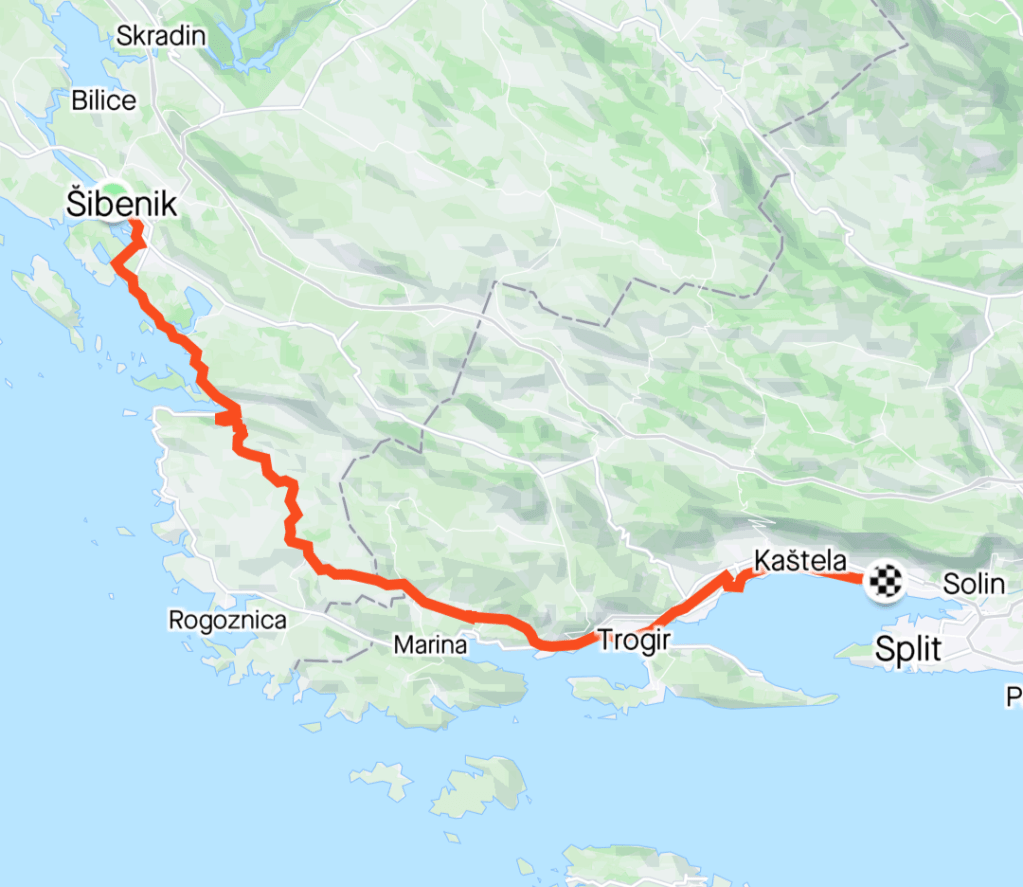
The ride to Kastela (suburb of Split) was a nice one! We had originally routed ourselves to follow the coast but have grown tired of the shoulderless roads and drivers here so opted instead to follow the EV8 (Eurovelo 8) on an inland route. This meant more climbing but the bulk of the ride was on lovely quiet roads. The climb was early in the ride but still a warm day so not easy as it was over 300 meters ascent and up to 9% grade with the average around 4-5%. However it was so pleasant to not have cars and trucks whizzing closely past you constantly that we enjoyed the challenge. There were 2 stretches of 3-4 km of gravel unfortunately, some of it quite rough, but we preferred this route overall. Coming down the other side was very fun with smooth downhill twisty roads.

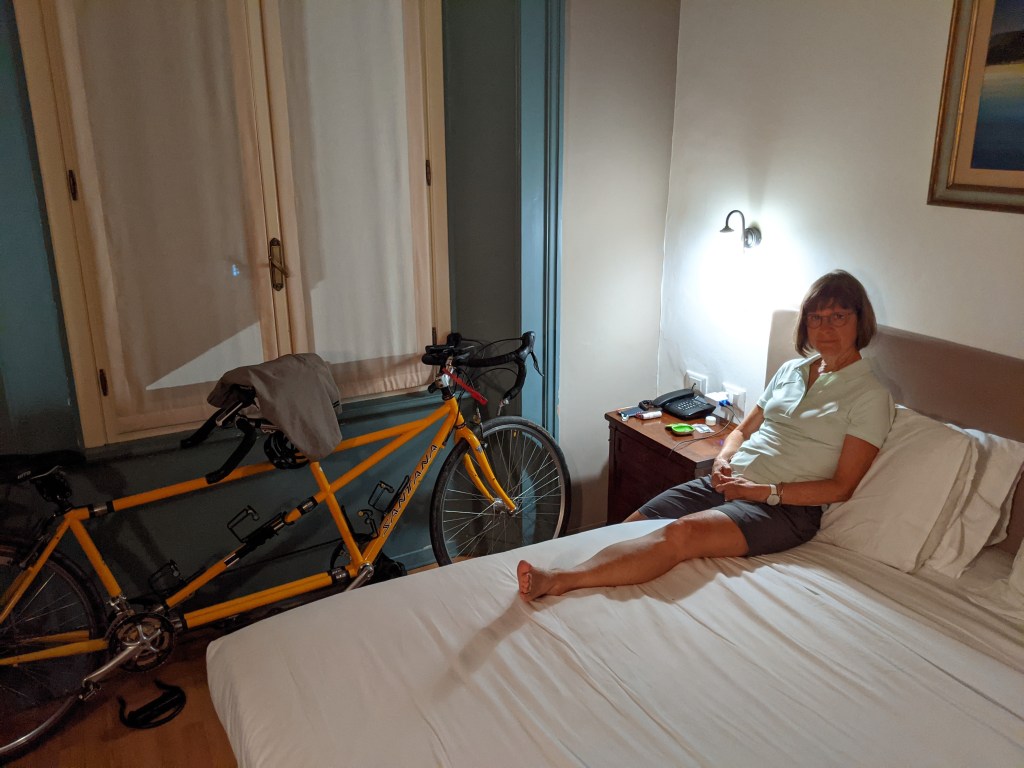
Our apartment in Kastelo Sucurac is very tiny and not in a particularly interesting place but it is close to the Adriatic and has everything we need. We had trouble finding accommodation in Split that would suit our needs so decided on this instead. We had to carry the bike up to the second floor to lock it on the balcony as there was no other safe place to leave it. After getting into the various apartments we have stayed in and securing the bike there are groceries to find, washing out our “sveti” bike clothes (always hope for a washing machine), showering and then figuring out supper. No rest for the weary. We definitely sleep well.

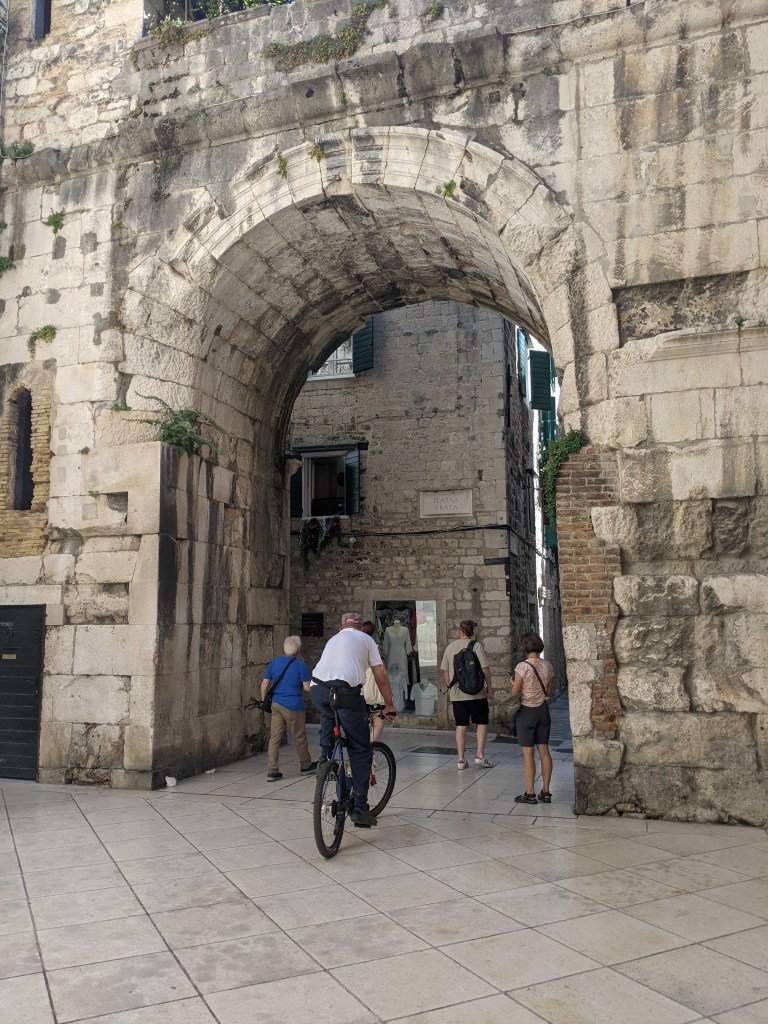
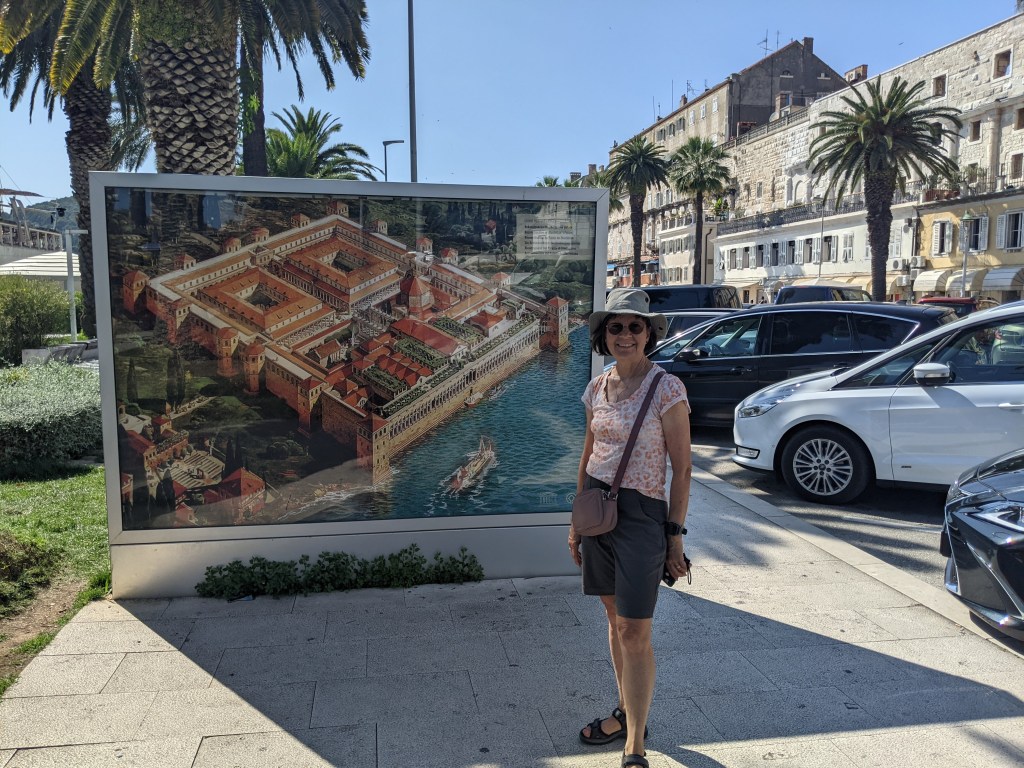
The next day after a morning on the beach here we hopped on a local bus and headed into Split. We spent a couple of hours doing a self guided walking tour of the Diocletian palace and some other city sites as well as walking up to see the view from the top of Marjan hill. The palace is a UNESCO heritage site so well worth the visit. It was built back in about 300 AD by the roman emperor Diocletian as his retirement villa then eventually taken over by the Christians who added or renovated it to their liking by adding many cathedrals. Over time it has become incorporated into the city with shops and homes within the palace. It is quite a remarkable place to see, very old yet still complete. The stone used to build it is white and comes from the nearby island of Brac.

Split has become a major tourist destination, almost like Venice and Rome and is very crowded now that it’s officially summer. It’s much more busy than anywhere else we’ve been. I think this is why we had trouble finding a place to stay right in the city. As well we don’t see many hotels in Croatia, not like in western Europe. Apparently with the boom in Croatian tourism over the past 20 years or so many Croatians have bought property in Split and turned them into rental apartments, driving up the costs and forcing many locals to live elsewhere. Split is one of the places where The Game of Thrones is filmed so this has also had an impact on tourism. This same thing has happened in Venice and other smaller places we have visited this trip (Rovinj) with nobody really living in the cities or at least not year round. Perhaps some legislated balance is needed.

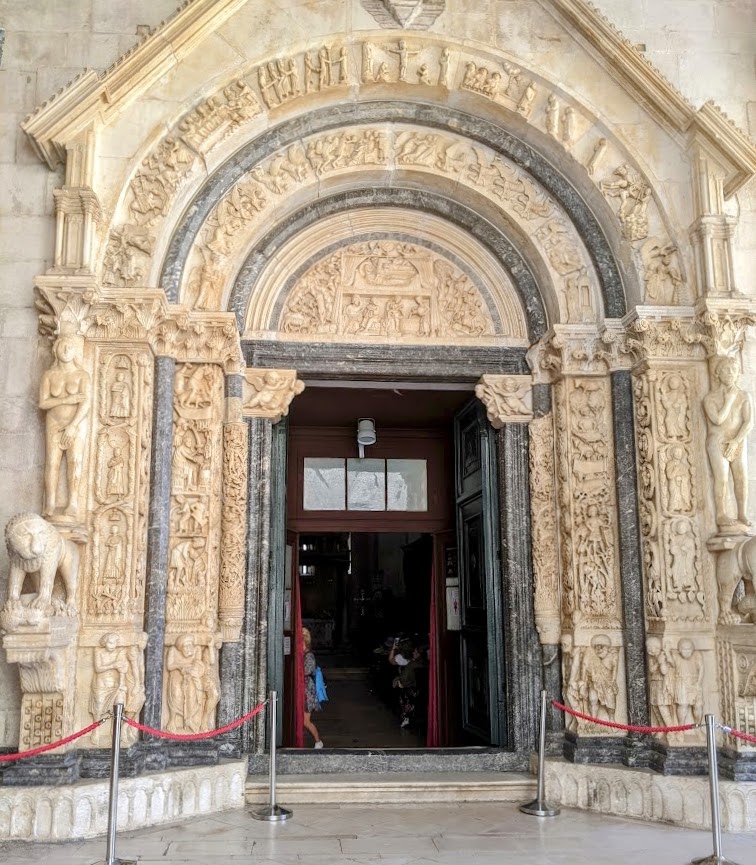
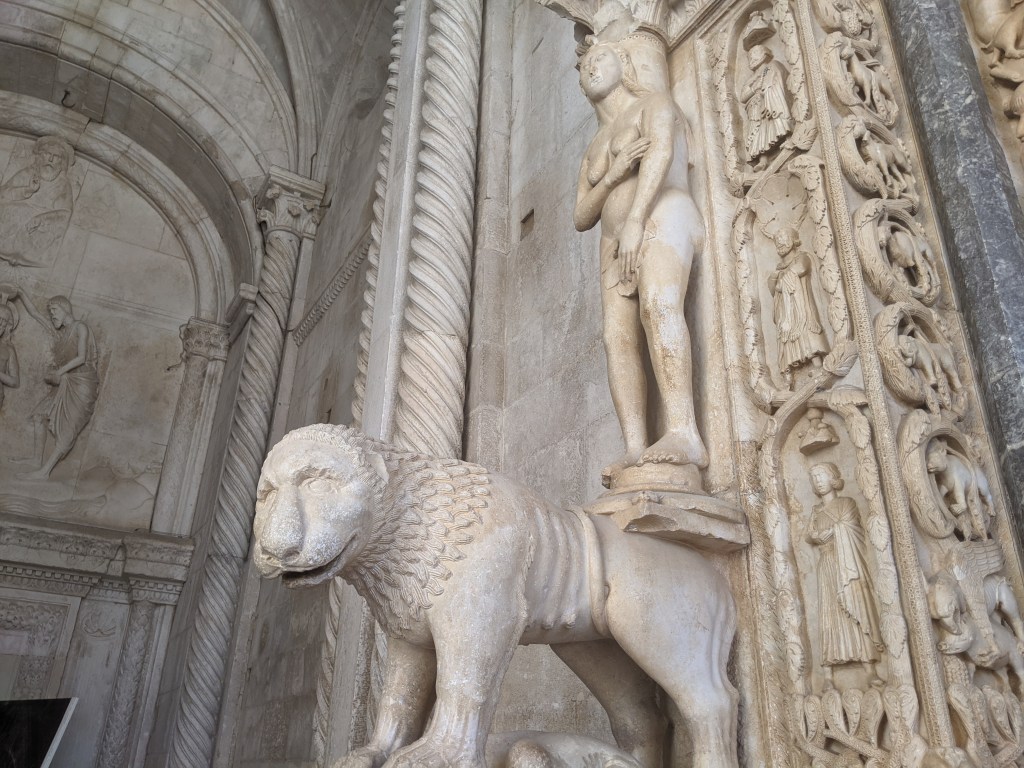
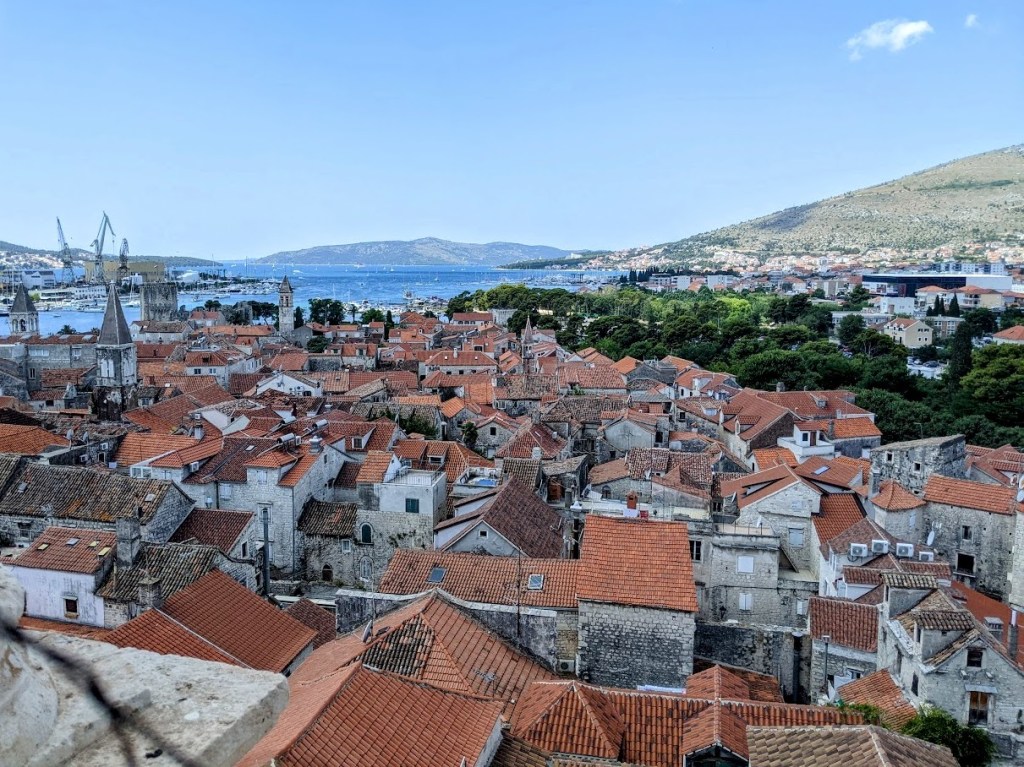
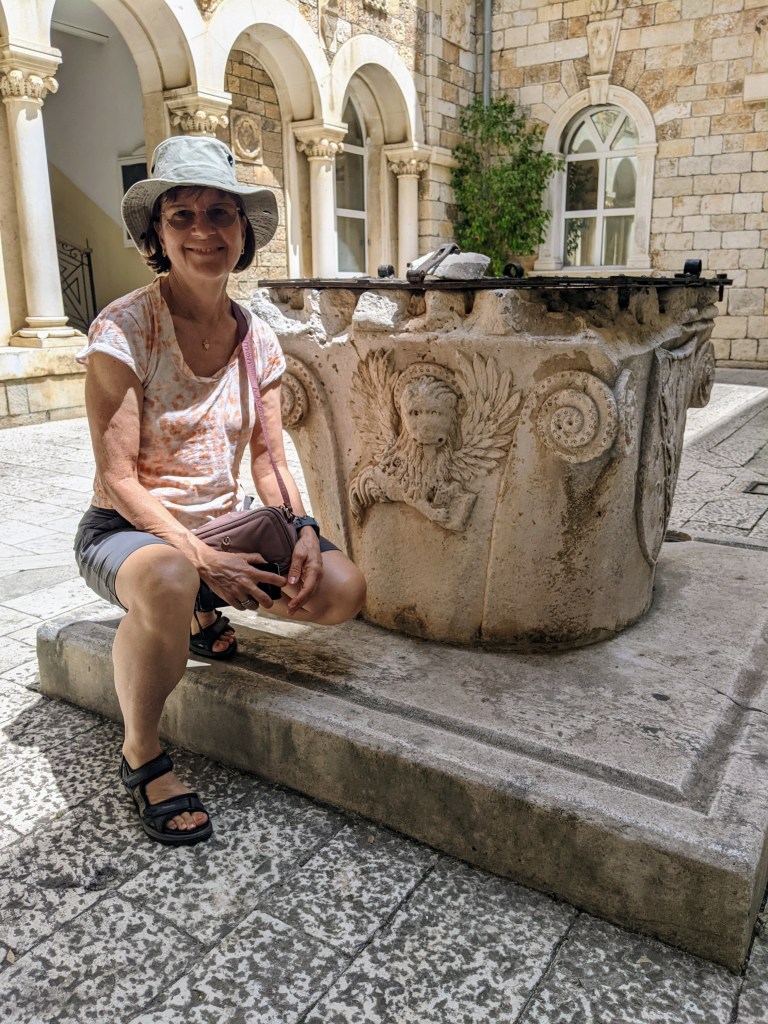
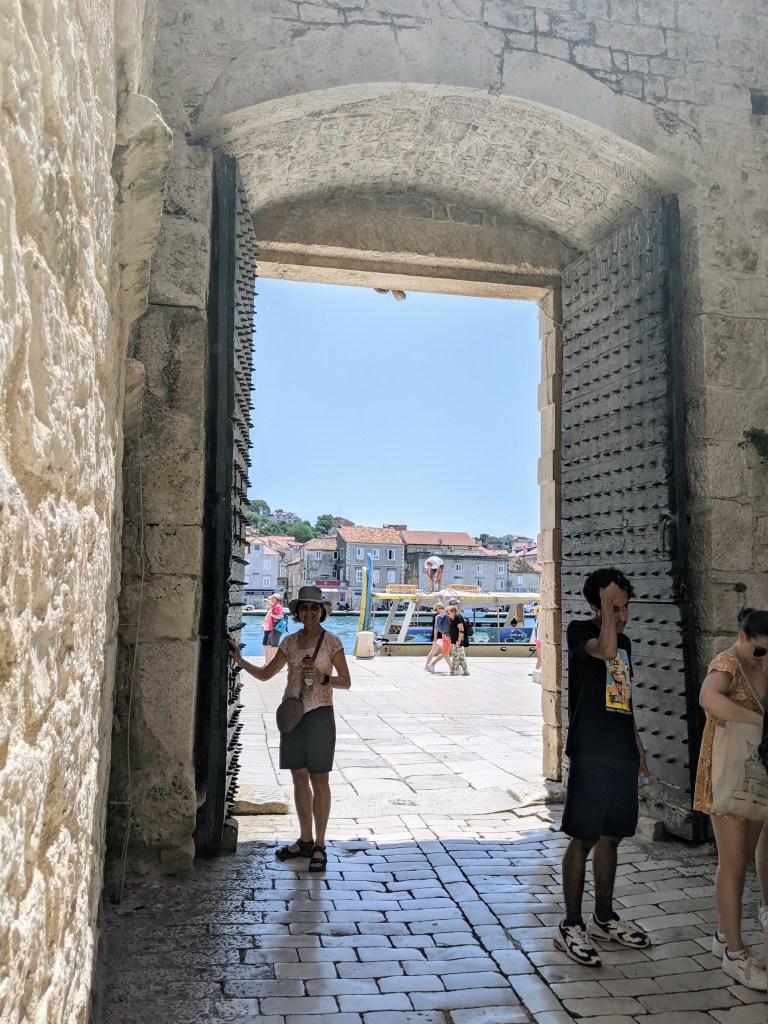
On the second day we took the bus again in the other direction to Trogir, another UNESCO heritage site. Trogir is a small city that sits on its own tiny island, as others we have visited. It was founded by the Greeks in the 3rd century BC (Hellenistic period) and since has been controlled by the Romans, Saracens, Venetians, Hapsburgs, Napoleon, etc, another city with complicated history. Structure and art work has been added or removed over the centuries depending on who is in control. The Venetian winged lion symbol has been mostly removed except for one on a small well hidden in a courtyard. Like other ancient cities we’ve seen it is a maze of narrow streets and tall buildings. When viewed from the local bell tower you can see how complex the buildings are; where does one begin and another end? I can’t imagine buying/selling property in these places. We visited the famous Cathedral of St. Lawrence (Sveti Lovre) which has a spectacular entrance portal called the Radovan portal after the architect. It was built in the 13th century. There was also a fort and a lovely Riva or waterfront promenade to enjoy.

Tomorrow we head back to Split on the bike and catch a ferry to take us across the Adriatic back to Italy.

Zadar to Šibenik

4 Jul

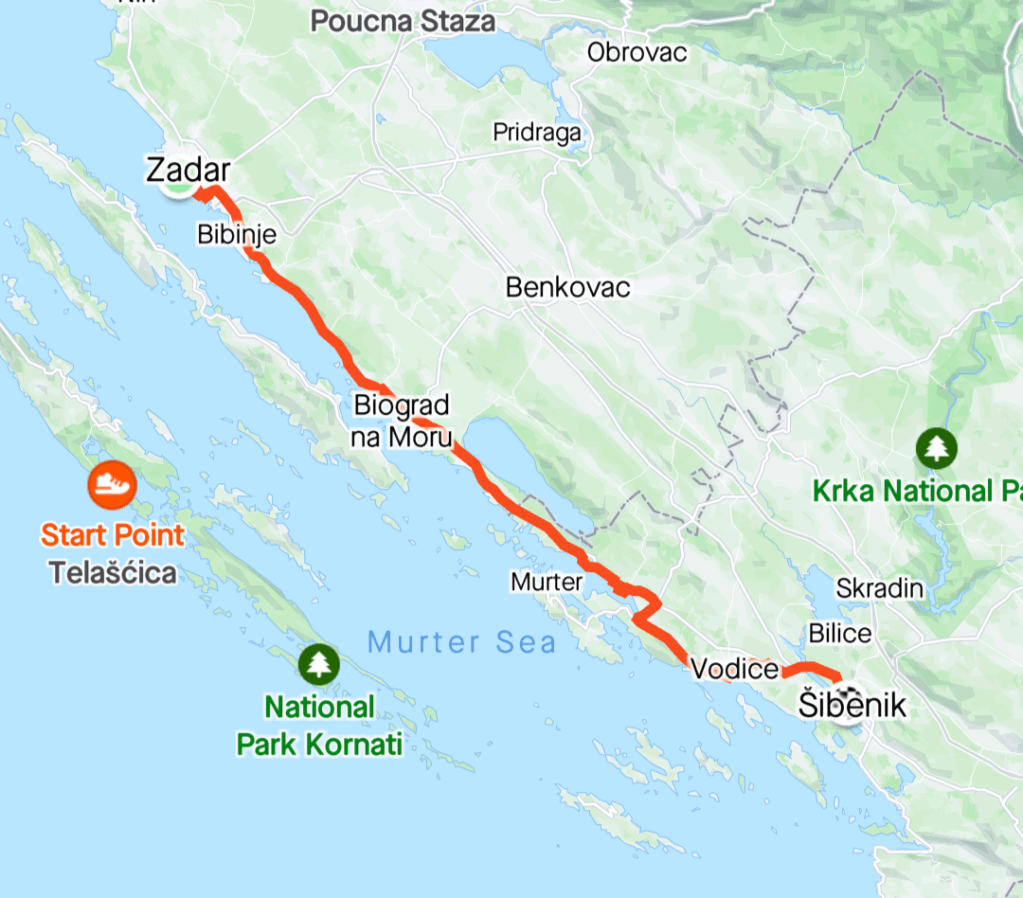
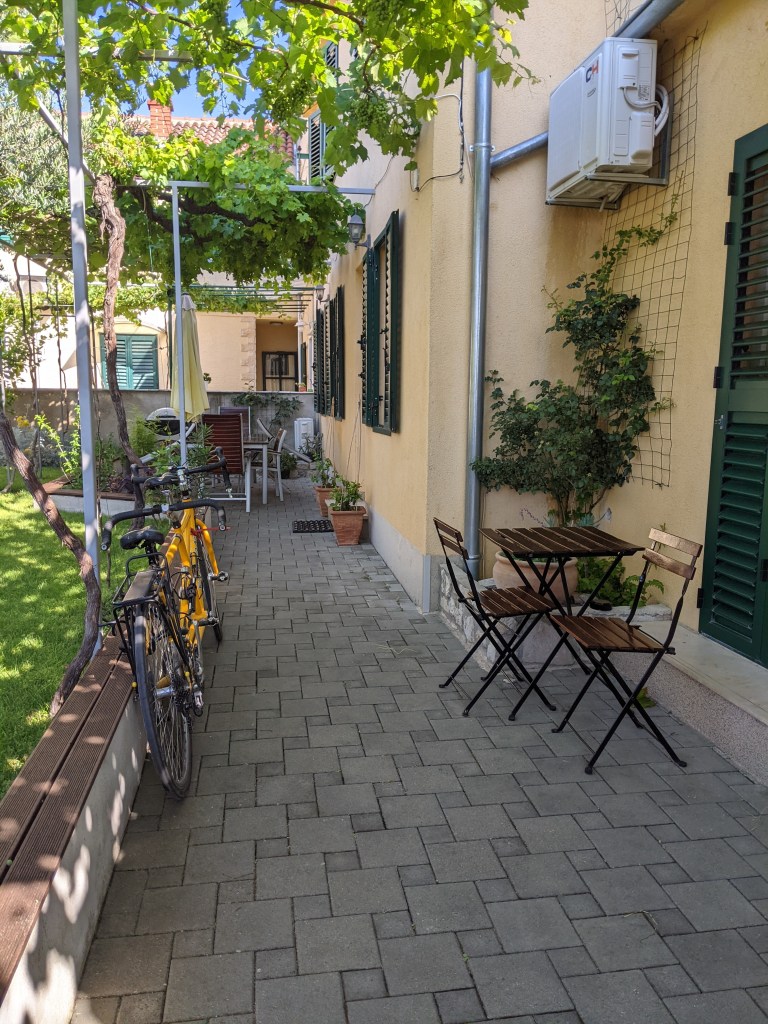
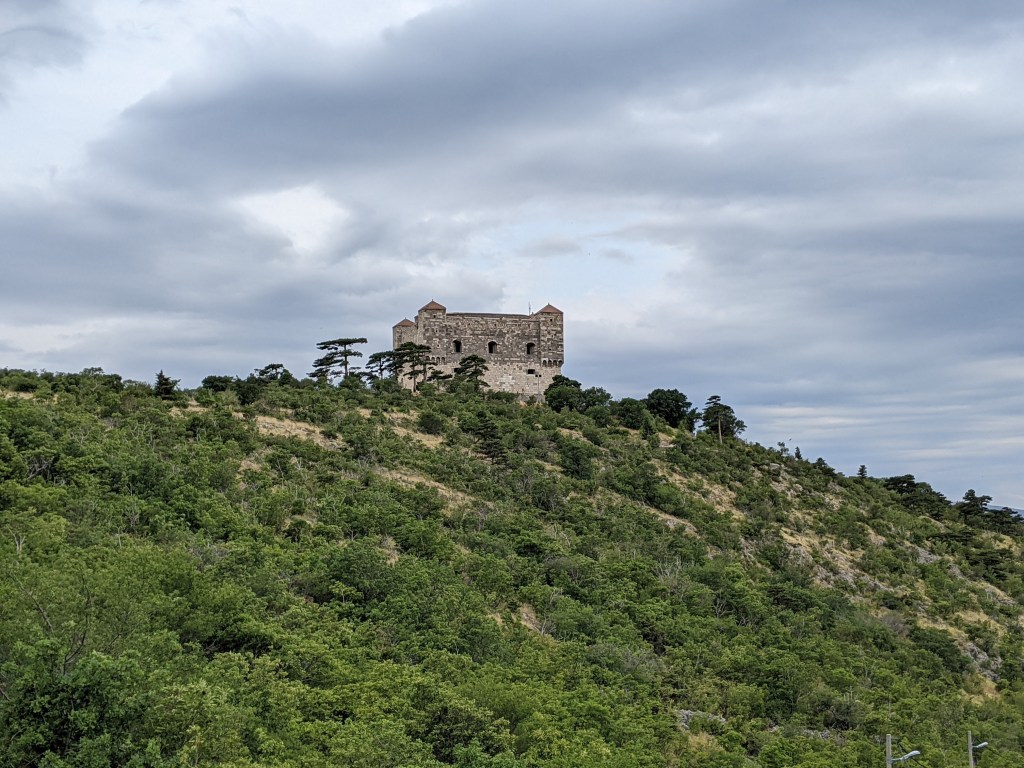
The ride to Sibenik (Sheebenik, emphasis on the 1st syllable) was much better than other recent rides and we found it pleasant for much of it. For quite a way we were on part of the Eurovelo #8 which meant the roads chosen are more bike suitable and quiet. This Eurovelo route does make its way through Croatia but much of it is still under development, not paved, and often quite rough and rocky, better for mountain bikes. We had no further challenges like we had last week thankfully, only trouble finding and getting to our apartment once in Sibenik. We are staying in the old centre here situated on a steep hill and stairs are the major mode of movement, not easy with a fully loaded tandem. The other issue in these narrow streets with tall buildings is that GPS loses satellite signal so you can’t reliably use it for navigation. Eventually we did succeed in locating the “apartman” and there were some wooden boards forming a ramp over the stairs up to it so we could roll the bike up. Our Sibenik apartment is very cute with a little private garden and we are directly under a large old fortress, St. Micheal’s, which is an important tourist destination within the city

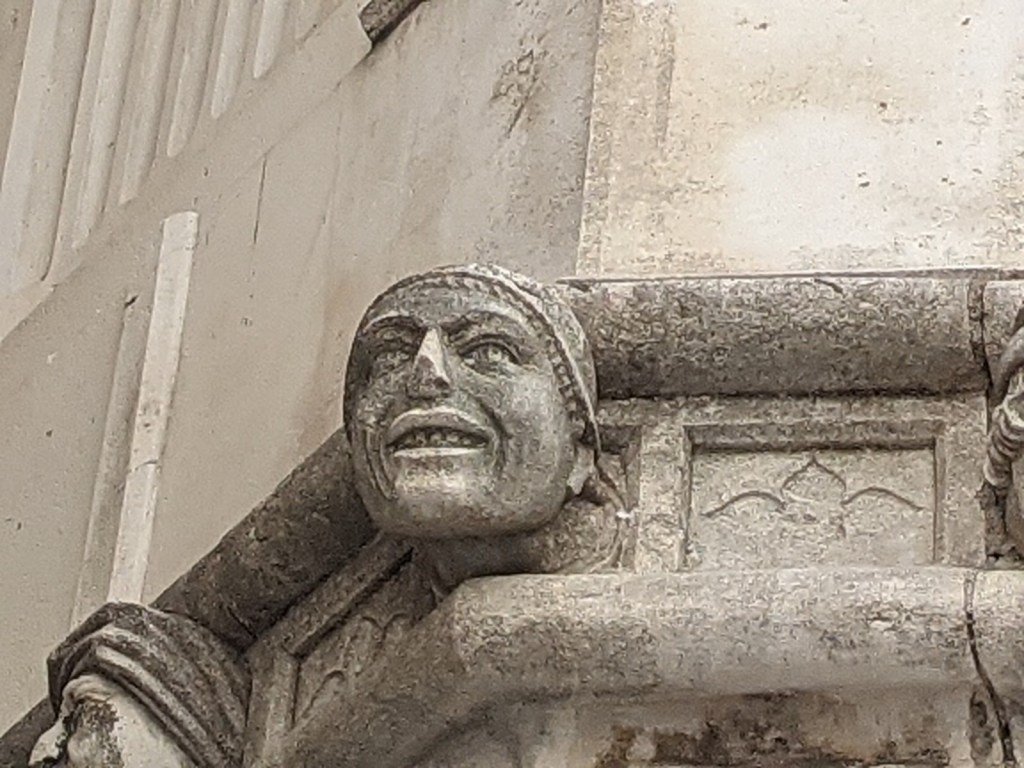
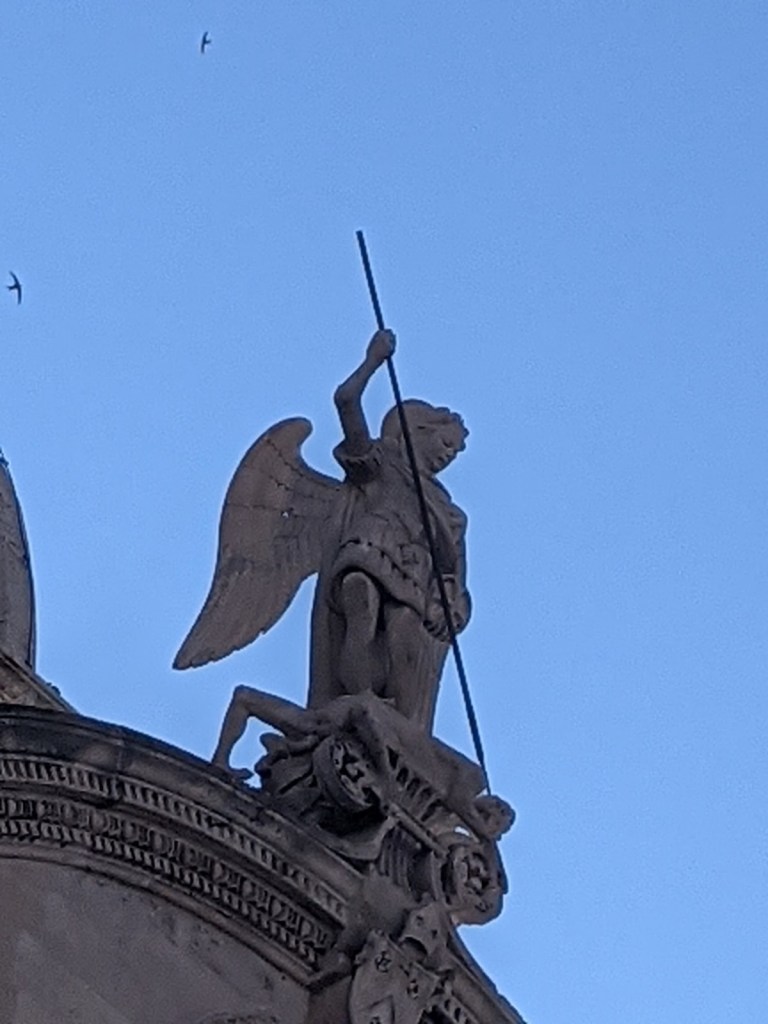
For our first day in Sibenik, we started with the 3 fortress tour. First the one beside us, St. Micheal’s, then the Barone fortress and finally St. John’s. The first one is the oldest, from the 11th century, most developed and has a large open air concert venue that hosts musical concerts. In fact there was one last night, it was a bit noisy around our bed time. The other 2 fortresses are on opposing hills so there was definitely some climbing to be done but only on foot and no heavy bags so it is too easy. All 3 give you some very good views of the city and areas around here. As you can well imagine the city was protected from 3 places when needed through history and the countless wars. We spent the rest of the day exploring the old centre and its narrow winding streets as well as the important UNESCO listed St. James Cathedral. It is positioned lower in the old town and and makes an imposing statement when viewing from the fortress above. It was built in the 15th century by an architect and sculptor named Juraj Dalmatinac. The main reason it is classified as a UNESCO site is related to its interlocking stone construction method for the church and the dome as well as other renaissance artistic styles. One very unique and interesting feature is the 71 heads of the architect’s contemporaries sticking out of an outside wall. They are interesting in that they look like regular people with expressions and liveliness, an unusual thing to see as opposed to the usual biblical characters. On top is a statue of St. Micheal, the patron Saint of Sibenik, slaying Satan.

As in other parts of Europe and the world many places and streets are called Saint this and that. Saint is Sveti in Croatian and when George first saw this he didn’t realize it meant saint, didn’t know what it meant and thought it was a funny thing to say in place of “sweaty”. So this has been our standing joke riding here as we are always “sveti” Tara and George. See also the old SNL skit about “schweti balls” for further hilarity.

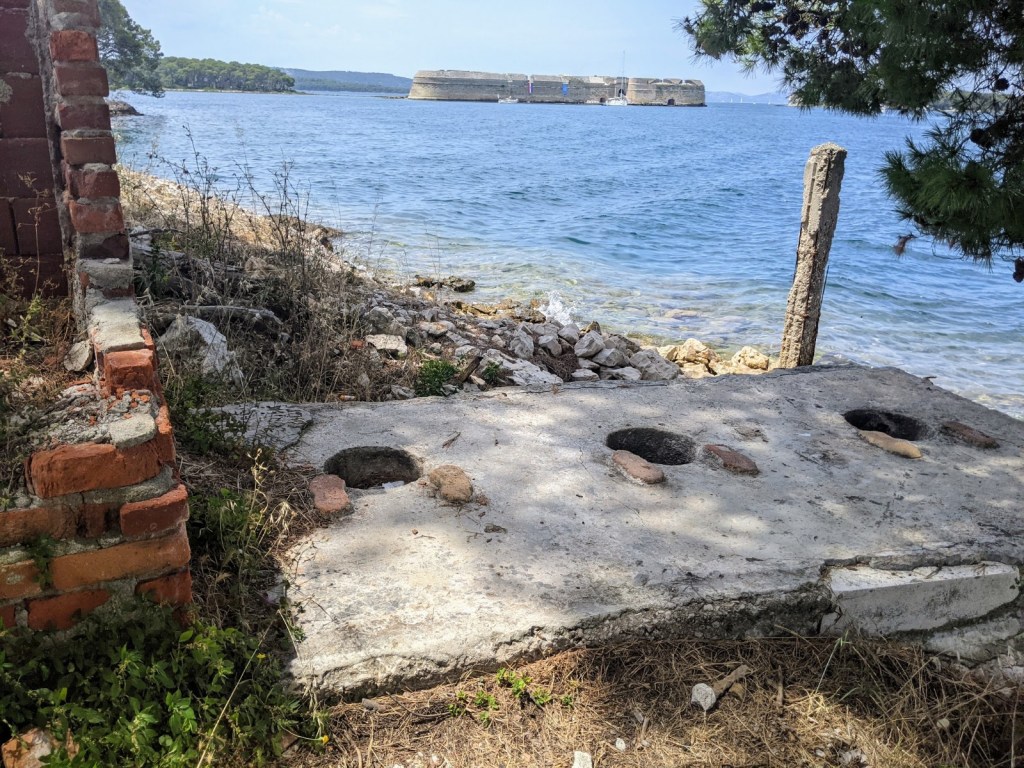
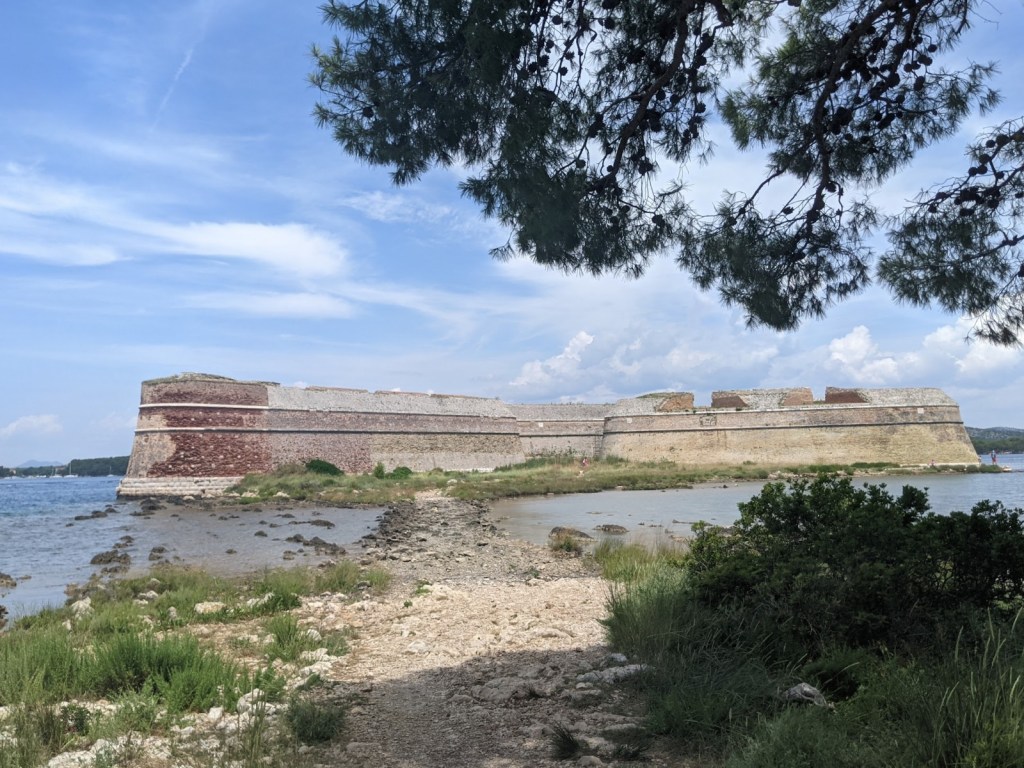
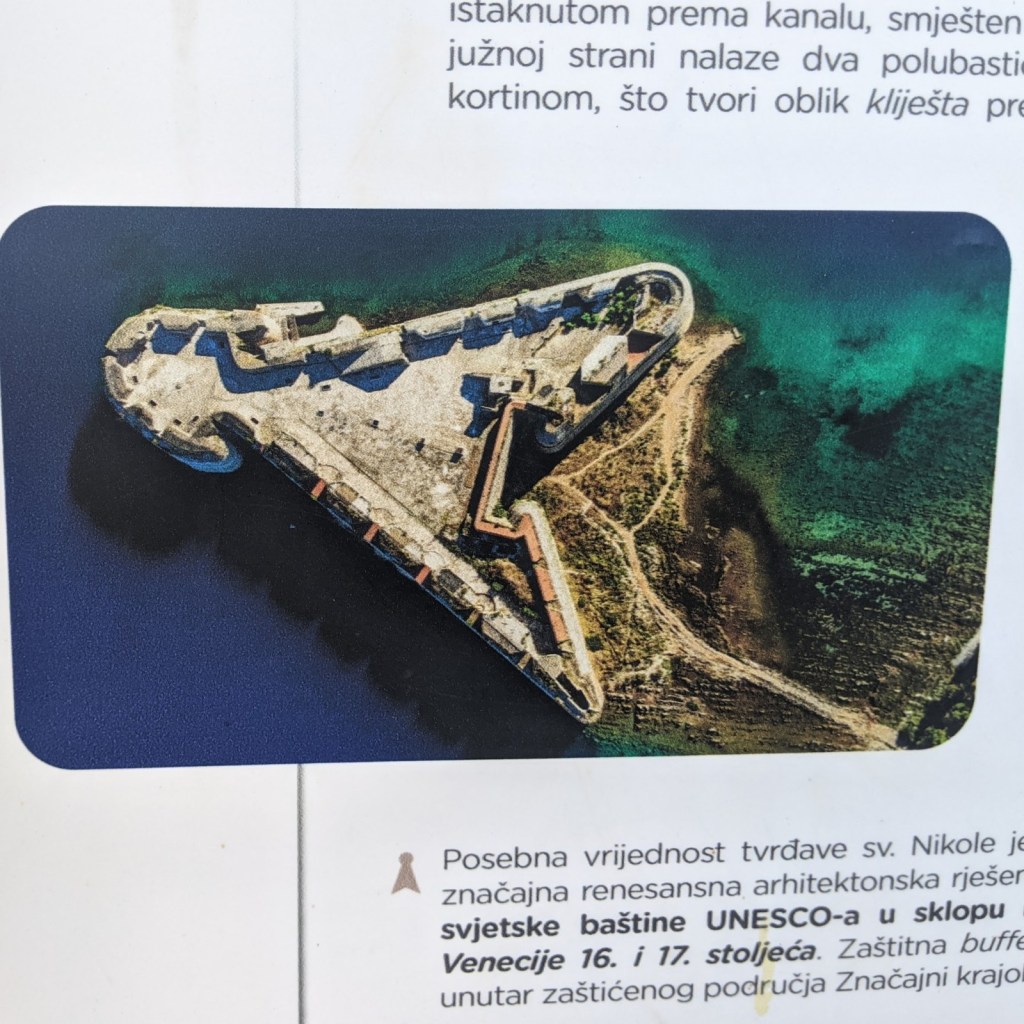
The 2nd day here we rode out on to the promontory across from the city to see the other UNESCO listed site, St. Nicholas Fortress. This is the 4th fortress in the city and it protected the inlet into Sibenik from the Adriatic side. Riding over there gives you an excellent view of the city and the other 3 fortresses from the other side. We weren’t able to actually visit the site as it is undergoing restoration but could get right out to the point where it sits. We were able to enter the visitor’s centre about this area including the fortress, the estuary, rivers, sea life and some history too.

Novalja to Zadar

1 Jul

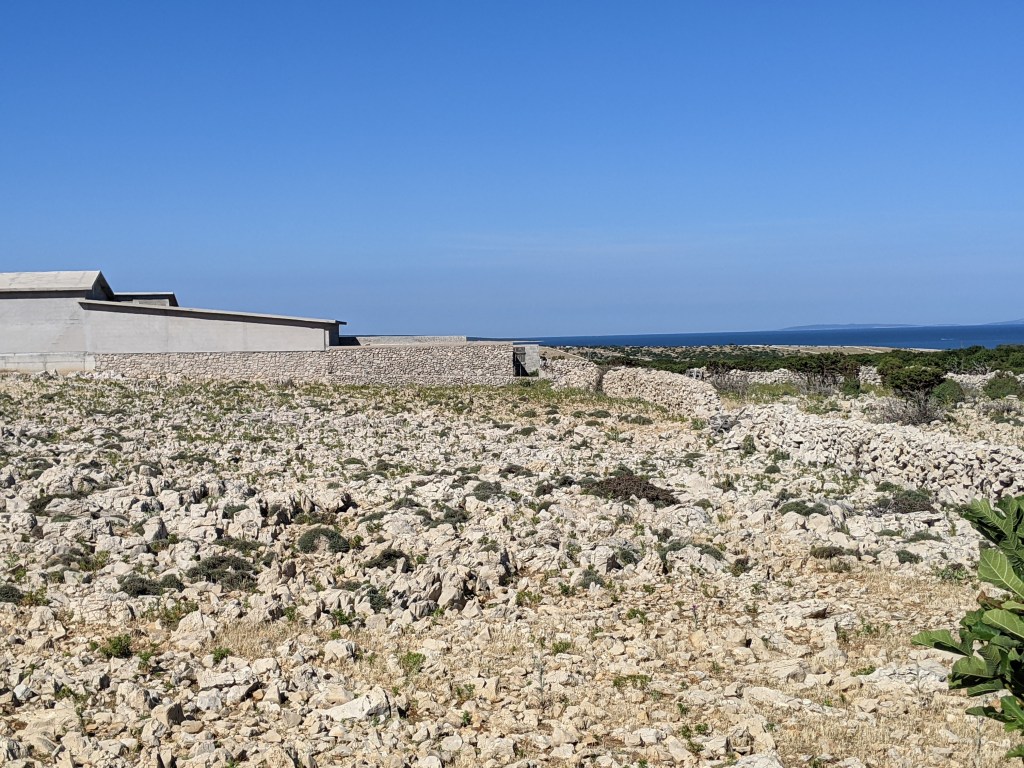
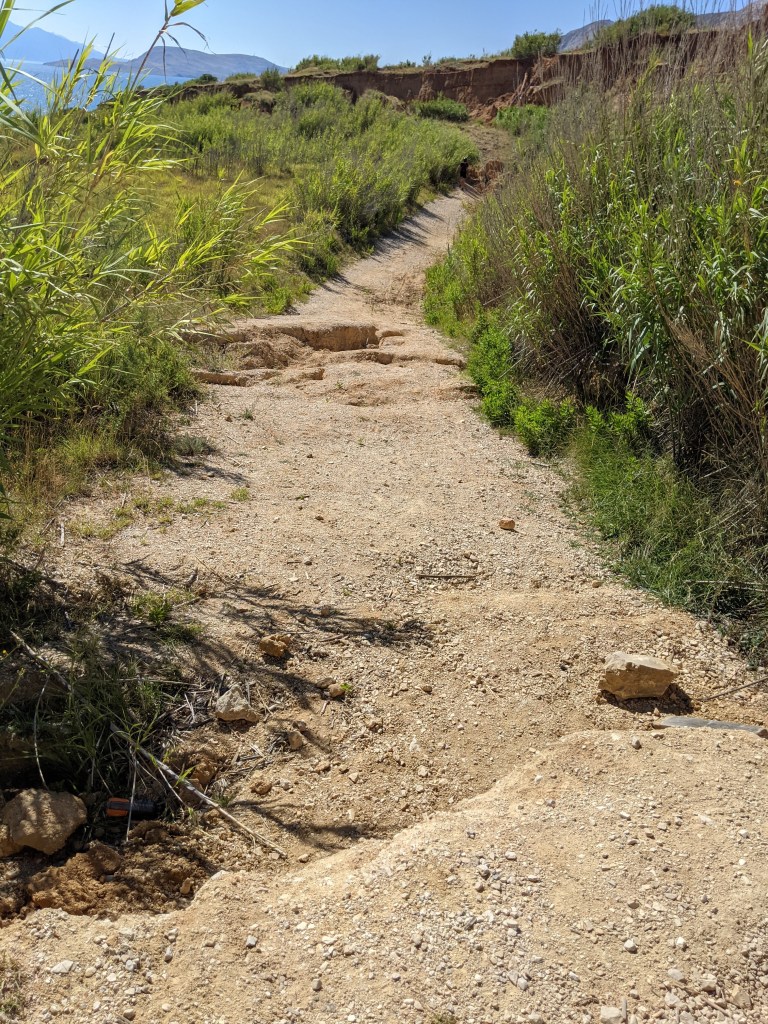
Today we decided to call this year’s tour The Amazing Race Croatia. First there was the Bora wind to get through on the way to Pag and today we had to resort to crossing rocky barren fields while pushing the fully loaded bike, looking for another trail as a section of the one we were following had been washed away. There wasn’t a direct road to follow from Novalja to get off the island, only a very long round about way so instead George found a gravel path short cut that took us directly to Pag town and off the island. He carefully checked said gravel path on google earth and other cycling sites to make sure it was decent prior to going there. But beware of shortcuts, always believe the actual terrain and forget about the map. We did eventually find another almost rideable path that got us back on track luckily, otherwise we would have had to climb back up to the main road…

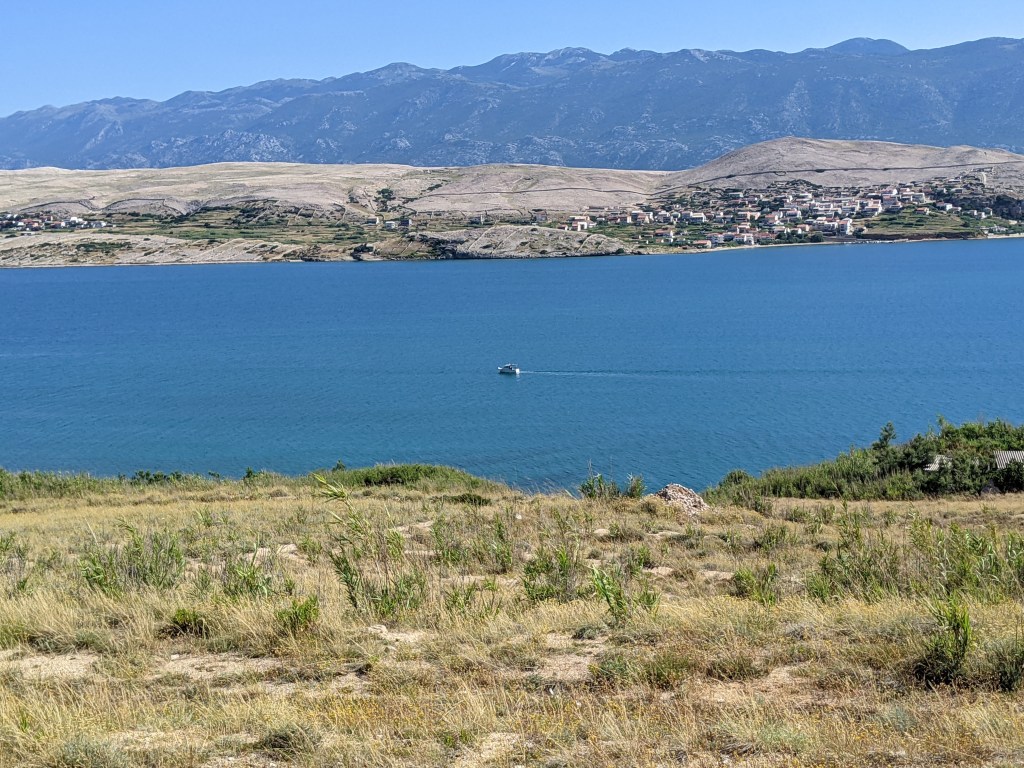
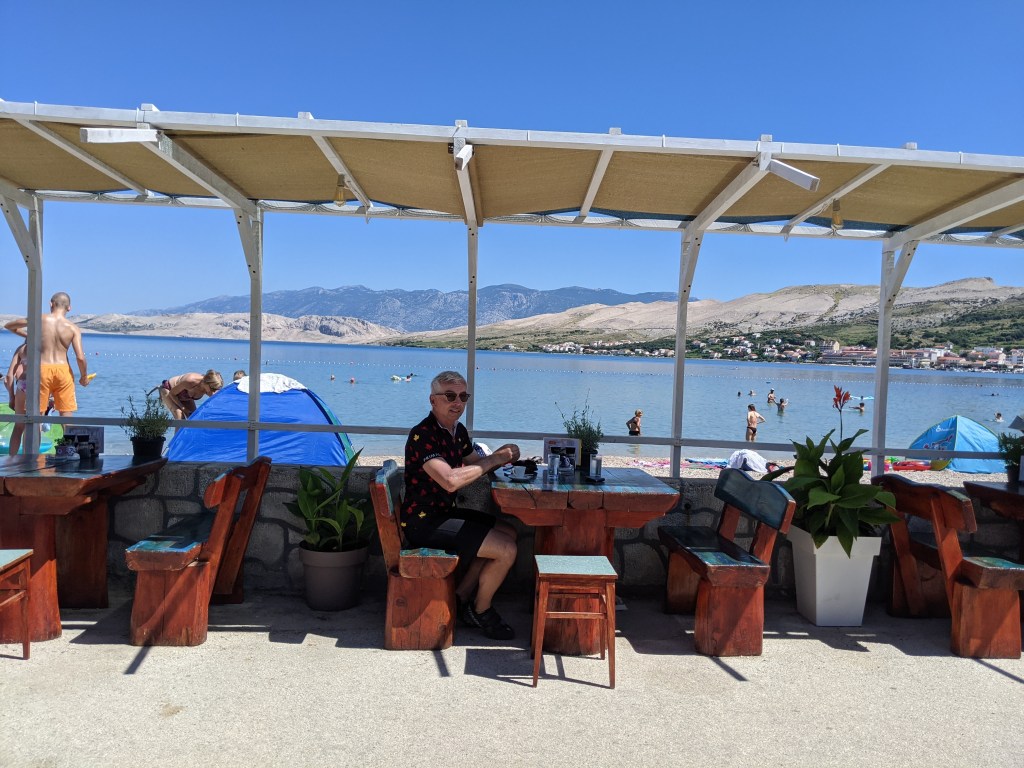
We stopped in lovely Pag town along the beach front for a refreshment and rest. We eventually crossed the Paski Most (bridge) that takes us off Pag and back to the mainland. My sister Margo, brother in law Dean and cousin Zane also crossed this bridge back during their May visit. The rest of the ride to Zadar today was less eventful thankfully although still hard work with lots of hills to climb (one daunting 9% grade) and moderate traffic on the usual shoulder-less roads here. We think that the difference here is that there just isn’t the same infrastructure as in western Europe where there are many road options, often 3+ choices from the A route down to small roads. Here there’s only one, maybe two route options so the roads are crowded. The drivers are not great either, much less patient than we’ve found in previous locations, and they drive too fast and don’t give us space. Overall we wouldn’t likely return here for cycling, Croatia just isn’t bike friendly. However it is very scenic and we enjoy it when we are off the highway.

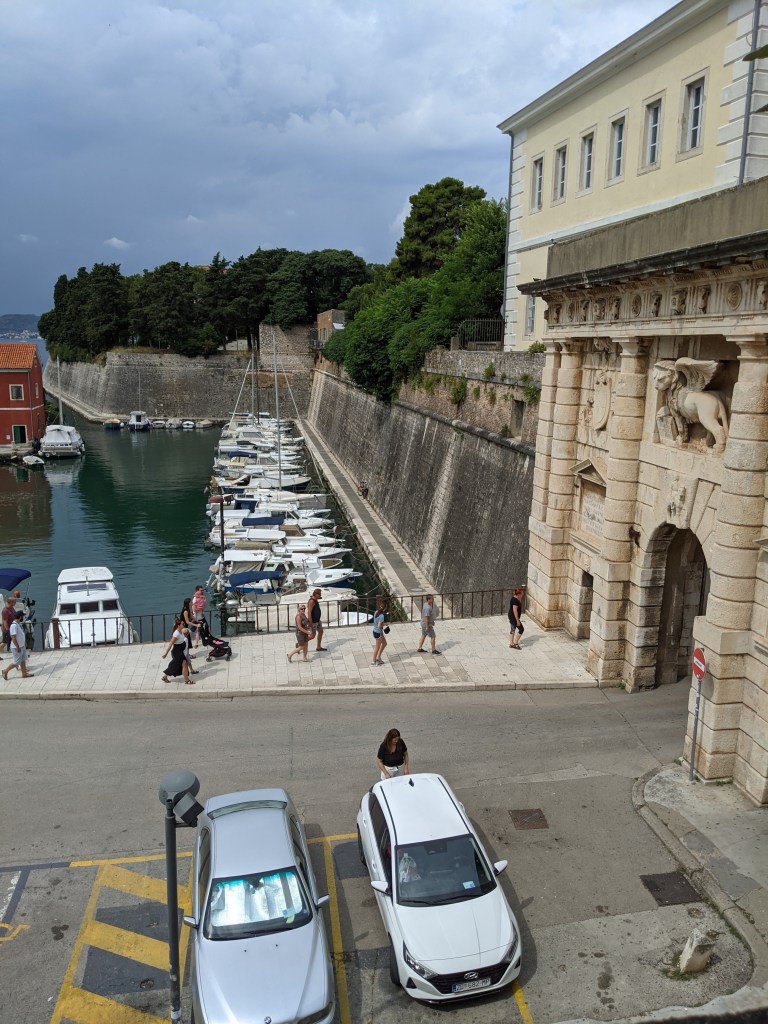
We arrived in Zadar feeling bagged so stopped at a lovely cafe just before entering the old centre for a cold refreshment and reboot. We then came across the pedestrian bridge into the centre and found our new apartment within the old walls and it’s perfect! We cleaned ourselves up and headed out to refill the lost calories at a restaurant called Pet Bunara (Five Wells) where my sister, brother in law and cousin had a meal back in May. It was delicious!

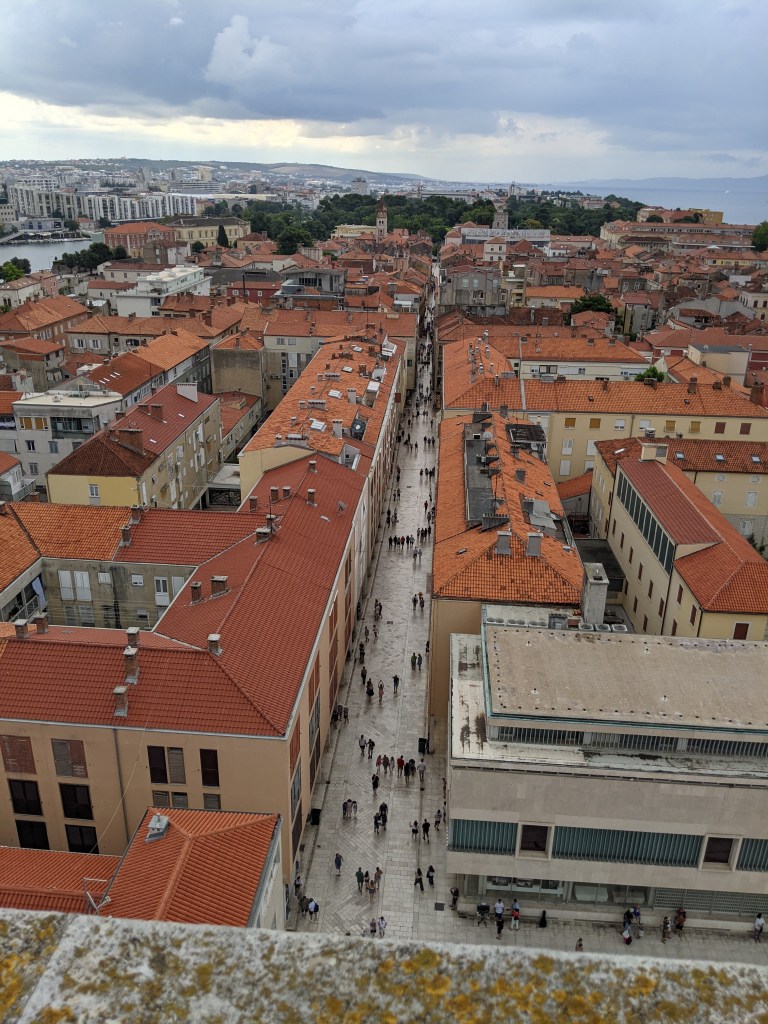
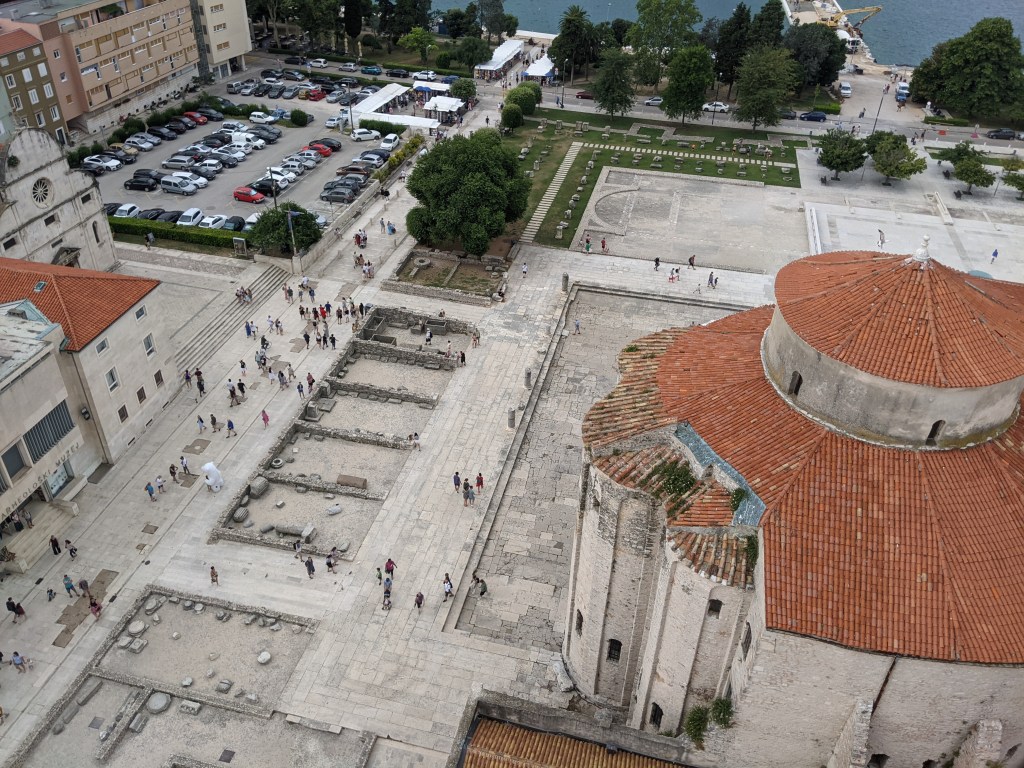
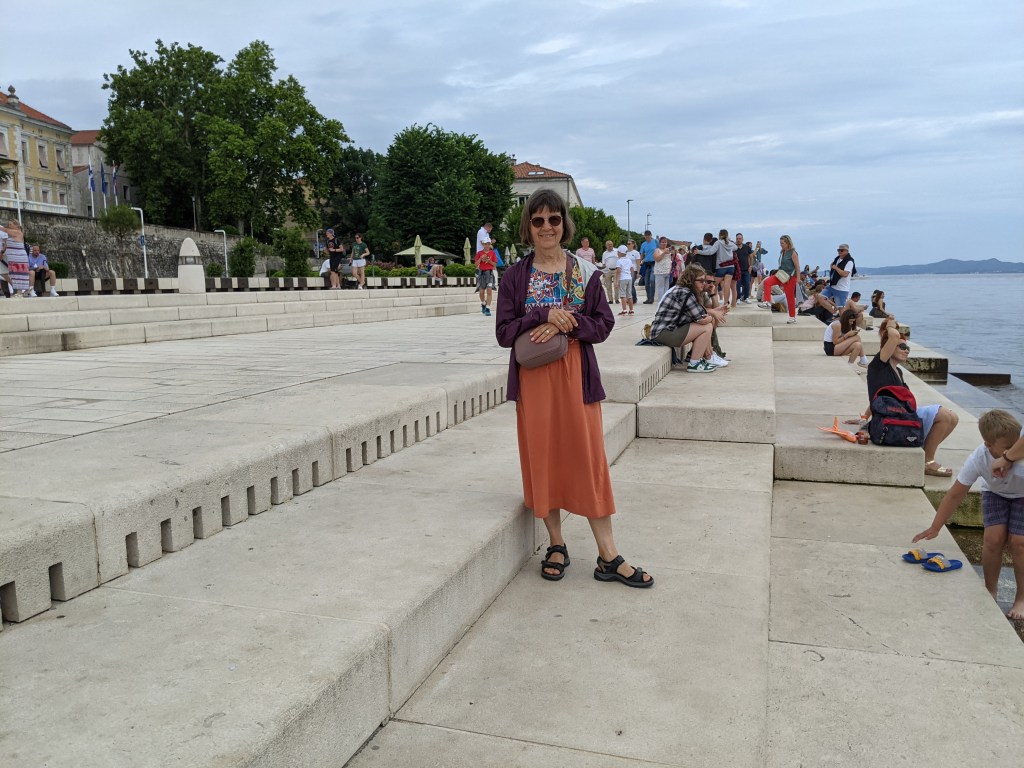
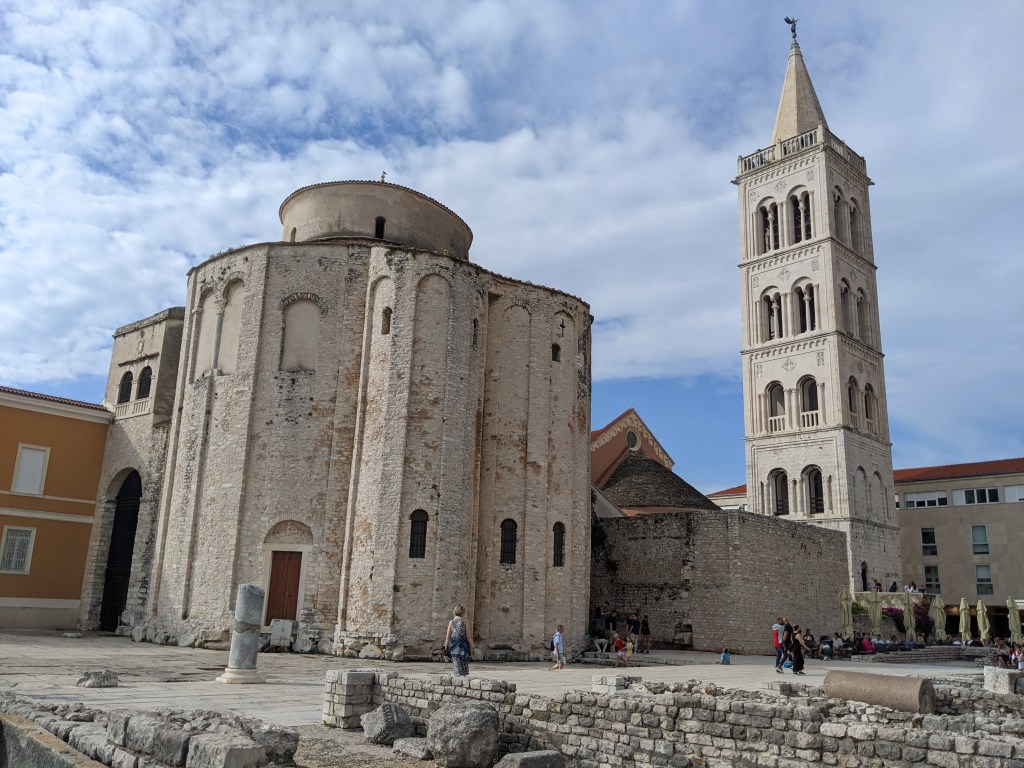
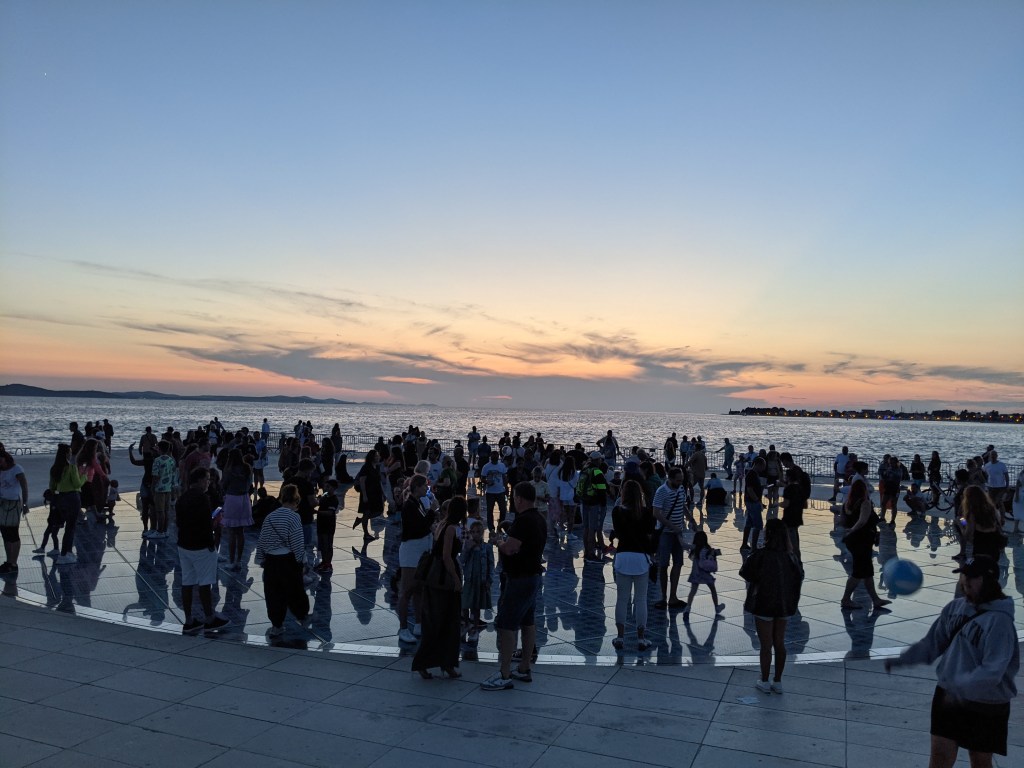
The next day was our Zadar tourist day. Zadar is similar to other cities we’ve visited recently in that it is a very compact old centre so never too far to go. We found many lovely Trgs (piazzas), churches, a tower to climb, roman ruins and a nice cafe too. Unfortunately it started to rain quite heavily about midday so we headed inside for the afternoon siesta time, a favourite time of day for George. We have been quite lucky weather wise, no riding in the rain yet other than very short lived light rain. After the rain stopped we completed our walking tour and saw/heard the Sea Organ, a very cool waterside installation with air pipes under the walkway that produce notes initiated by the wave action. There are seven sections with 5 pipes each section. The seven sections are supposed to be the notes of a diatonic scale. The sound it produces is very calming and mesmerizing and quite the tourist draw. Right beside this is a large solar panelled circle also embedded in the walkway that lights up at night after spending the day absorbing solar energy. Both of these installations were the creation of a man named Nikola Basic and he won an award for urban public space design in Europe. Two very inspiring and interesting creations. We quite enjoyed our day here in Zadar, lots to see and do.

Opatija to Senj to Pag Island (Novalja)

29 Jun

These past 2 days of cycling have probably been some of the most challenging mentally and physically that we have ever done. But we got through it…and are relieved it’s done.

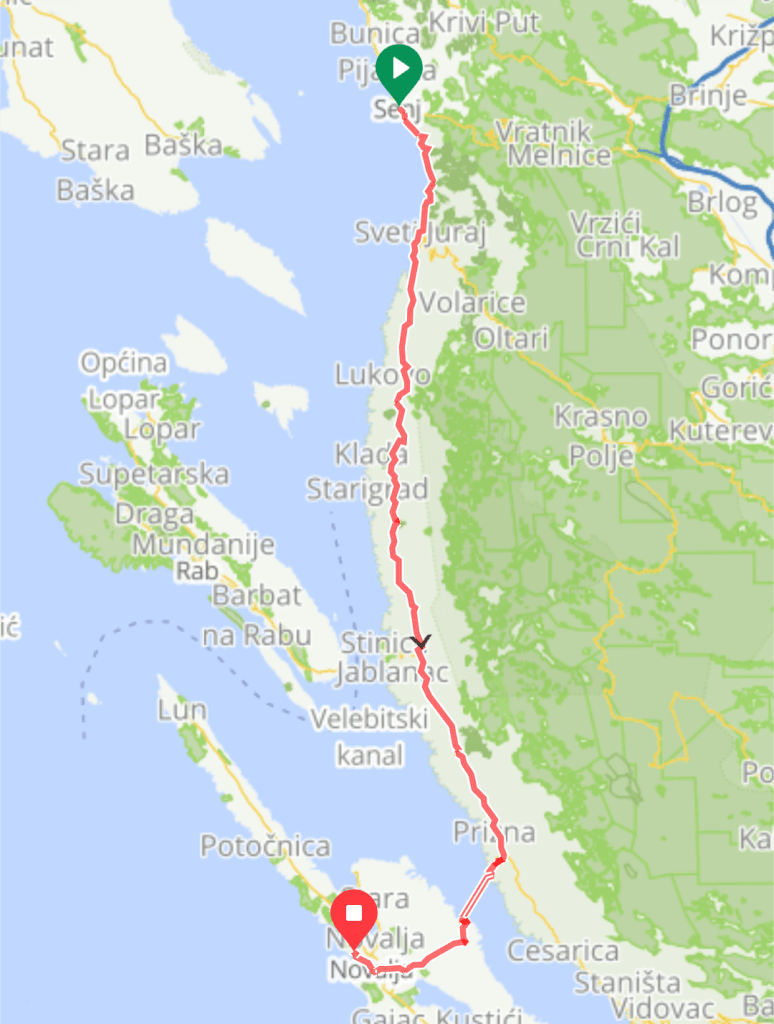
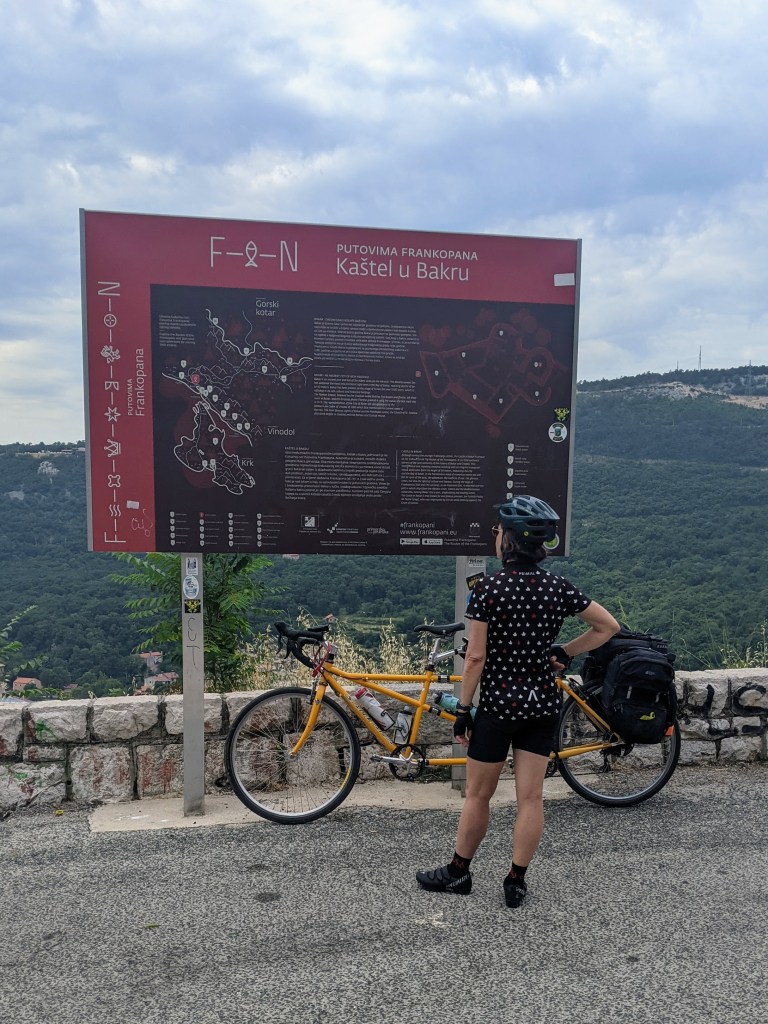
From Opatija to Senj was challenging physically as we had 1000 + meters of ascent but also much of it was on what we would consider more of a primary highway than the secondary one it is. There was lots of traffic, little shoulder, many trucks, etc. thus mentally this starts to wear on you. When we finally arrived at our stopover point of Senj we had a comedy of errors to work through. We were led by the GPS to the wrong apartment and went through quite a process with a nice Croatian speaking lady checking us into a room in the wrong house. Then our actual host texted us wondering where we were and so we realized our error. The first lady did seem surprised, yet very accommodating, about our arrival. The second lady, our host, who spoke perfect English helped us explain to the first lady what happened. Both addresses were #13(!) and in the same cluster of little streets.

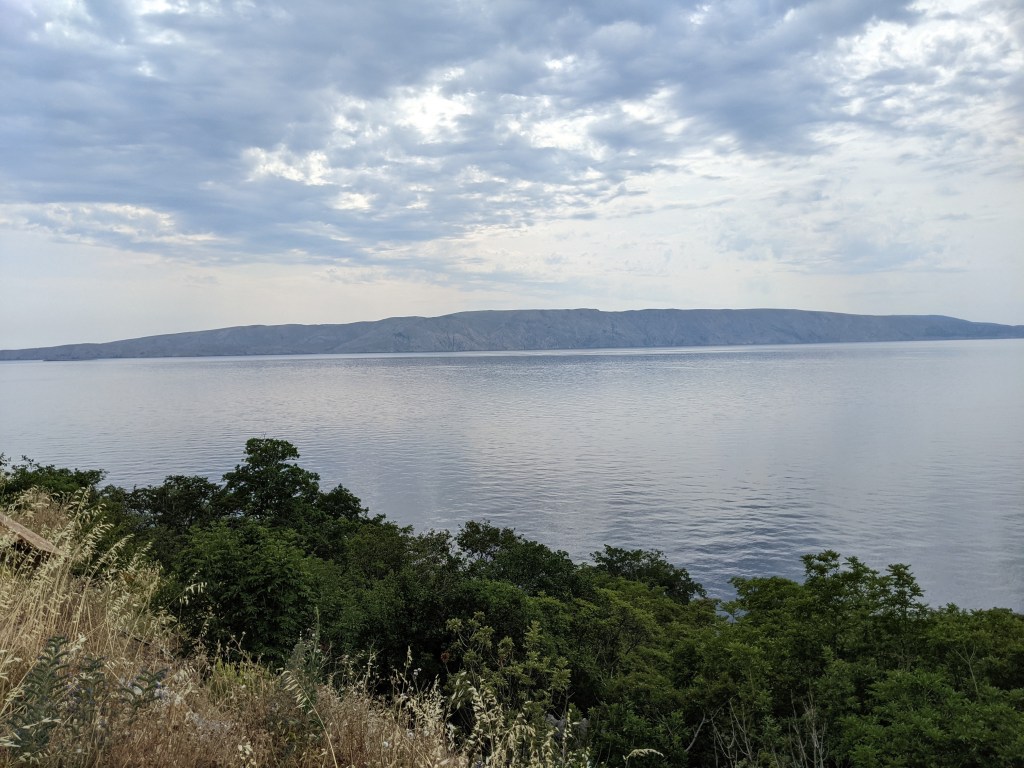
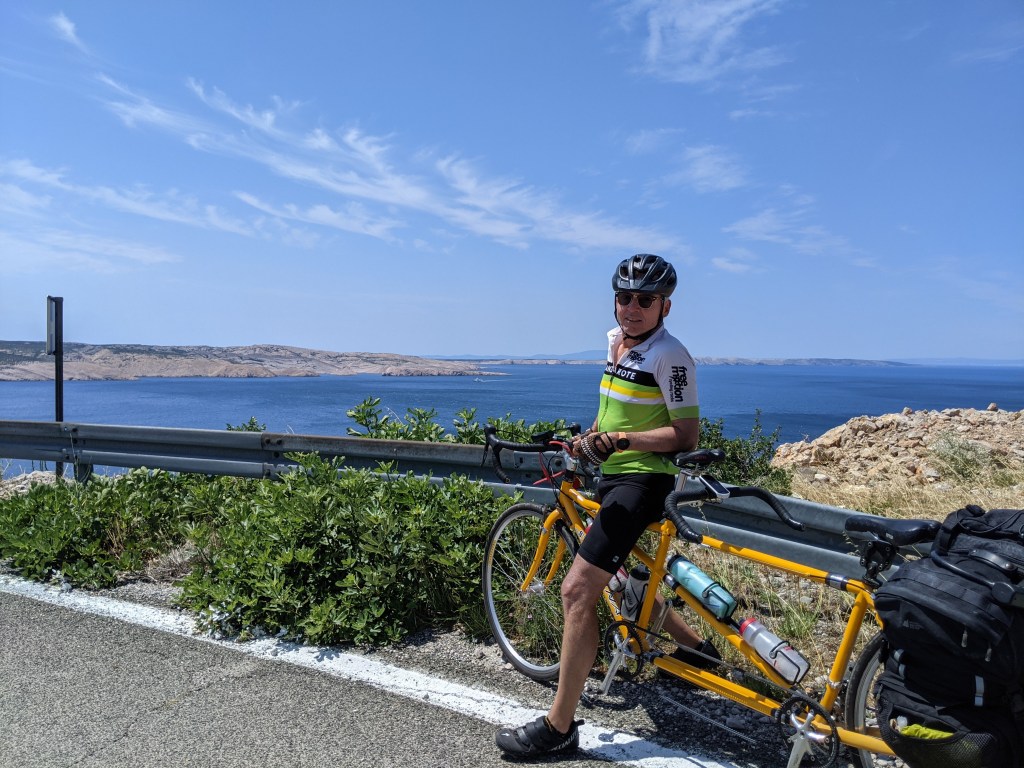
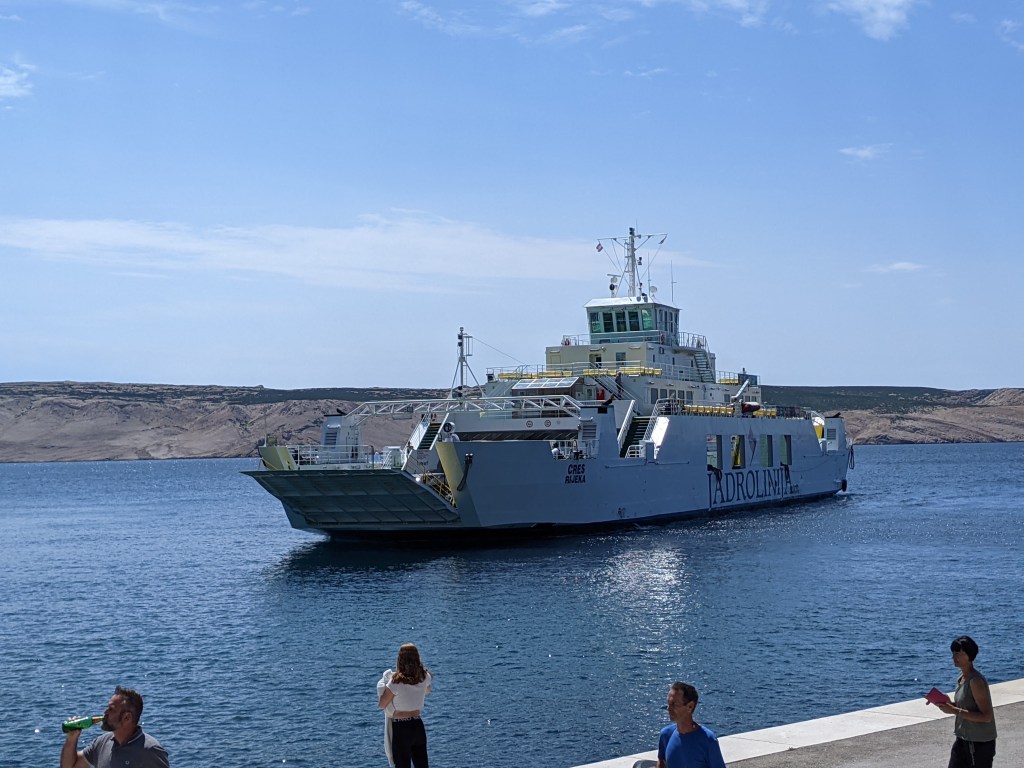
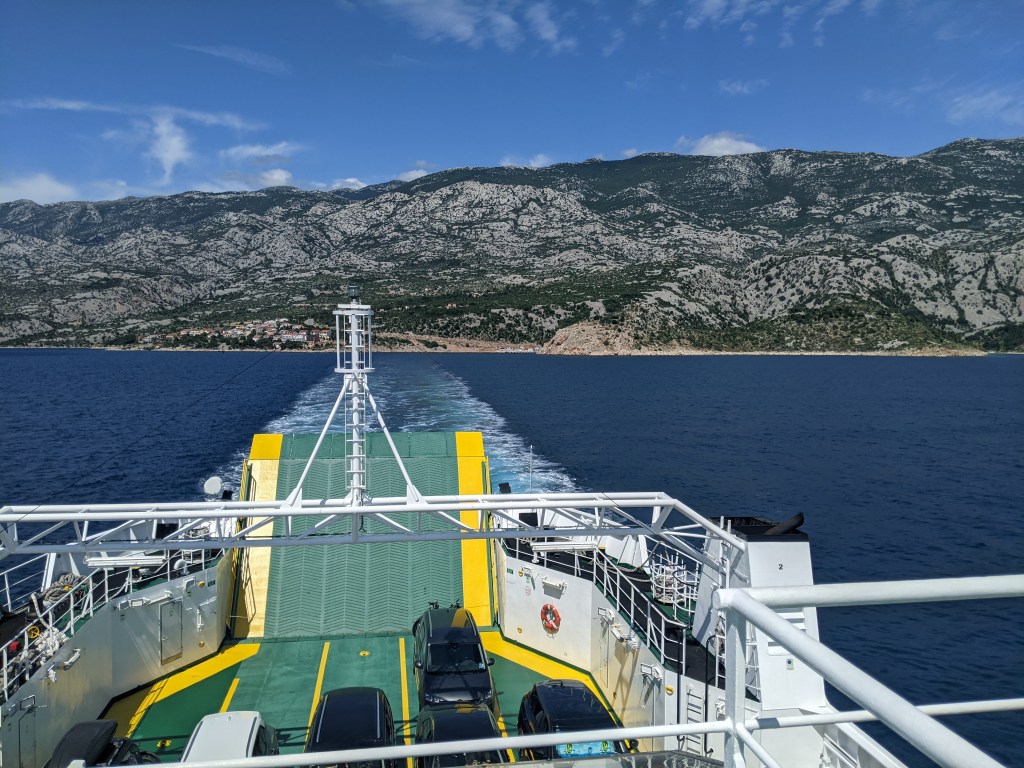
Once settled in, a seriously strong wind came up suddenly and lasted into the night (famous Bora wind). Apparently Senj is known for this as is most of coastal Croatia. We were worried about it and wondered if we needed a plan B for the next day as we were climbing along the coastal mountains on the way to Pag Island. However when we woke up in the morning it was much improved and the wind forecast looked stable so off we went. Well, the Bora monster is no laughing matter. Once up higher on the road we were starting to have difficulty controlling the bike, we thought we could be blown off the road the Bora was so fierce. Not cold or rainy but a powerful force on a somewhat narrow winding road with steep drop offs, not for the faint of heart and yes, we shouldn’t have been there on that day. Mostly there were guard rails but not always. The traffic was somewhat lighter this day, likely due to the wind, so a small concession. We stopped often, walked some and at one point George tried to flag down larger vehicles that may be able to give us a ride but to no avail. We just had to keep going. We had about a 350m climb over 10km and at the top of this the wind was the worst. Once we started to descend we could gradually feel an improvement and once at the ferry terminal in Prizna it was fairly calm again. It was a huge relief to actually arrive there on time, we did have doubts that we would make it that day. There were a few other crazy cyclists on the road also and we commiserated together which actually helped. Another factor on this part of the road is that there are virtually no services or towns where you can rest or get more supplies. We saw one small gas station only, well after the worst part, and no WC even. Once off the ferry on Pag we had another 10 or so kilometers to ride to Novalja where we are staying for a couple of nights. So thankful for a rest day!

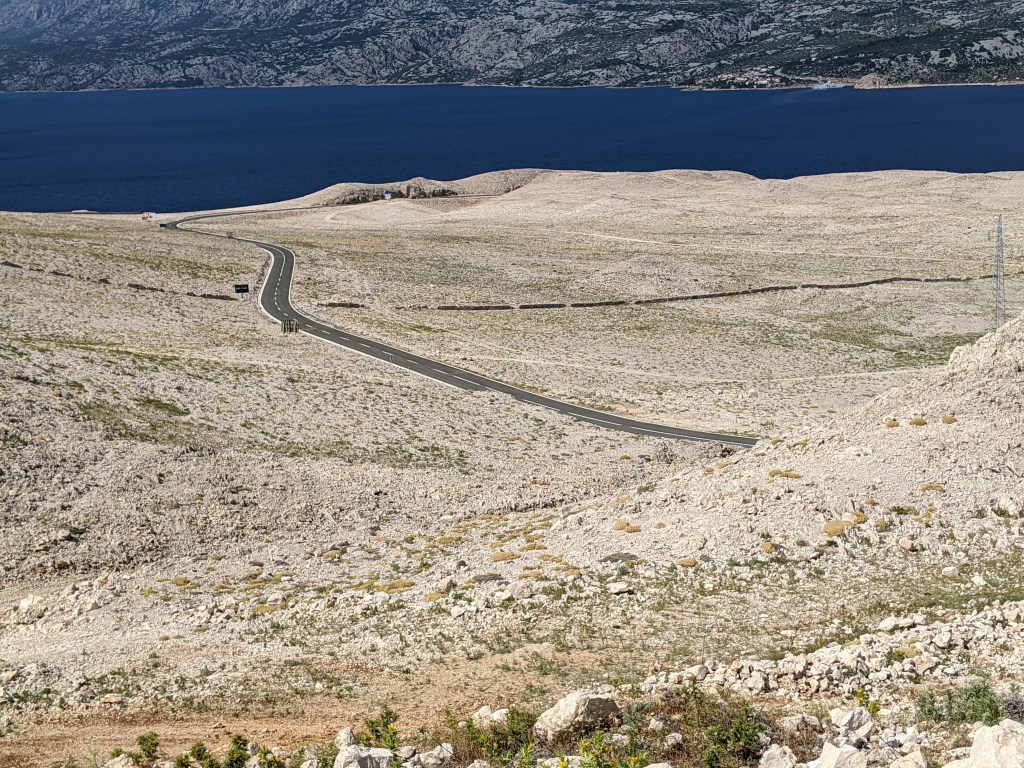
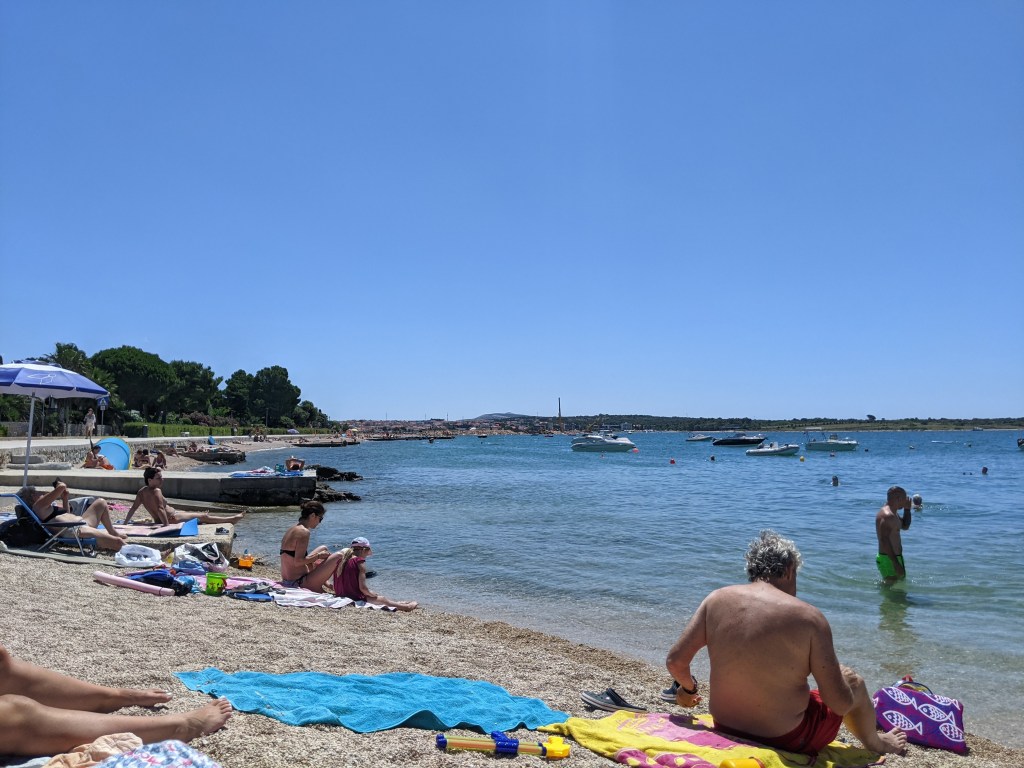
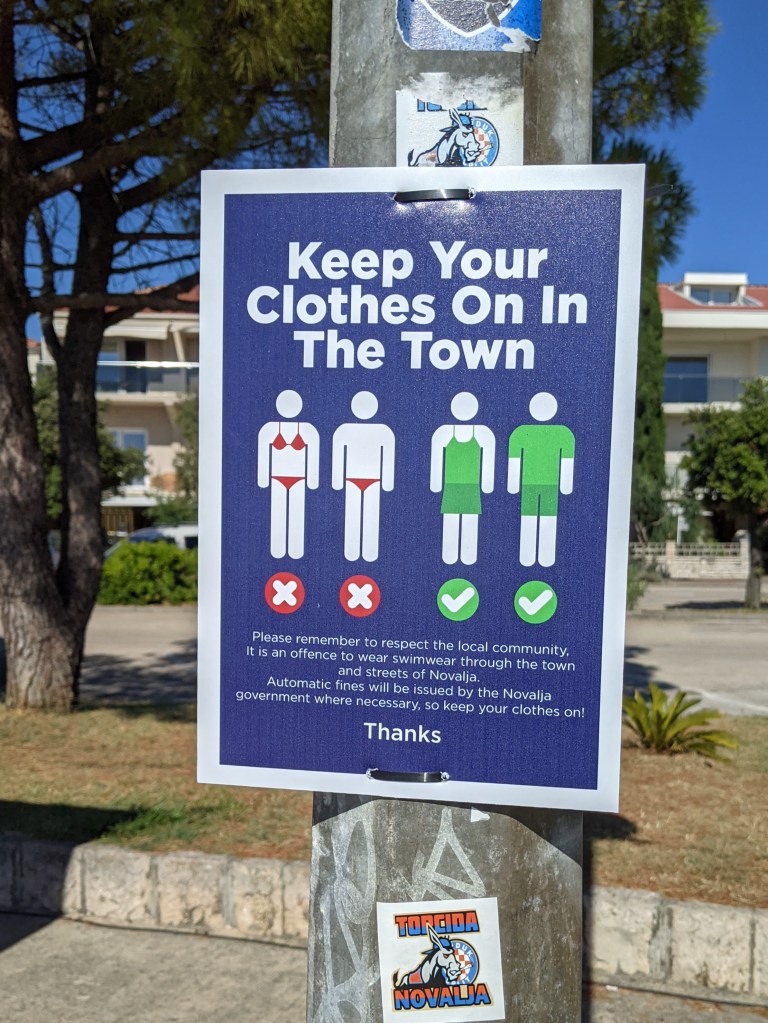
The east side of this island and others in the area are all barren, like a moonscape, due to the Bora. The west sides have more vegetation but still a dry area. The west side where we are is another huge beach playground area with many tourists and services, we won’t go hungry or thirsty here. It actually is pure party central with thousands of 20 something Brits predominating. School’s out and this is the place to be I guess. We had a bit of a dispute with our host misrepresenting the property here resulting in a 50% refund so all together we’ll be happy to head south to Zadar tomorrow.

Rovinj to Labin to Opatija

26 Jun

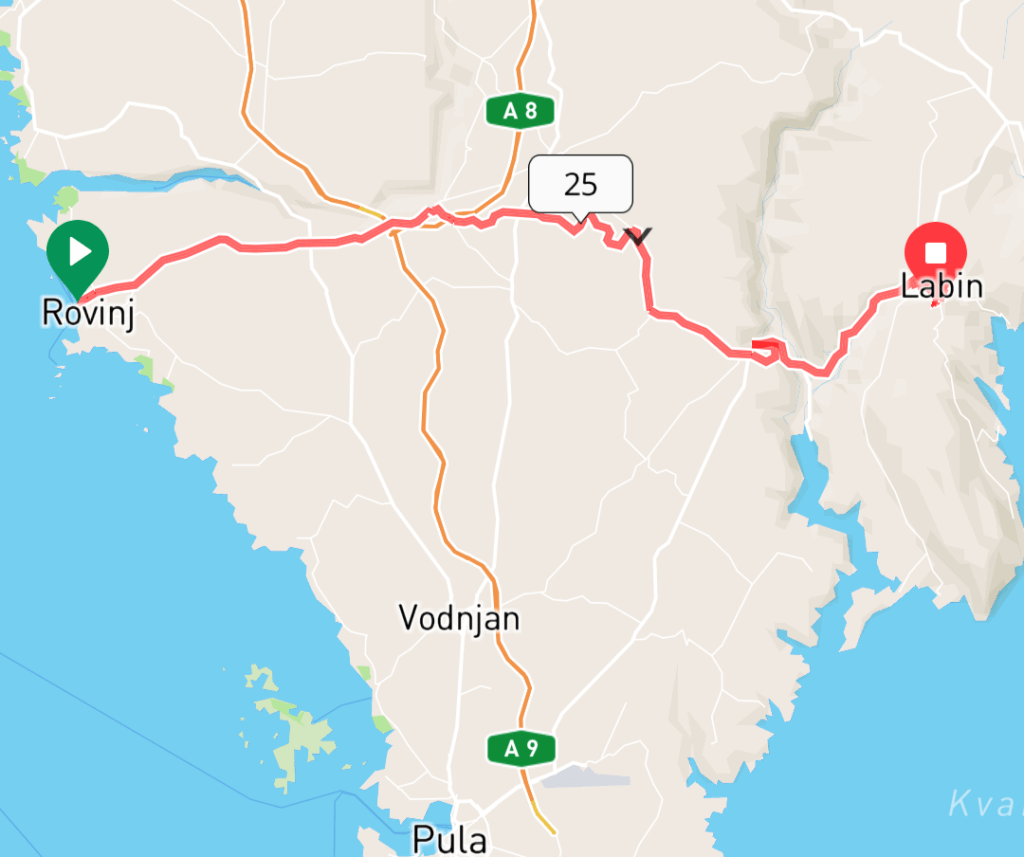
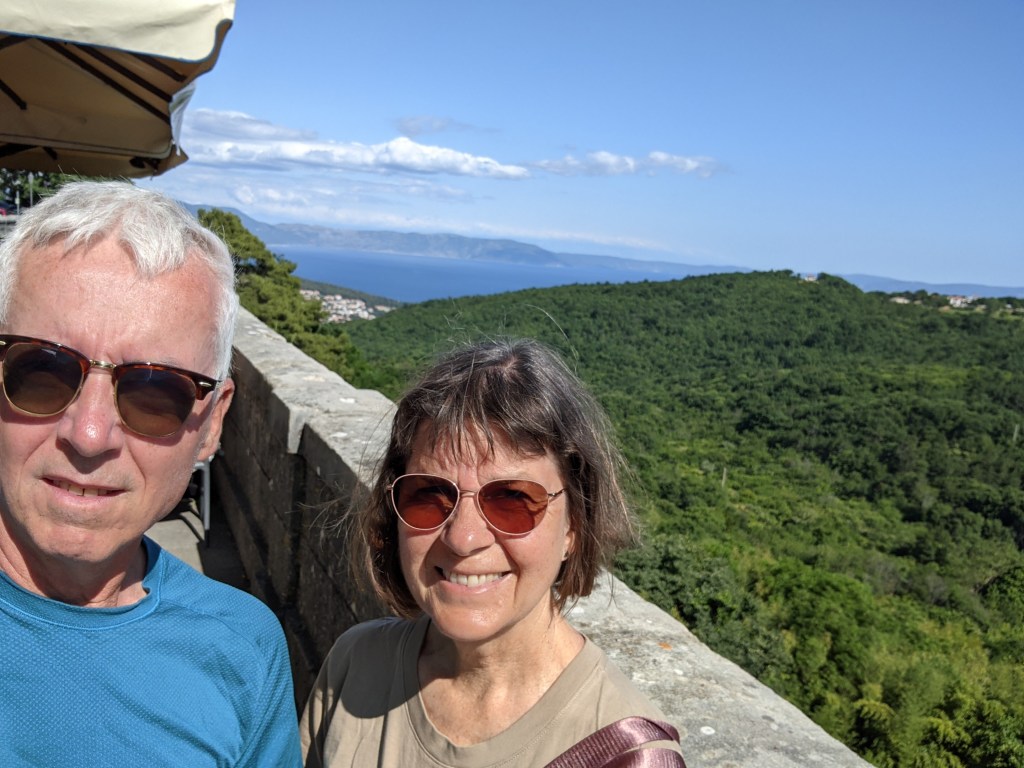
The first leg of this ride to Labin was predominantly climbing. Of the 55 kms we were ascending for 31 kms, too much! Mostly the grade was doable from 3-7% but the last km, true confessions now, was in the 13-18% range and we had to push the bike up to the hotel.  Perhaps in the future we need to look at this more carefully.  This route took us across the Istrian peninsula to the other side, almost to the opposite coast but not quite.  It went through many forested areas and into big hills, almost mountains, on some lovely quiet roads.  As we got closer to our destination we realized that Labin is a (very high) hilltop town, unfortunate for non e-bike cyclists as ourselves, but fortunate as it provides wonderful views of the surrounding area and it is very charming place as well. We found a place to have dinner with a stunning view down to the town of Rabac on the coast.  Labin was meant as just a stopover point on the way to Opatija as it was too far otherwise but ended up being a nice spot to visit too.

The next day our ride to Opatija was also lower in mileage, only 53 kms, and stunningly beautiful.  We again had a good amount of climbing to do after descending out of Labin (down is fun but usually means another up) but it did pay off with wonderful vistas of the Adriatic.  The road was good except for 4 speed crazy motorcyclists who passed us twice at extremely high speeds and scared the sh## out of us.  We could feel a shock wave and high noise level as they passed at speeds probably around 200kph; so dangerous for everyone on that narrow winding mountain road with a speed limit of 80kph, an example of more balls than brains.  We found our apartment for the next 2 days easily, just a few blocks off the water and not at the top of a mountain, thank goodness.  After yesterday it felt like we got off easy.

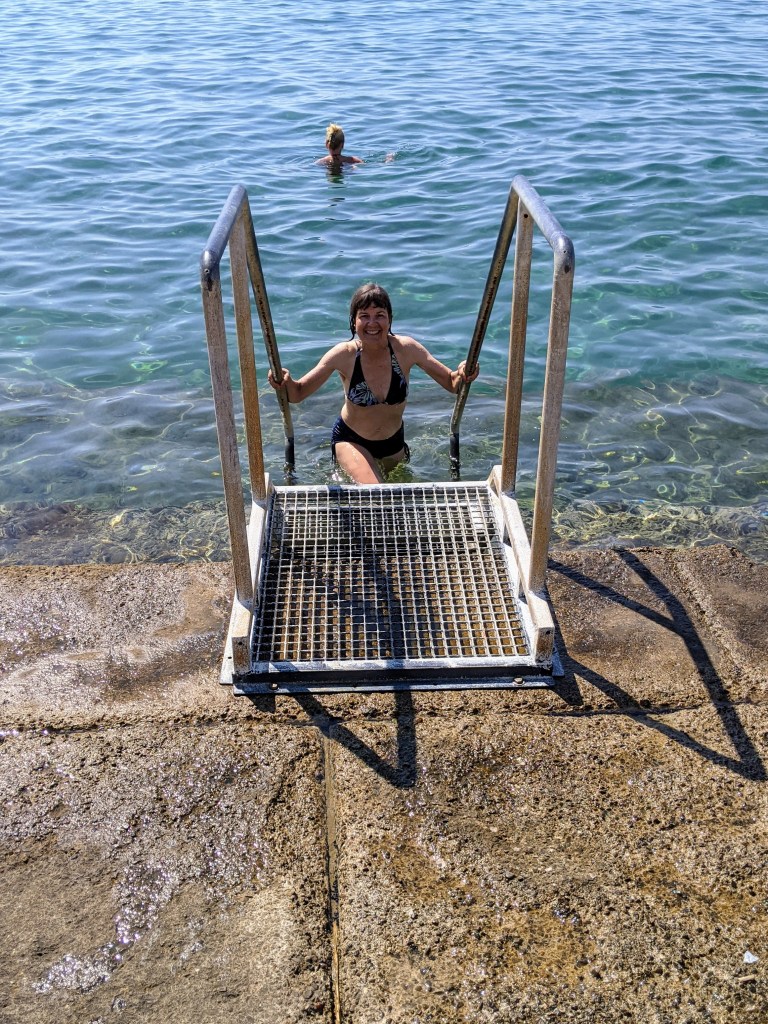
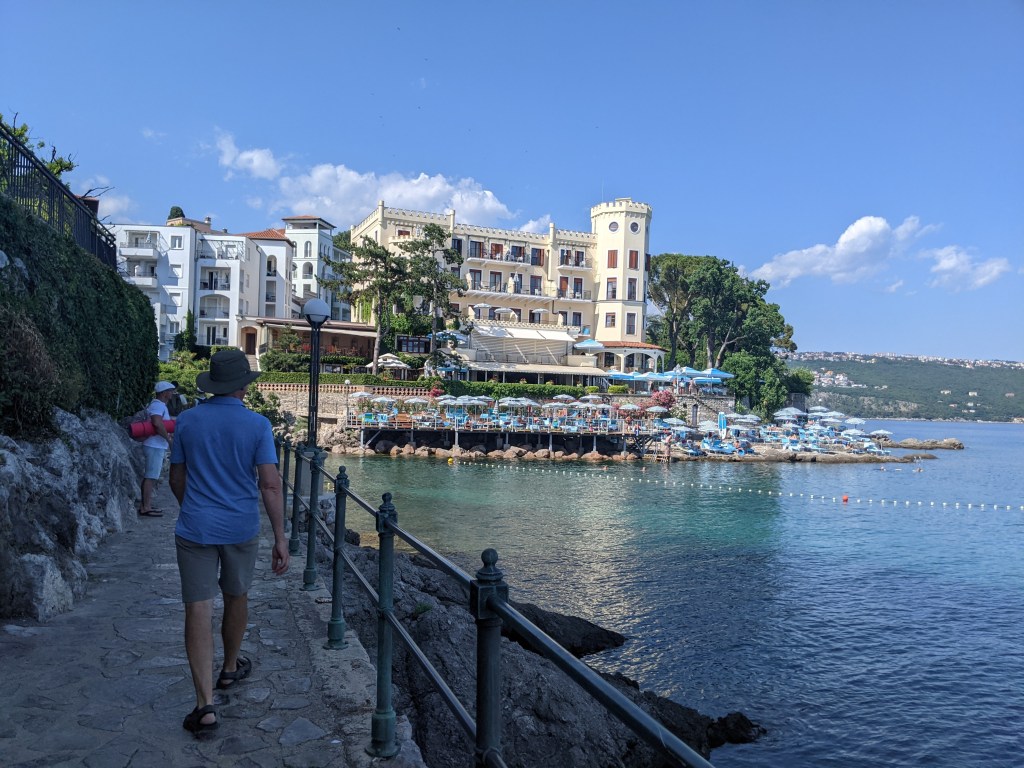
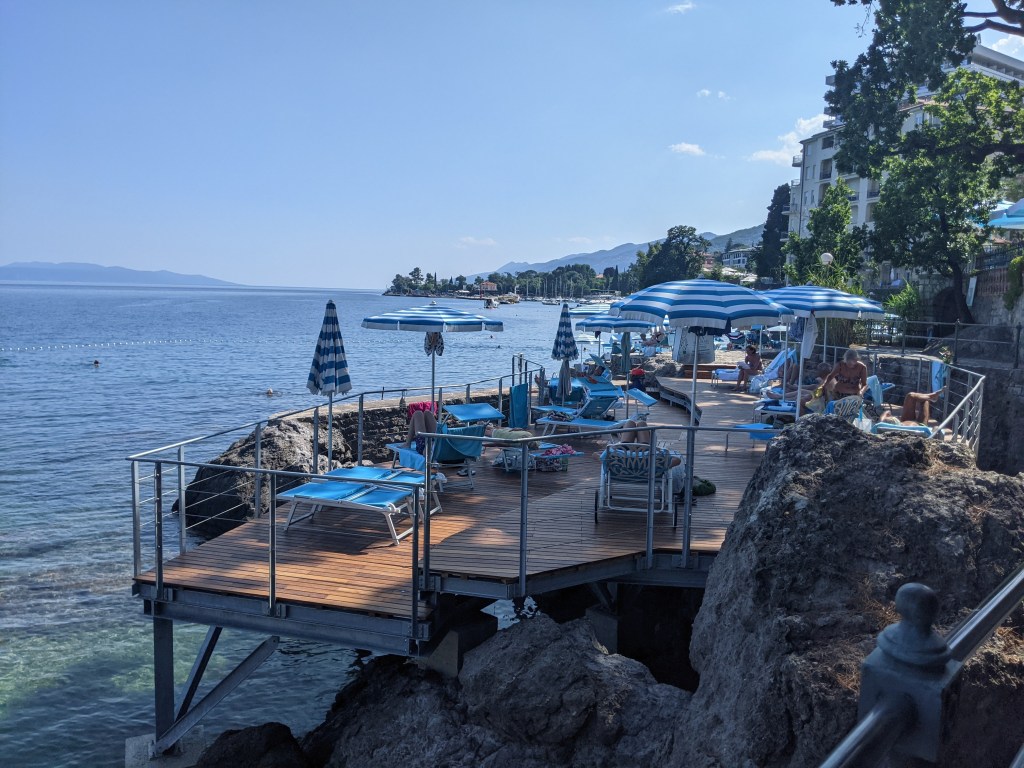
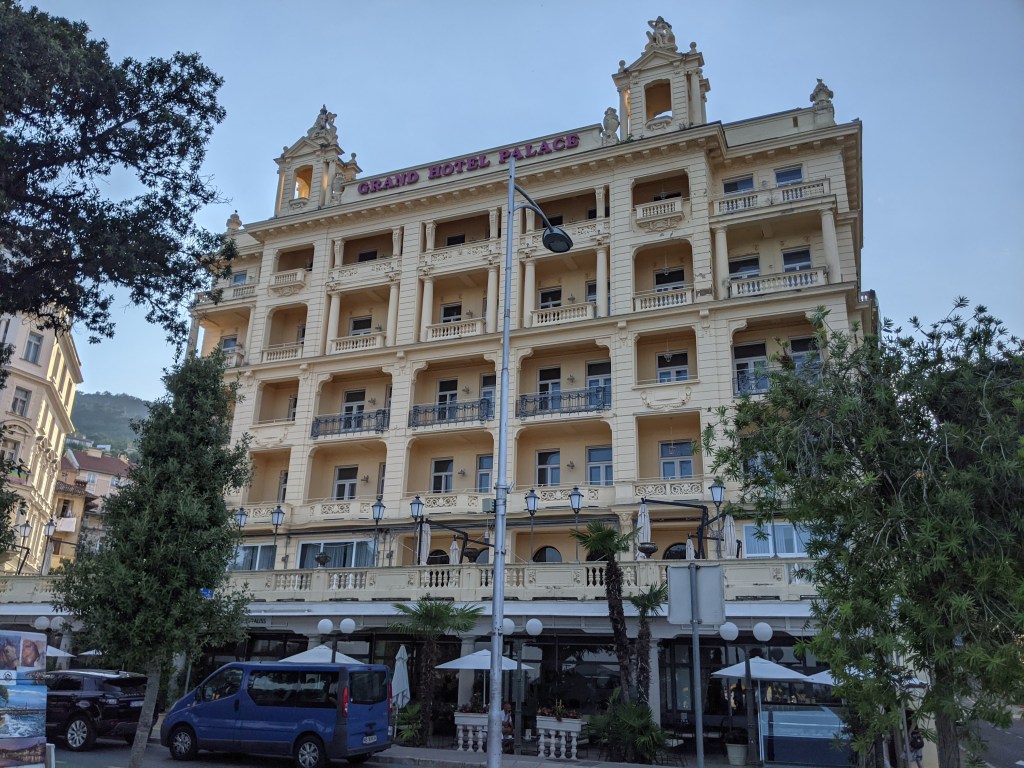
The Austrians started to develop Opatija as a summer and tourist destination starting in the later half of the 19th century and it is similarly grand looking like the French Riviera. It is known for the villas and grand hotels along the seafront. The architecture is similar to Trieste coming from the same influences. For our rest day in Opatija we spent the morning at the beach. It was a calm and beautiful morning, so perfect. The water was nippy but very refreshing once you were in. Again there are no beaches as we are used to, just concrete platforms built out onto the water and steps and ladders to help access the water. But there are a lot of them with tiny coves and bays strung out for many km. Sitting or lying on the concrete is a bit uncomfortable but we don’t last too long just sunbathing so not a problem. The locals of course have it figured out, bringing cushioning as a base layer.

In the afternoon we did the Lungomare stroll past parks, statues, villas turned into hotels and many sunbathers. It seems as though if you were born here or even just came for a visit they are happy to make a statue or at least a bust to commemorate you. We found several dedicated to librarians. With the architecture being very Viennese, we can see the Italian influence is fading as we leave Istria behind and go south.

Porec to Rovinj

23 Jun

After the last leg with too much gravel we altered this route to stay on pavement which means we were with the cars and probably less scenic too but better for us and our road bike. Rather than following the bike path which is just above the Lim Fjord we were on the road farther above which meant a long descent followed of course by a notable ascent of up to 7% grade. It was hard for sure and a +30 degree day to boot but our overall mileage that day was only around 40 kms so we managed. As we are climbing these hills I am always thinking about how much we are carrying and what we don’t really need…Every year we try to pare it down more to lighten the load, maybe that’s us getting old and feeble?  Next trip we will have a new tandem that will be lighter and better, can’t wait!

While riding this day George managed to collide with a rather large wasp that first hit his face then bounced to his arm and stung him well.  It has left him with an angry red and edematous upper arm and elbow but slowly it seems to be improving. Such is the life of the person in front of the ship.

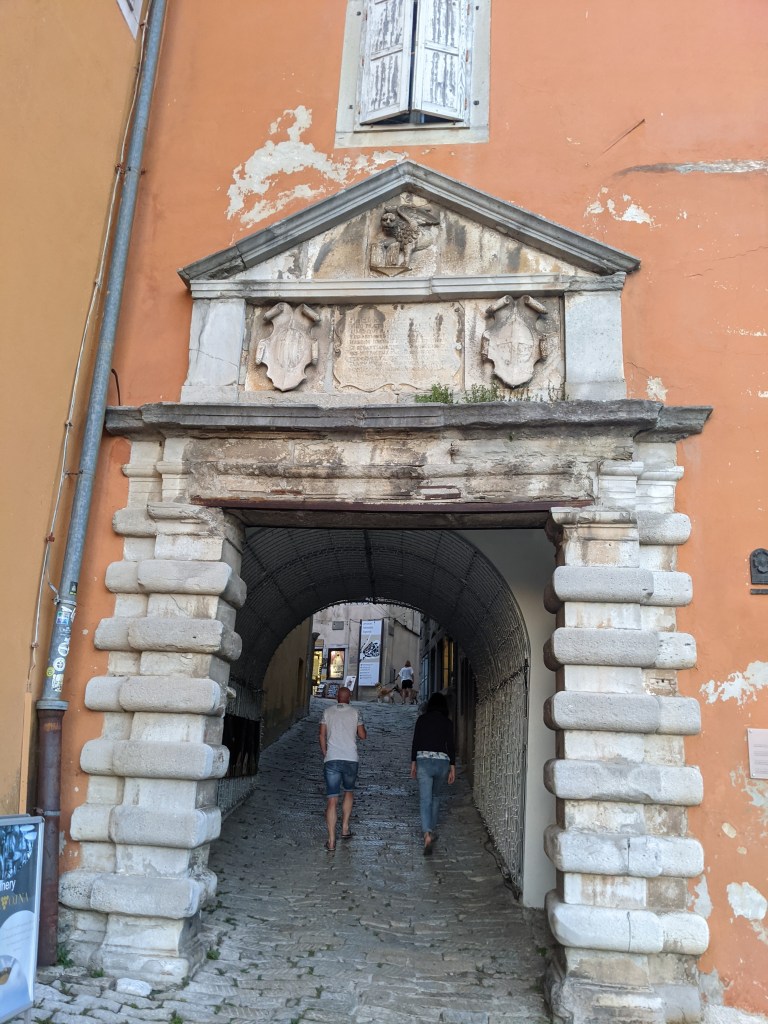
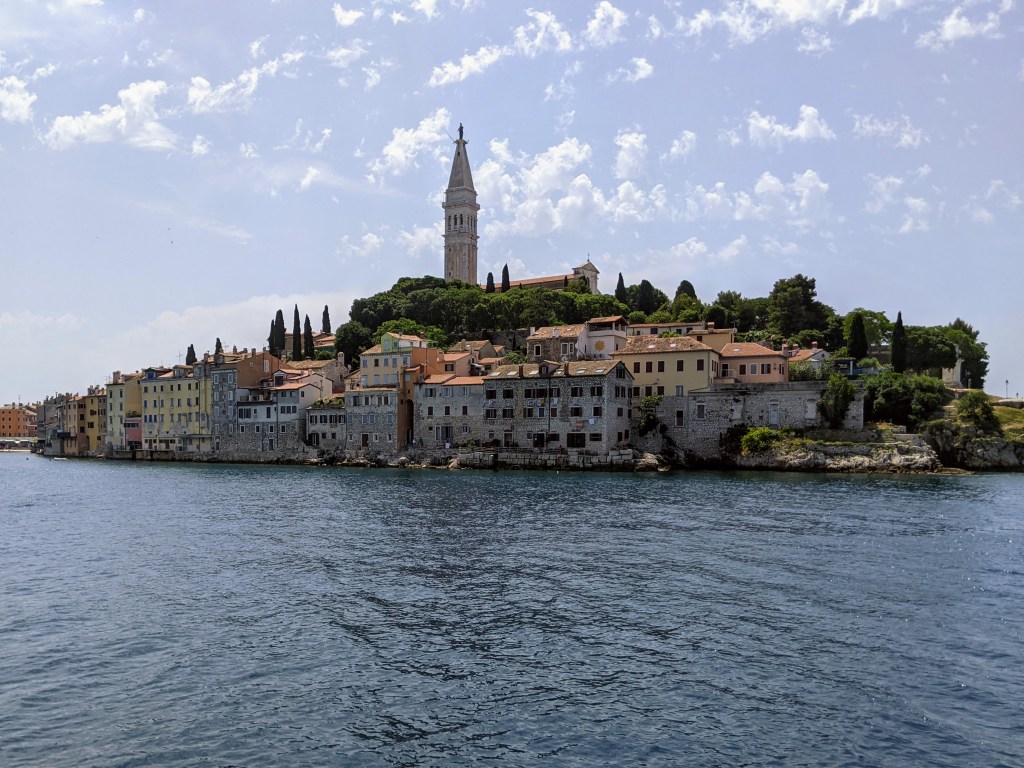
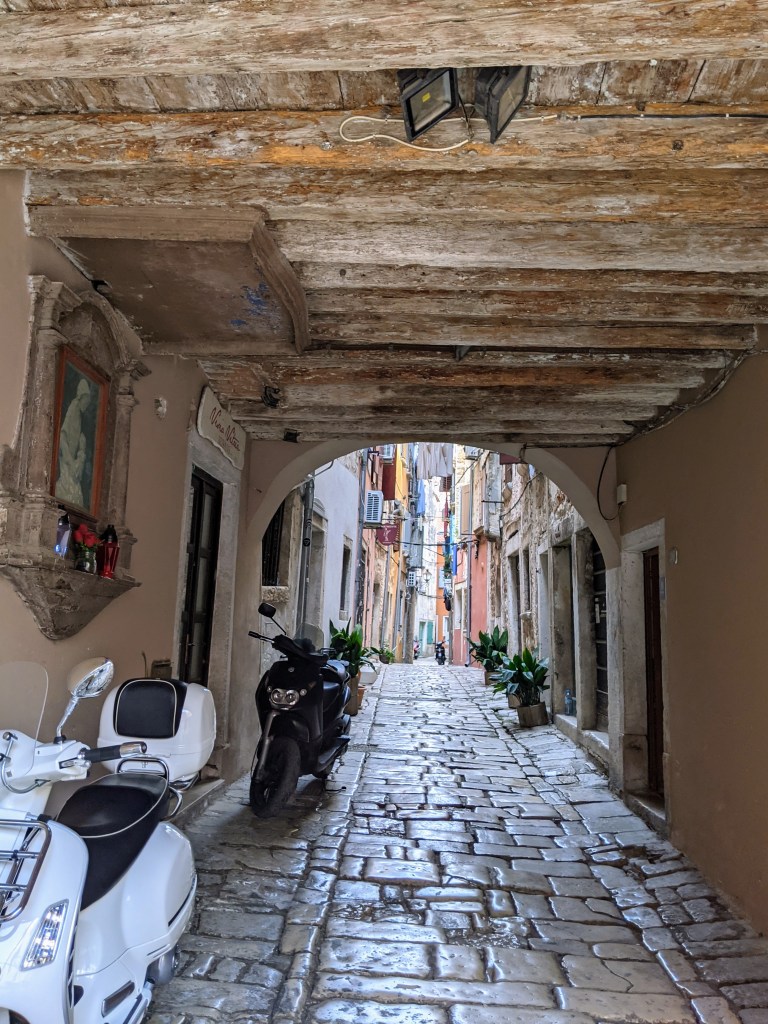
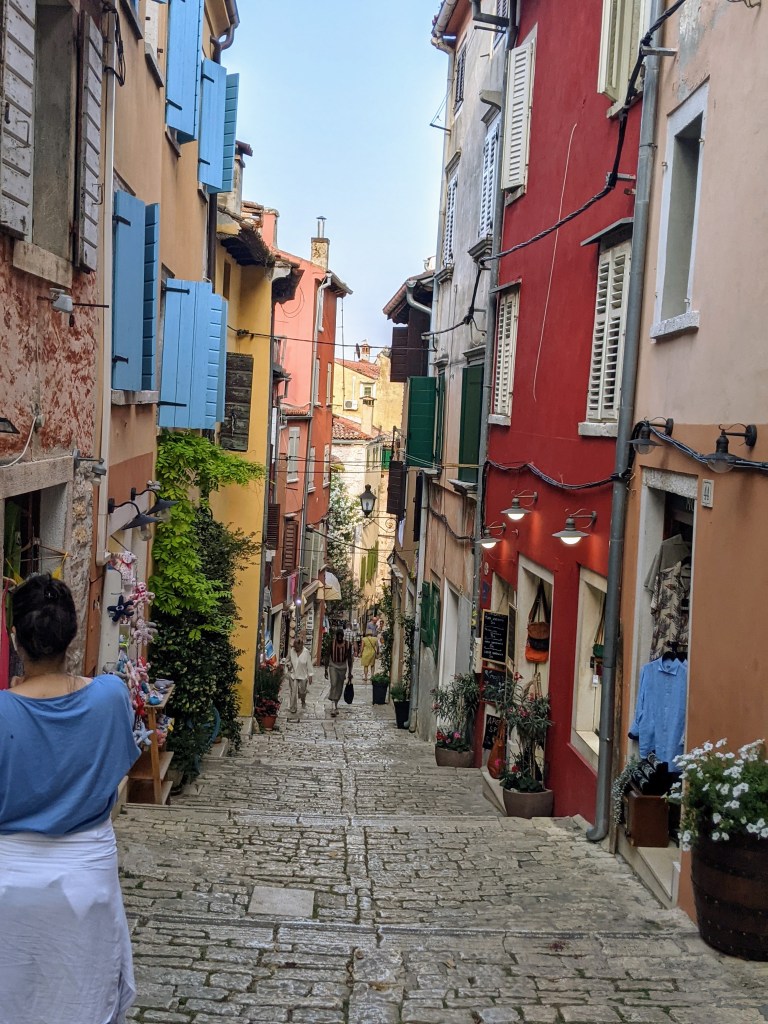
The last 10 km descent gave us a beautiful view of Rovinj (pronounced Roving, hard G and emphasis on the “ing”), originally an island just off the mainland and joined by a land bridge over the sea moat in 1763.  At this point in history the controlling Venetians felt safer from threats than previously so joined the little island to encourage trade and commerce.  Now it appears as a roundish peninsula with densely packed housing which was done to fit the population onto the island.  The Venetians were in control of Rovinj and other coastal areas of Istria for approximately 500 years starting in the 13th century.  There are winged lions everywhere which is the symbol of Venice.  If the lion is holding an open book it means Venetian rule was accepted (peace) and if the book is closed it means there was war to get the same result. Istria is known as ‘Little Italy’ with Italian culture still having a strong influence; Italian is officially the second language here and most people are (at least) bilingual.  The name Istria comes from the very first people to inhabit the area, the Histri.  Rovinj is truly a maze of narrow streets and tall houses, quite spectacular to see and easy to get lost in.

We went on a “free” walking tour (Free Spirit Walking Tours) with a lovely and knowledgeable young woman named Martina who is a native Croatian and a bicycle enthusiast also.  We were the only 2 in the group so we were able to talk about cycling and our route and she gave us many good ideas.  She also shared much with us about Istrian and Rovinj history, local foods, the people, language, more recent history including the separation of Yugoslavia (south slavia), the war, Tito and much more.  It was very informative and interesting, we learned a lot.  

We also took a boat tour to see Rovinj from the water side and as well see other nearby islands and the coast south of Rovinj.  This was pleasant with good views but not very informative.  

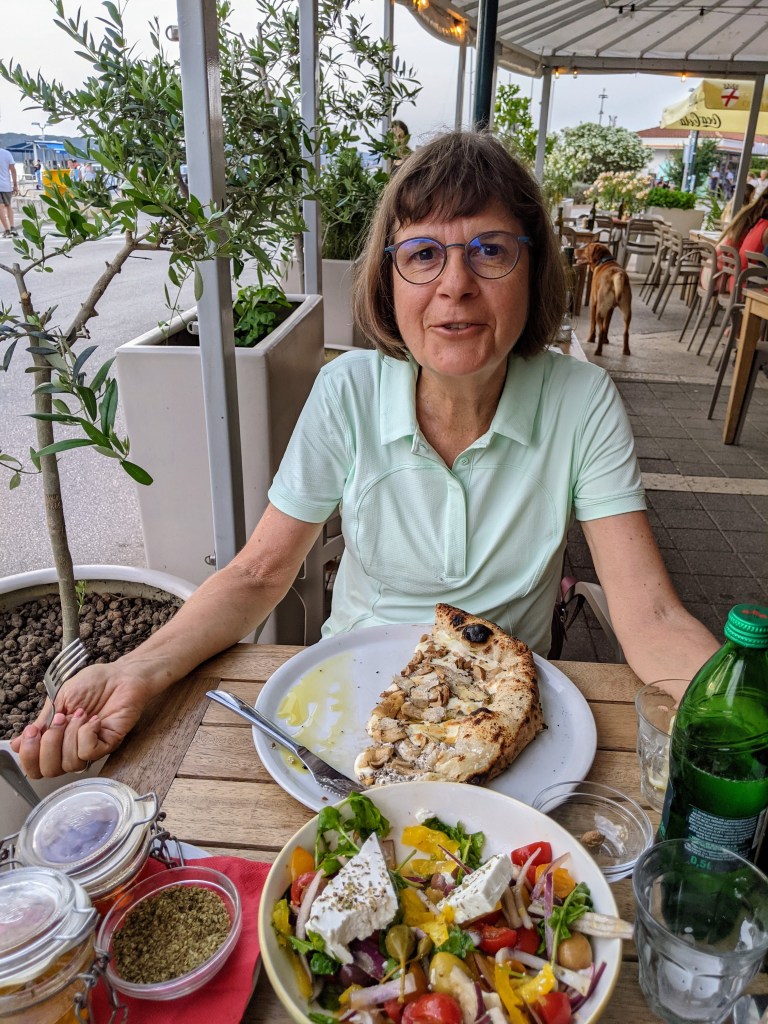
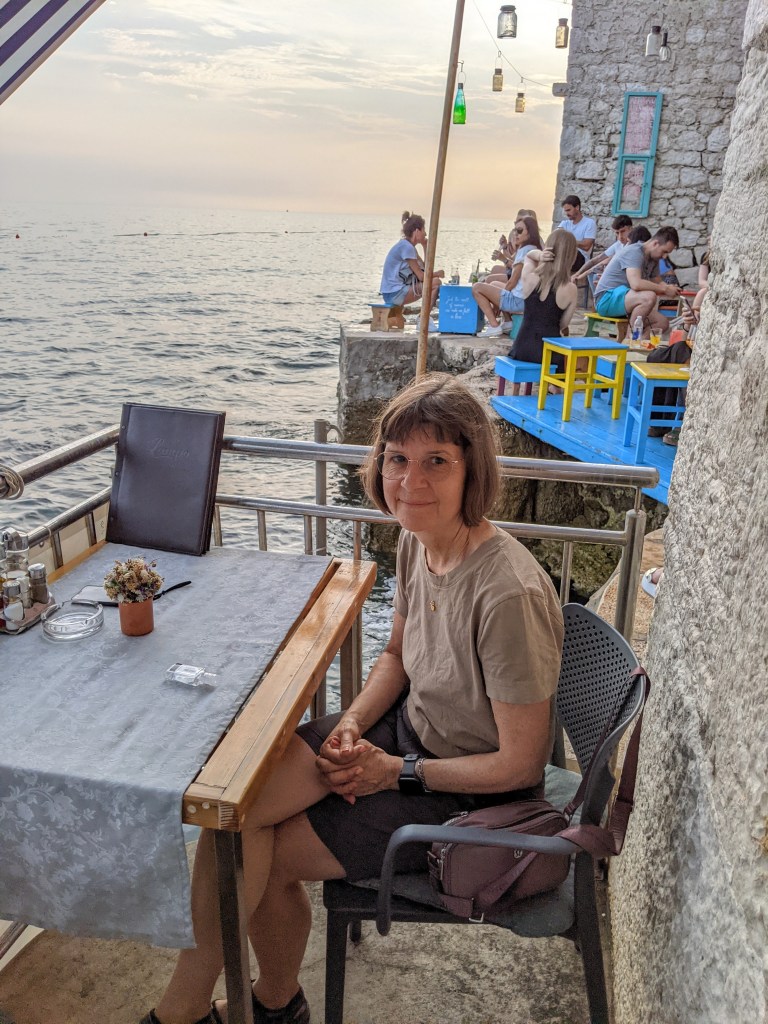
We enjoyed 2 excellent dinners in Rovinj.  One was excellent food without a view and the other was the opposite with average food but situated right on the water.  The first dinner I mentioned was a truffle and mushroom pizza, probably one of the best we have had, and we are not even in Italy.  Istria is famous for its truffles, it is now black truffle season (white in the winter) and they are for sale everywhere.