Tag Archives: tandemcycling

Rotorua

12 Feb

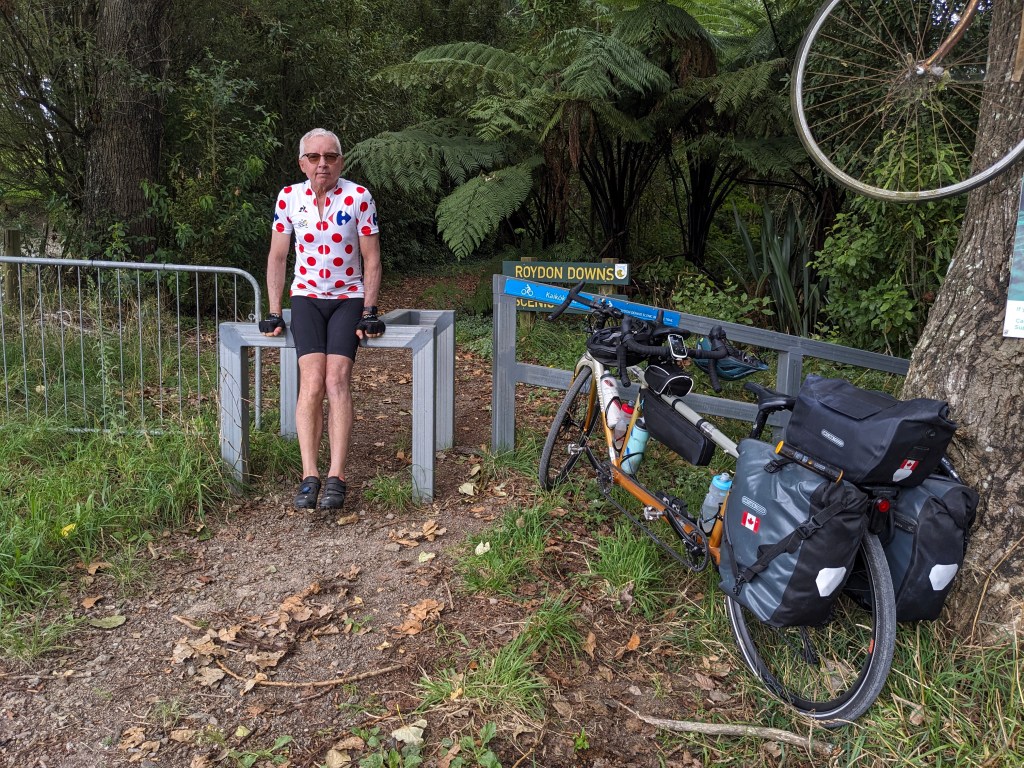
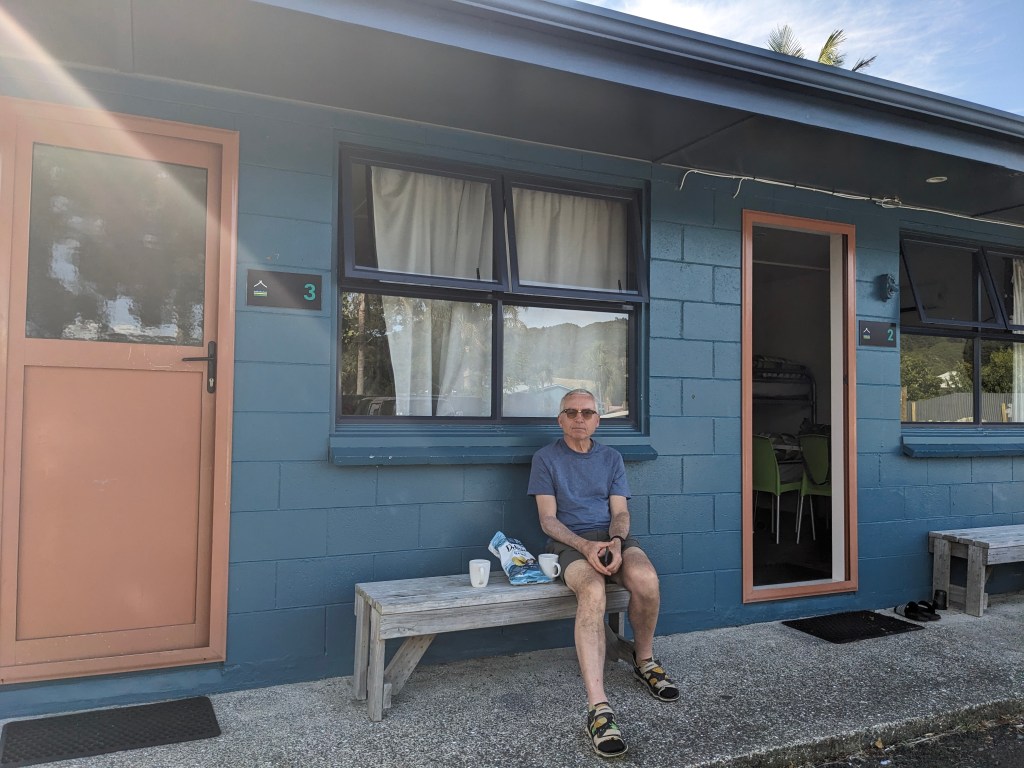
Our ride to Rotorua was a longish one at 80 kms with some climbing and a bush bike path, to stay off the highway as much as possible. We started with a beautiful and quick 16 km down the beach road out of Mt. Maunganui to Papamoa which was flat and quiet. At the end of that we joined onto a separate bike path along the highway to Paengaroa followed by a small alternate road where we only encountered a few other vehicles. Despite a few hard climbs it was a beautiful ride through here. Eventually the road ended and we entered a reserve area with a bike trail. It wasn’t exactly ideal for our bike as it was narrow, gravel and jungley but we got through it anyway without walking. Eventually we did have to get on the highway for the last 20 kms and mostly the shoulders were decent and traffic was not too bad. We were expecting to get rained on but it turned out just fine weather wise. We had been warned that the sulphur smell in Rotorua was overpowering but fortunately we were a little way from the most active geothermal sites so not too bothered by it. We stayed in an older motel along a long road with many similar motels.

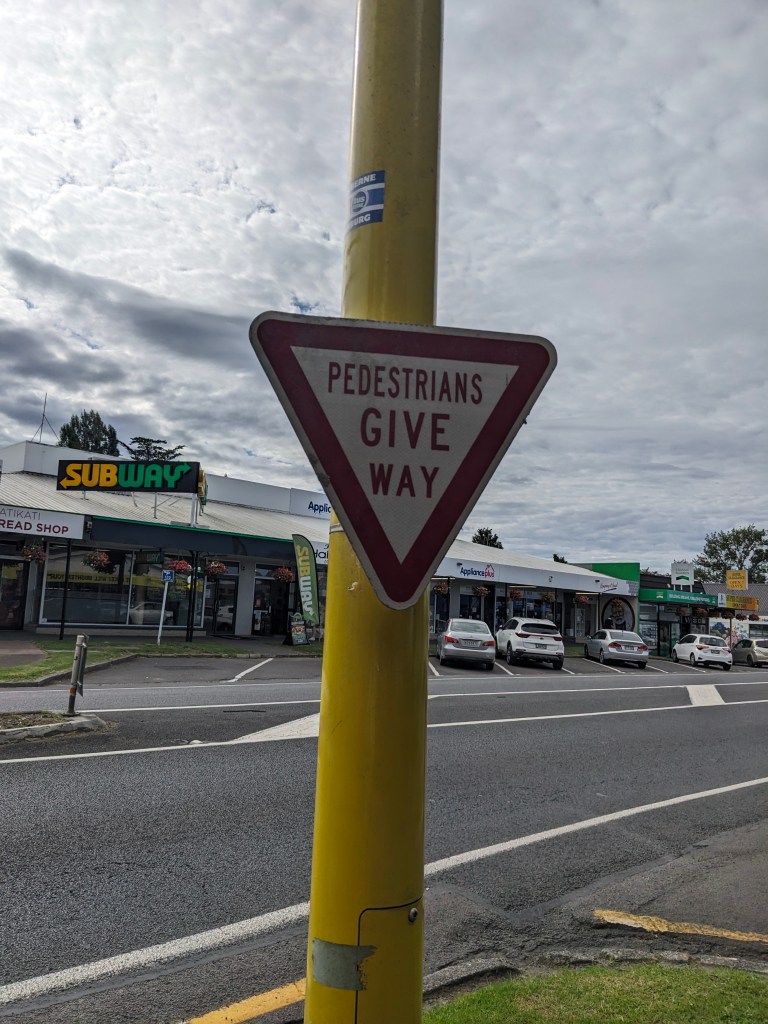
Just an aside here, something we’ve noticed in New Zealand is that pedestrians aren’t given priority over cars. On this long four lane road that we were staying on in Rotorua, about 2 kms or so, there are no crosswalks, you must jay walk. When you get to a crossing you do not have any priority, you go when it’s clear, and you must look in all directions including the cars turning from both directions. There are crossings that are just “pseudo cross walks” that say Pedestrians Give Way. In the very commercial areas of the cities there are crosswalks at the major intersections but only there. I think it’s much worse even than southern Europe, the drivers rarely stop for you even if you are already in the crossing. You have to stay alert, no looking at your phone or a map.

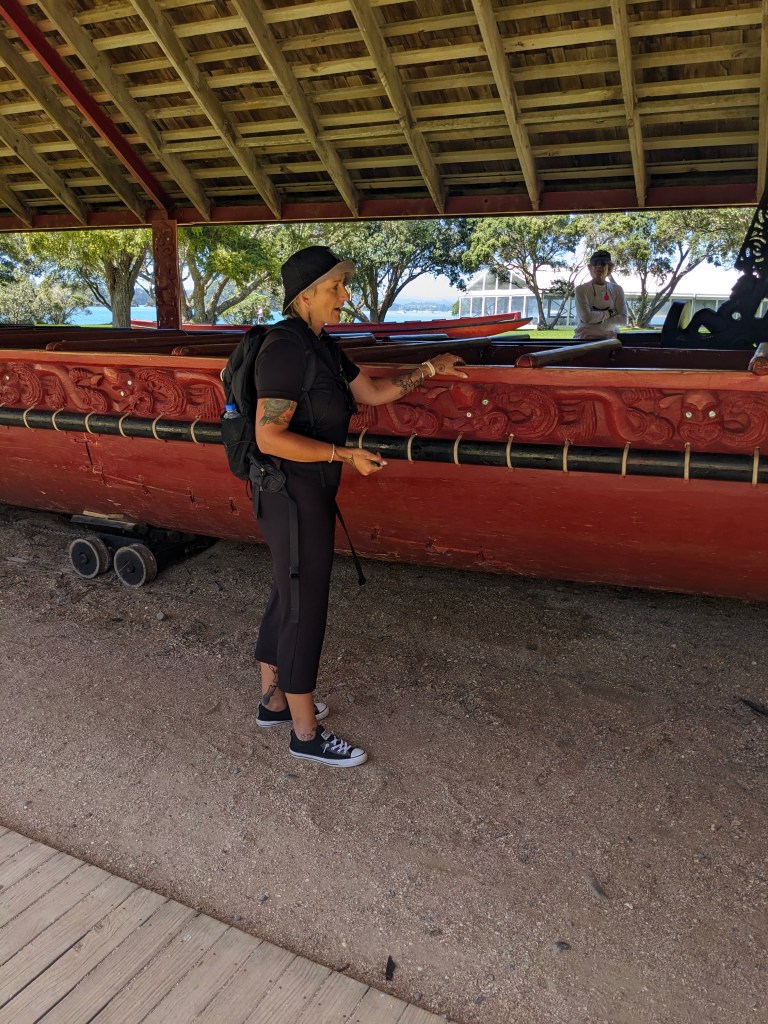
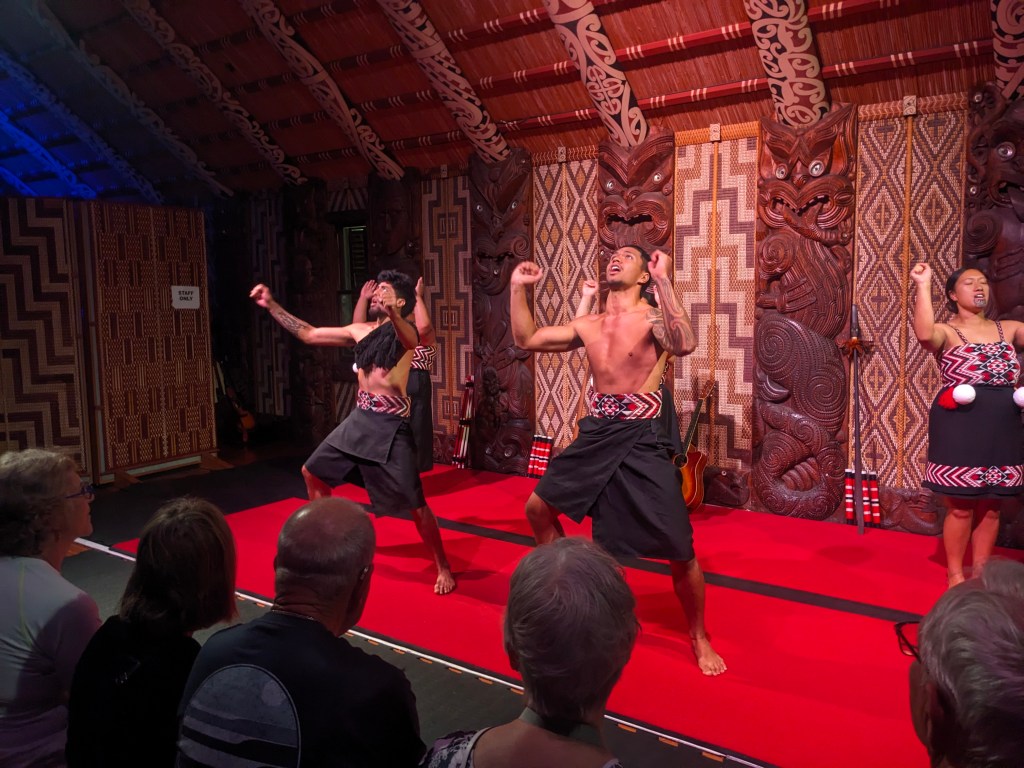
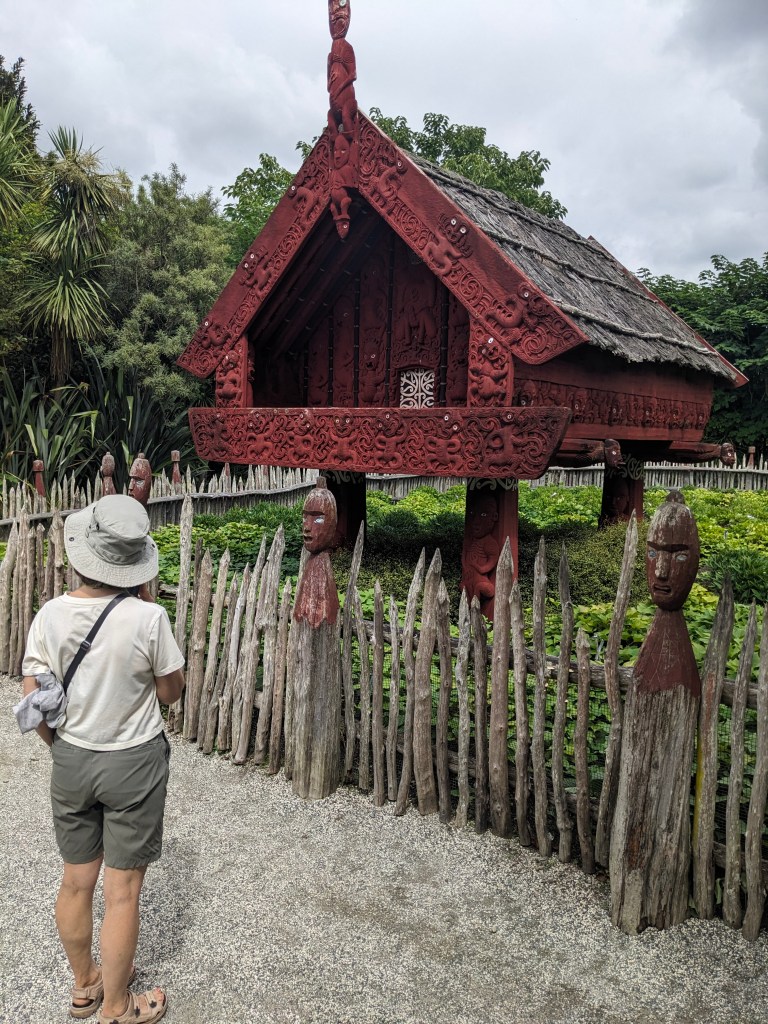
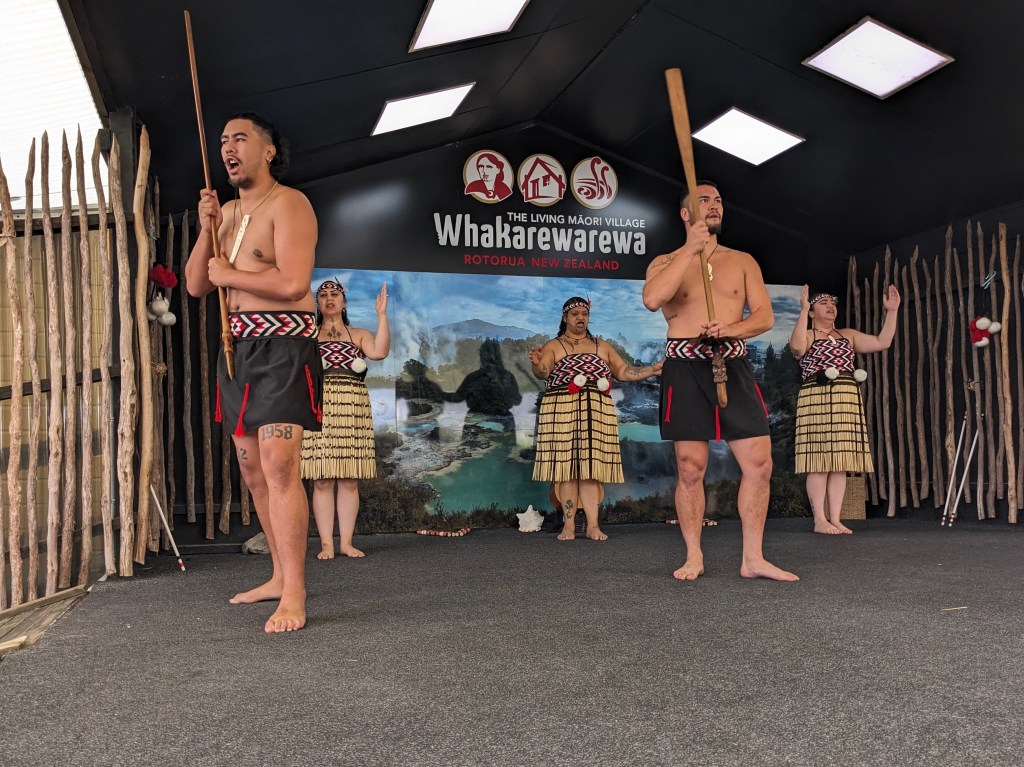
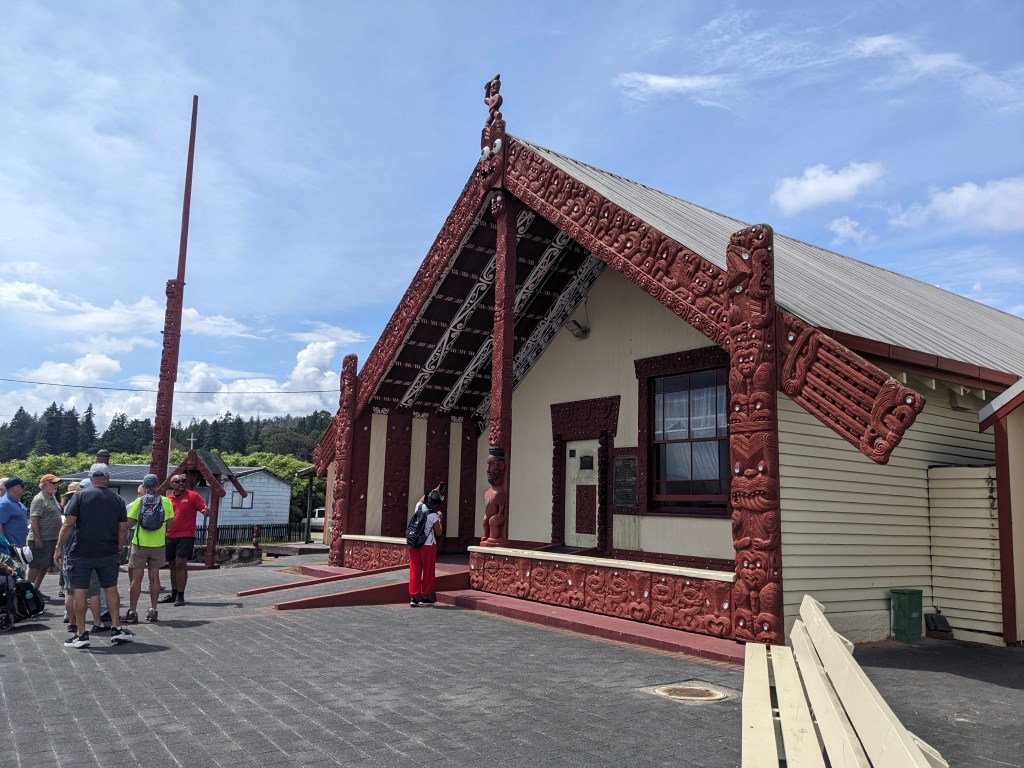
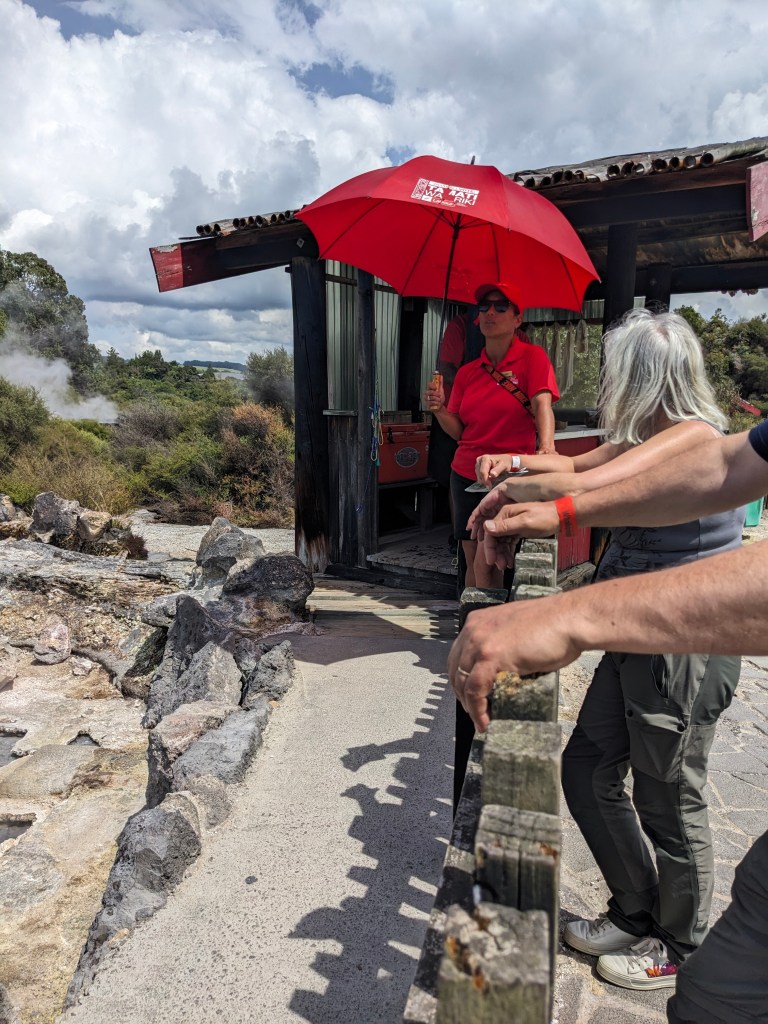
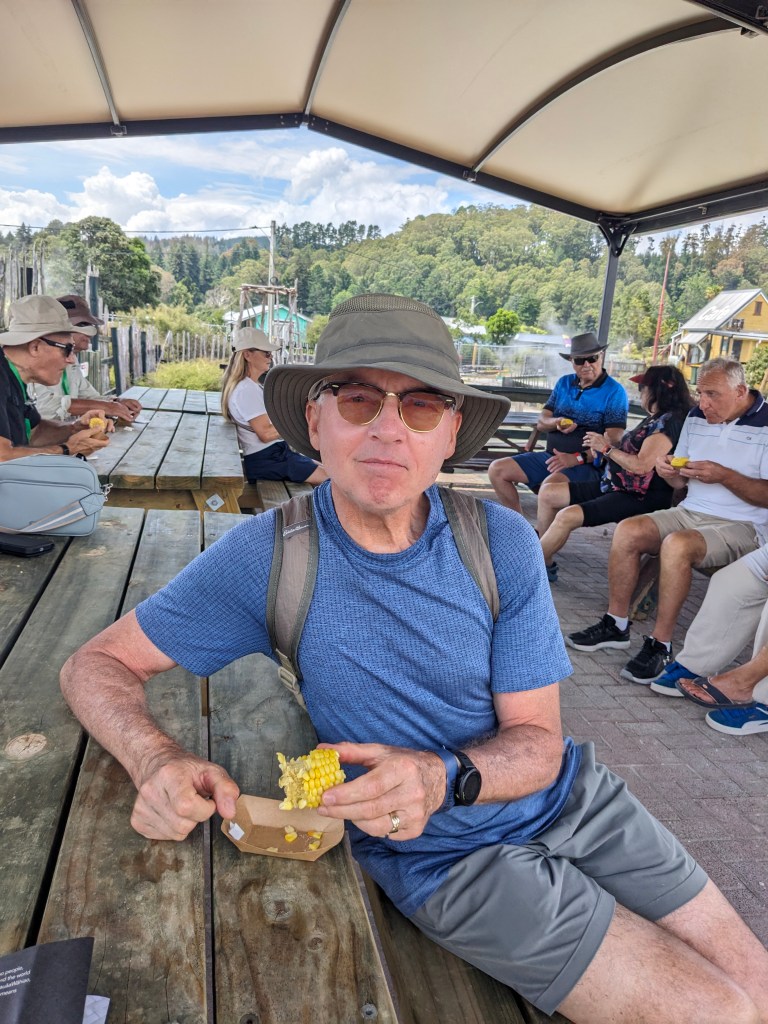
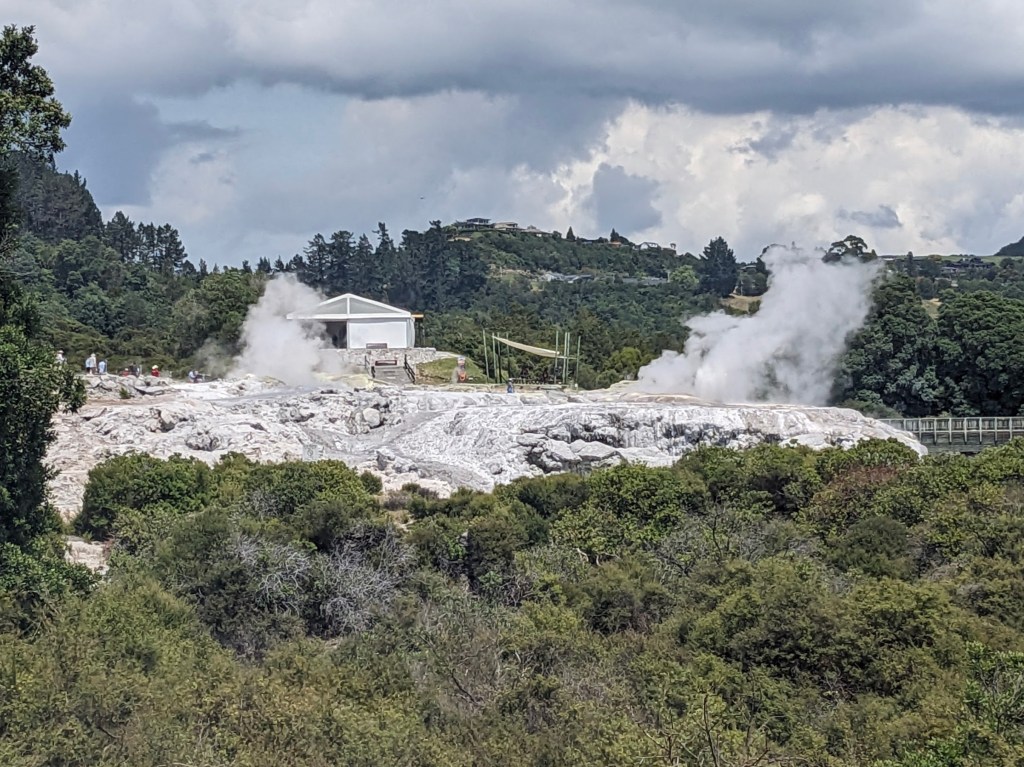
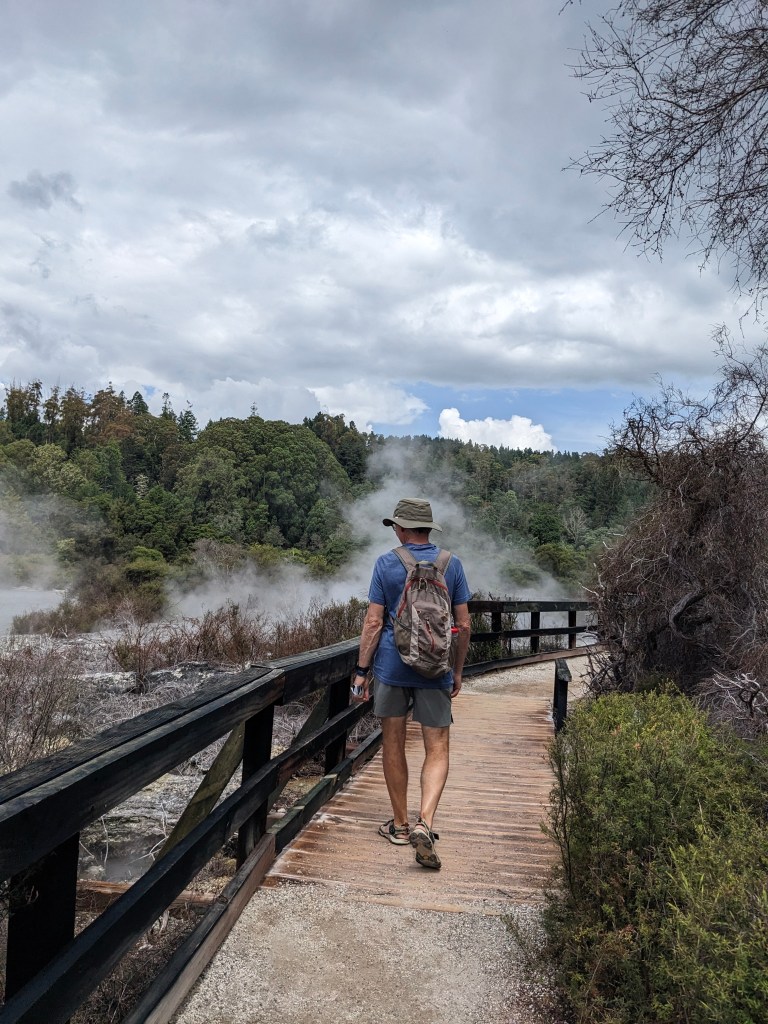
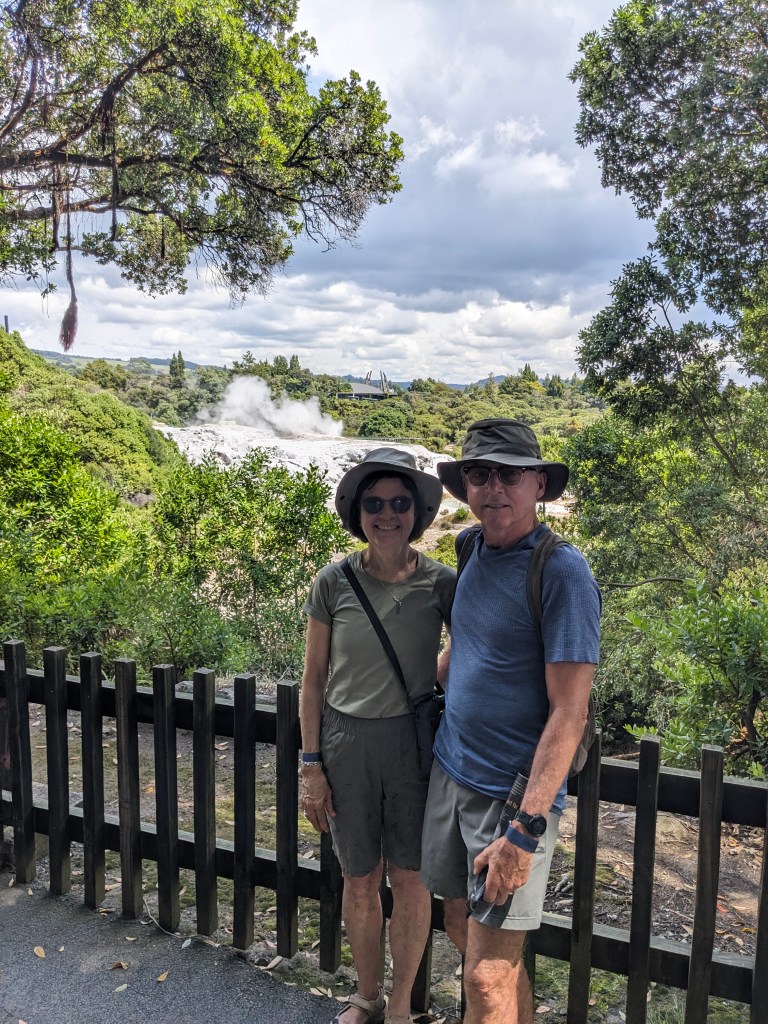
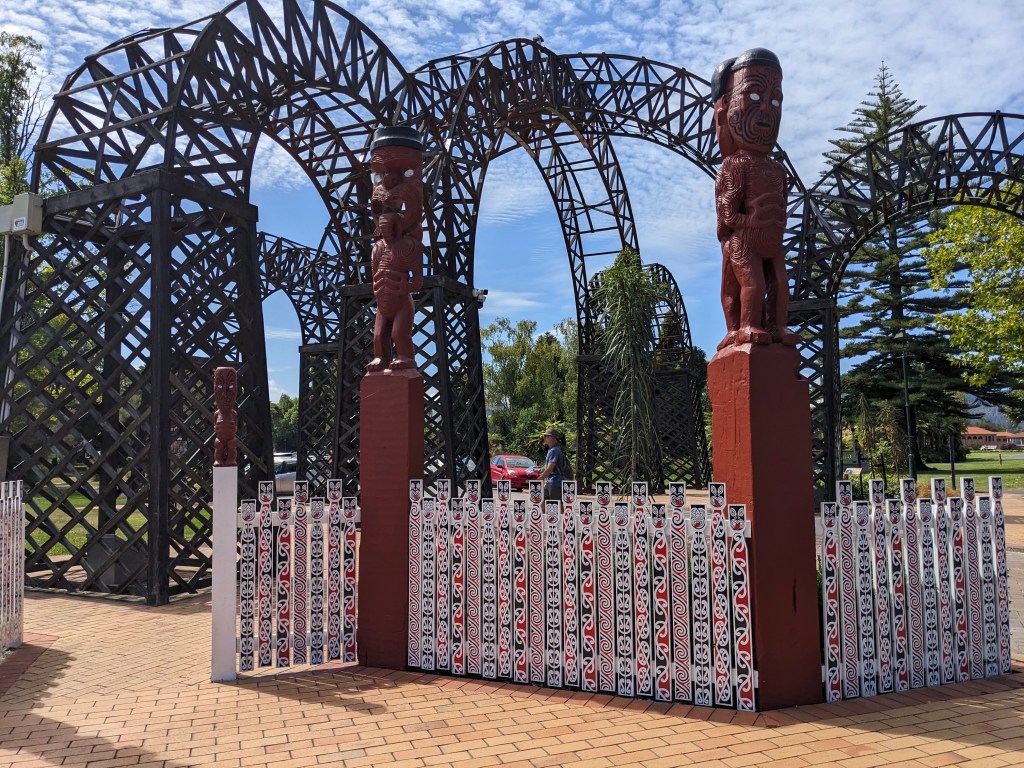
Rotorua is a big tourist destination due to the geothermal attractions as well as the Maori cultural sites. During our stay it wasn’t overly busy though, no trouble getting accommodations or seeing the sites. On our first day we visited Whakarewarewa village, just a short walk from our lodgings. This is an actual Maori village with people residing there still and it is on top of a very active geothermal site. We attended a cultural performance and had a tour of the village, learning about life on a constantly changing and dynamic earth where sometimes vents blow through homes but also how they use the heat and energy to cook and clean themselves. It was a fascinating and steamy environment to walk around. The water is very hot, often at a boiling temperature, so you don’t go swimming here. Where they bathe is cooler, only 45-50 degrees C, still pretty hot.

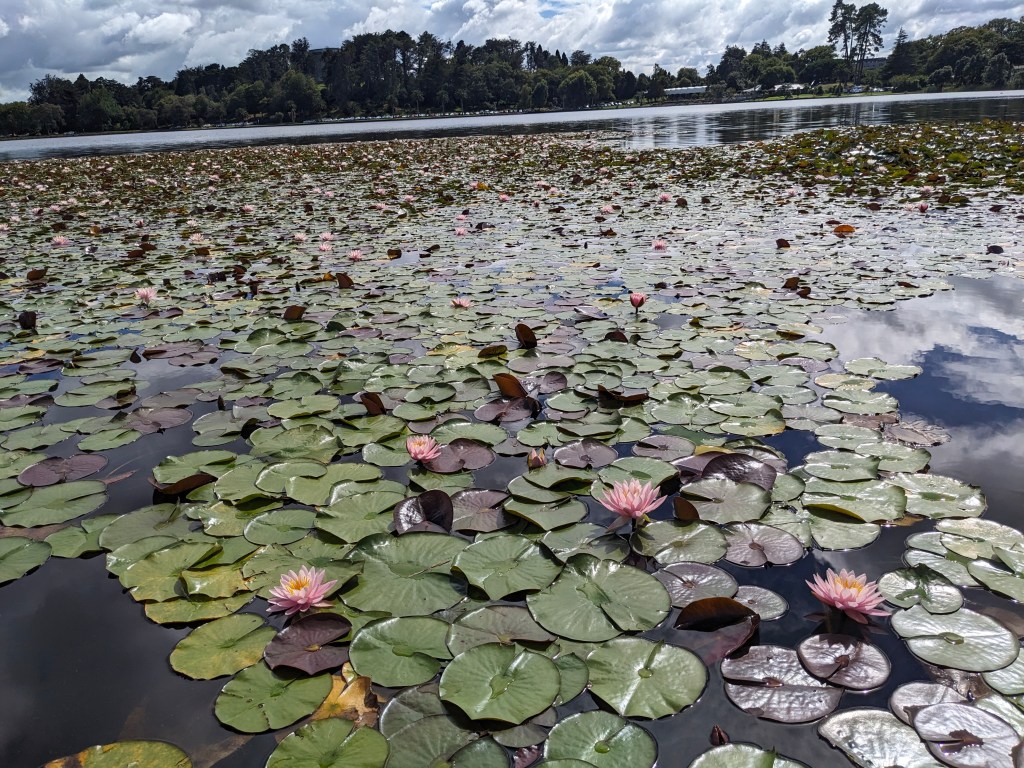
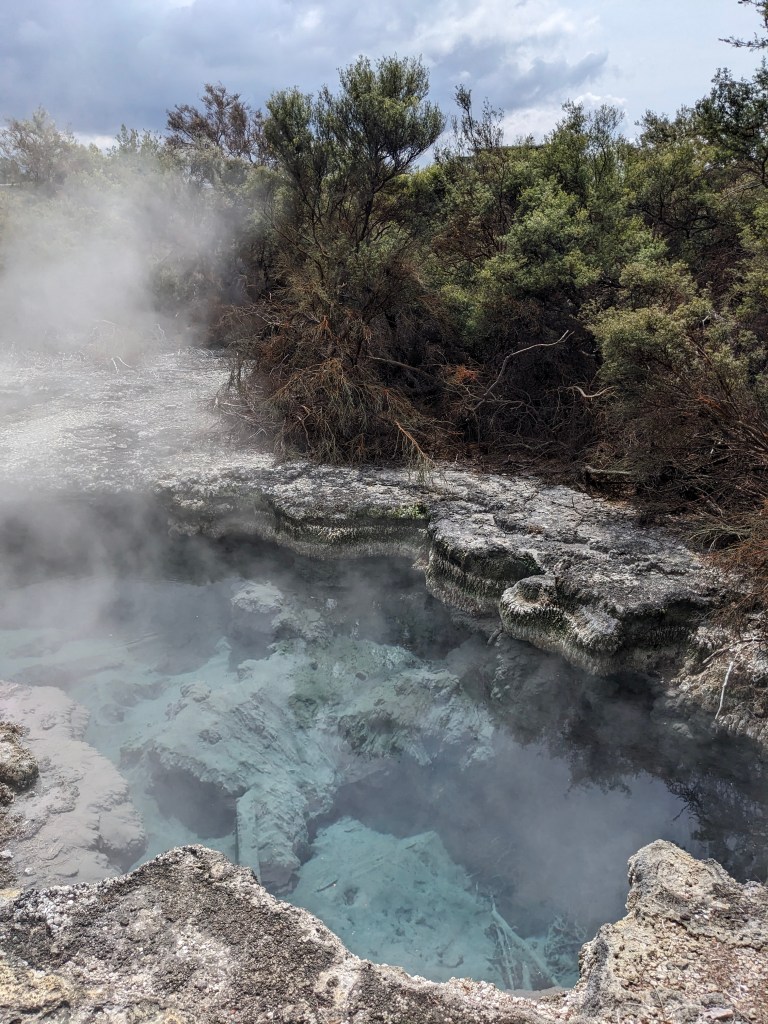
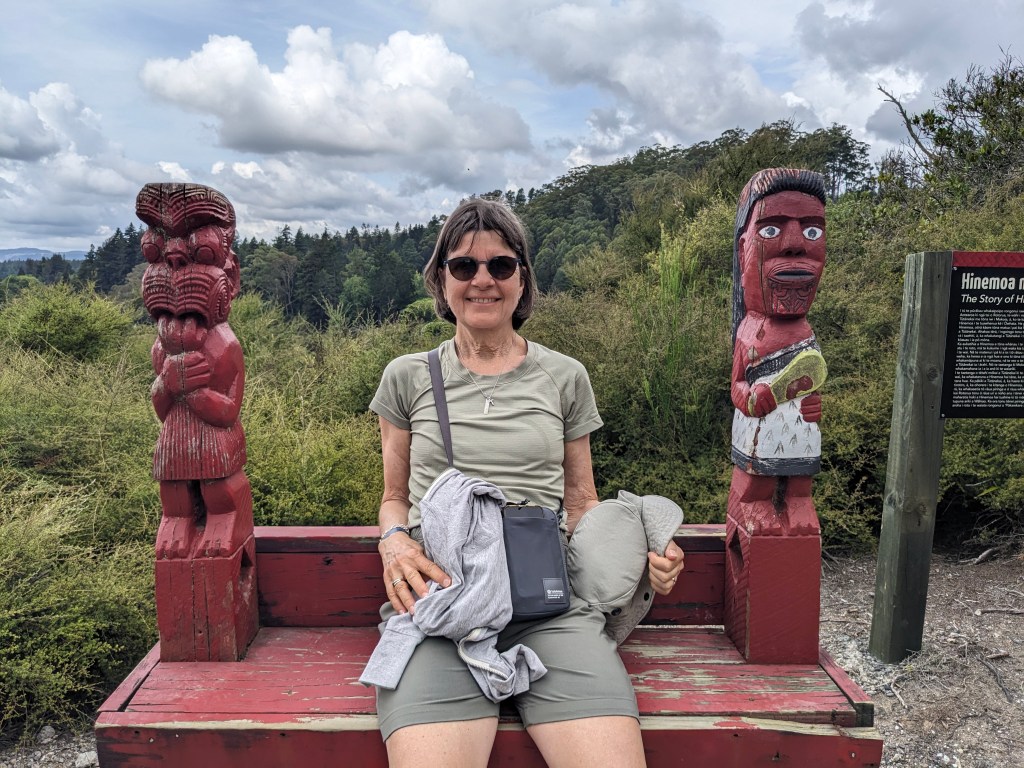
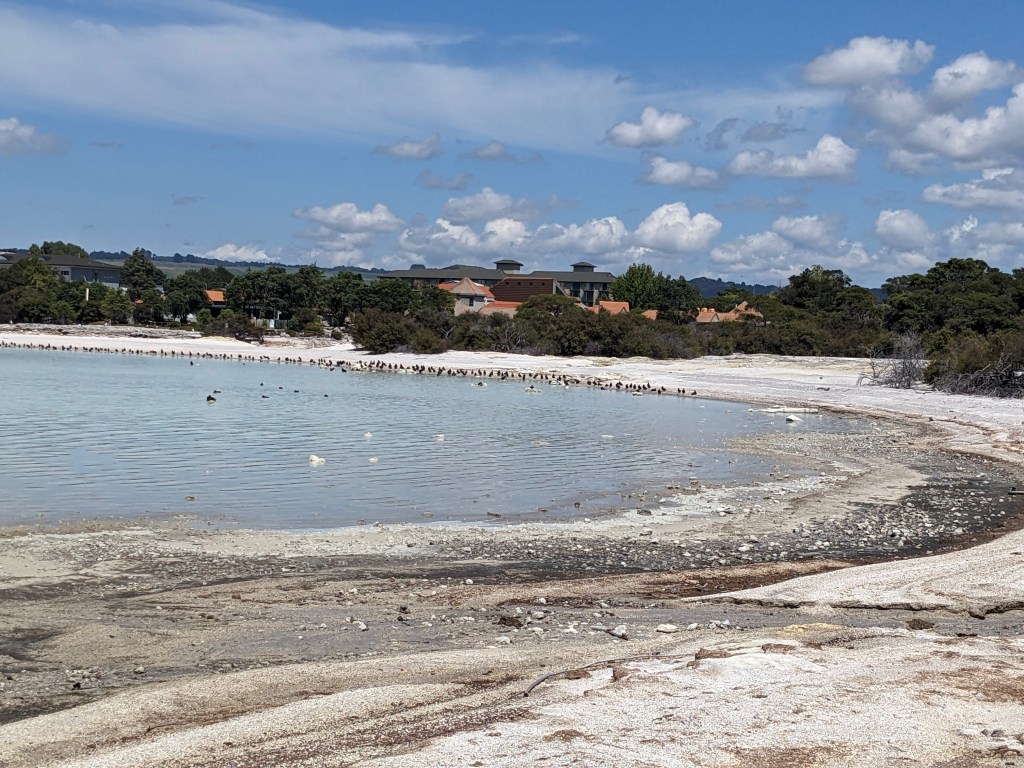
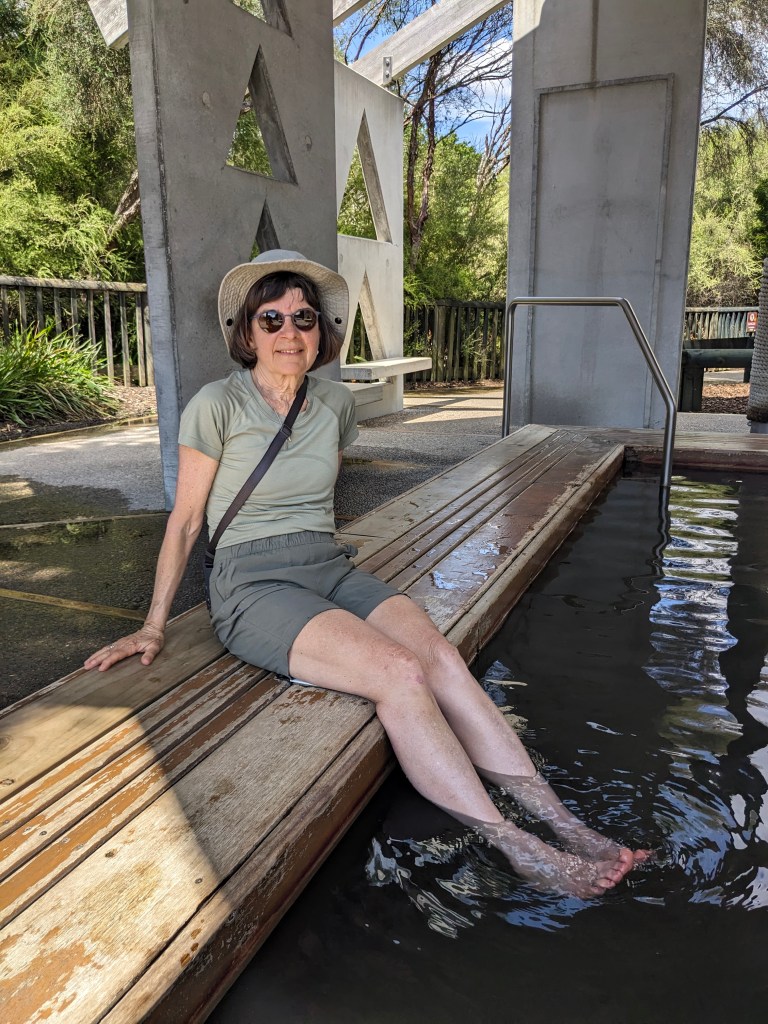
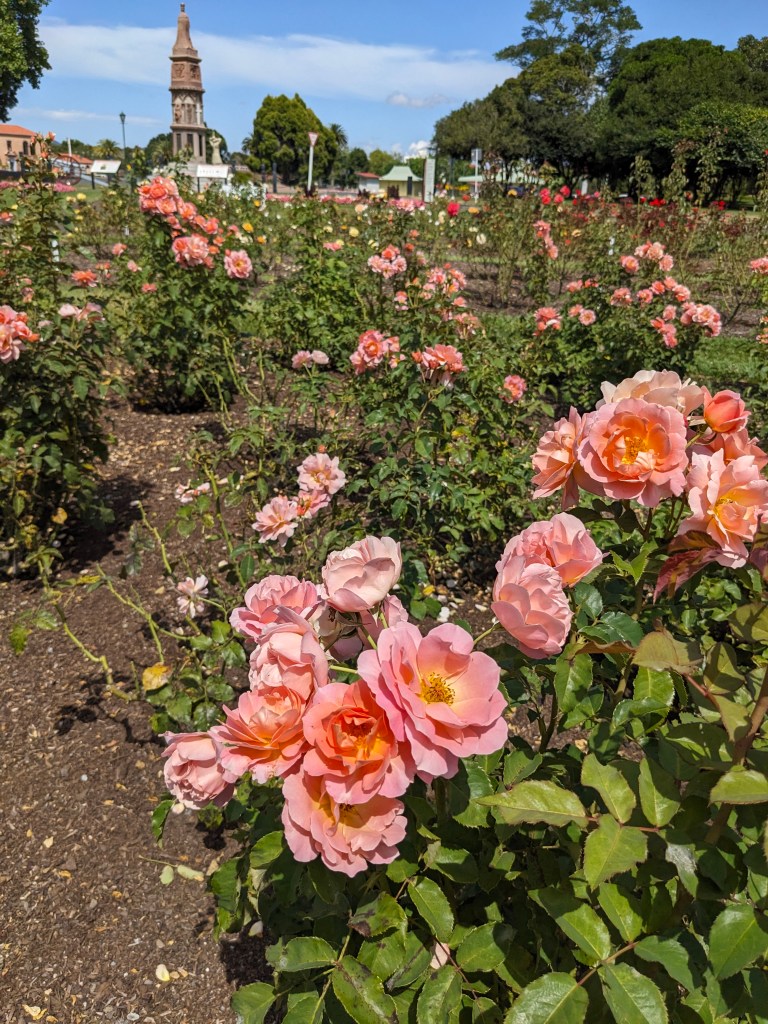
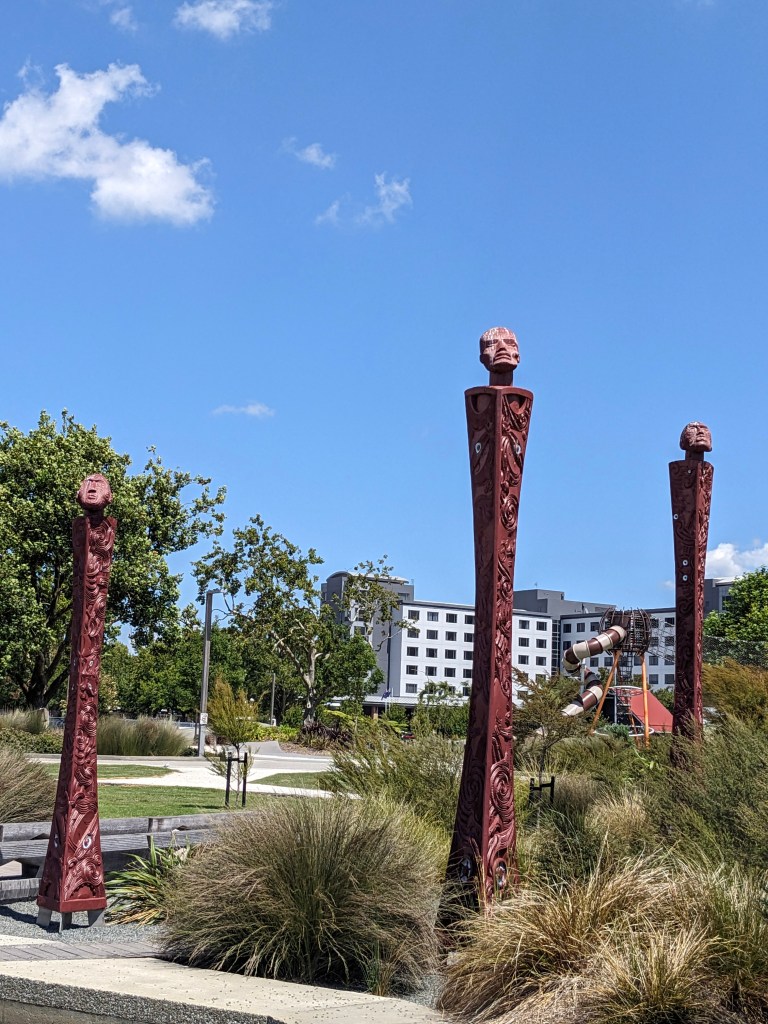
The following day we went into the centre of Rotorua by the lake, which is actually a caldera with an island in the middle. There are many active geothermal sites around the shore of the lake and close to where people are living. There’s another Maori village there as well, Ohinemutu, although not set up for tourists like Whakarewarewa. We walked along the shore of the lake through more geothermal sites where the sulphur smell is quite strong, although you get used to it. There are clear alkaline and murky acidic pools as well as boiling mud pools. There was one park with small pools where you could safely wade or soak your feet although it was quite warm, definitely warmer than our hot tub at home.

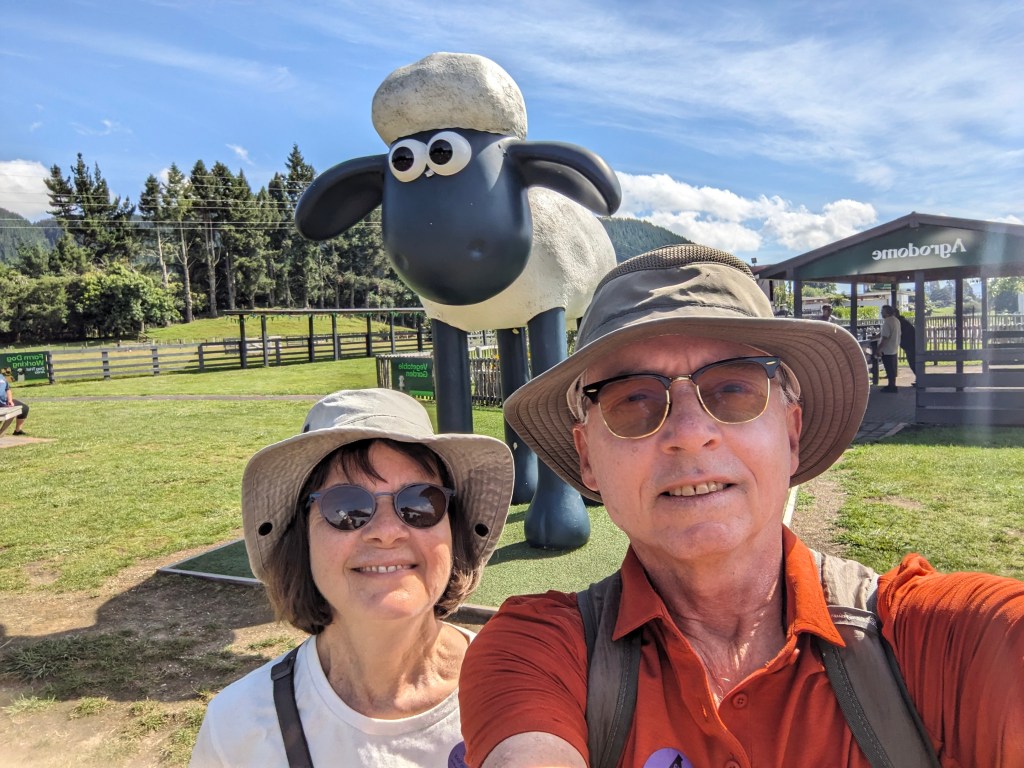
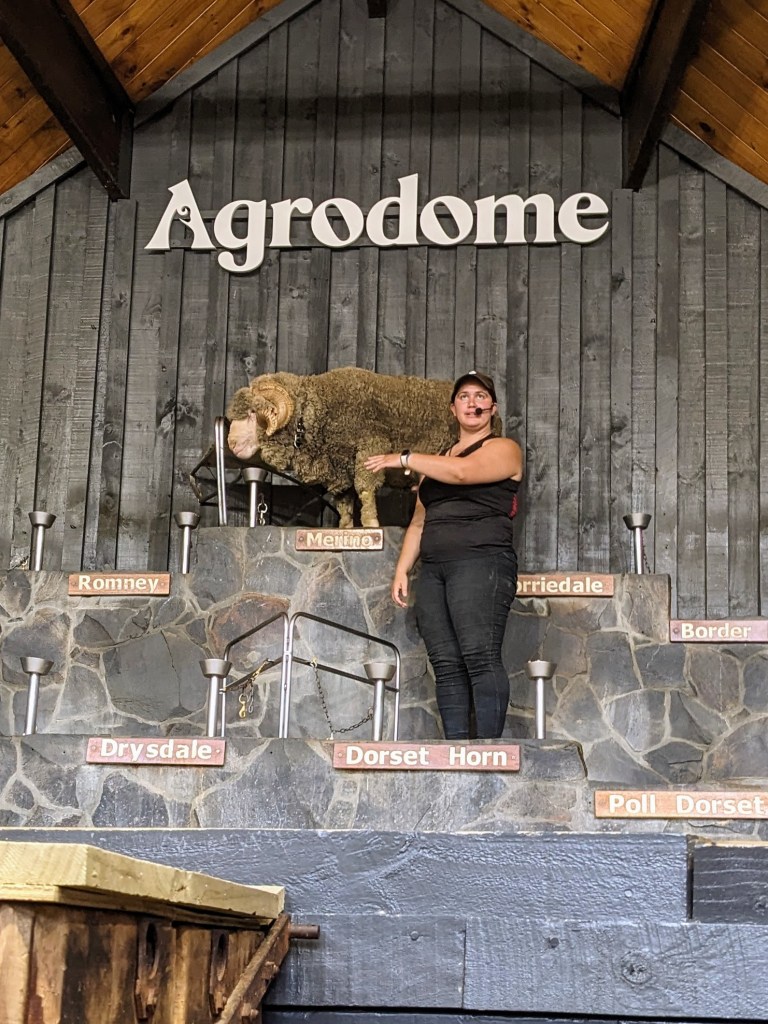
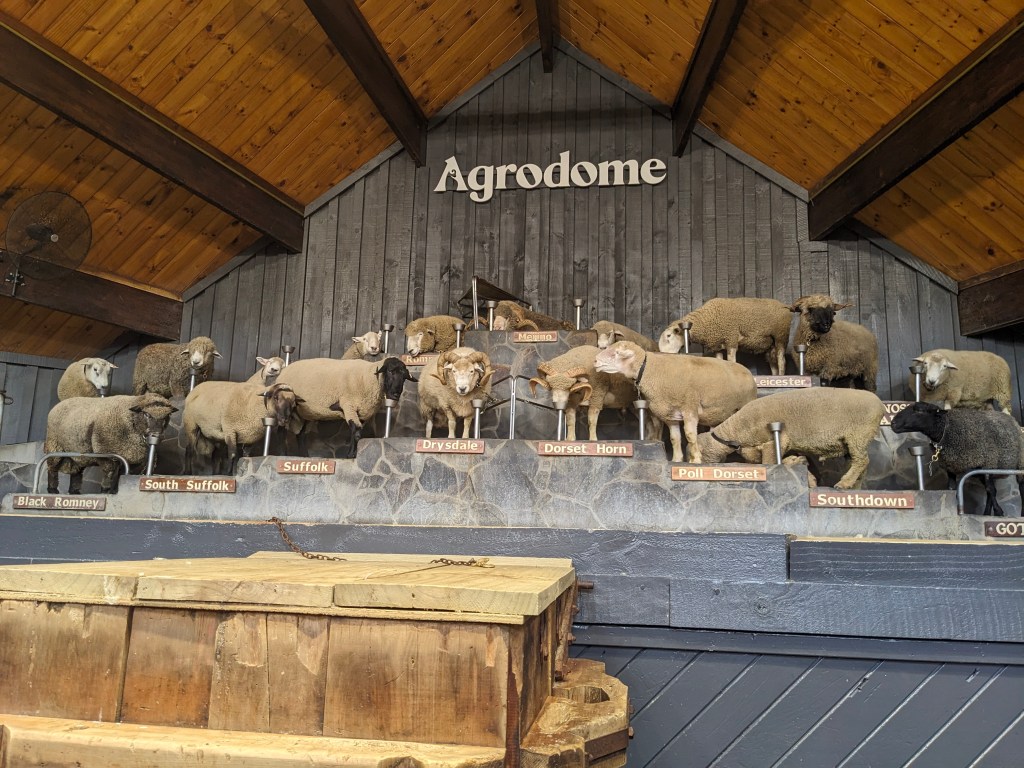
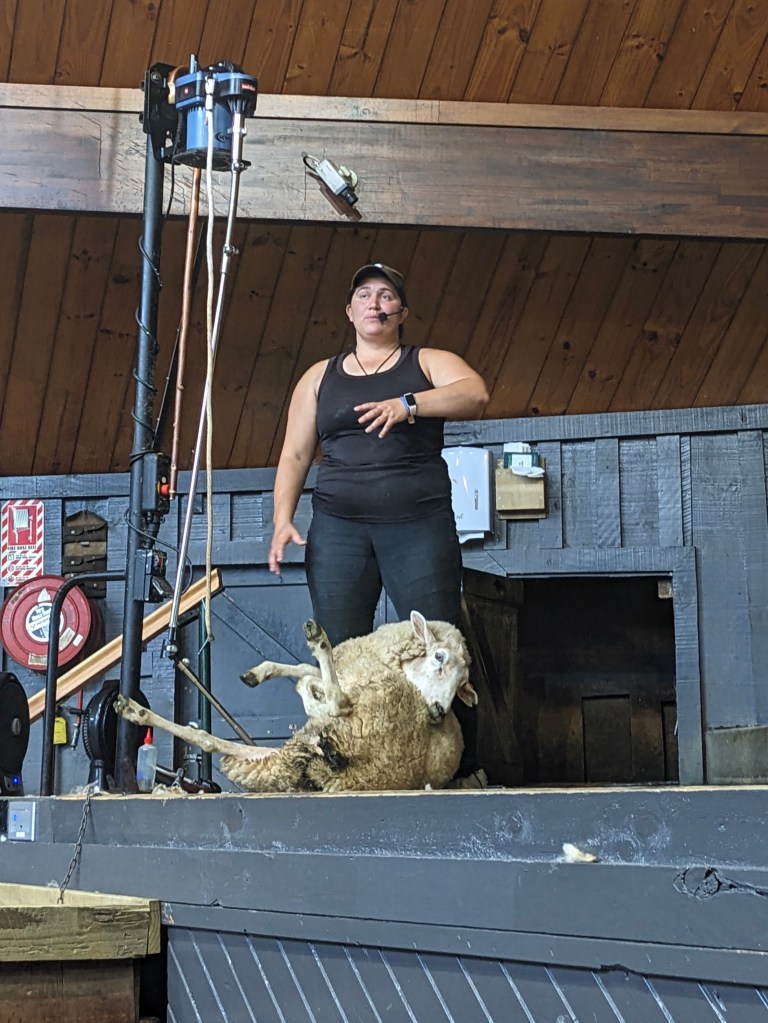
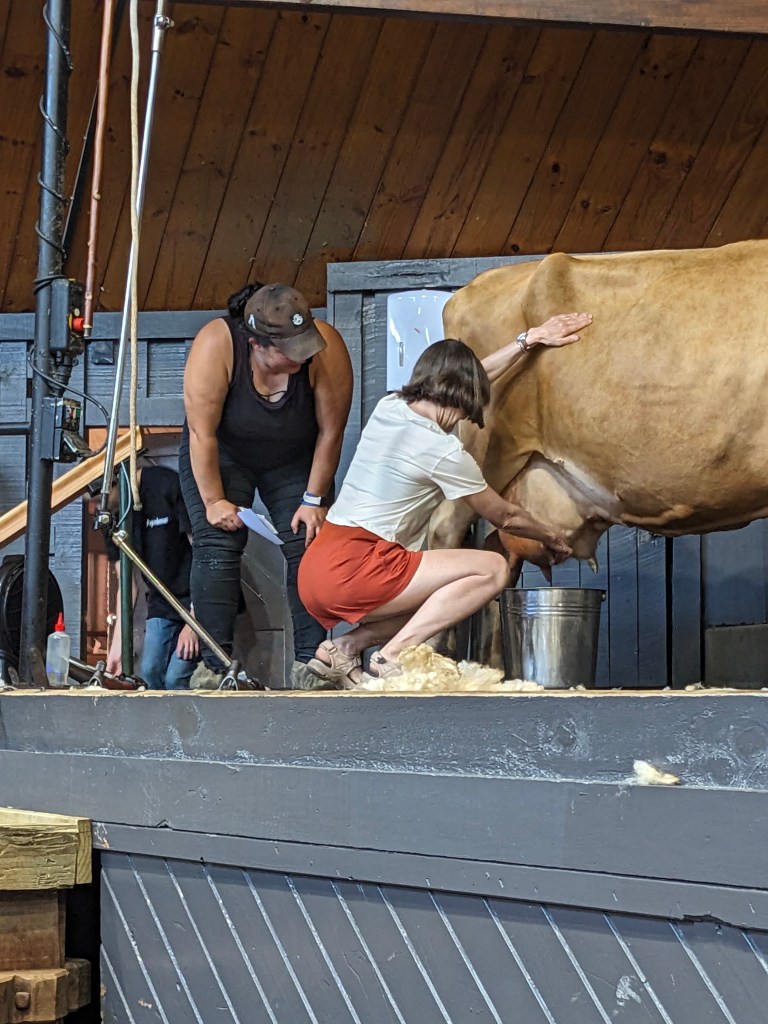
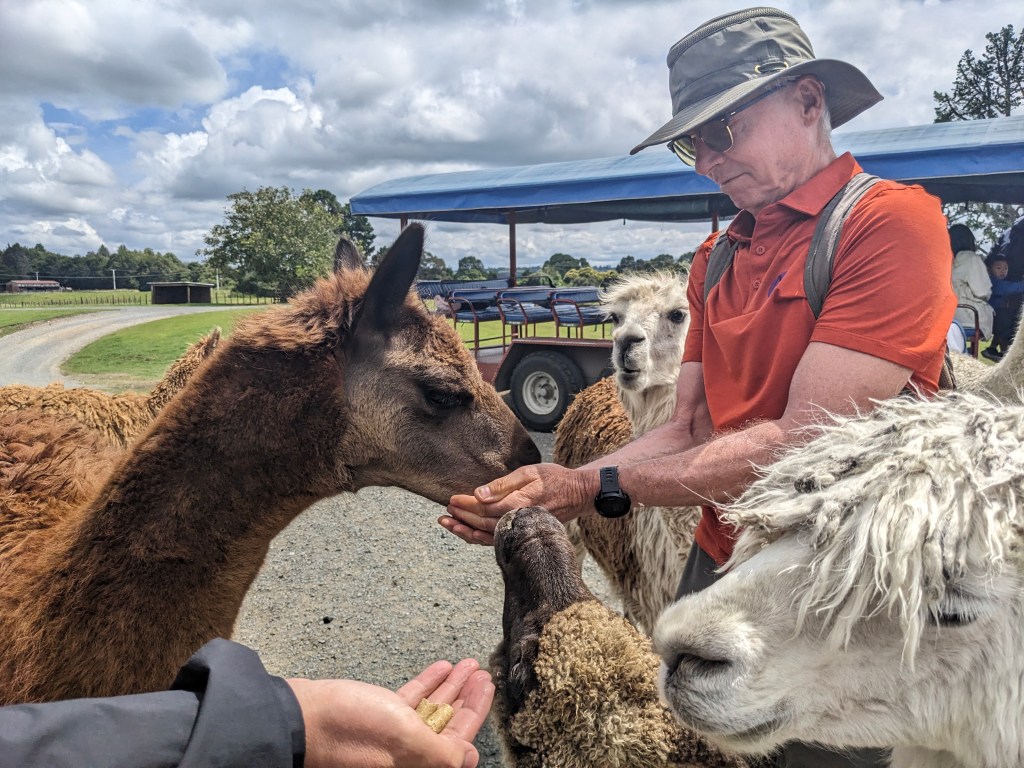
On our final day in Rotorua we took a city bus out to the Agrodome. This is a tourist farm, also an actual working farm, that George visited many years ago on one of his other trips to New Zealand. We saw a farm show that displayed and explained to us the various kinds of sheep, sheep shearing, about the different wool and grades, sheep herding with dogs, cow milking, and a trip around the farm via tractor to see all the animals such as deer, alpaca, cattle and more sheep. It was quite entertaining and Tara had a go at milking a cow.

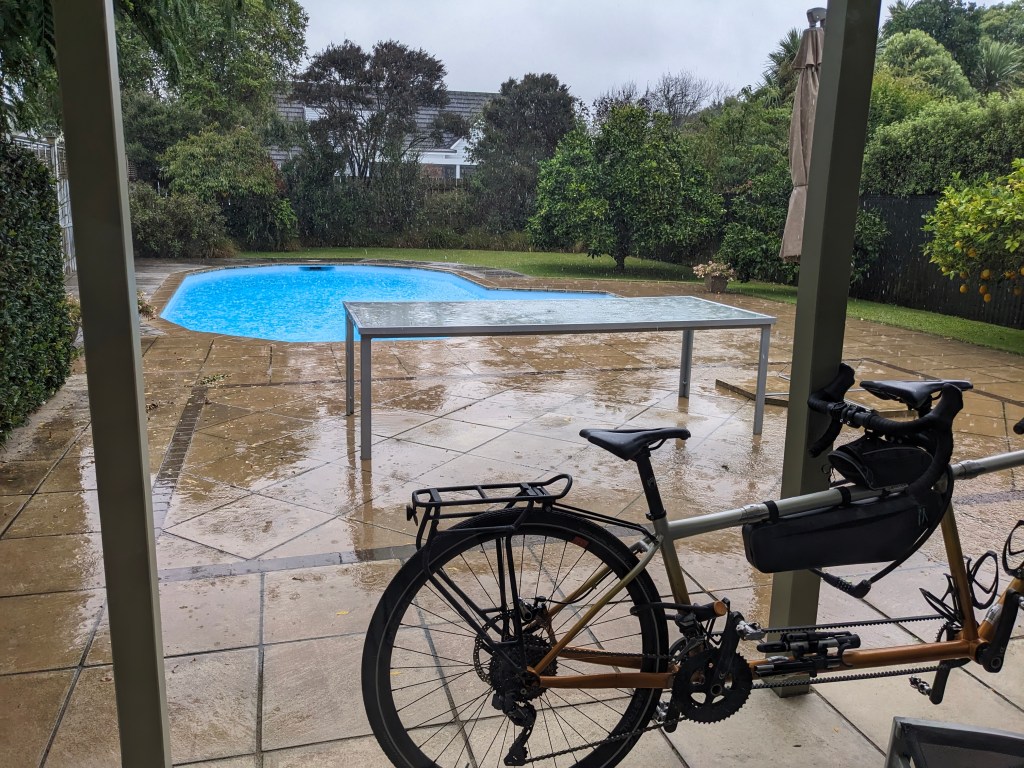
The weather in Rotorua was quite nice, just one evening with some fierce thunder showers and a big rainfall however the forecast is quite wet looking, fingers crossed for our ride out tomorrow.

Mount Maunganui

8 Feb

Getting to Mount Maunganui took us two days rather than one so that we didn’t have to ride on the highway the whole distance. Instead of 65 kms on the state highway it was 97 kms on small roads and pathways over two days. We still had to be on the highway for about 32 kms of that but it was a much more enjoyable ride. This particular highway into Tauranga is a very busy one and despite having some shoulder (about 1 meter) it is still unnerving.

We left Waihi Beach and did a scenic route to Katikati, riding out to Bowentown on the tip of the peninsula before making our way around and onto the highway. Once in Katikati we rode around a bird sanctuary and past many kiwifruit orchards. This area grows a lot of kiwifruit which is shipped all over the world. Katikati is also known for its public murals.

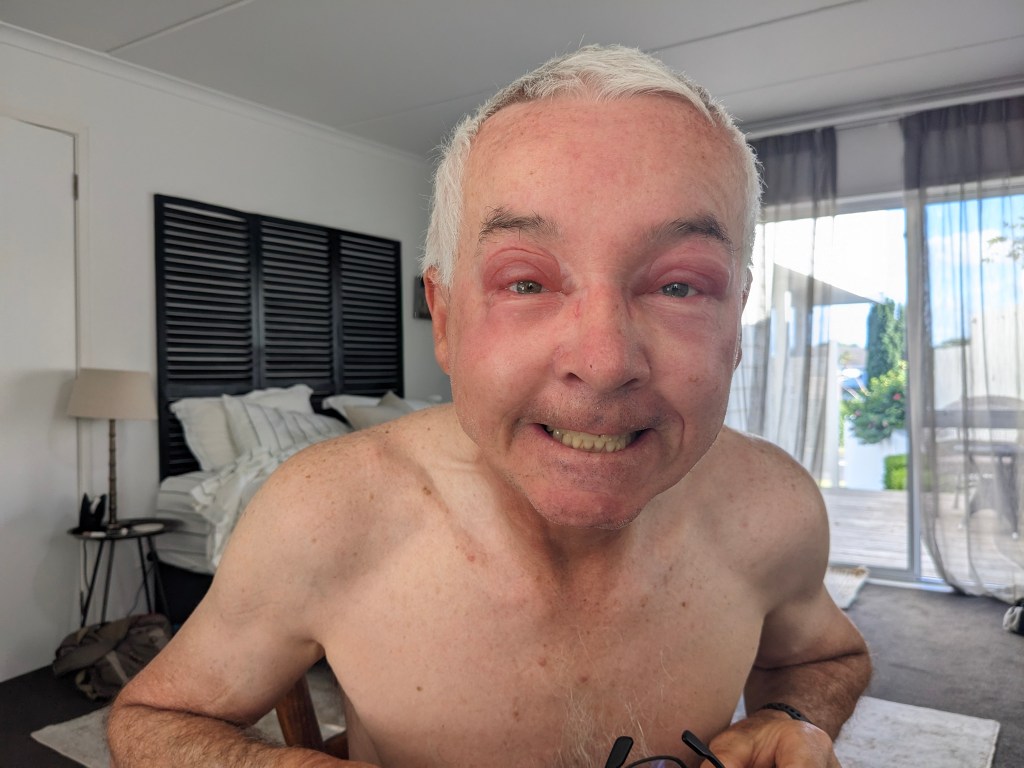
We left Katikati in the morning and rode about 20 kms on the highway before we could get onto some quiet roads and pathways which took us by Omokoroa and Te Puna, through some nice reserves, parks, past beaches and scenic bays. This part was lovely. Getting through Tauranga was relatively easy as the city has quite good bike lanes. There was one tricky bit getting over the bridge to Mount Maunganui; we somehow had to get across a very busy intersection with cars going in many more directions than seemed possible and which lacked crosswalks and bike lanes. We eventually had to just hoof it across when the coast was clear. Unfortunately during this ride George made hard contact with a bee that got into one of the vents of his helmet and caused considerable damage. Tara removed the bee, which was plastered to his forehead, and all the other bee bits she could find but he ended up with a very swollen forehead and eyes which gradually resolved over the following 4-5 days with regular antihistamine, ibuprofen and a cooling gel eye mask. The captain does take the brunt of the bugs on a tandem.

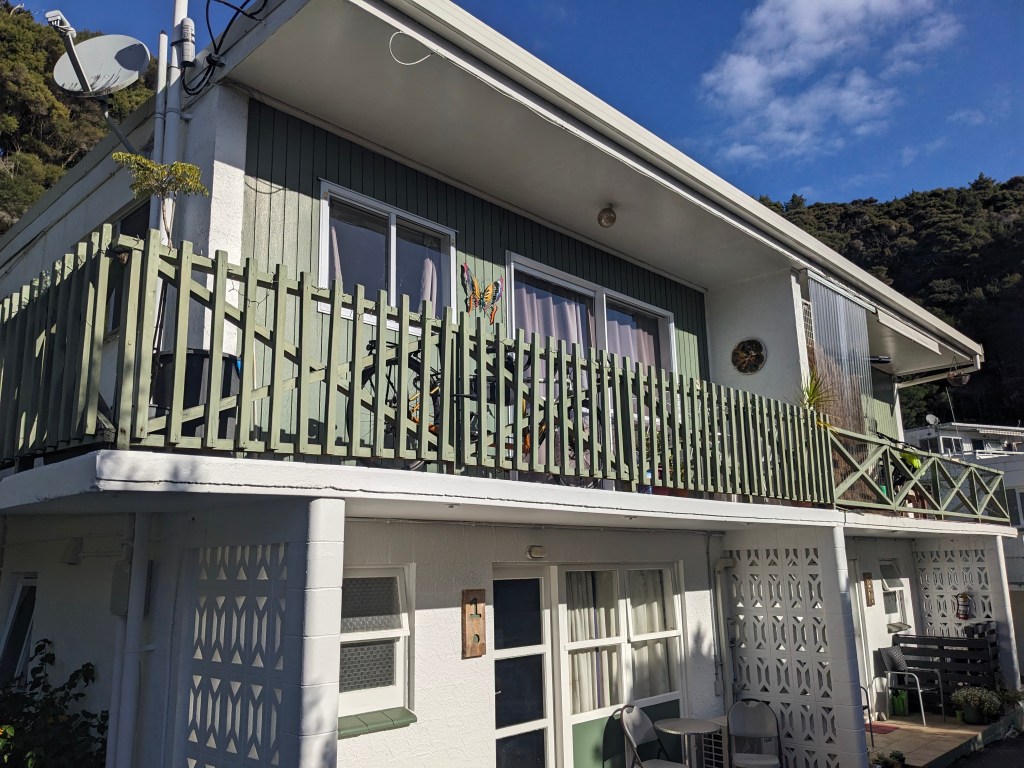
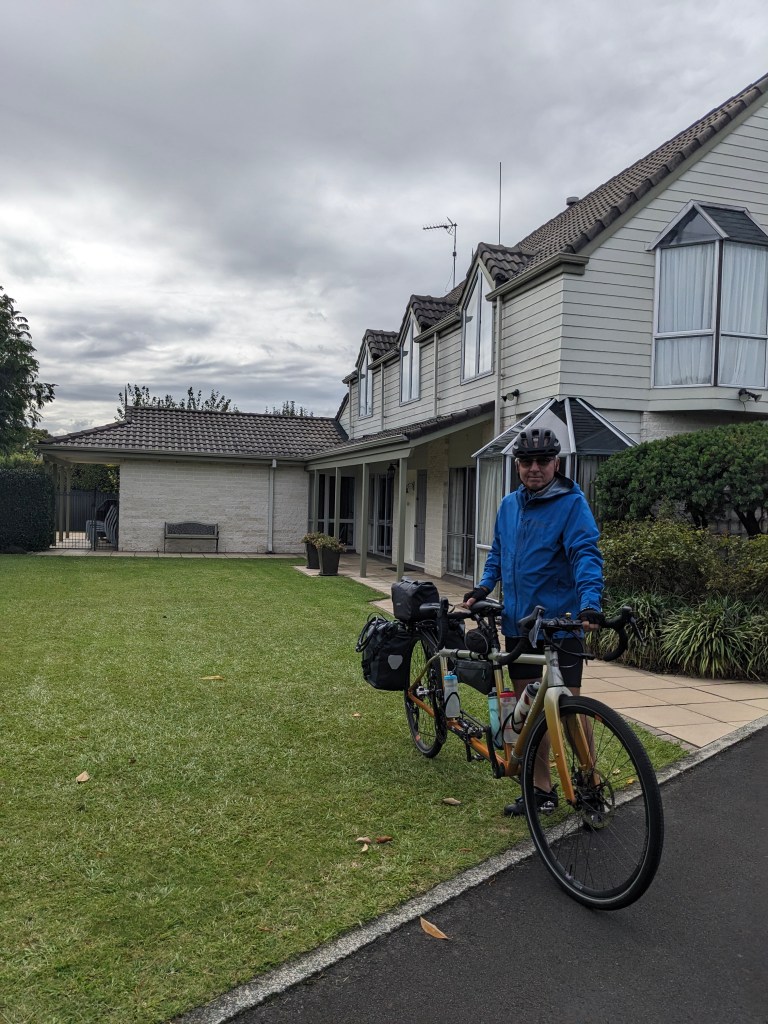
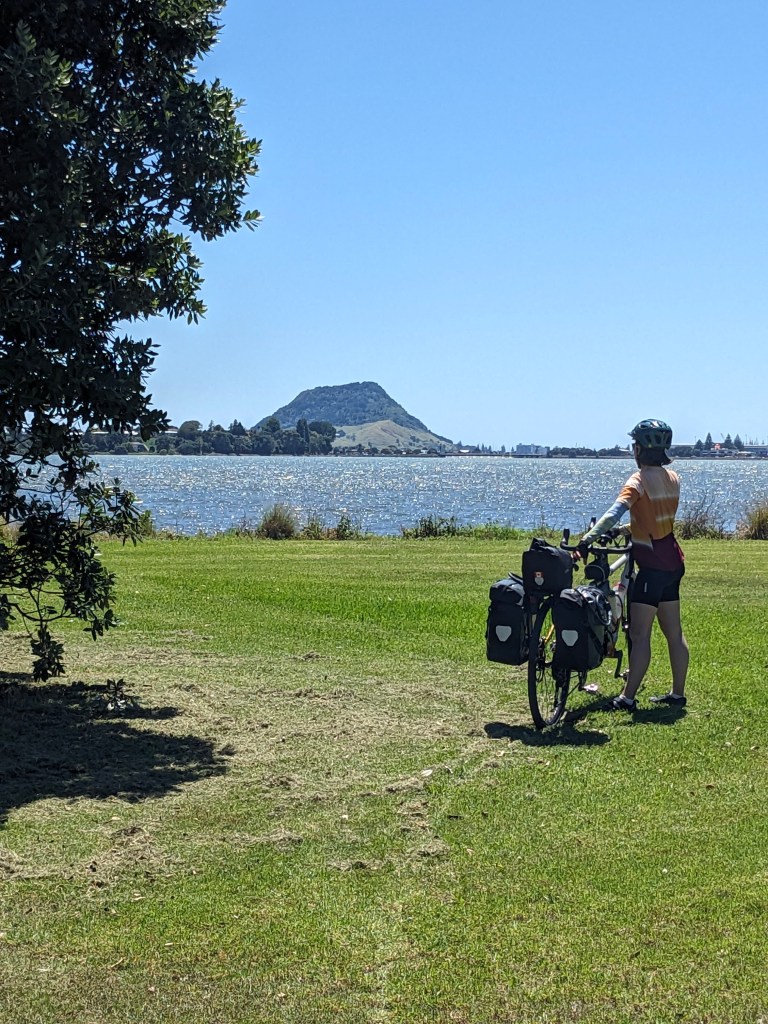
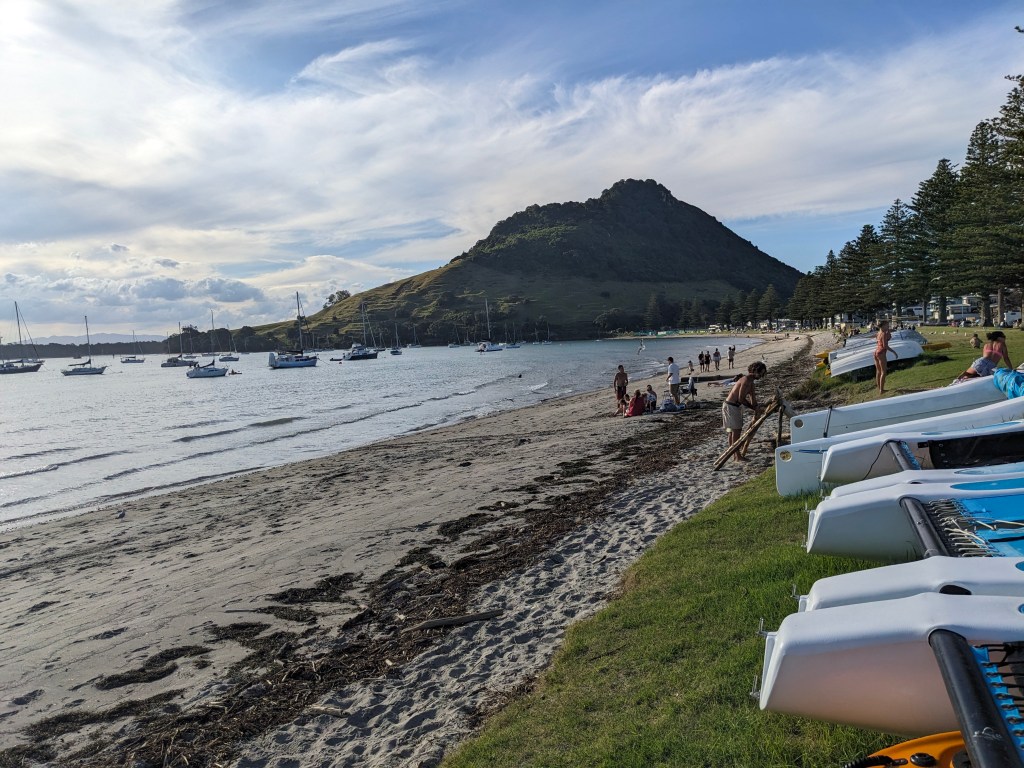
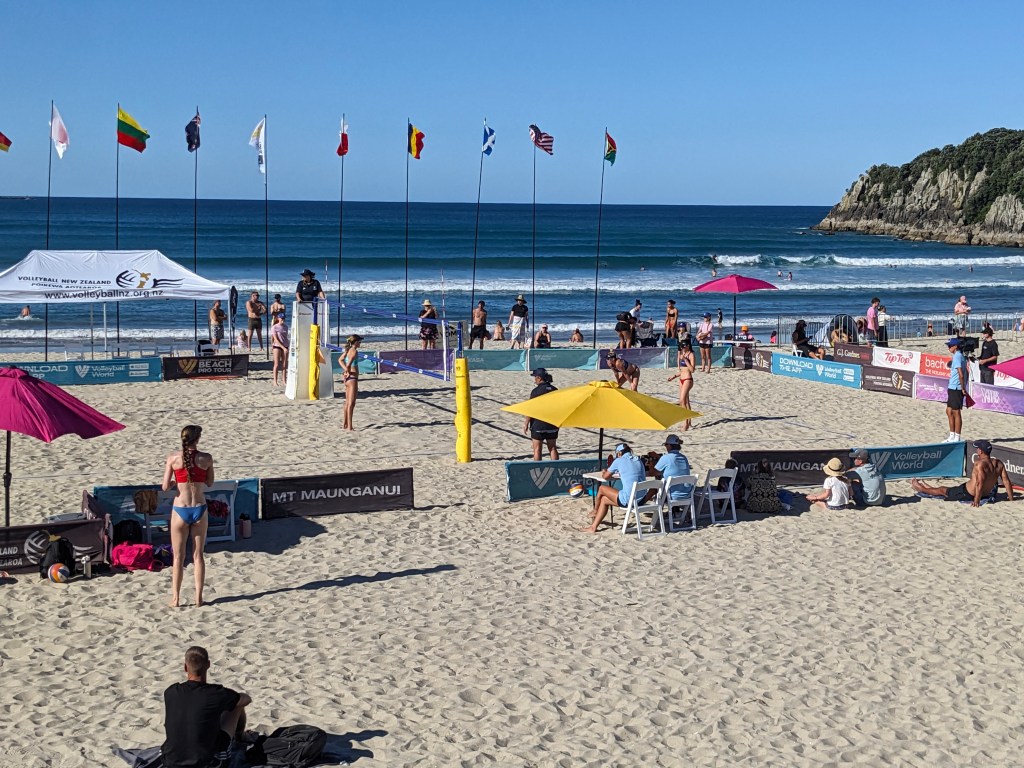
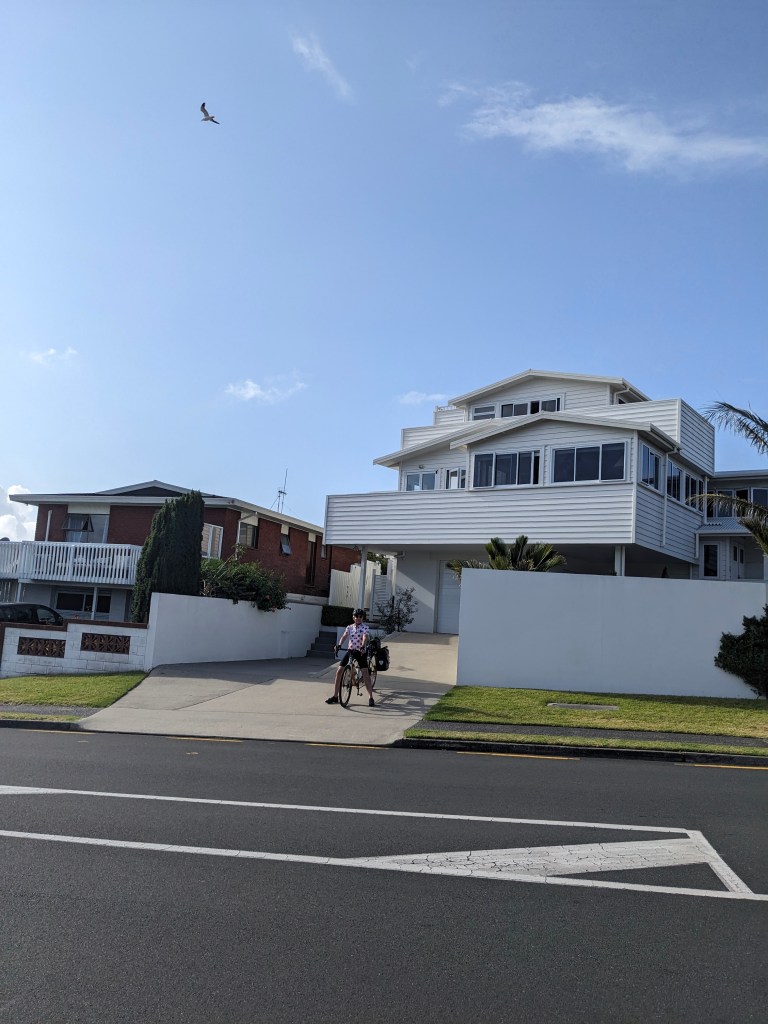
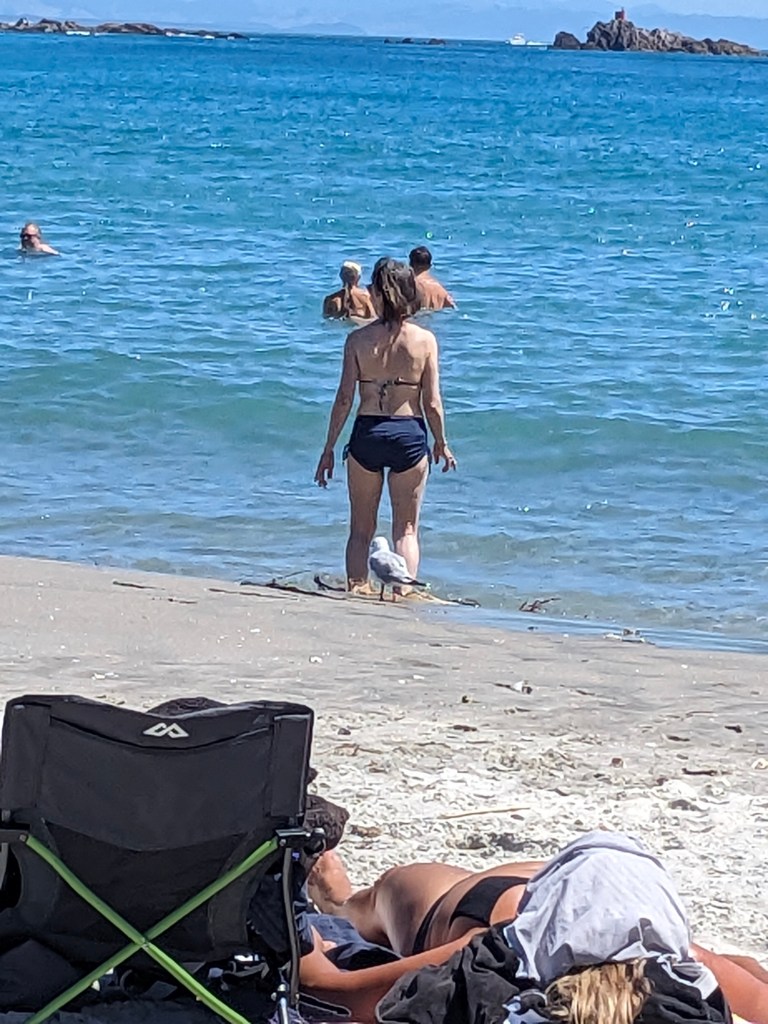
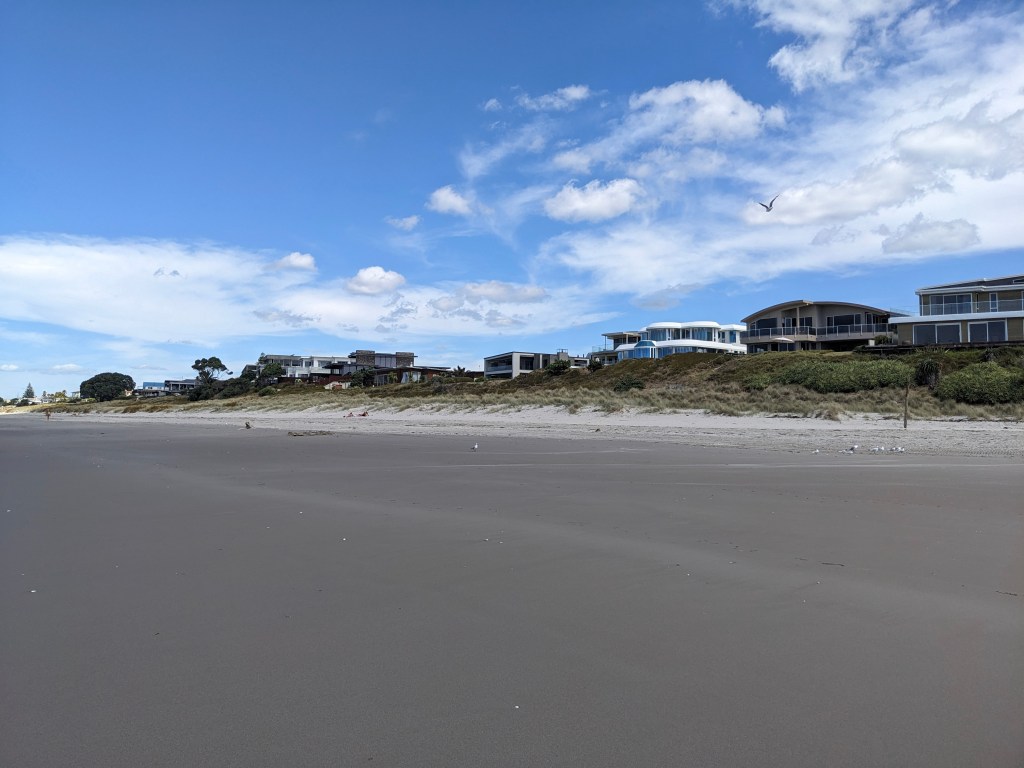
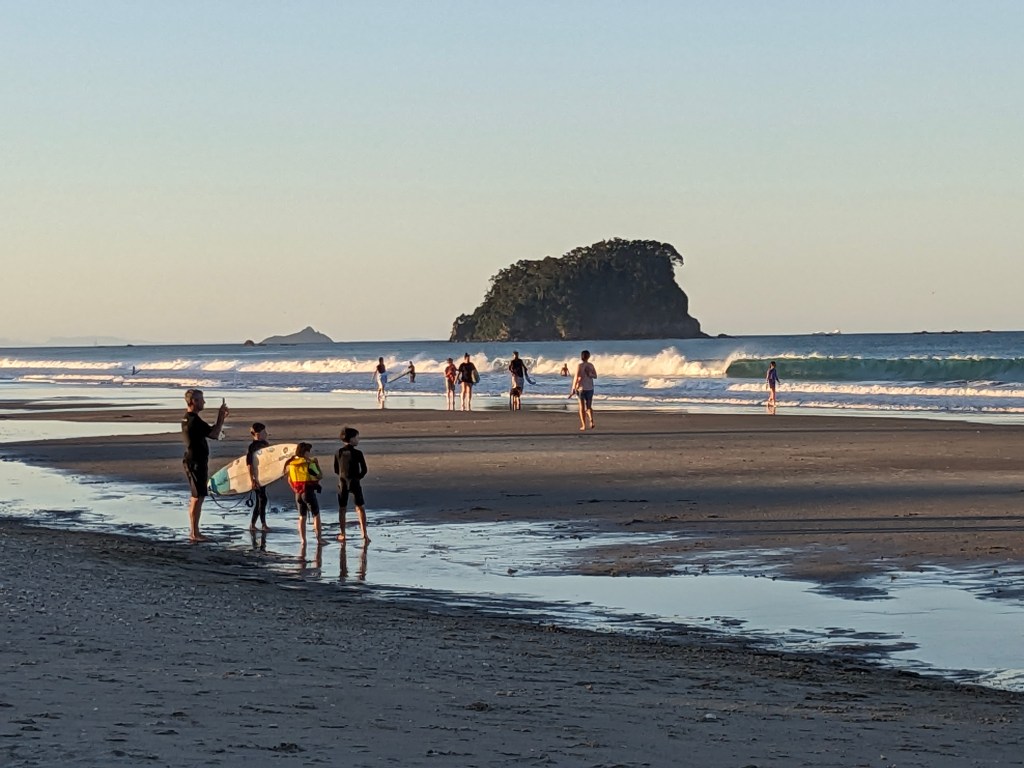
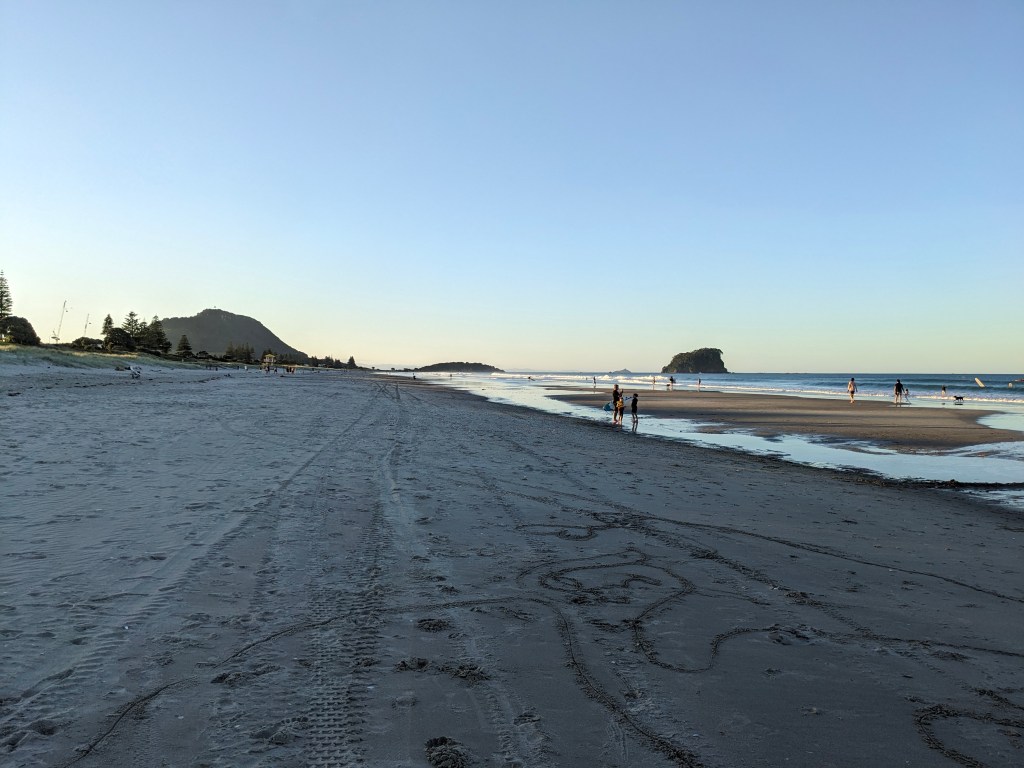
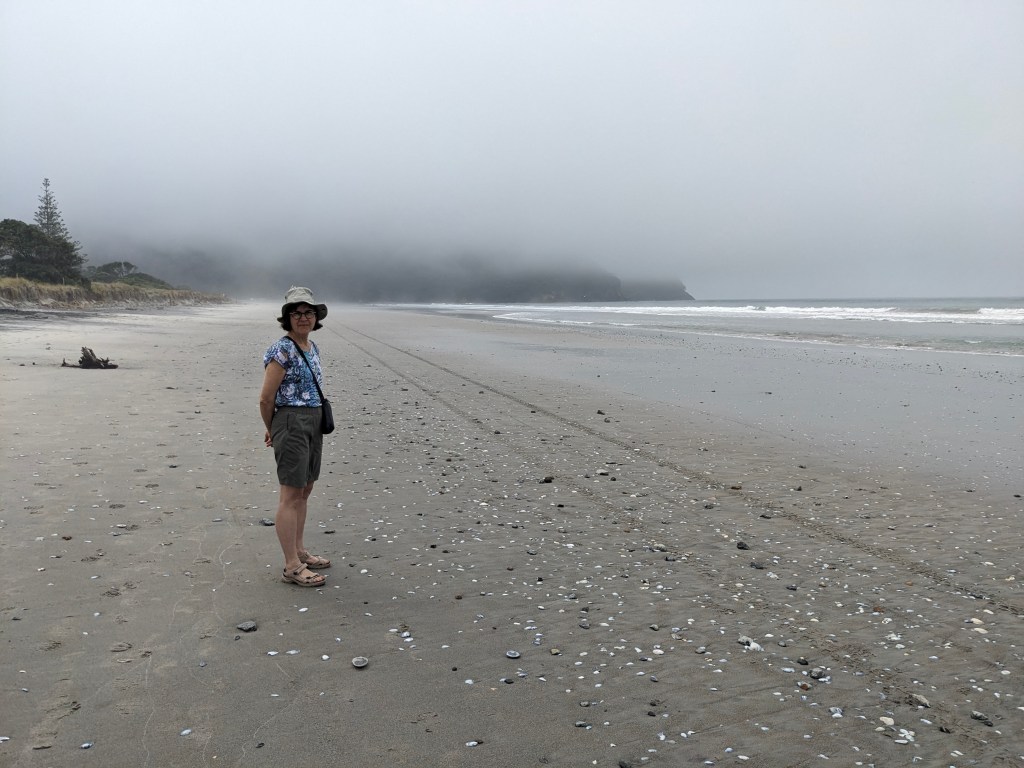
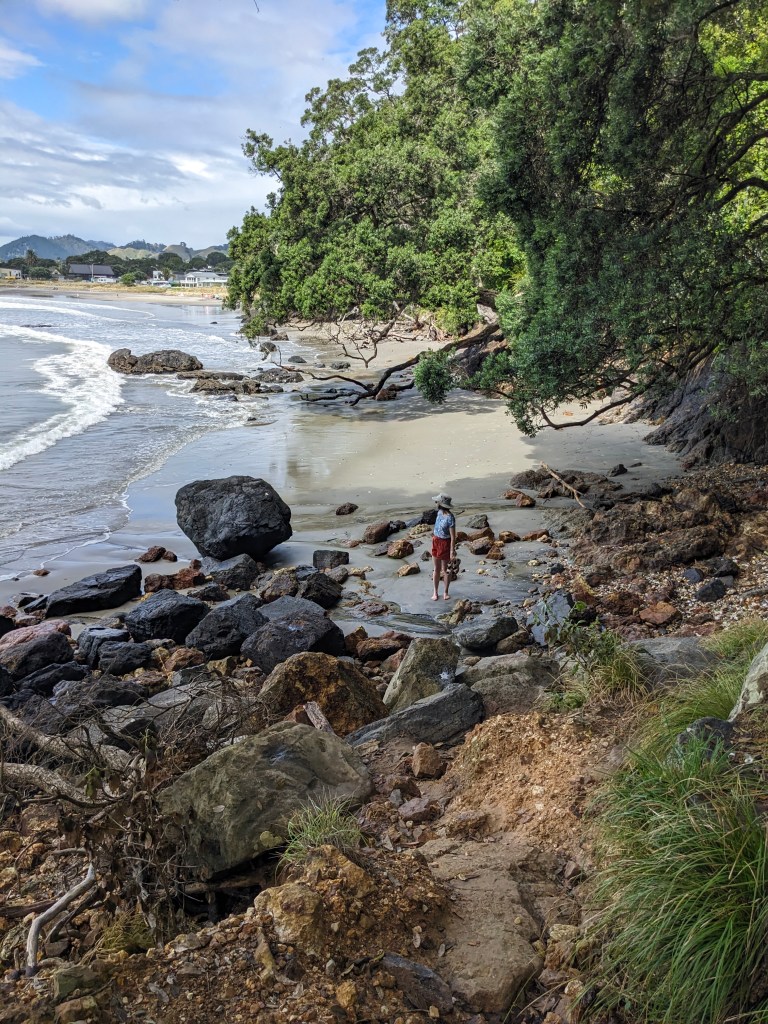
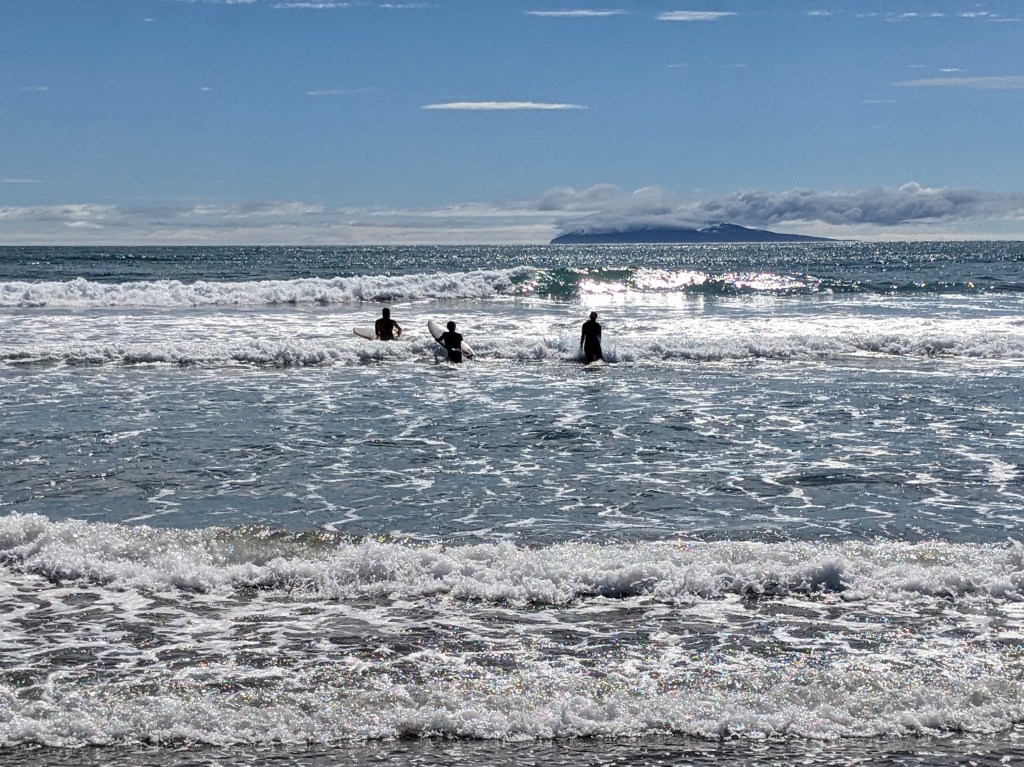
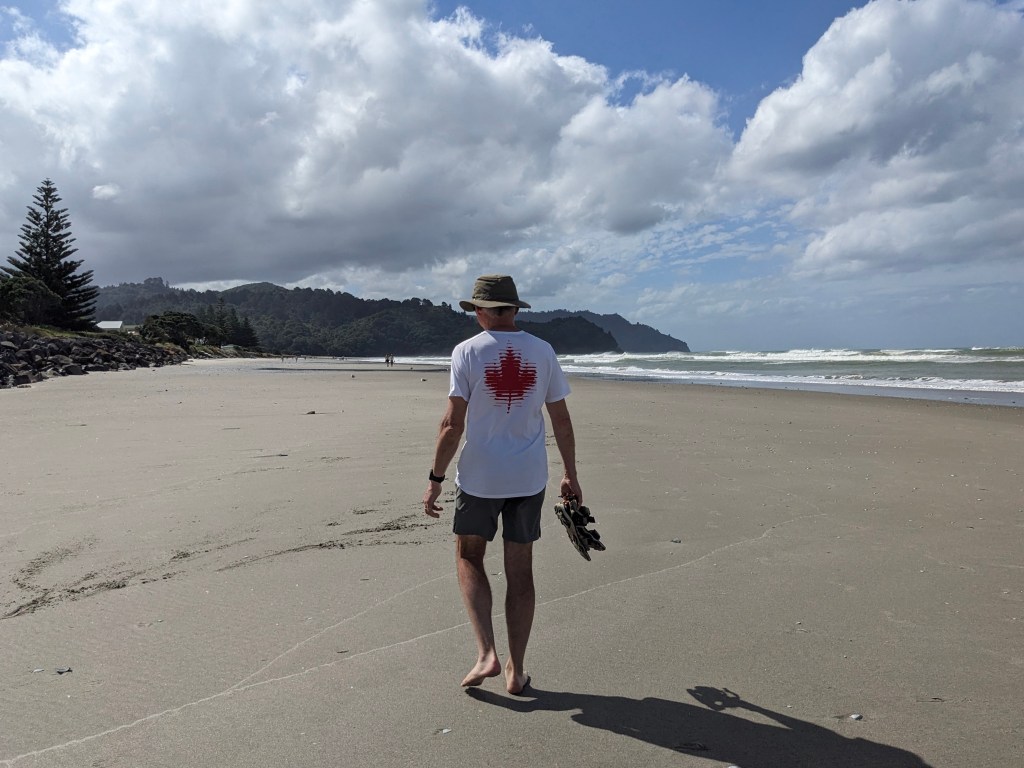
We spent 3 days in Mt. Maunganui, staying in a private suite in a lovely home close to the beach and not too far from the lively commercial area. The weather was quite good and we had a very relaxing stay. We did several beach walks on the amazingly long and wide beach here (about 20 kms long!) and enjoyed watching the waves and the surfers. We did go in for a little dip but found the water quite chilly and the waves intimidating. On the other side of the peninsula is a quieter and smaller beach called Pilot Bay that is calmer and we hoped to be able to do some paddle boarding but unfortunately it was a bit too breezy.

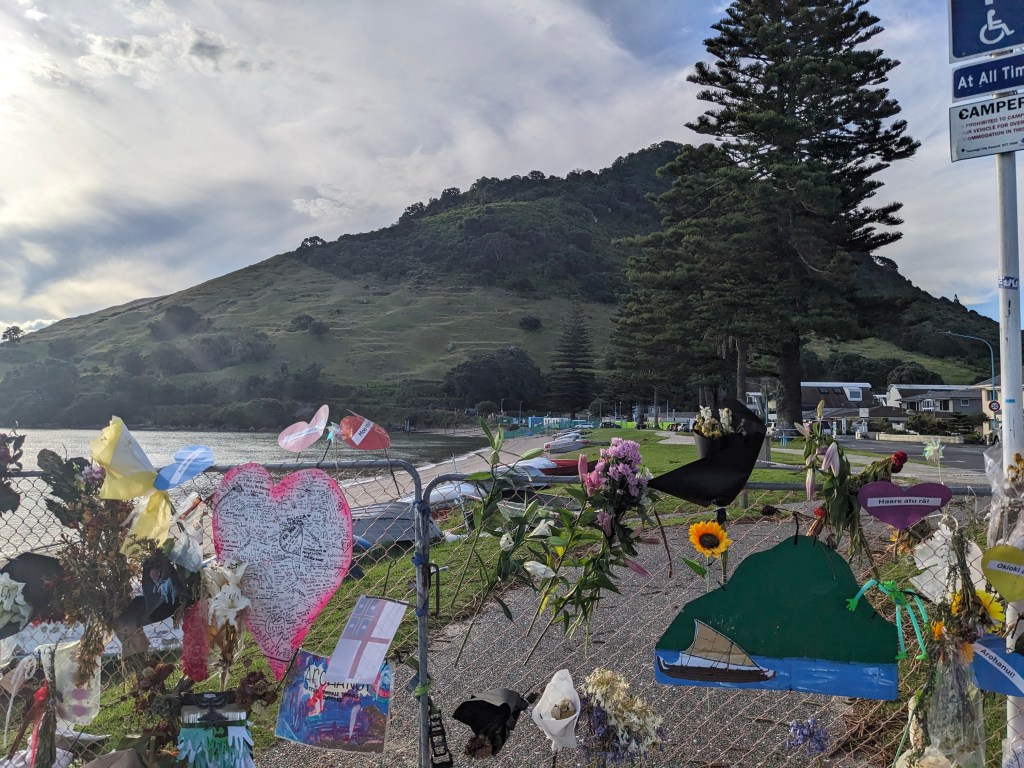
At the base of this peninsula is the famous landmark Mt. Maunganui and it is indeed a magnificent view. Normally you are able to walk around the perimeter and hike up the mountain but the entire area is currently closed off due to the recent rain storm which caused several large landslides on the mountain, one of which occurred into a campsite at the base and killed 6 people.

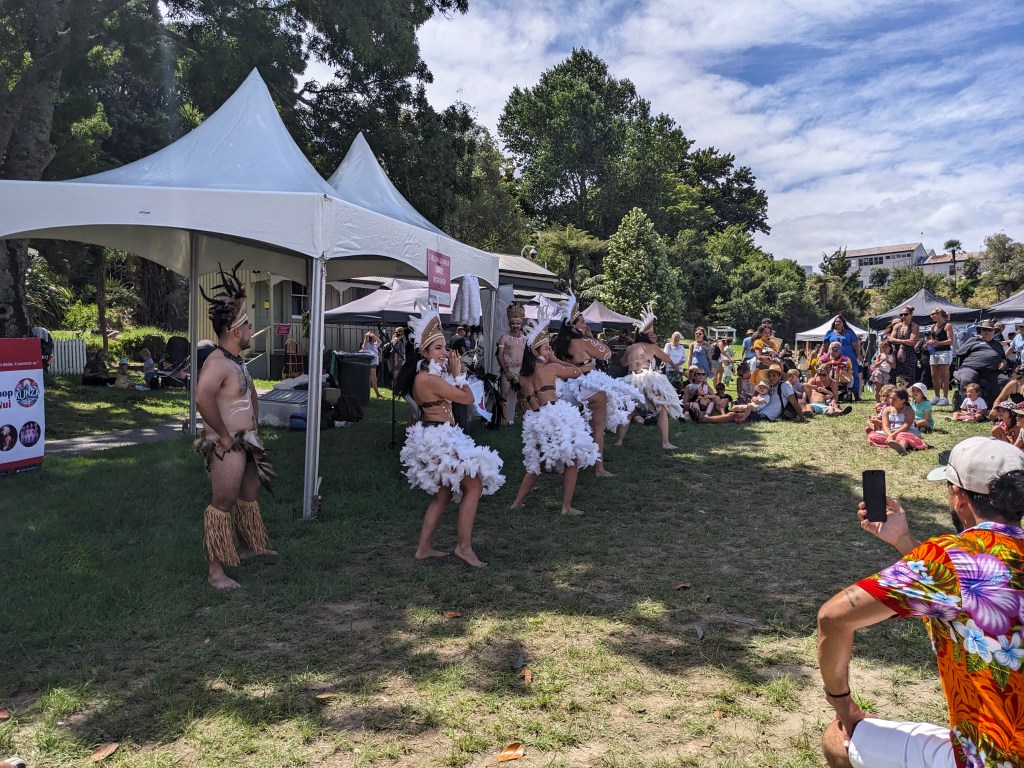
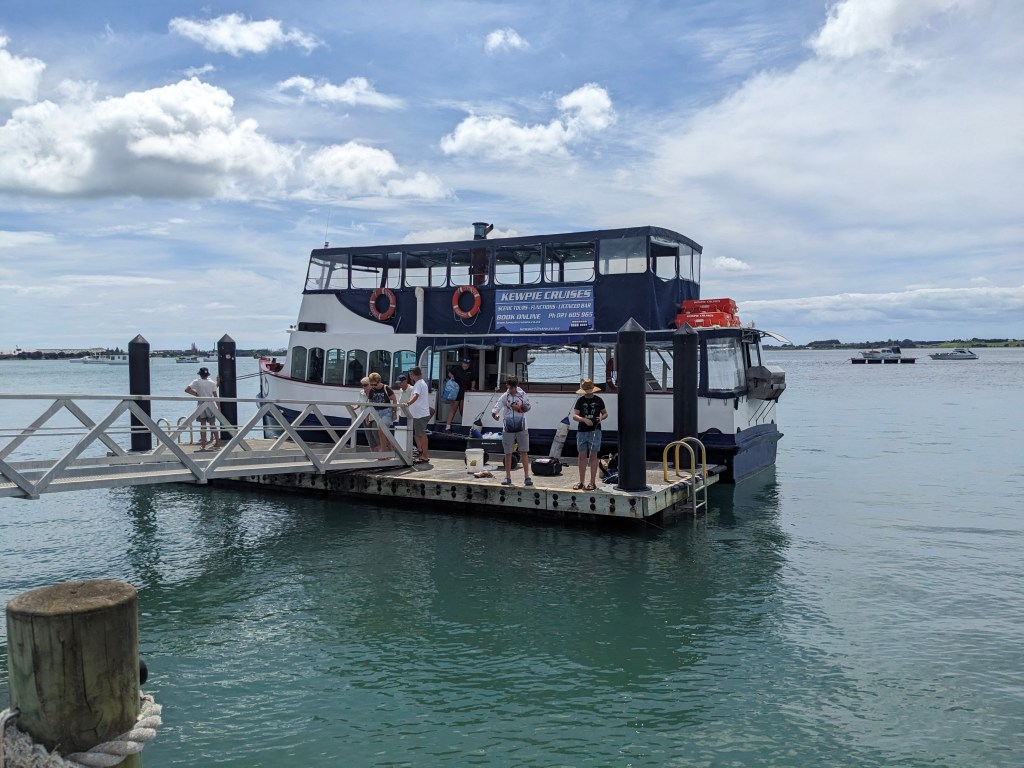
The first day we were here was Feb 6, Waitangi Day, a national holiday in New Zealand, commemorating the signing of the agreement between the Maori people and the British government under Queen Victoria. It involved use and sale of the land as well as governing and was clearly a good deal for the British, not so good for the Maori. We attended a Waitangi Day festival which was really more like a heritage day festival but interesting nonetheless. We also went on a harbour cruise around the bay and the mountain. While here we met up with friends of a friend for dinner. They were lovely folks, local for some time, and well travelled themselves. We picked up many tips on our route and places we were going. (Thanks Heather and Dennis!)

Hauraki Rail Trail to the Bay of Plenty finally!

3 Feb

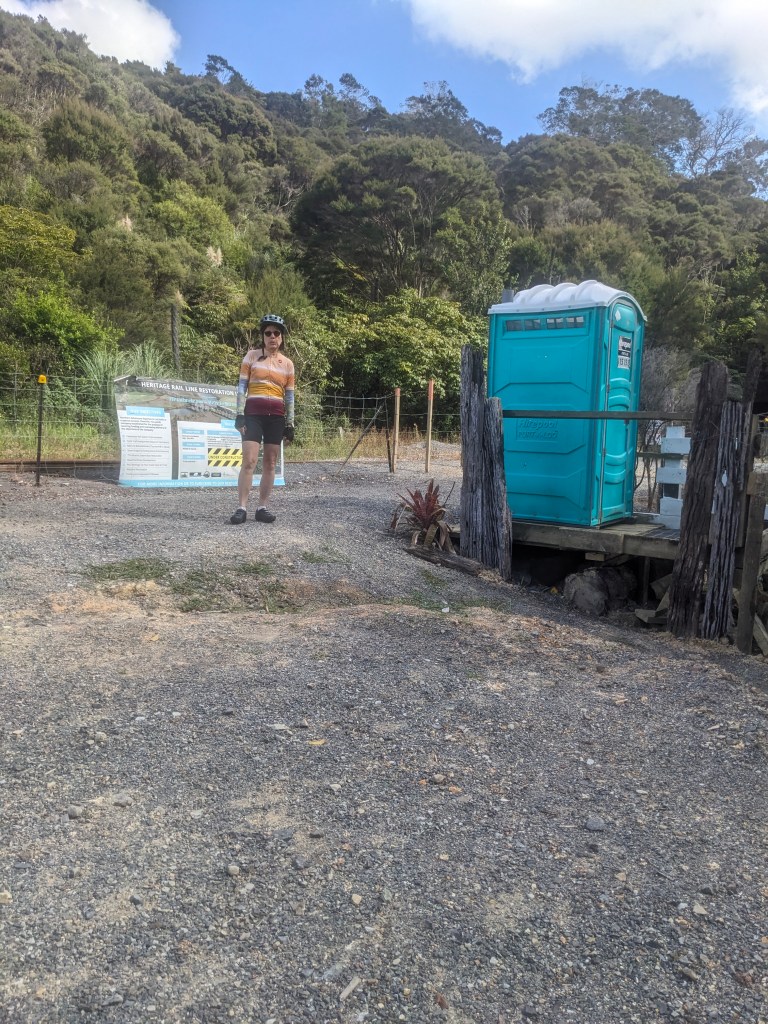
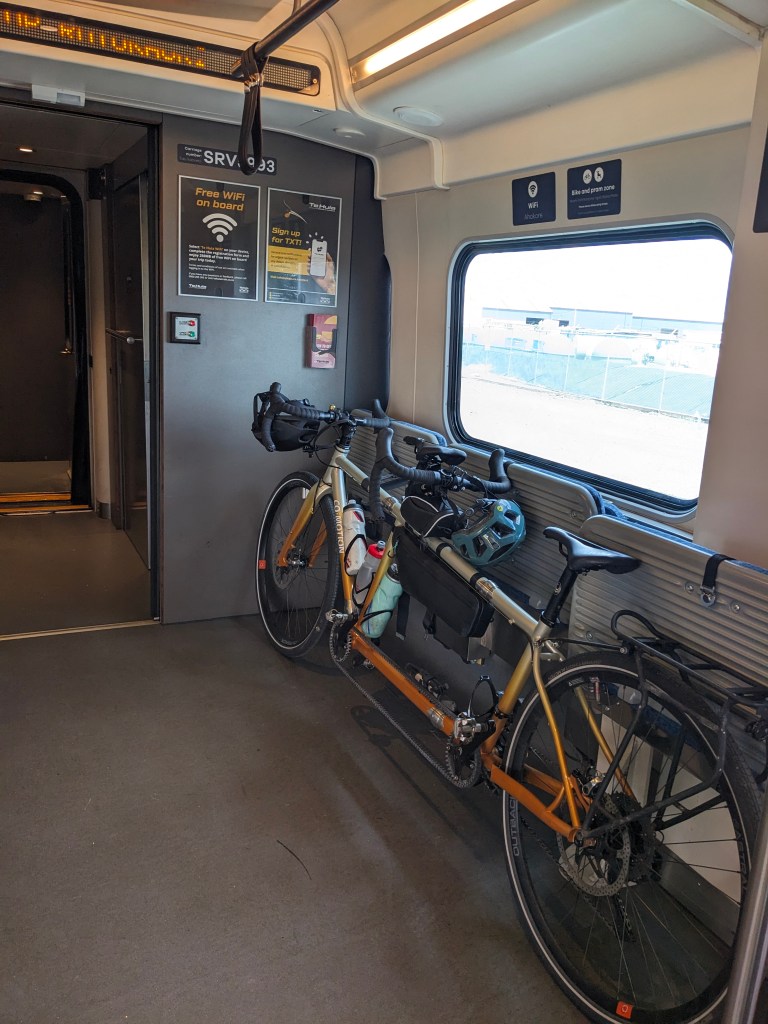
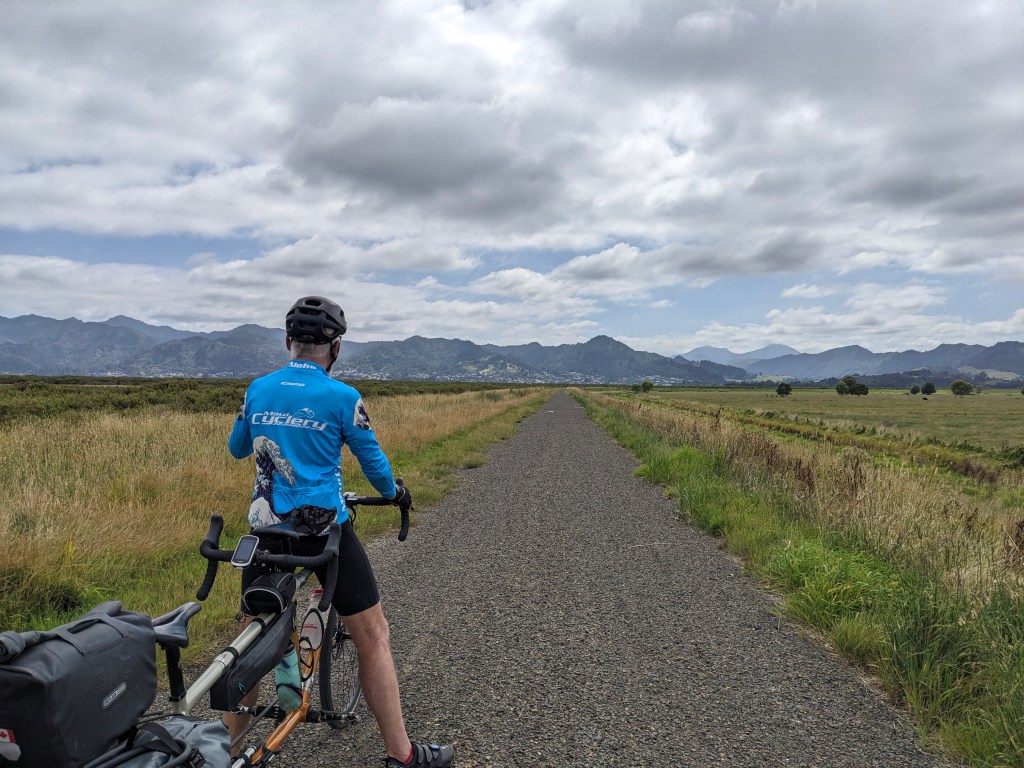
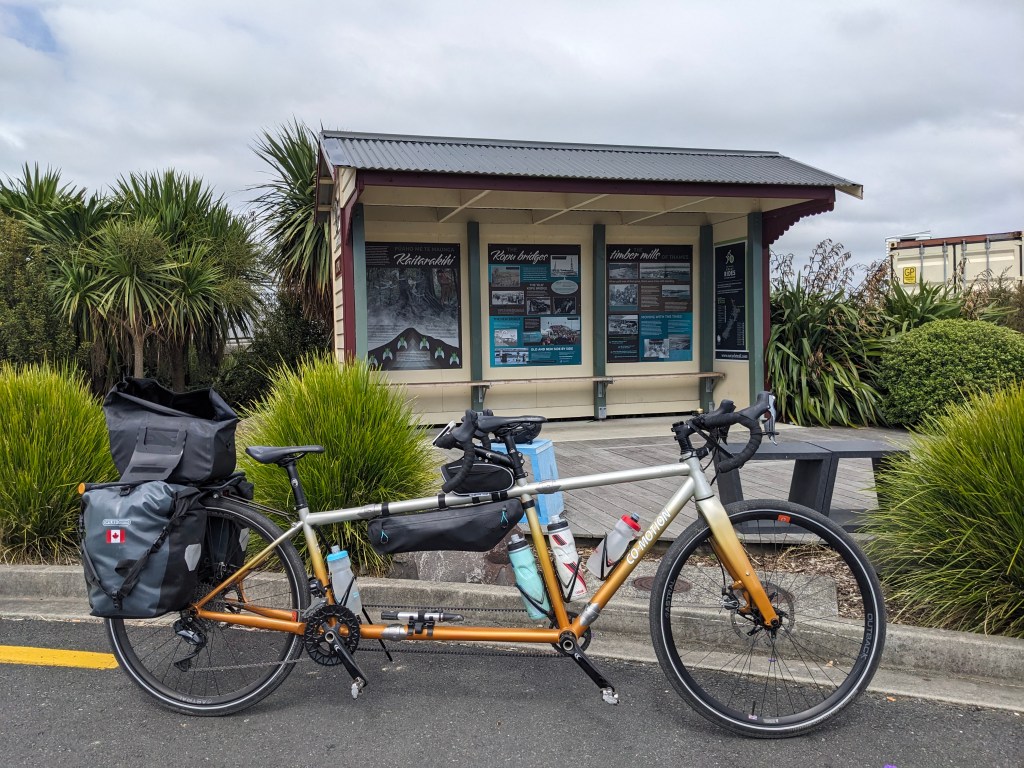
The Hauraki Rail Trail is one of the 23 Great Rides of New Zealand, designated, marked, and supported tracks for cyclists. Most are gravel, some are old railway lines converted to trails like the one we went on going south from Thames. We started out south but then added a bit going west and back on a part that we originally (so long ago) had planned to ride here from Auckland. Along the shoreline there are many birds, almost none of which we have at home so we have turned into birdwatchers. I am using an app called Merlin to help identify and keep track of them. The track going south was gravel but not difficult for our 38mm tires (43 would be better), although the Captain needs to maintain focus lest we slide into the ditch. The trail is well maintained and includes informational shelters and toilets along the way.

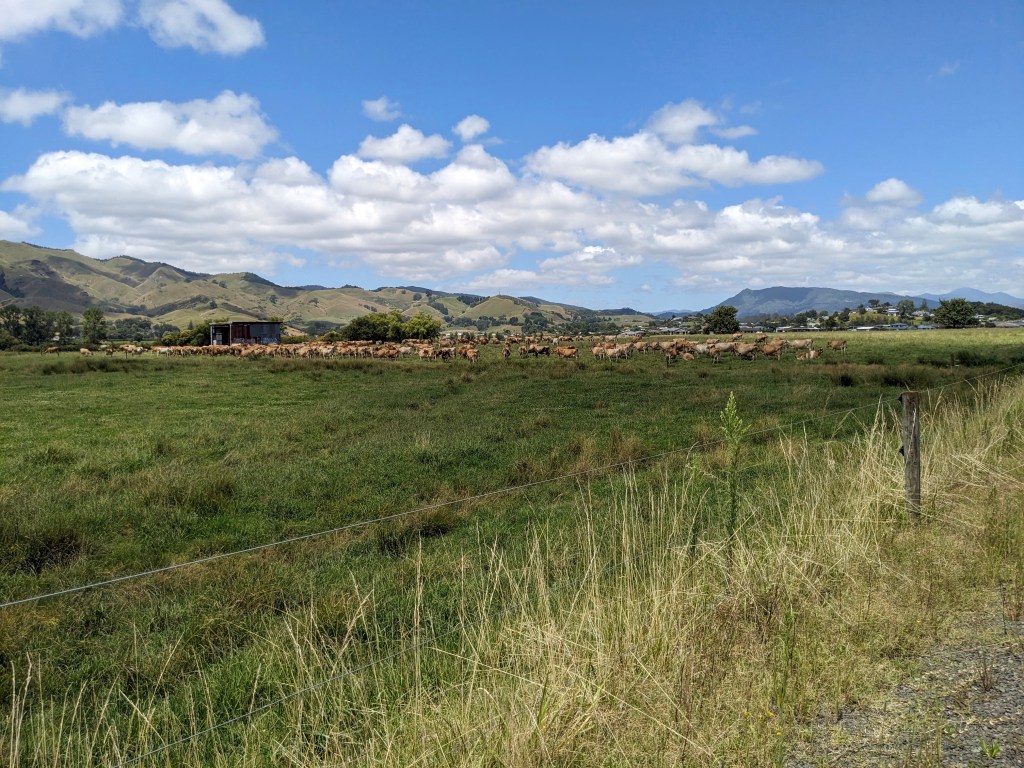
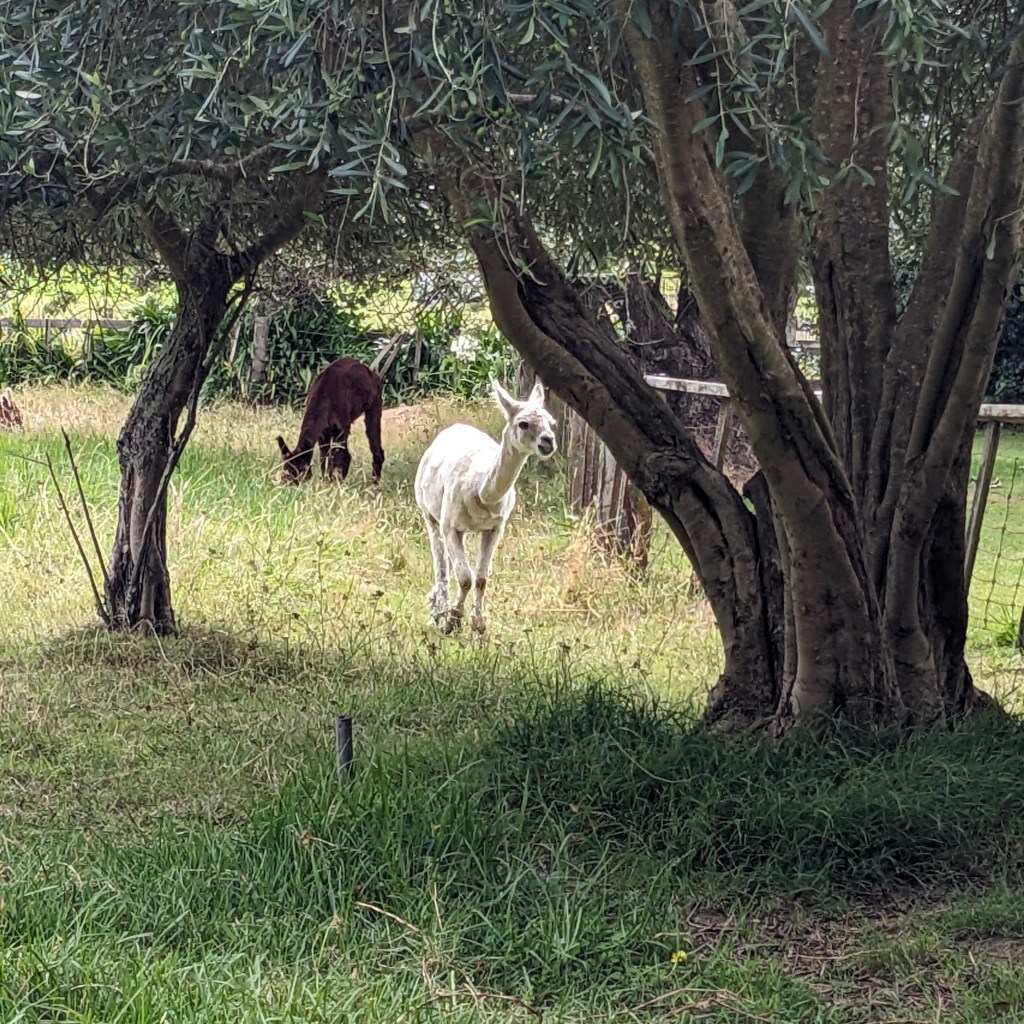
This is an intensive dairy country populated by Holstein-Friesian and Jersey cows, the latter of which make really good ice cream :-). You see them and smell them everywhere along this route, and there was also a notable Cheese Barn/cafe along the way which also had a few alpacas and rabbits for good measure.

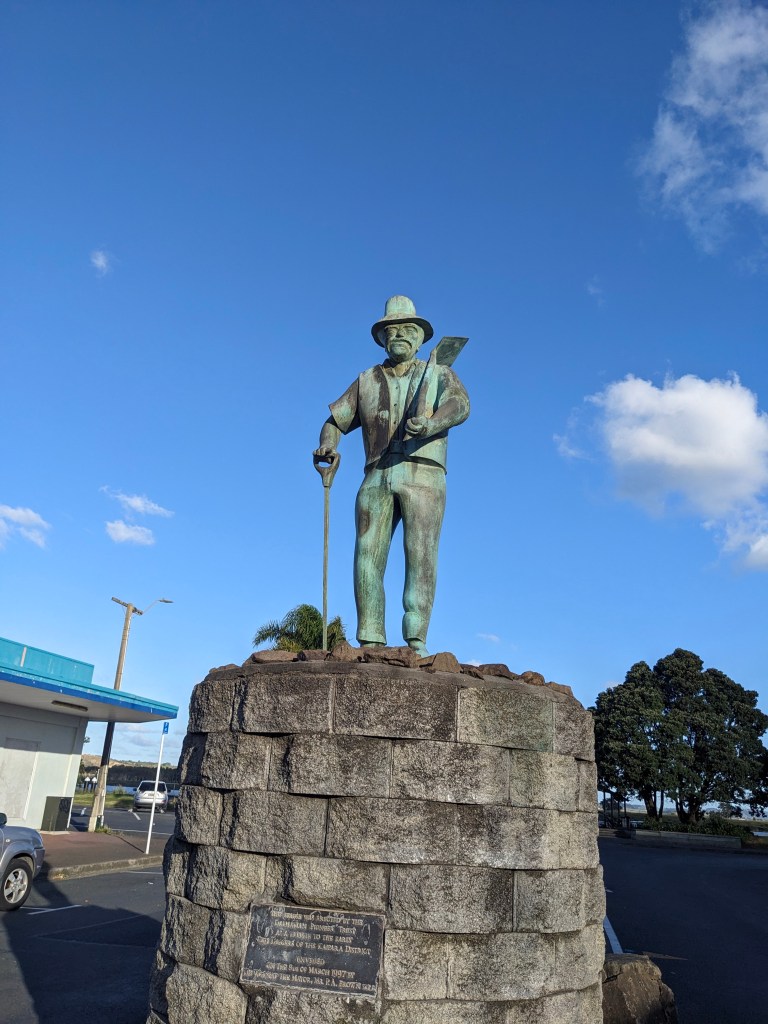
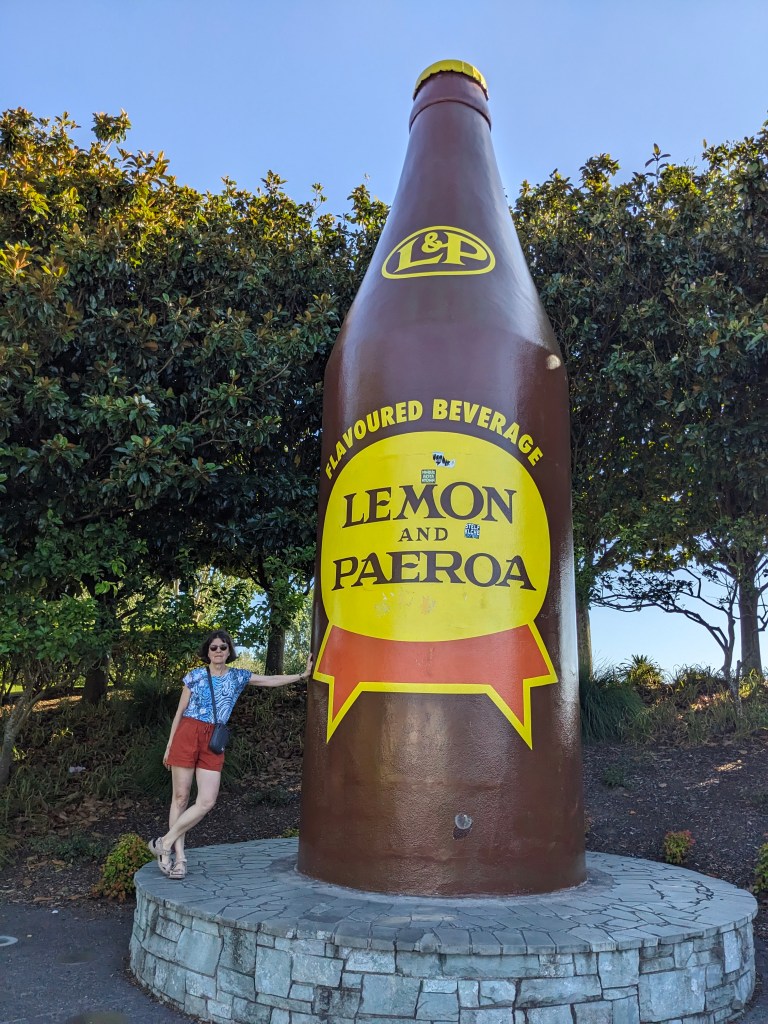
We did a one night stop in Paeroa staying at a modern motel close to all needed amenities such as coffee and groceries. Paeroa is famous, “world famous in New Zealand”, for being the birthplace of a soft drink called Lemon and Paeroa, which mixed lemon flavouring with the natural spring water of the area, although it tastes a lot like Sprite. They have memorialized the drink by having a giant L&P bottle available for tourists like us to take a photo of.

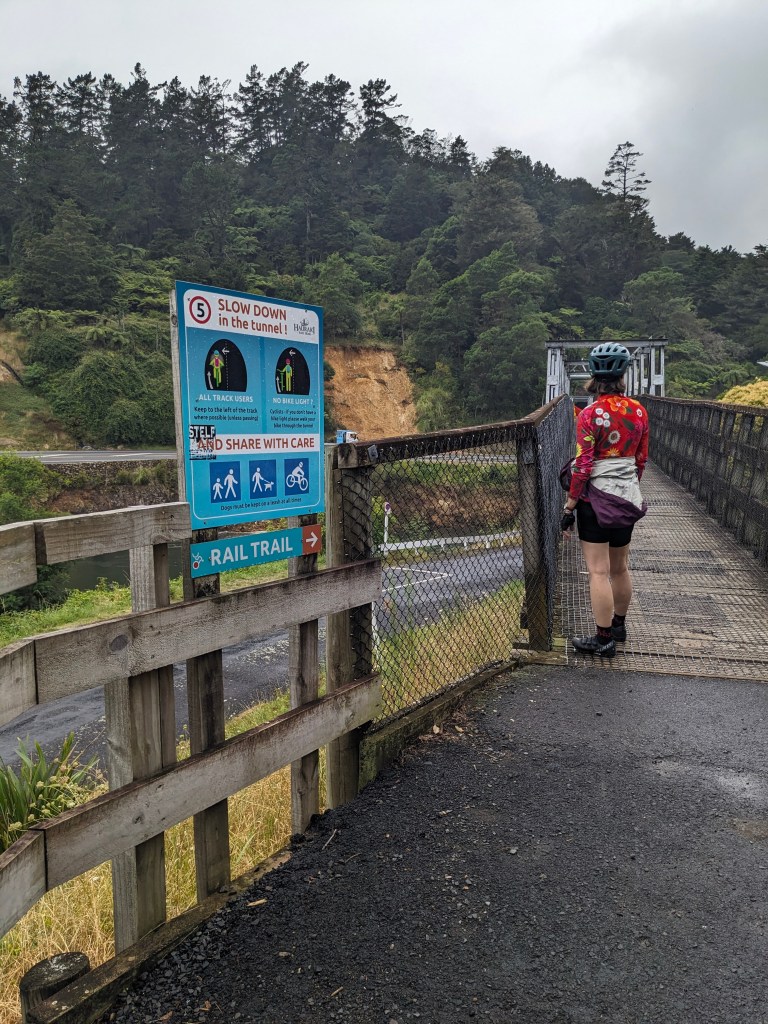
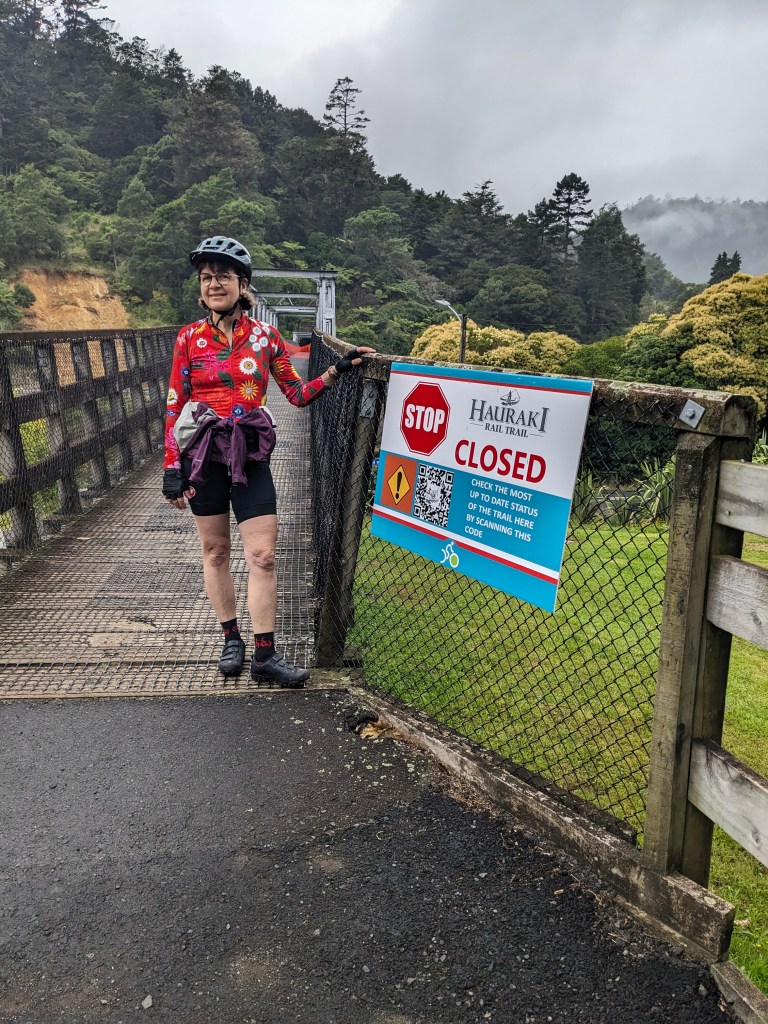
Going east the next day on the way to Waihi beach, we began on an offshoot of the Hauraki trail which cuts through the Karangahake gorge and goes under a hill through a 1.1.km tunnel, saving us a climb. However, due to the recent weather event part of the trail was damaged so we only got as far as the start of the tunnel. We had found this out beforehand though so we had (re)planned to switch to the highway at that point. Also the rain had returned so overall it was a wet, but still warm, day. Again, riding on the highway is not ideal here but, also again, the drivers were well behaved.

So we have finally arrived on the east coast. We would have been here for awhile now except for the big rains that continue to have an impact on our trip. We were going to do a hike here along the coast but the trail was closed due to storm damage. We are staying in another holiday park cabin in Waihi Beach. The weather has been warm but still a bit drippy at times with sunny breaks. There is an amazing long and wide beach here that we didn’t reach the other end of after an hour of walking. The waves are a bit too wild for swimming in so we just walked and watched the surfers.

Thames

31 Jan

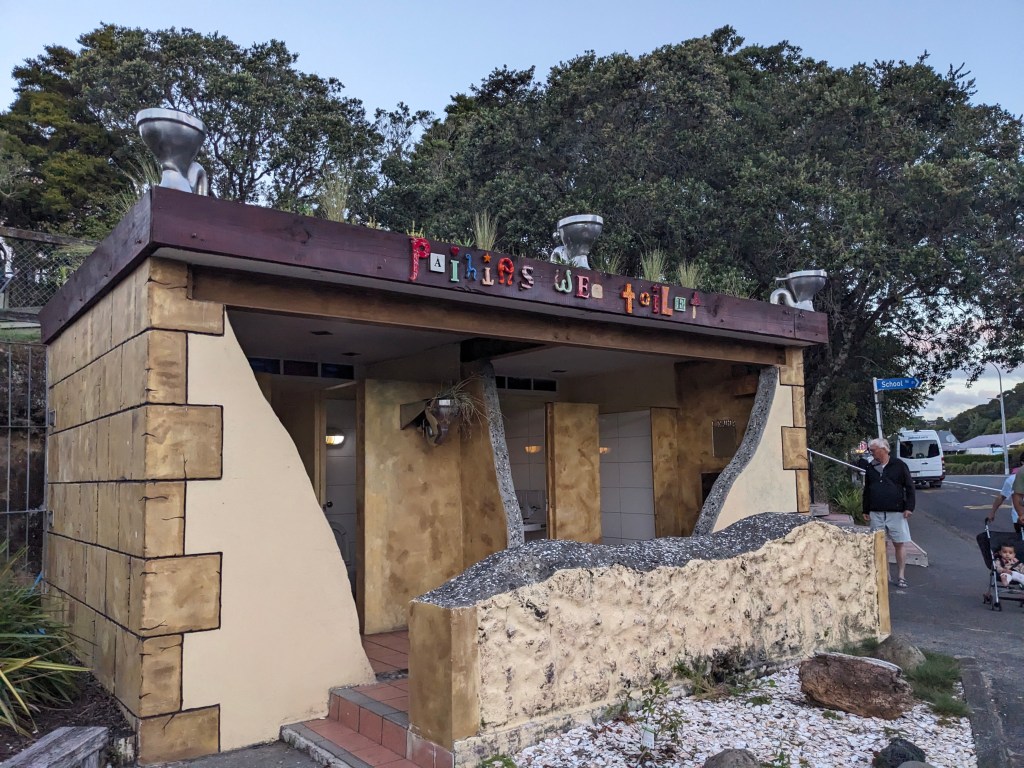
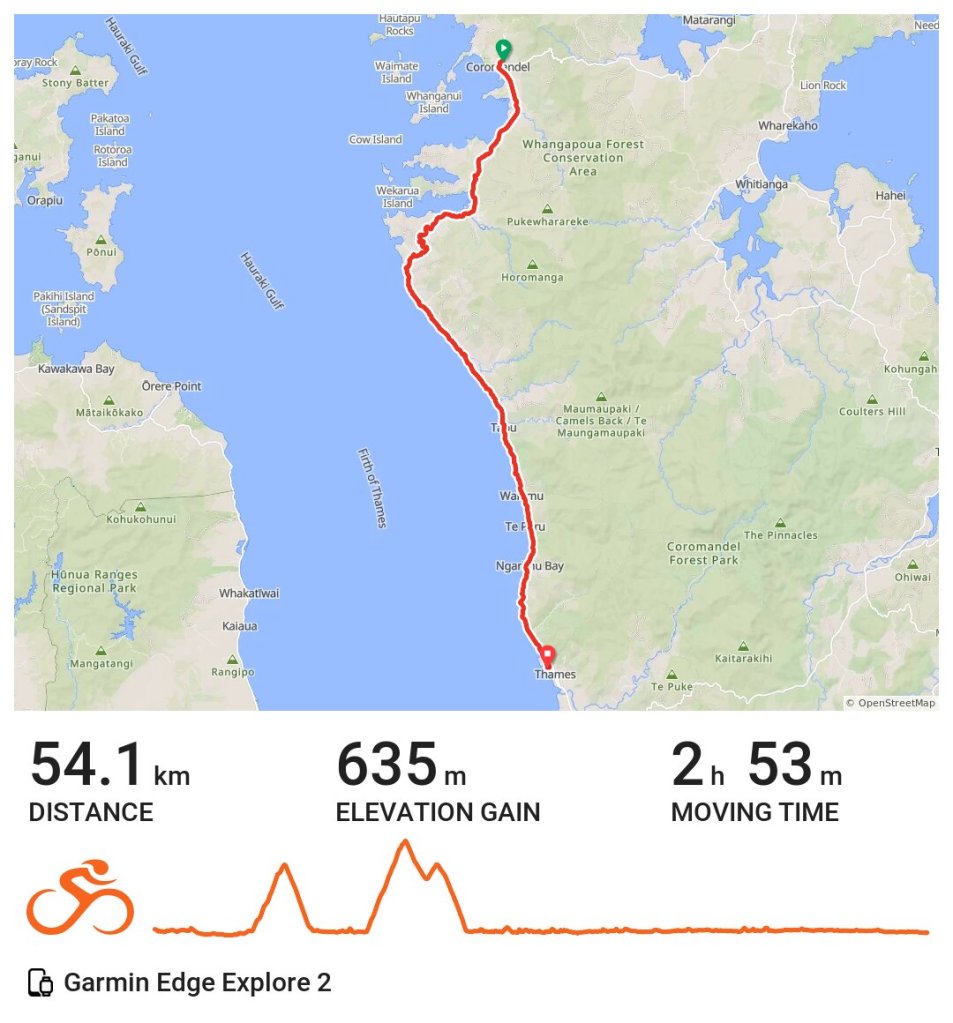
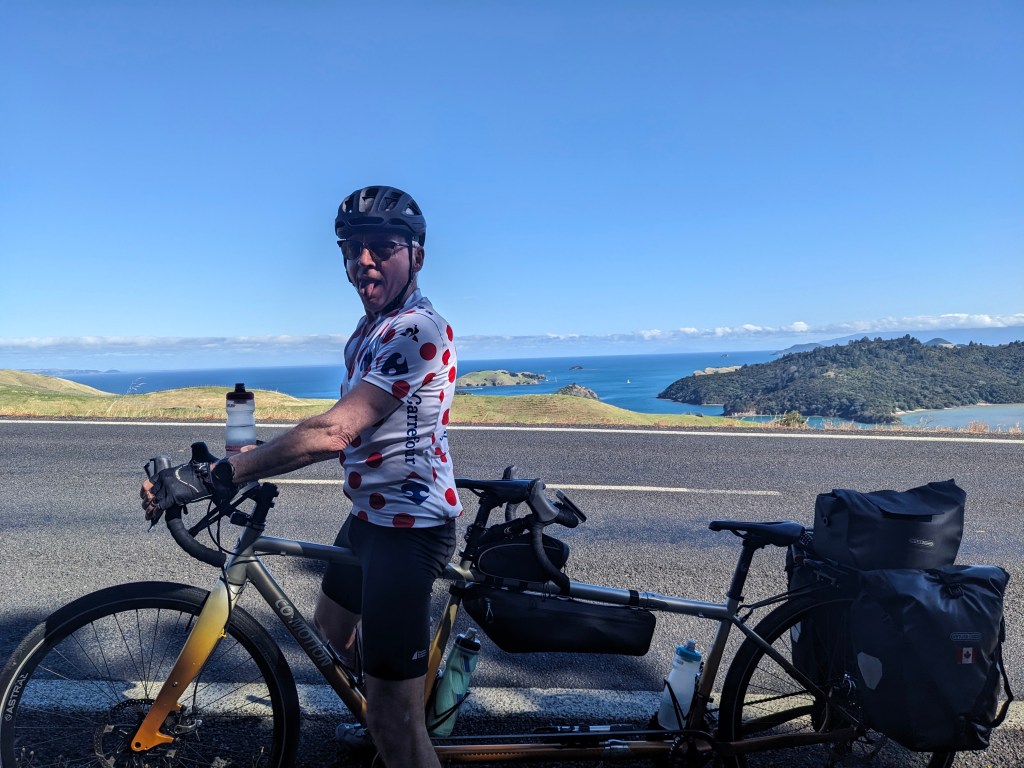
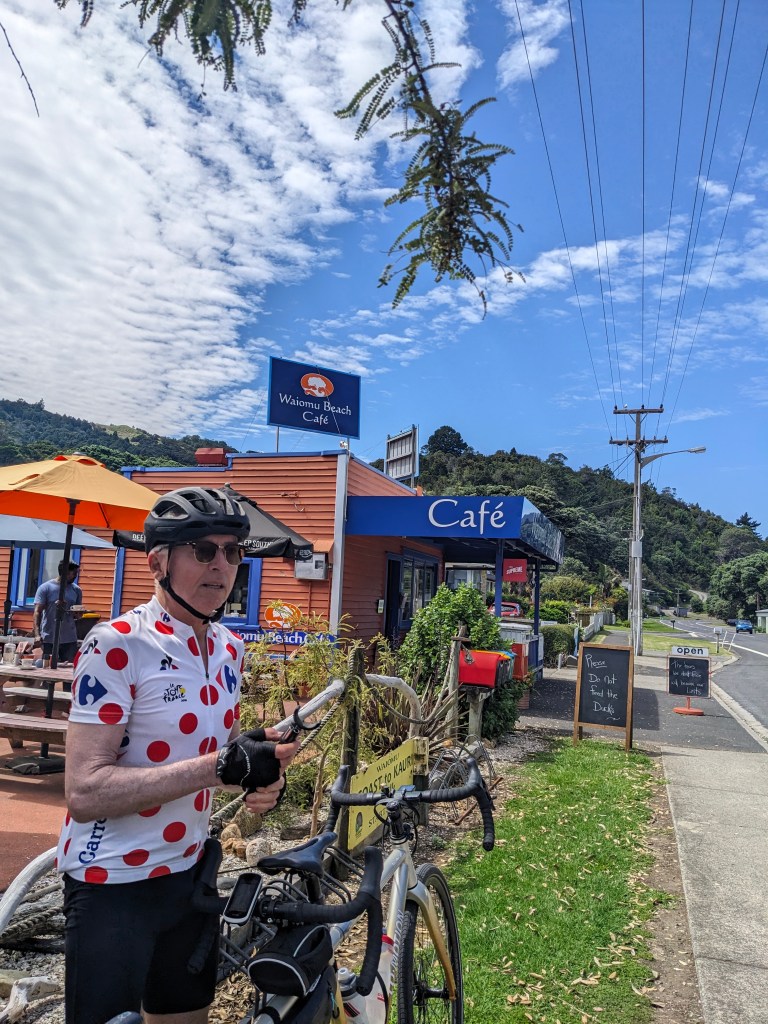
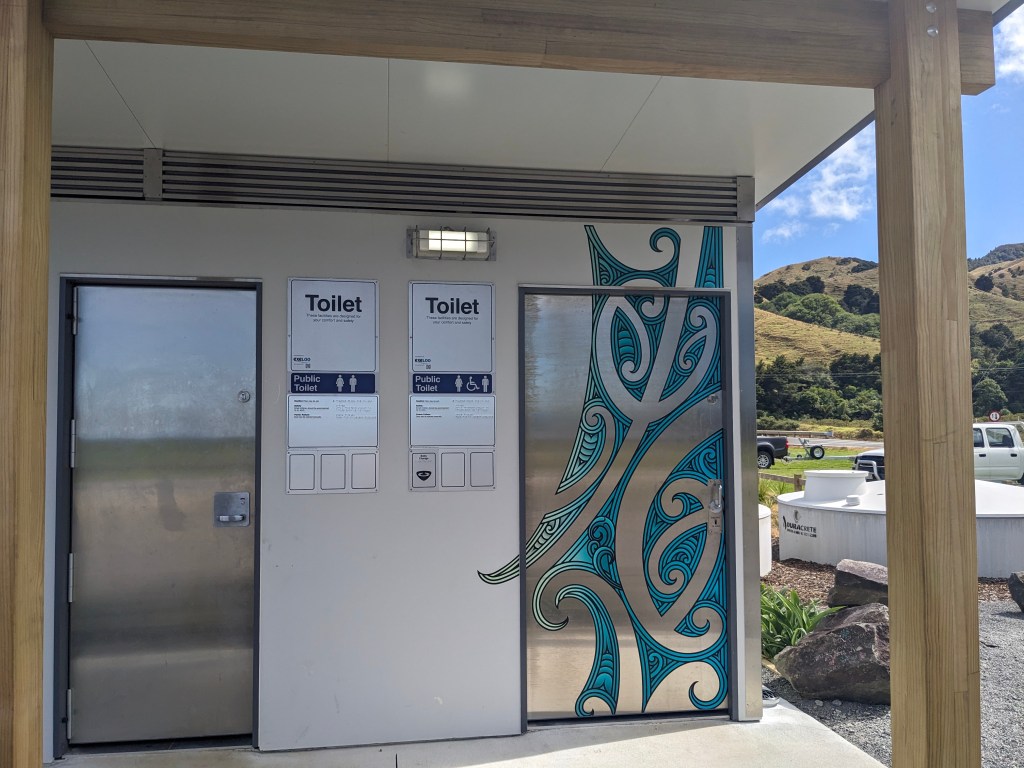
We rode south to Thames along the western side of the Coromandel Peninsula following a beautiful coastal road except for 2 big mountains that got in the way. We were thankful that the climbs were at the start of the day rather than the end and we got an earlier start to beat some of the tourist traffic. It took almost 2 hours to get over these bumps after which it was pretty easy the rest of the ride, just rolling hills. We saw many beautiful bays, birds, and the various native trees that we can now identify. Unlike in Europe there were not many cafes along the way so when we finally came upon one we definitely stopped to enjoy a nice coffee. Another feature unlike Europe, there are many public toilets which is a very handy thing when cycling. New Zealand is known for having plenty of public facilities and we have noticed and utilized them. We aren’t having much trouble riding on the left and even amongst a decent amount of traffic on major roads. There is never enough shoulder but the drivers are overall quite well behaved and patient about passing us.

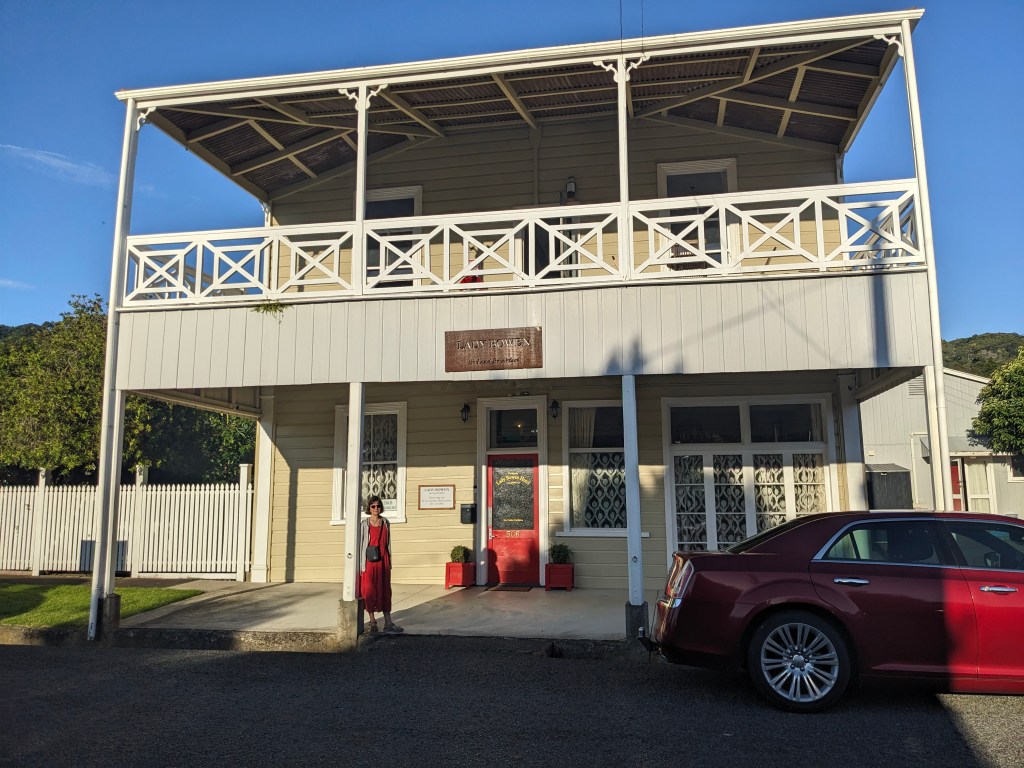
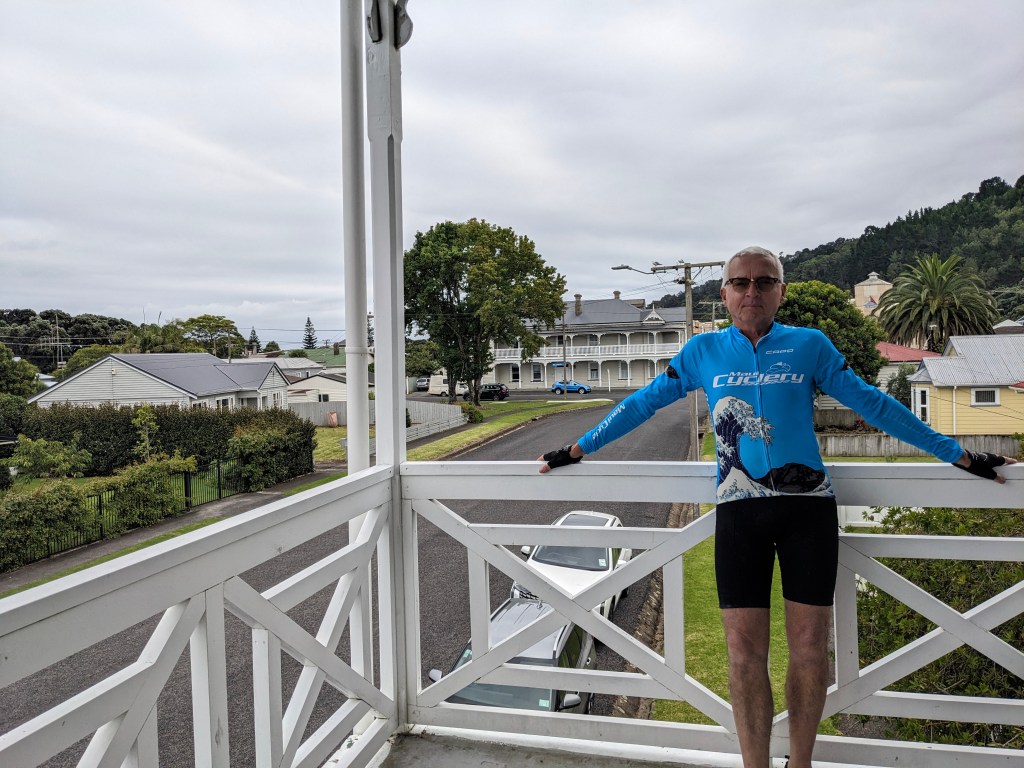
Thames is at the base of the peninsula and is famous for the gold rush which happened here starting in 1867. At this time Thames was booming and bigger than Auckland. There are still many historic hotels and other buildings dating from that time and we are staying in one of them. It is currently a Bed and Breakfast but was once a hotel as well as a brothel and other businesses. Thames is no longer booming but it does attract tourists interested in nature, hiking, fishing, cycling (it’s the start of the Hauraki Rail Trail which we will be riding on) and gold mining history.

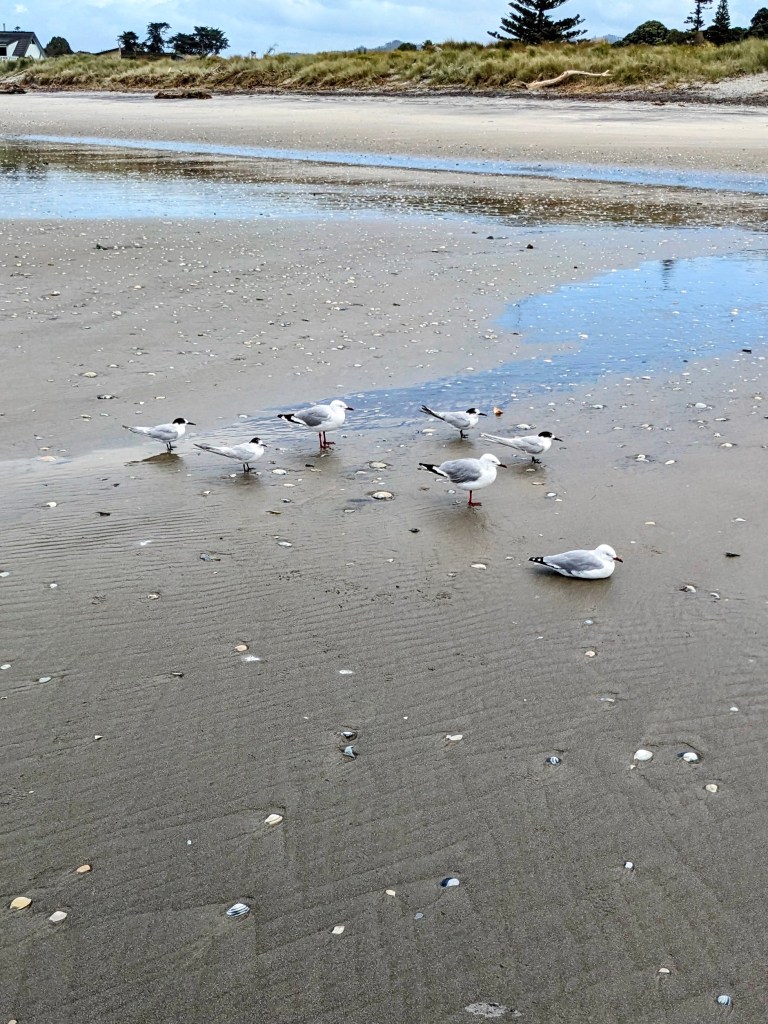
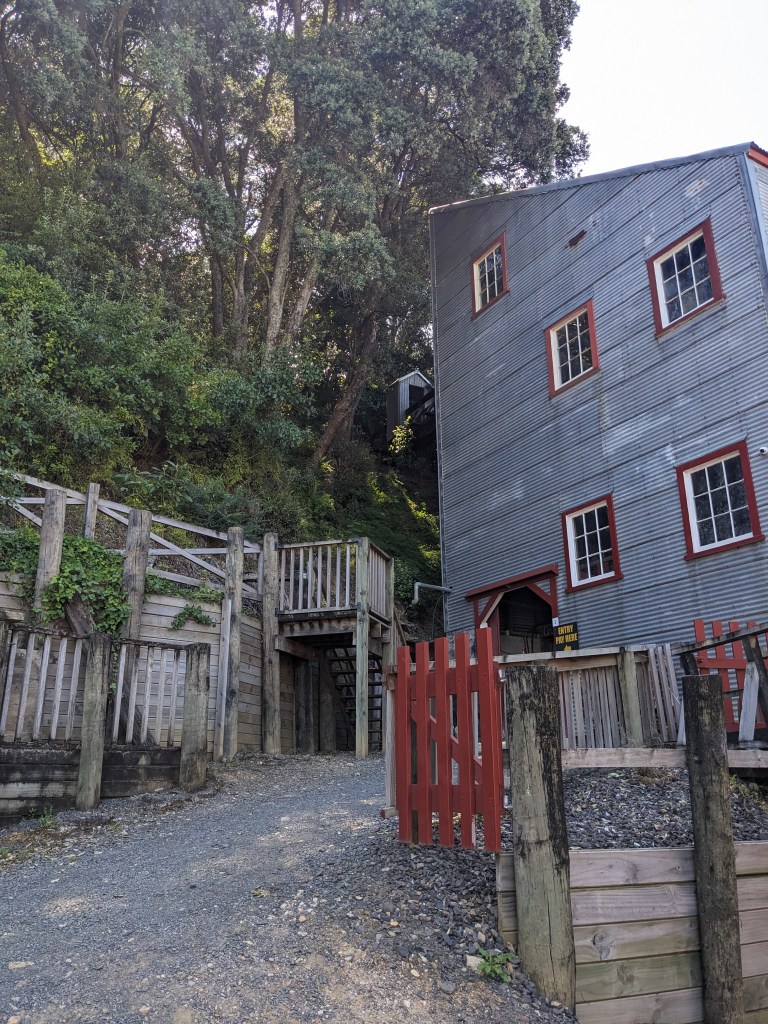
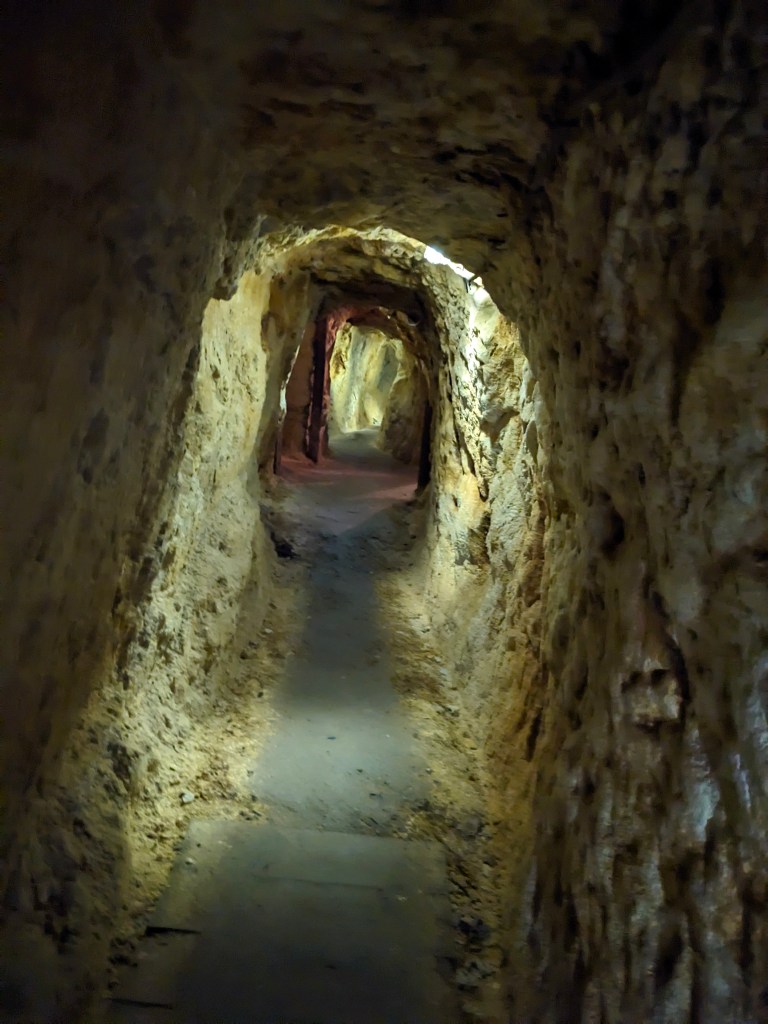
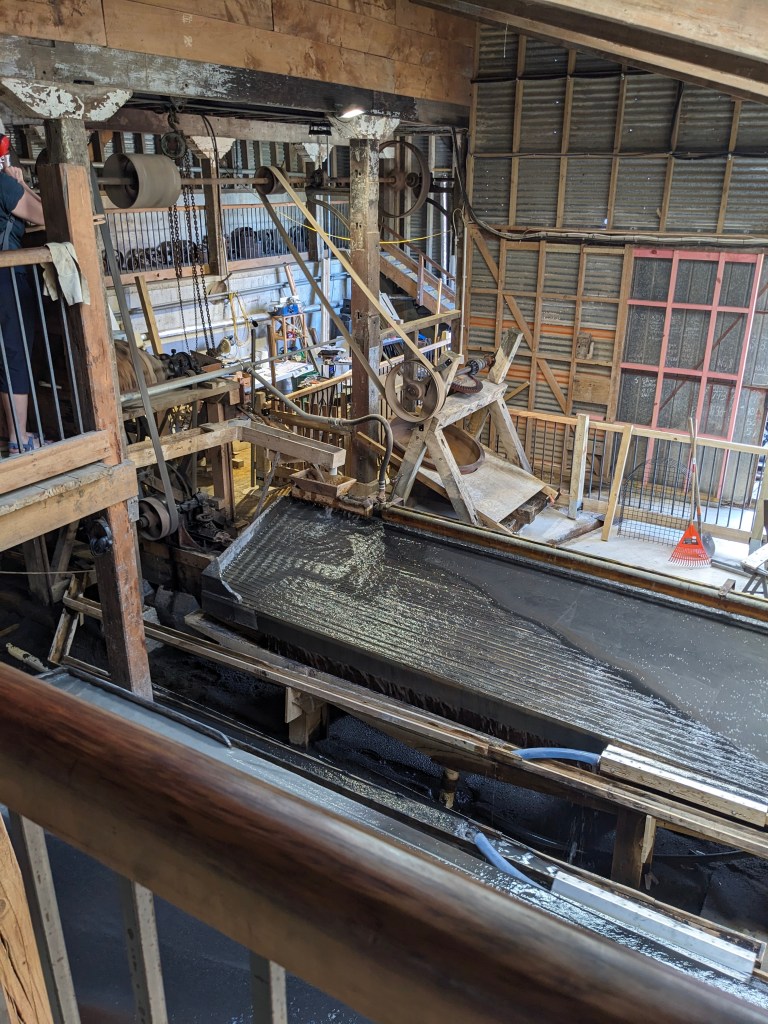
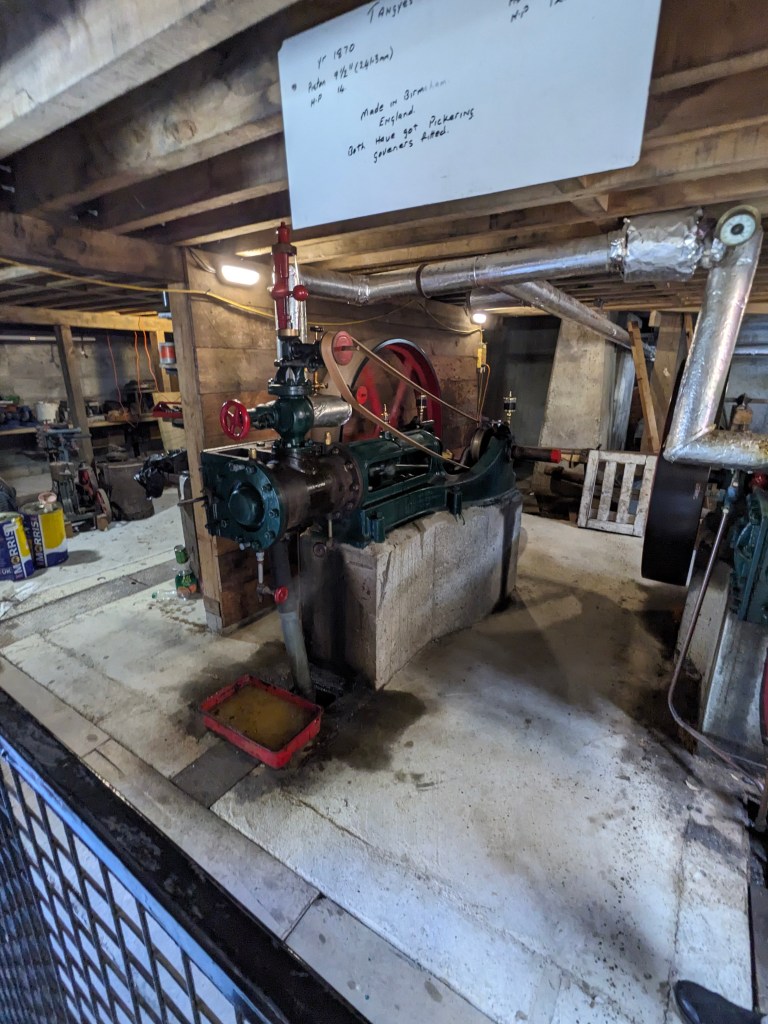
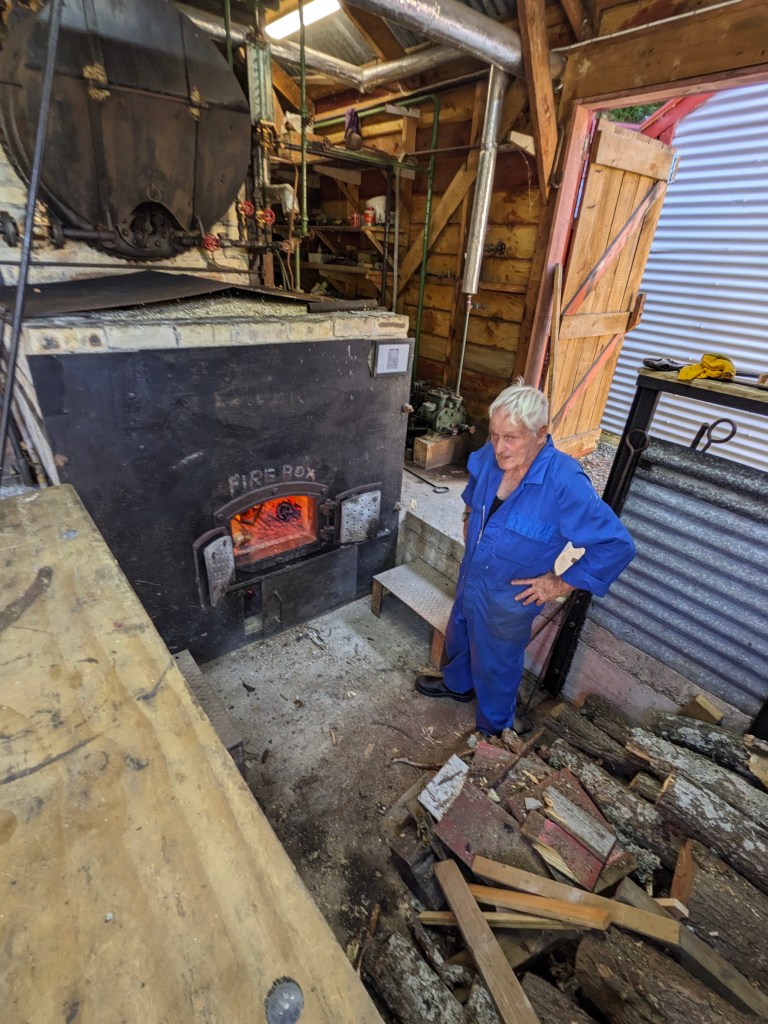
We just had the one day to look around and visited the Gold Mine Experience museum which was an excellent way to learn about the history of the area, see how the gold was mined and go into an old shaft. This was very difficult mining starting with that it was underground, not alluvial, where the gold and silver was embedded in streaks of quartz. It was a complex and toxic process to extract the bullion but the haul was truly massive before it ran out. We also took a walk along the shore which is a tidal flat and home to many sea birds such as herons, cormorants, stilts, ducks, etc which we were able to view from a bird watch ‘hide’. The weather has really turned into a lovely summer which we greatly appreciate.

Coromandel Town

30 Jan

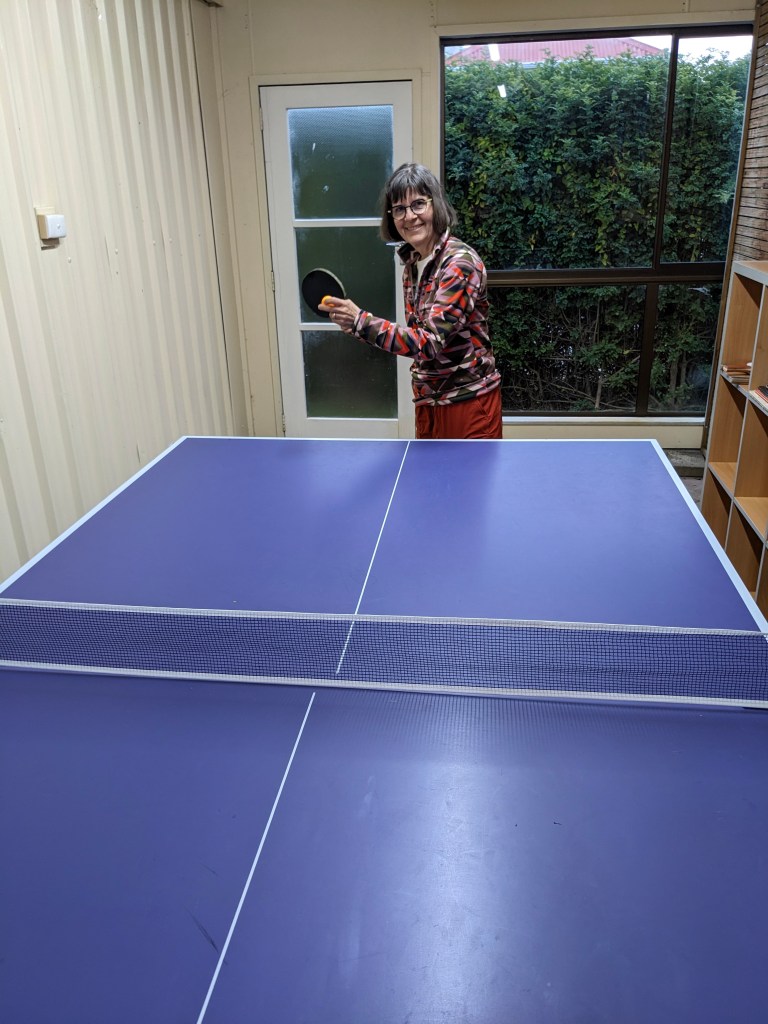
This is a lovely little town on the west coast of the lush and hilly Coromandel Peninsula and the weather finally turned favourable. We were staying in a holiday park cottage with a pool and other good campground amenities like laundry (always welcomed on a cycle trip), bbq’s, table tennis (to keep our pickleball skills up hopefully), a large bouncing pillow which we didn’t partake in but enjoyed watching the kids as well as lots of shops and services close by. We cooked half our meals at the holiday park and went out the other half, once to a turkish restaurant and once we bought savoury pies to reheat. There is a definite ‘pie’ culture here which George is keen on checking out. Also the coffee in the cafes is excellent, ‘flat white’ being the norm. We bbq’d steak for two nights and surprisingly beef is about half of what it costs at home.

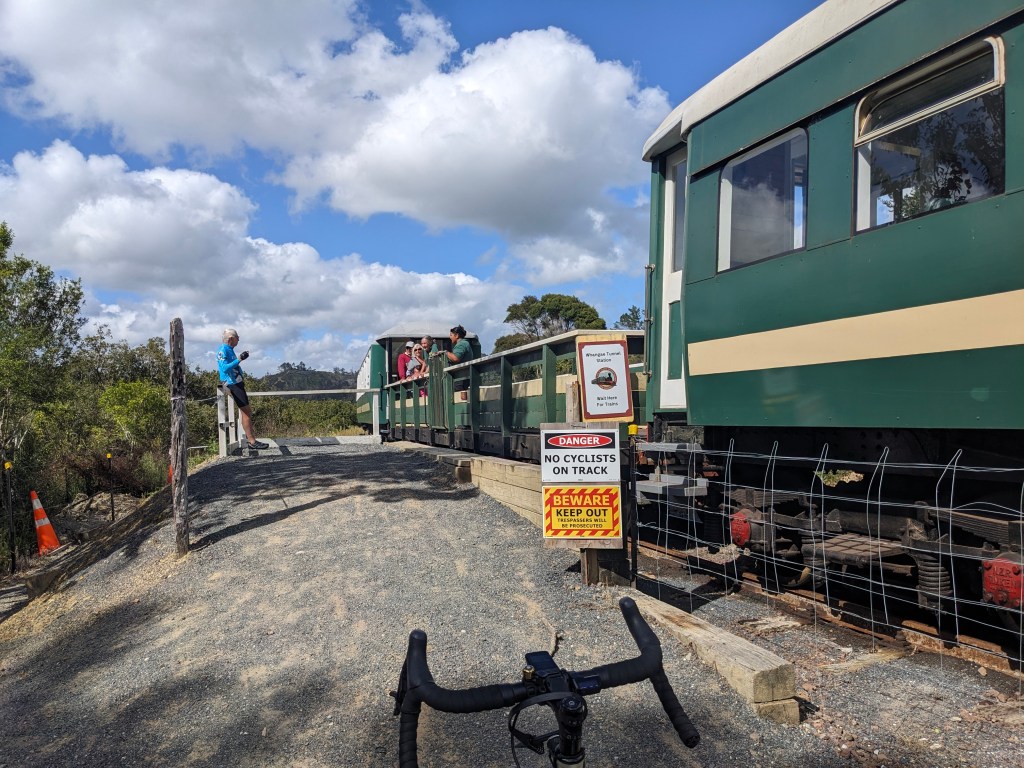
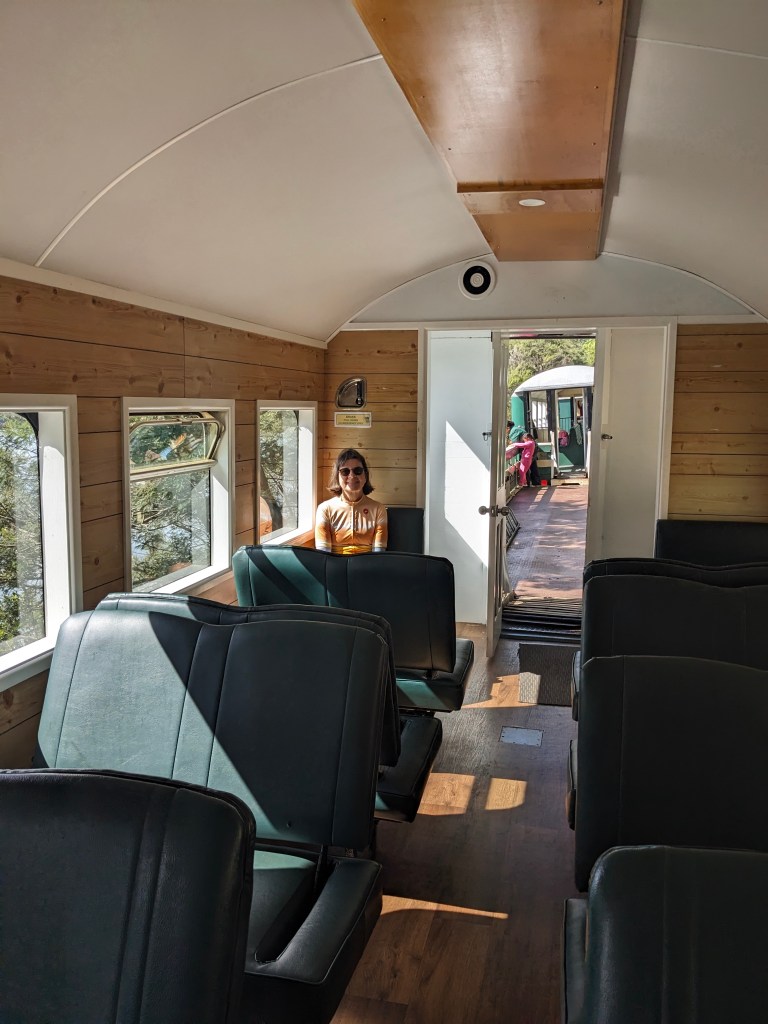
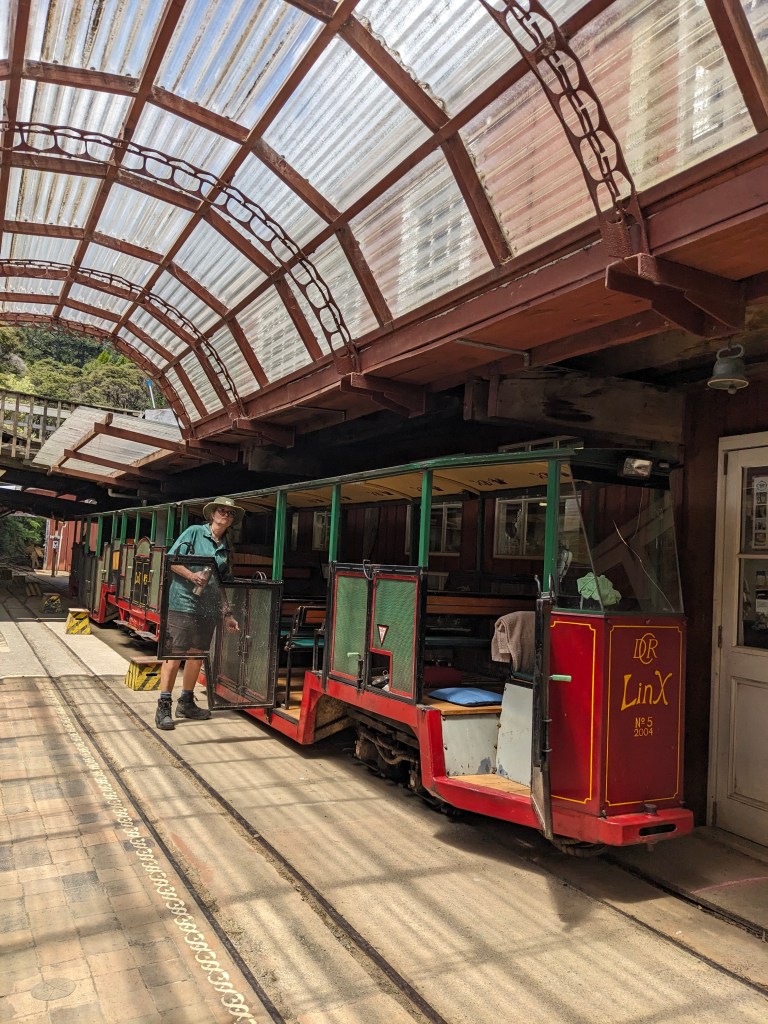
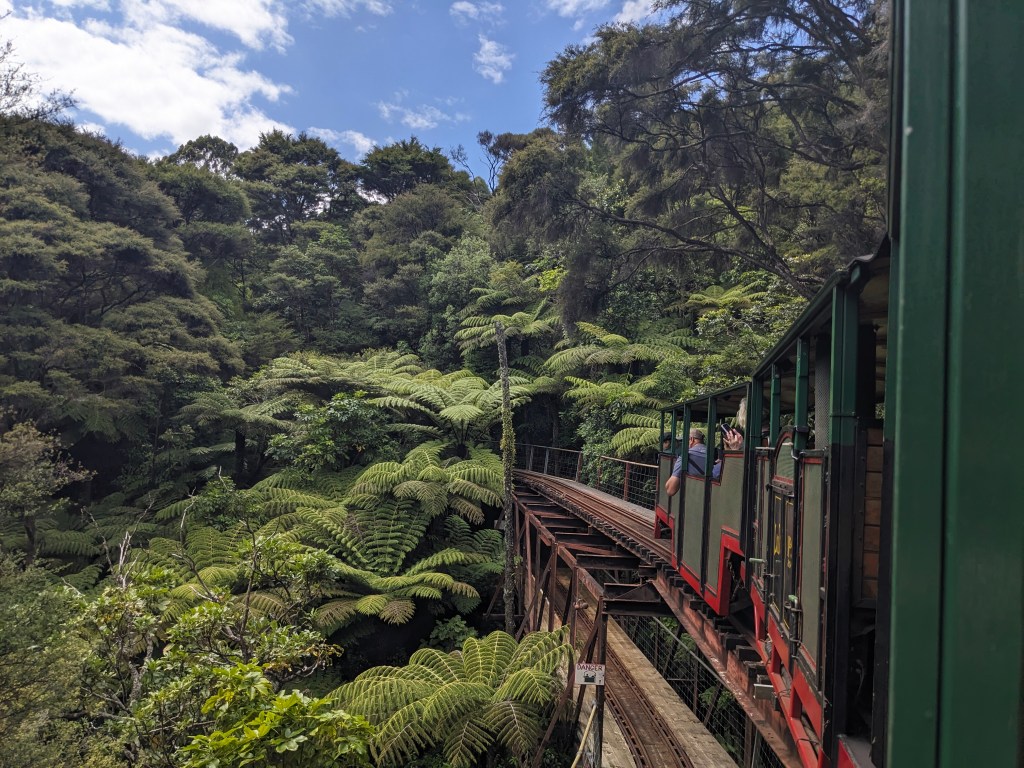
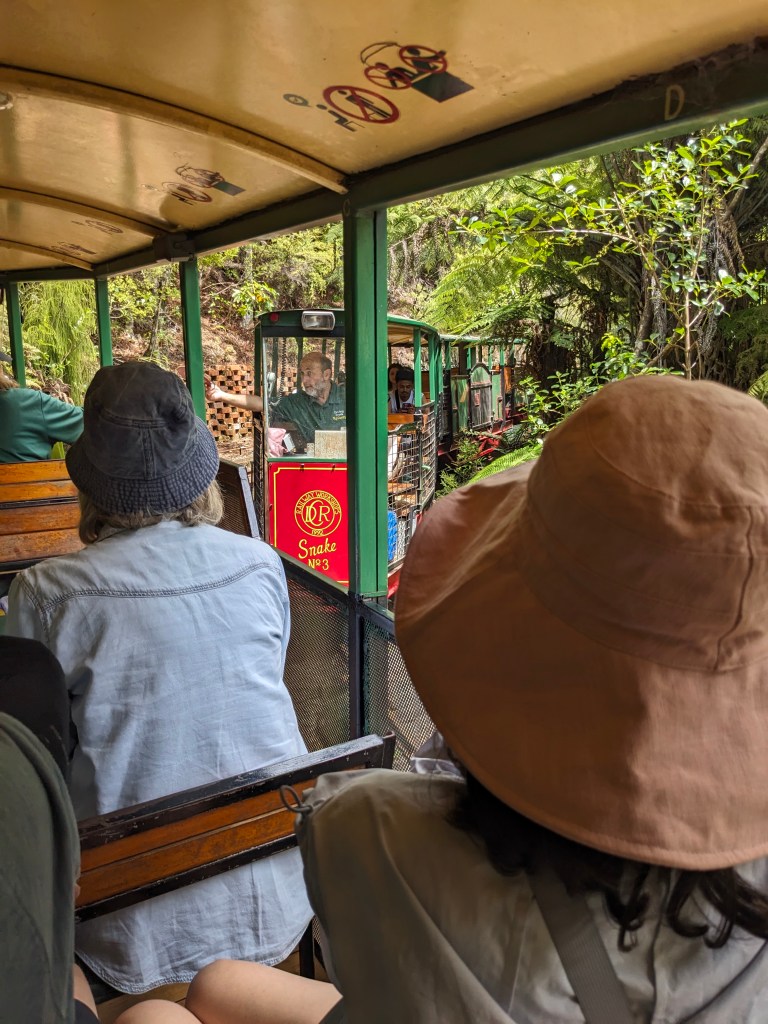
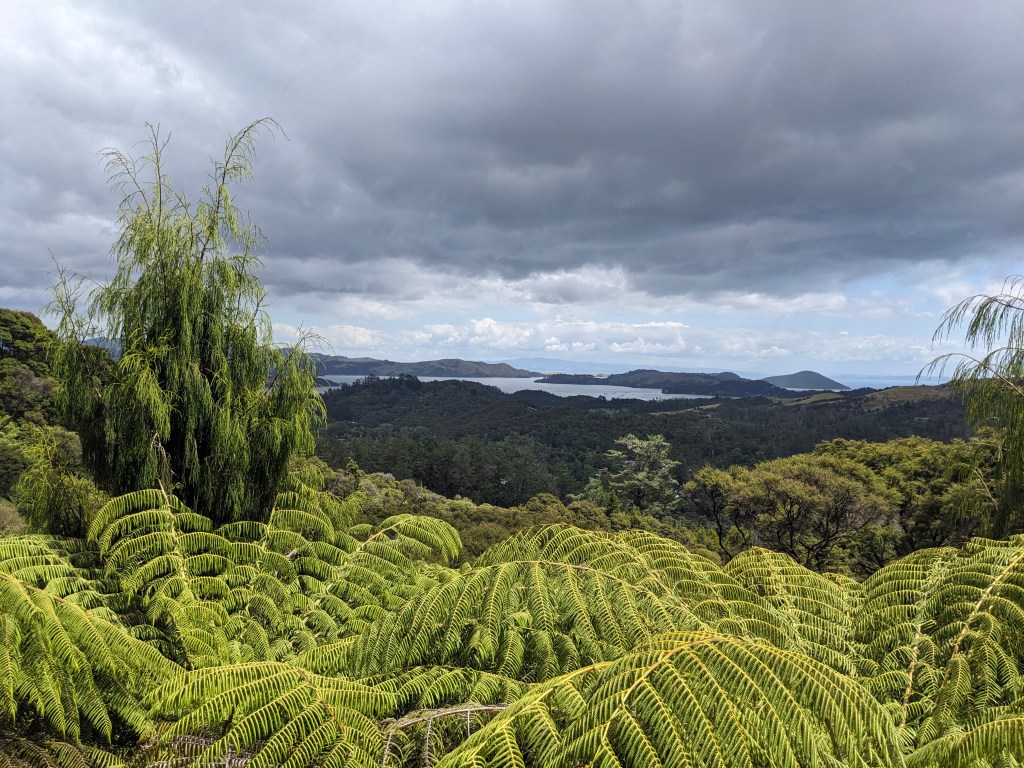
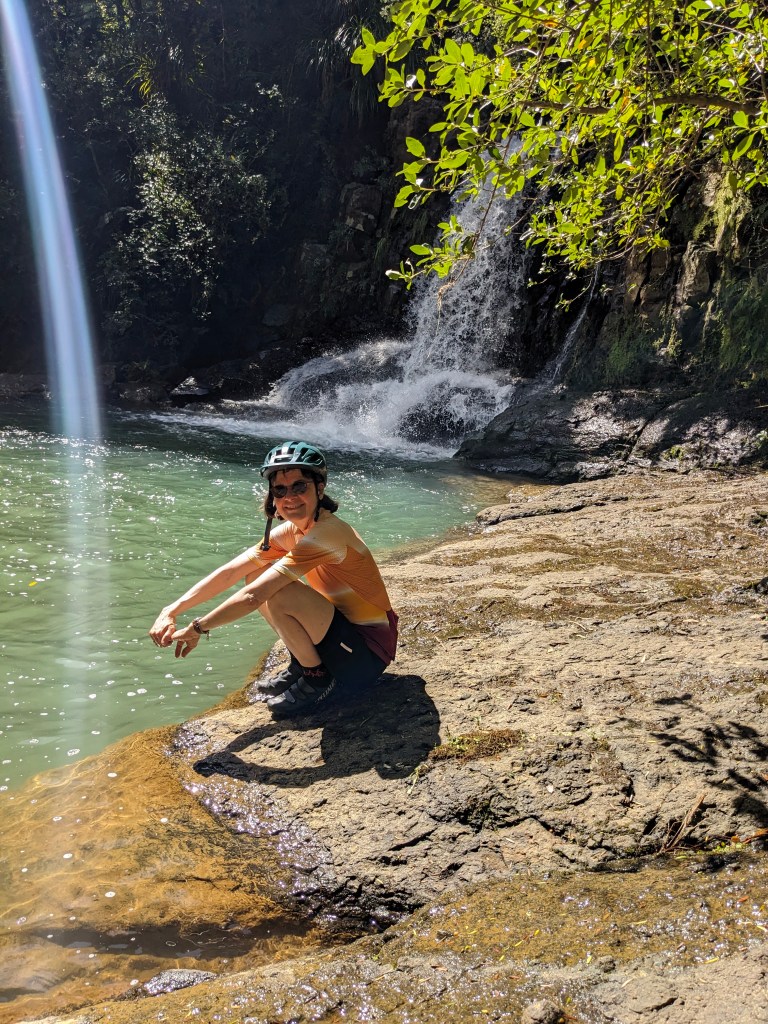
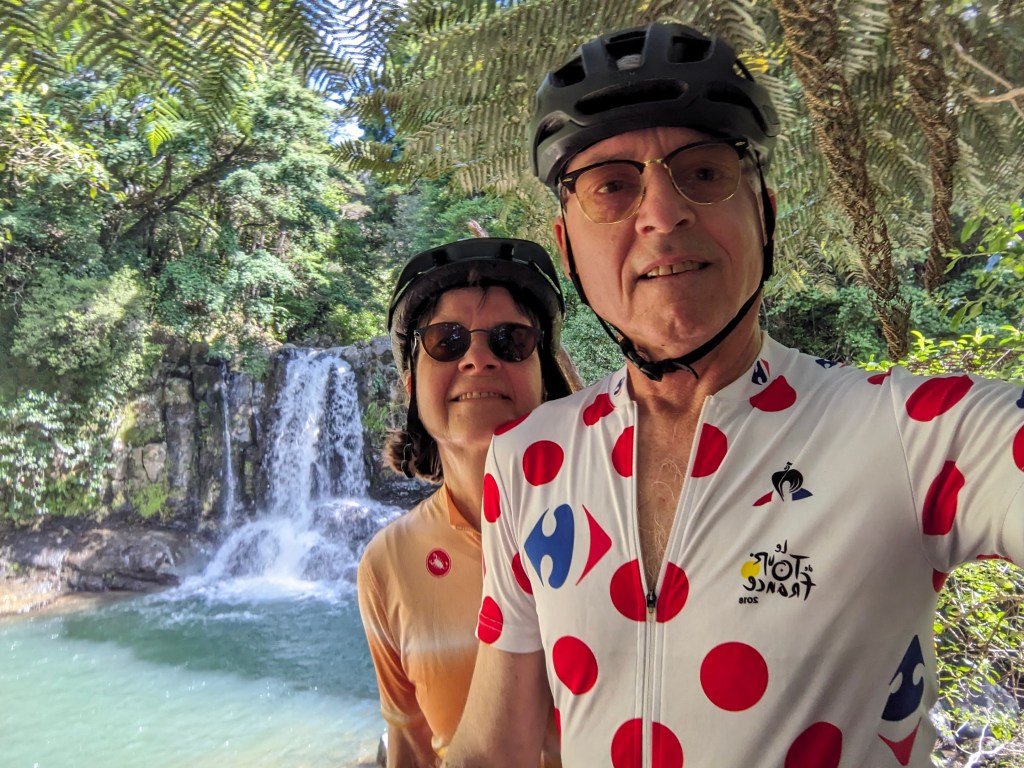
We spent the first day redoing our routes and our accommodations for the next week due to the route change and luckily had no trouble re-booking elsewhere. We did lose one night of refund with our cancellations unfortunately, but it could have been worse. Over the next few days we did a couple of shorter bike rides around the area visiting some beaches and waterfalls and climbing some hills trying to get our legs in shape for these big hills. We also visited Driving Creek Railway, a unique and interesting attraction with a narrow gauge bush/mountain train that takes you up 173 meters into a regenerating native forest area. It was built by hand by a local potter who used it initially to haul clay to his workshop but he transformed it into an attraction to promote conservation and share the beauty of the land. During the 75 min. trip up the mountain you see many native and some non native plants and trees as well as an interesting assortment of the man’s pottery.

Waiheke Island

25 Jan

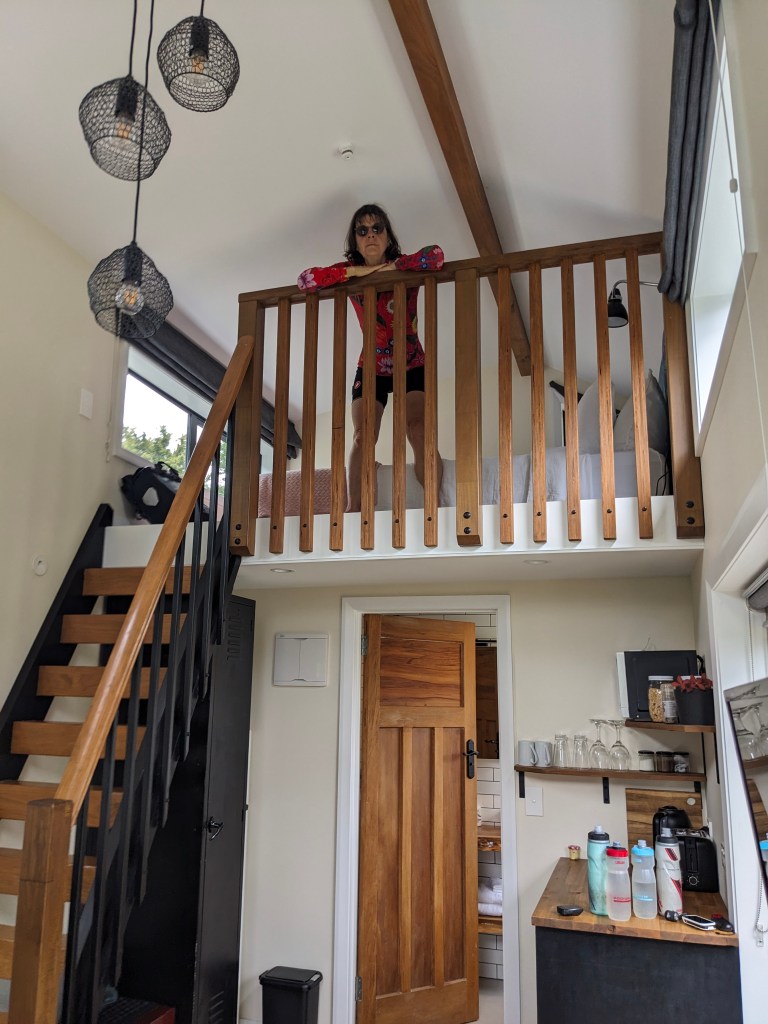
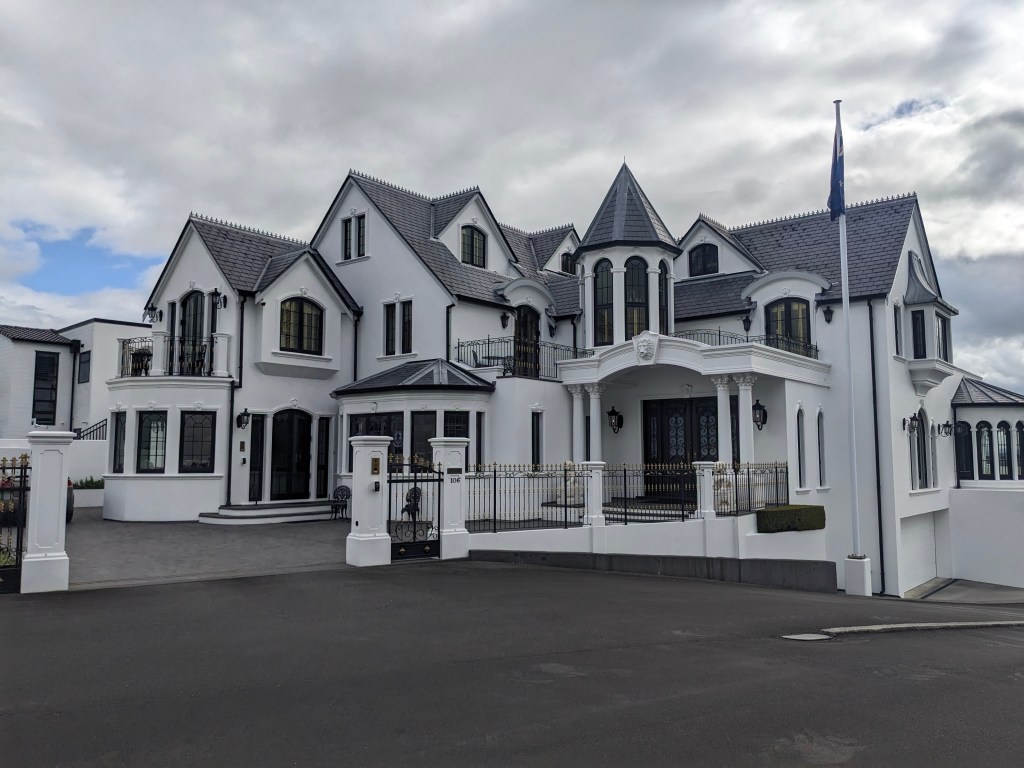
The rain started to ease the day we left Auckland and we took the short ferry to Waiheke Island. The temperature remained on the cool side and the wind high but at least we were not getting drenched in minutes. Waiheke reminds me somewhat of Saltspring Island with a bit of a hippy vibe while also having some very opulent estates on the hills. It is very green and tropical with many trees, plants and flowers that we see in Hawaii. There are many beautiful bays, beaches and walking paths to enjoy here which we took advantage of however it remained showery for most of the time we were here. We stayed in a suite within a home and it was lovely and comfortable with a large garden out back and a patio to relax on when the sun came out.

We did one cycle loop of about half the island on the nicest day and despite it only being about 20kms we had a few big climbs so it was good training, not too easy. The other 2 days, in between showers, we walked on some of the many hiking paths (Te Ara Hura) leading to beautiful vistas and through the bush. We have started to see the many sheep in New Zealand, apparently 5X more than people. We are also seeing many different birds that we’ve never seen before such as oystercatchers, fantails, herons, and godwits. We are on the hunt for the Blue Penguins that live here but haven’t been lucky yet.

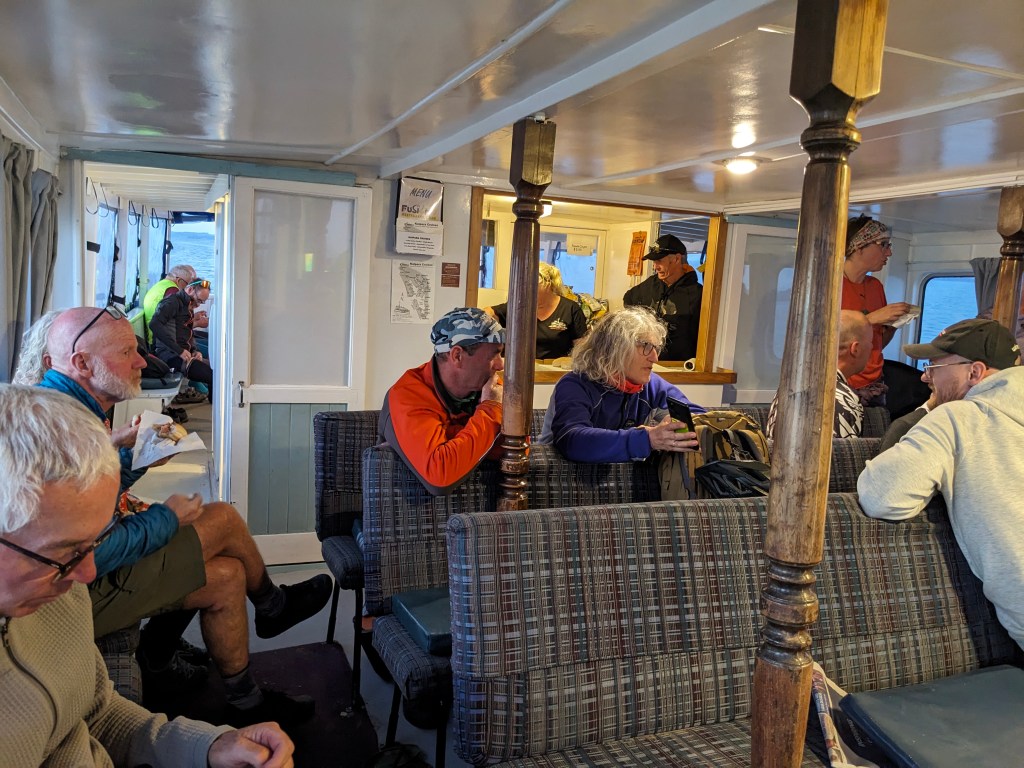
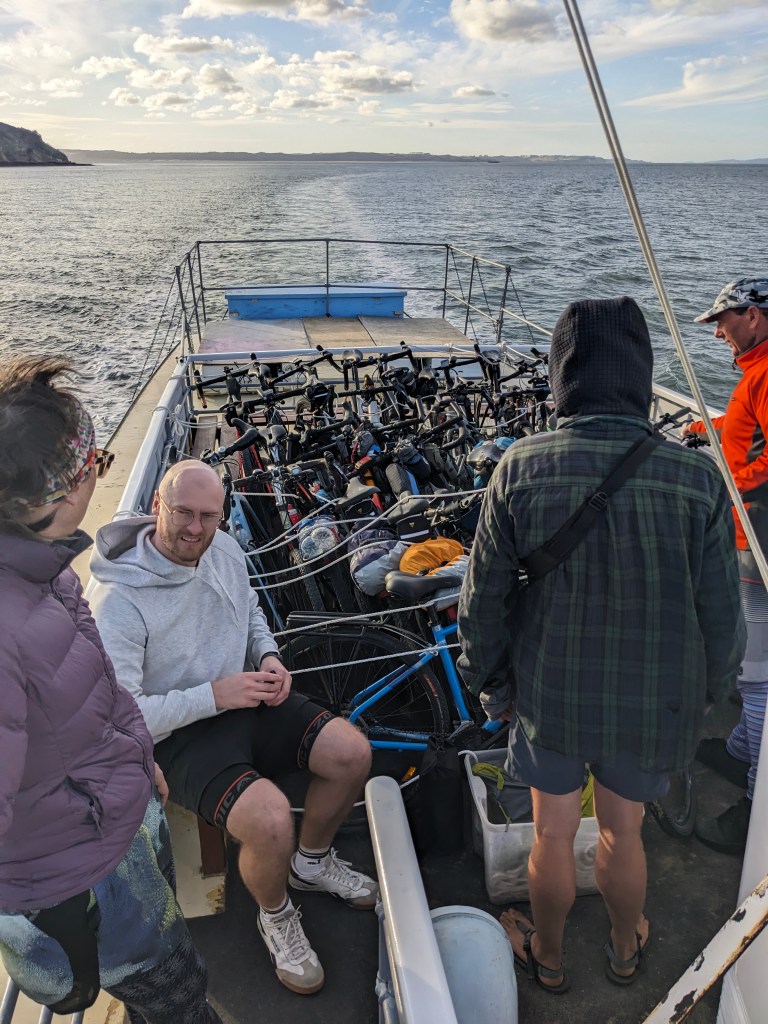
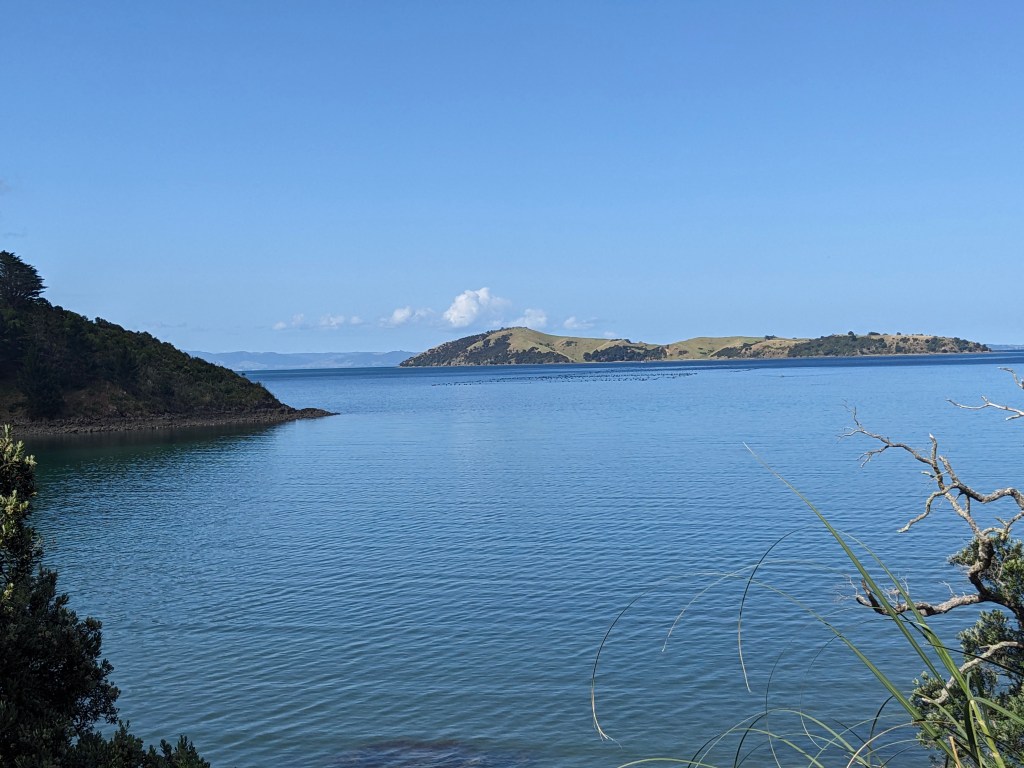
To leave Waiheke we rode to the east end of the island which is much less developed and took a ferry out of Man O’War bay, and over to Coromandel town on the peninsula of the same name. This ride too wasn’t very far, but involved 2 notable climbs of which one was on a gravelly washboard road so the going was slow. We had allowed enough time though and arrived in time for a snack and drink in a lovely vineyard cafe as a reward for our efforts. We were certainly the only cyclists on that road, however the drivers seemed tolerant of us. We don’t see too many people powered bikes here, similar to Europe and home. The ferry ride across the Firth of Thames was a bit bumpy but enjoyable with only 4 passengers (and 4 washrooms) on this crossing so it felt like our own private yacht. The 4 staff members were very friendly and interested in our journey.

The ride into Coromandel Town was fairly short and flat so a nice way to end the day. Our plan from here was to cross to the east side of the Coromandel Peninsula and ride south to Tauranga over the next week. However, the heavy rains we experienced in Auckland hit even harder in this region causing many mud ‘slips’ onto the highways and one deadly one on Mt. Manganui into a caravan park with 6 people killed. The roads are still being cleared and fixed and we have no certainty when they will reopen so we have been forced to do a major reroute, unfortunately. Instead we will be heading south on the west side of the Coromandel and making our way to Tauranga from an alternate route.

HNL, Auckland and Unusual Weather

22 Jan

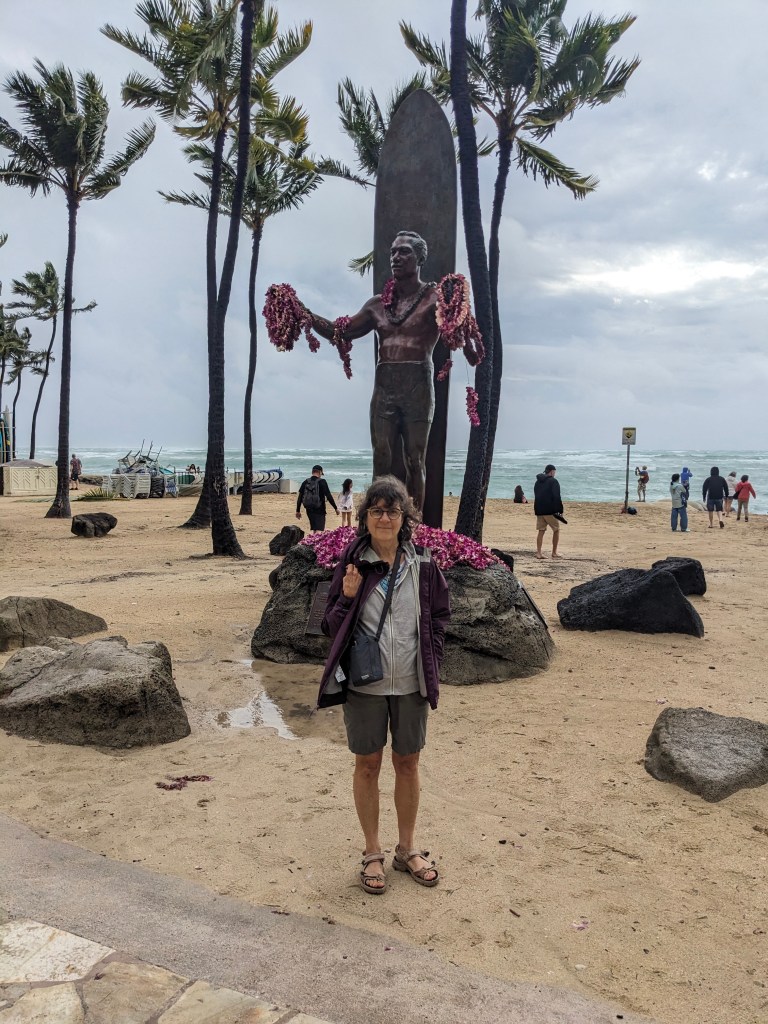
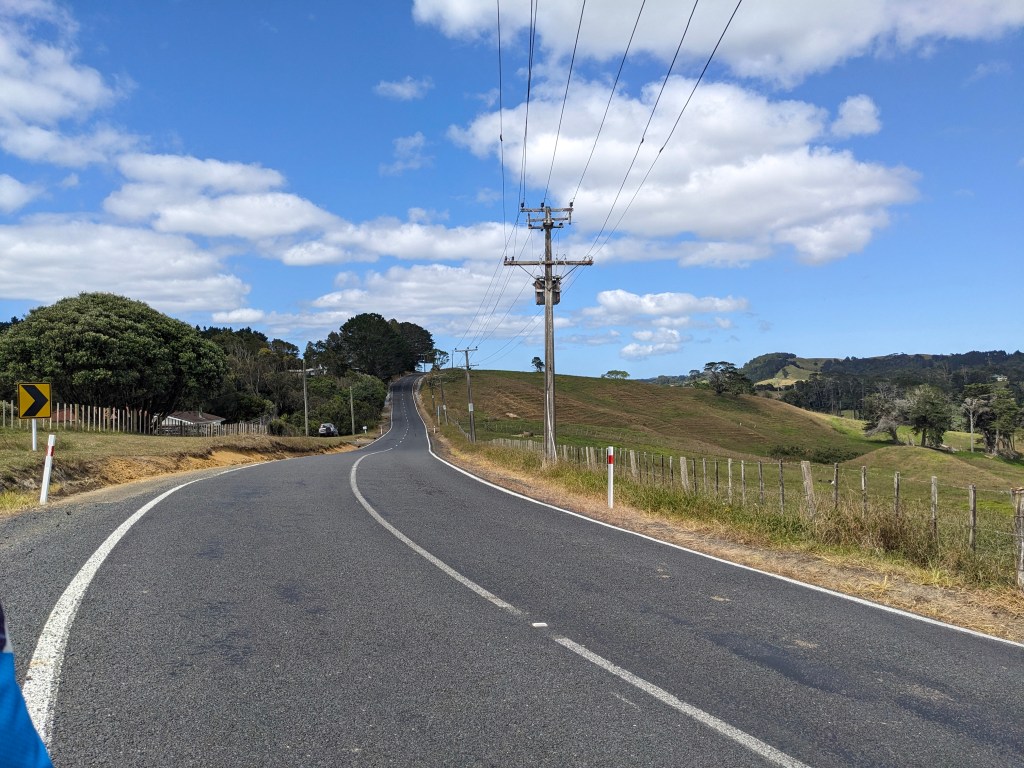
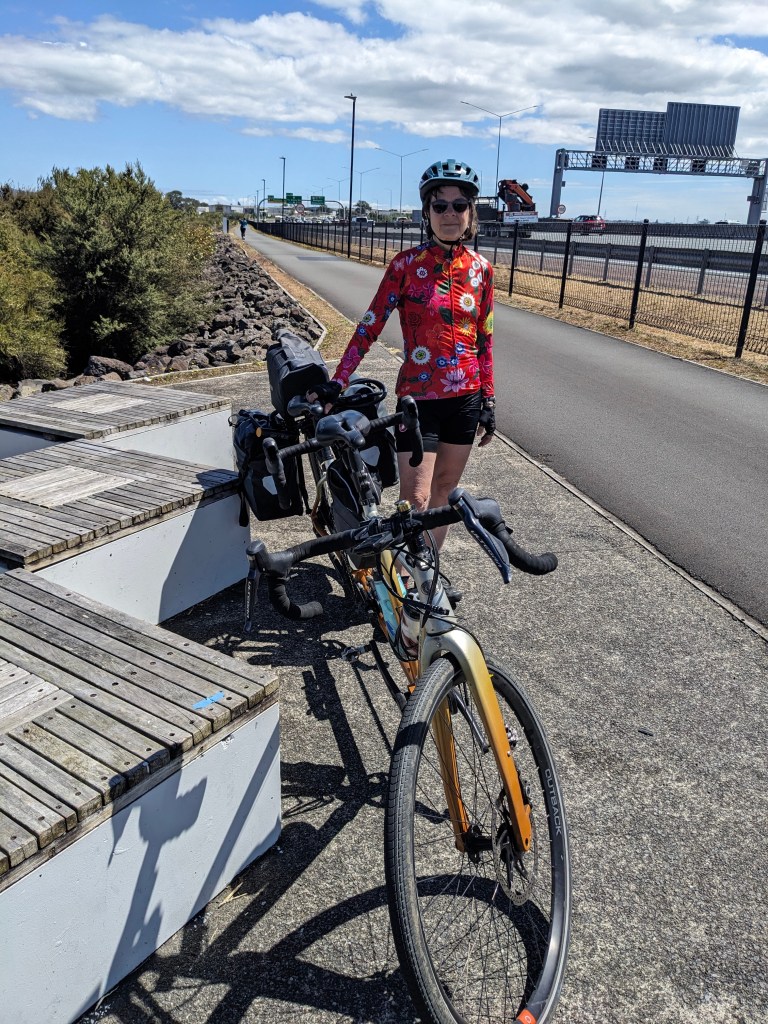
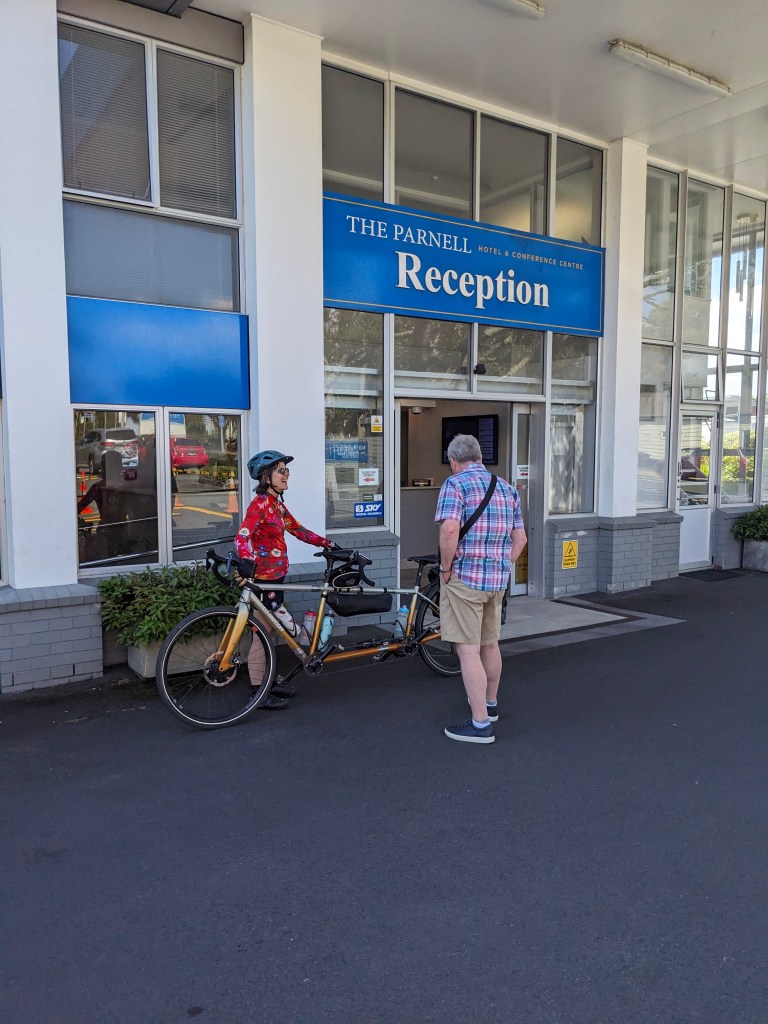
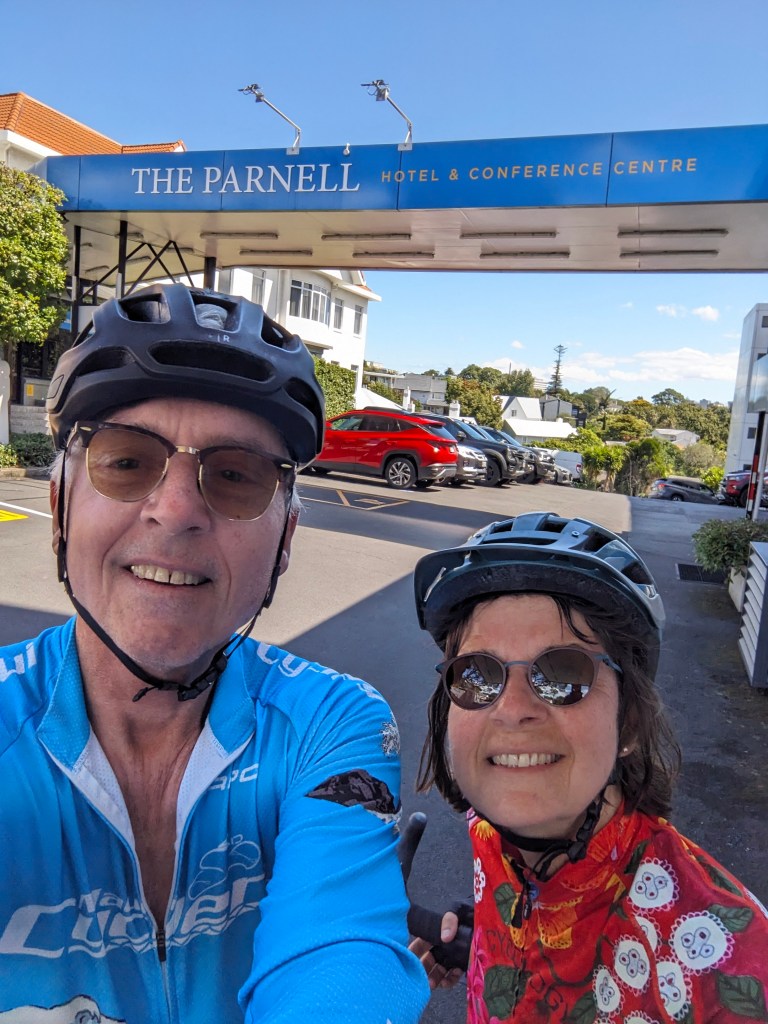
Our lovely friend Rob brought us to the airport with our new bike cases and the rest of the luggage on an unusually warm Calgary day in January for our Westjet flight to Honolulu (HNL). There was some trepidation about the level of scrutiny the U.S. border guys would give us but we went through that, and security, in record time, perhaps, due to the Nexus cards we now have. Westjet got us to HNL without issue and we took the hotel shuttle to our airport hotel for the night. The hotel itself was underwhelming and expensive for our 8 hour stay. Back to HNL on the 6:00am shuttle we went, only to discover the Air NZ flight was delayed by more than an hour, leaving us lamenting the extra hour of sleep we missed. But, Air NZ made up for it in lovely service, great food, and the luxury of their ‘skycouch’ which we opted for. This upgrade gave us an entire row with a footrest that raised 90 degrees creating a platform to snooze on. Getting through NZ customs was also easy, and off we went by pre-booked shuttle to our hotel in the Parnell suburb. The weather all over the North Island was, unfortunately, ‘wit’ (kiwi word for wet). In fact the next day it set precipitation records in some parts, even causing deaths from landslides, and flooding roads in areas that we plan to go to in the near future. Happily the rain has stopped now and is not expected to that degree in the week ahead. The Parnell hotel turned out to be perfect for our needs and the 3 days in Auckland went by quickly. We missed some outdoor activities we had planned, but did get to the Auckland Museum. The museum houses exhibits on natural history, NZ history, Maori culture, and included a Maori Cultural Experience/performance. It was all well worth the price of admission. The rain quit overnight on Thursday and we headed to the ferry for Waiheke Island, riding on the left side of the road very cautiously, and successfully completed a few right hand turns into the correct lane! I should mention that the hotel did give us a momentary scare saying they had no room to store our luggage and the unknown employee who okayed this months ago never should have. After seeing for ourselves there was room in their luggage room we convinced the manager it would work, and she acquiesced. Yikes, all over again? We took an earlier ferry than planned as we had time, and we are very happy with our first few hours on Waiheke. Island vibes definitely and the sun came out in full force in the afternoon. We are staying in a suite within a local lady’s house. The host is lovely and the suite has everything we need.

Return to Mâcon and Lyon

21 Jun

Today we rode from Paray le Monial over to Mâcon, and when I say ‘over’ I mean it because there are nothing but hills between the two. We looked at alternatives but selected one using smaller roads, but not ‘smallest’. It was a lot of climbing anyway and this one was fine with little traffic. The weather has now decided to be hot for our last few days so at the end of it we were well spent. At one point we lucked out and came upon a bar at just the right time as they are not frequent out in the agricultural hinterland. Terrific views were had along the way and also a 1.6km tunnel under a hill (thanks!). We were also happy to be back in the vines as we neared Mâcon. We are staying at the same apartment we were in 3 weeks ago and really liked. Mâcon seems much more alive now as we strolled about in the evening.

Back to canal riding for our last one but a bit of a problem. Tara has hurt a toe by stubbing it on a corner and it is hurting her. She is okay with cycling but not good for walking as we think it may be broken. It is another hot day for cycling and a long way but flat again. This stretch is probably the best one for beauty as well as services like water , toilets, and cold drinks. It got busy as we got close to Lyon as cities often are, but also we got to ride through another tunnel which dropped the temperature likely by 15 degrees for an excellent break from the 30+.
Now we sit waiting for the hotel to find our bike case which has gone astray. *** ten days later *** The hotel LOST OUR BIKE CASE! This was a biblical level disaster for us and we are now home but there was a lot of angst, tears, and total mystification and disbelief along the way. The short story is a) the hotel has taken full responsibility (in writing) and will reimburse us for a new case and expenses, b) the manager found us a bike box just under the maximum size allowed by the airlines, c) we packed the bike in with a lot of padding also hotel supplied, d) we got a huge taxi to get us to the airport, e) we got it on the flight to London ok, f) we had to plead with a bus driver at Heathrow to allow it on his bus to go between terminals, g) we got it on the flight home, h) and finally, our brilliant friend Rob came to pick us up in his van rather than Lyndsay and her smaller Subaru.

Alas, no relaxing and re-visiting Lyon in our final 2 days. C’est la guerre. Au revoir. p.s. Tara’s toe is recovering but carrying rather than rolling bike cases didn’t help.

Cronat and Paray le Monial

9 Jun

We left our accommodation in Chatillon with our 300euro damage deposit intact despite one (previously sabotaged) broken chair and a sore derriere. The weather was starting to clear up and we only had a few sprinkles on the ride today. We were heading to a one night stopover in the town of Cronat, marking a change in our route from the Nivernais canal network, turning south alongside the Loire river. This also meant joining the Eurovelo 6 cycling path for the next two days. It is well known as it traverses Europe all the way from the Atlantic to the Black Sea. It has been interesting being exclusively on a cycle route as we have met many other cyclists following the same route and some we have met several times and even had dinner in Paray le Monial with a charming couple from Luxembourg (Yvonne and Dan). Once off the canal we were met by some hilly terrain, finally, as we were not really close to the Loire at this point and found we could still climb hills.

Cronat is a small town in the heart of Charolais country. We saw many Charolais as well as a fair number of sheep and some goats. Our lodging for the night was a B&B called La Heron Pourpre managed by a very hospitable couple from The Netherlands, Jolanda and Martin. This seems like an unusual name but not if you have been here. Along the canal we saw many herons pourpre. We attempted many times to get a good picture of one but they are shy so fly off as soon as they sense we are near. The B&B was lovely with a garden in the back and a pool but unfortunately not quite warm enough to swim. We also had our dinner here as there wasn’t anywhere else in town and Martin is a capable chef. Our meal consisted of four courses: fresh salmon on white asparagus/egg/greens as a starter, Charolais veal with an oyster mushroom sauce/fresh vegetables/potato and leek fritata(?) for main course; chevre in pastry and other cheeses with honey third course; choux pastry filled with whipped cream and blackberries for dessert and finally a home made coffee liquor. All very tasty except Tara slipped the hard boiled egg and potato fritata onto George’s plate which he accepted gratefully. Interestingly, the meal was a very reasonable cost at 30 euros each or about $48 CDN. Wine was less than $5/glass as well. It helps to get outside of the bigger cities cost wise.

The next day our ride took us to Paray le Monial and the weather was perfect. The first 15 km was again through the hilly countryside amongst the Charolais herds and pretty villages. After this the route again followed the water, along the Loire river. It was a beautiful day and we saw many cyclists, local and touring like us (even one fellow Canadian from Quebec), pretty villages, boaters, fishers and bird life.

We arrived at our new lodgings, Maison St. Louis, and were greeted by lovely hosts again with a cold drink and a “sort of” conversation about the city and its religious importance in broken French and English. This is a bit of a quirky place, again a dorm-like environment with shared spaces and overtly religious. The city is famous due to a saint having a vision or apparition of the heart of Jesus Christ. Consequently since the late 19th century this has been a pilgrimage destination, which was obvious as we walked around to the various sites, mostly religious, today. The town is very clean, well maintained, and certainly picturesque; I think there is good money in religious tourism. Indeed, our host said about 3000 people live here but 5000 more are tourists at peak.

Clamecy

5 Jun

We woke up to heavy rain in Auxerre but by the time we left to ride it had stopped. The forecast looked rather bleak (cool and precipitation) but somehow we managed to evade the rain. It was cool, but a comfortable temperature when pedaling. There is heavy rain and hail south and east of us today in France so luckily we were in the right place. We did encounter one problem on our route today, a large tree that had fallen across the path and onto power lines. We could not get past it with our bike and bags so had to back track a bit and find a road to go around the blockage.
There are many boat tourists on this canal. Every lock we came to today either had boats in it or waiting to enter and all the locks were manned by staff, unlike the Burgundy canal where we saw few boats. We witnessed one fellow on the Burgundy canal working at one lock then racing ahead on his motorbike (passed us) to the next one ahead of the boat he just put through. We spoke to one couple on a boat today and they said they aren’t required to book the locks, they just arrive and wait. It is a slow way to travel, we are much faster. There were 38(!) locks on the ride today from Auxerre to Clamecy, about 70kms. I think all the waiting would get tiresome.

We arrived at our new abode for the next 2 nights, La Boule D’or, in Clamecy. It’s an older place with a hostel feel (shared kitchen, courtyard with ping pong, etc.) but we have our own room and bathroom and it’s very bike friendly. An old chapel is where breakfast is served so that is a new experience. There is very little choice for accommodation in the smaller places like this, you take what you can get.

We did a walking tour here as well to get a good look around. The town is very medieval looking, sort of like Auxerre, with narrow streets and half timber construction. There are also many canals within the city and a confluence of two rivers, the Yonne and the Beuvron, and is sometimes described as the Venice of the Nivernais. It is famous for timber floating (flottage de bois) as it is in a rich forested area and on a river. The wood was cut around here and then assembled into large rafts/trains (75 meters long) which raftsmen (flotteurs) then took downstream to Paris where the need for wood to burn was great and supply inadequate. This was happening from the 16th to the 19th century until coal heating took over. It is quite a fascinating history as it went on for nearly 4 centuries and is the genesis of the canal system on the Yonne river, and contributed hugely to the development of so many places along the route.
Clamecy is also the birthplace of a famous writer/historian, Romain Rolland (1866-1944), who received the nobel prize for literature in 1915. He wrote novels but also commentary about the two world wars he lived through. He was a pacifist who lamented the destruction and loss of relationships between the French and German people. He was an interesting man who apparently influenced and had relationships with notable people including Ghandi, Freud and Richard Strauss, I may have to read more about him. This much we learned in the excellent museum here, along with the flottage history.